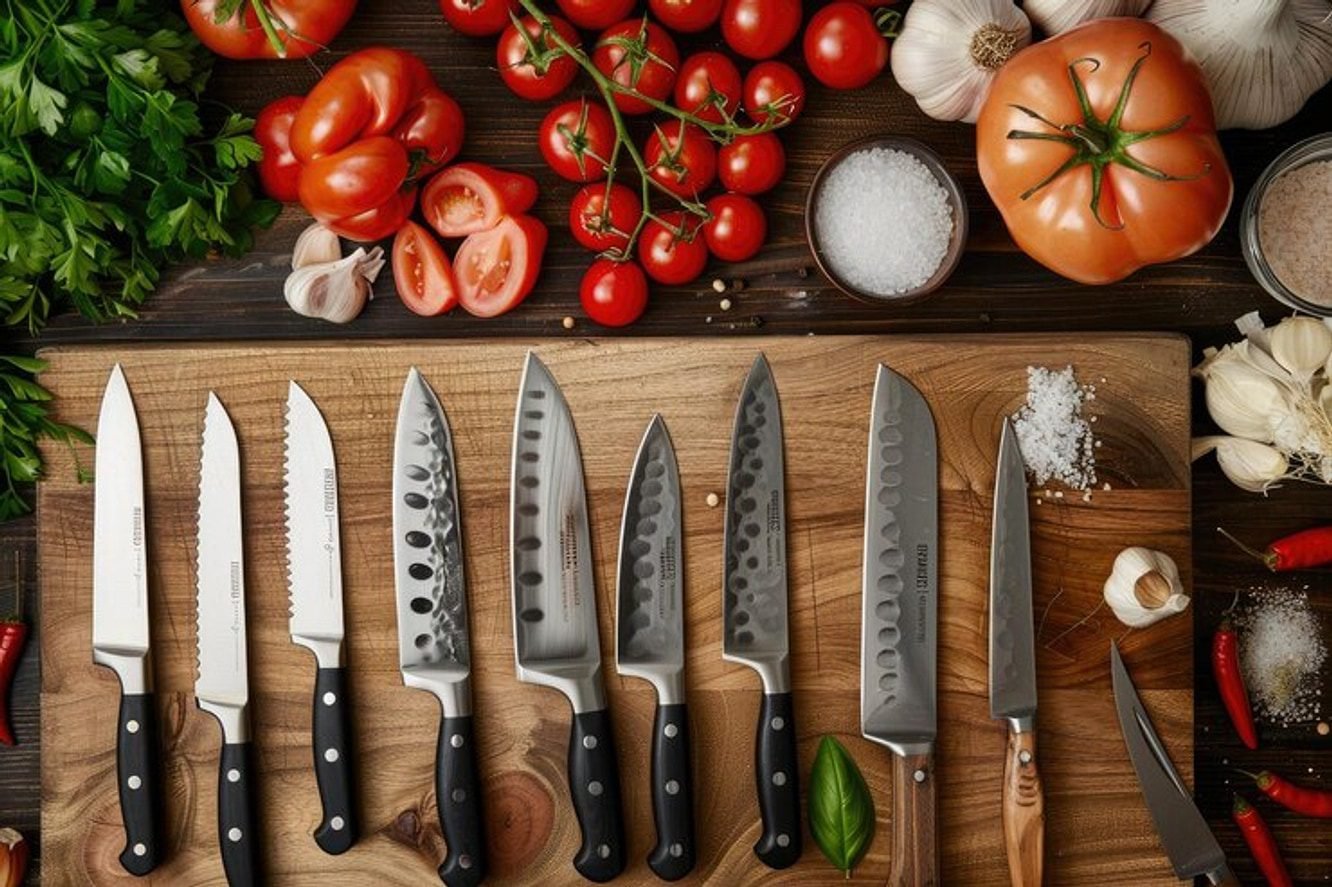
Being able to rely on one great kitchen knife is wonderful. But cooking with only one knife can take you out of the moment. You’ll rush through tasks instead of enjoying your food. Certain knives will give you more control. Speed. Safety. With knowledge of the differences, you’ll become a better cook.
Understanding Kitchen Knife Types
Every meal you make will go smoother when you consider three factors. Precision. Comfort. Efficiency. The right knife will decrease slippage. Cut your prep time down. Grant you cleaner slices for better presentation or texture.
The type of food you’re cutting should guide your decision. A soft herb requires a gentle touch. Tough squash and crusty bread can’t be sliced without the proper tooth. Using the correct knife for the job is also important for hand safety. A well-balanced knife will reduce fatigue from repetitive motions.
Kitchen Knifes Types: Chef’s Knife
Your chef’s knife is perfect for rocking downwards to chop onions. Minimize garlic. Slice through vegetables and boneless proteins with ease.
- Ideal for chopping vegetables, fruit, meat, and herbs.
- Rock your blade back and forth for quicker chopping and mincing.
- Keep your fingertips curled and use your knuckles as a guide.
- You should learn to use an 8-inch chef knife.
- Do not force the knife through the food.
Many chefs will tell you that this is the first knife you should really learn to use. After you get comfortable with your chef’ knife, most daily kitchen tasks will take less effort.
Kitchen Knifes Types: Paring Knife
Peeling potatoes. Snipping stems. Cutting small slices into a mango to remove the core. When the job is small or requires detailed work, you’ll need your paring knife.
- Ideal for cutting and peeling small fruit and vegetables.
- Small enough to comfortably hold in one hand.
The paring knife’s small blade allows for maximum control during these tasks. And because it is small, precise cuts become easier than they are with larger knives.
Kitchen Knifes Types: Serrated Knife
Soft knives slice smoothly through materials until they hit resistance. A serrated knife is exactly that; resistant. Whenever you come across tough skin or crusts, grab your serrated knife.
- Slice bread with ease without damaging the inside.
- Cut into ripe tomatoes without crushing them.
- Easily open citrus fruits without losing too much juice.
- Trim cakes.
Serrated knives are fantastic for sawing through items. They will be your best friend whenever you need to cut something with a hard outer layer and a soft interior.
Utility Knife
A chef’s knife can become too large for some jobs. Small vegetables and fruits may not get sliced cleanly with a paring knife. If you’re making sandwiches or cheese portions, reach for your utility knife.
Think of all the knives you currently own as middle-ground. Utility knives are typically the middle-child of your knife set. You may find yourself using this tool the most when you are doing smaller or quicker tasks.
Boning Knife
Imagine having to cut around bones with a chef’s knife. The blade width makes it difficult to get as close to the bone as you would like. When bone is involved, use a boning knife.
Boning knives are made to slide through these tight spaces with ease. The tip of the knife should fit easily into the corner of a chicken breast or along the sides of a fish fillet.
Bread Knife
A lot of people own bread knives, but know why they need one? Remove the crusts from your bread before dipping into your favorite soup. Whether you’re cutting tomatoes or heading down the aisle at the supermarket, squeeze each tomato gently.
- Use your bread knife to slice soft foods with a firm exterior.
Some knives are made for specific tasks. There are tons of different knives out there that have been designed to make chefs’ jobs easier. Hopefully these examples will help you solve a problem you encounter while cooking.
- Carving knives are designed for cutting cooked meats.
- Cleavers are best when force is necessary to cut.
- Santoku knives offer versatility with their straight edge.
- A fillet knife helps you separate your fish from its bones.
- Nakiri knives are specially made for chopping vegetables.
Knife Care Tips
Taking care of your knives will keep them safer and more useful for longer. Running your blades across a honing rod keeps them aligned between sharpenings. Hand washing prevents damage to your knife’s handle and edge from high heat or other dishwasher dangers.
Don’t allow your knives to knock into each other when in storage. A magnetic strip or knife block can keep your blades sharp by eliminating unwanted contact with other metals. Additionally, drying knives right after washing will prevent rust and stains from forming.
Assembling Your Knife Collection
Every home cook shouldn’t own every type of kitchen knife. Start with just the basics. One chef’s knife, paring knife, serrated knife, and one specialty knife you think you’ll use.
Once you’ve built your knife foundation, you can start adding to your collection. Look at the meals you cook regularly and consider what will make kitchen time more enjoyable. Steak lovers may want to pick up a carving knife. Veggie-centric chefs may find themselves more comfortable with a santoku or nakiri.