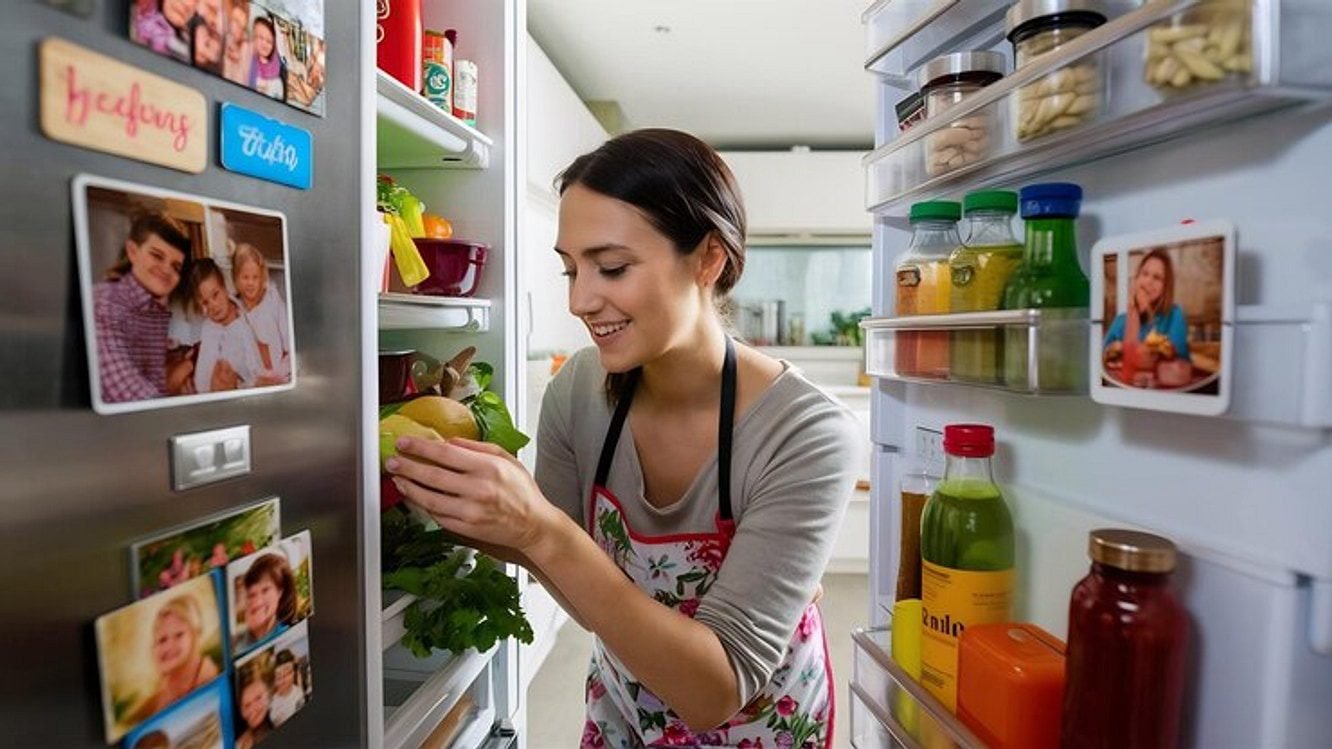
An organized refrigerator makes it easier to see what you have, find ingredients, and use leftovers before they are forgotten. It does not need matching containers or a complicated labeling system.
The most useful fridge organization tips combine convenience with sensible food storage. Keep frequently used items accessible, protect ready-to-eat food from raw juices, and leave enough space for cold air to circulate.
Start with these ten practical changes, adapting the layout to your refrigerator’s design and the storage instructions on your food.
1. Check the Temperature Before Rearranging
A tidy refrigerator still needs to keep food cold enough.
Keep the temperature at 40°F / 4°C or below, and use a refrigerator thermometer to check it. A numbered control dial does not necessarily show the actual temperature inside the appliance.
Follow the manufacturer’s instructions for temperature settings, thermometer placement, and ventilation. If the refrigerator is not maintaining a suitable temperature, address that before relying on a new arrangement.
The FDA’s food-storage guidance explains why temperature control matters.
2. Clean One Section at a Time
You do not need to empty the entire refrigerator onto the counter for a long sorting session.
Work through one shelf or drawer at a time. If you need to remove everything for cleaning, keep perishable food cold in an insulated cooler with enough ice or frozen packs.
Clean shelves and drawers according to the appliance instructions, then dry them before returning food. Remove spills promptly, especially leaks from raw meat or poultry.
Check containers as you go. Discard spoiled food and anything whose storage history makes it unsafe. If you cannot identify a leftover or remember when it was prepared, do not taste it to investigate.
3. Keep Raw Meat Below Ready-to-Eat Food
Store raw meat, poultry, and seafood in secure packaging or leakproof containers on a low shelf, below foods that will be eaten without further cooking.
A tray or suitable container provides an extra barrier if the original packaging leaks.
Keep salads, yogurt, cooked food, and other ready-to-eat items protected from raw juices. Do not place an open salad container beside a dripping package simply because both fit neatly in the same bin.
When thawing food in the refrigerator, use the same separation principle.
4. Give Leftovers a Visible Place
Choose an accessible area for cooked leftovers so they do not disappear behind unopened jars.
Use covered containers and label them with the food name and preparation date. Small, shallow containers also help larger quantities of cooked food cool more quickly.
The USDA recommends using most refrigerated cooked leftovers within three to four days. Freeze suitable portions you will not use in that period.
Do not combine a new batch with older leftovers and label the whole container with the newer date.
5. Use Door Storage Selectively
The refrigerator door experiences temperature changes when it is opened. Choose its contents with that in mind.
Condiments may be suitable there when their labels and your appliance instructions allow it. Frequently used food does not automatically belong in the door: storage requirements matter more than convenience.
For U.S. home-storage guidance, keep eggs in their original carton on an interior shelf. The USDA advises against storing eggs in refrigerator-door bins because their temperature fluctuates more.
Keep milk and other highly perishable items in an appropriately cold interior location rather than choosing the door simply because the bottles fit.
6. Organize Produce by Its Storage Needs
Not every fruit or vegetable benefits from the same conditions.
Use crisper drawers according to your refrigerator’s instructions, and follow produce-specific storage guidance. Protect delicate items from being crushed beneath heavy vegetables or containers.
Do not wash everything automatically before putting it away. Some produce stores better when washed shortly before use; anything washed in advance needs appropriate drying and storage.
Keep prepared produce covered and refrigerated as required. For more detail, see our guide to storing root vegetables.
7. Choose Containers That Fit Your Routine
Containers should make food easier to store and use. They do not need to match.
Choose sizes suited to the portions you normally prepare. A small amount of food in an oversized container wastes space, while an overfilled container can be difficult to close and handle.
Check that lids fit securely. Use containers suitable for their intended purpose, and follow their care instructions.
Clear containers help you see the contents, but a readable label works well for opaque ones. Keep the arrangement simple enough that you will maintain it after an ordinary weekday meal.
8. Leave Room for Air to Circulate
Avoid filling every gap with another bottle or storage bin.
Cold air needs to circulate around food, so keep vents clear and follow the appliance manufacturer’s loading advice. A neatly packed refrigerator can still be overcrowded.
Before buying an organizer, check whether it improves access or simply occupies space. Large bins can be useful, but they should not obstruct ventilation or make it harder to reach food behind them.
Leave some usable space for the next meal’s leftovers rather than filling the refrigerator to capacity.
9. Rotate Food When You Put Groceries Away
When unpacking groceries, move older suitable items forward and place newer ones behind them.
This makes it easier to use what you already have. Check dates and storage instructions rather than assuming every similar-looking package has the same usable life.
An “eat first” area can help identify food that needs attention, but only put food there that is still safe to eat. It is not a holding area for spoiled or improperly stored items.
Do the same with leftovers: check the preparation dates before deciding which meal to use next.
10. Build a Short Weekly Check Into Your Routine
Before shopping, spend a few minutes looking through the refrigerator.
Ask yourself:
- Which leftovers need to be eaten or frozen?
- Which vegetables should be used in the next meal?
- Are any packages leaking?
- Do shelves or drawers need cleaning?
- Am I about to buy something I already have?
Keep the check brief enough to become a habit. You do not need to redesign the whole refrigerator every week.
If the arrangement repeatedly becomes difficult to maintain, simplify it. Fewer categories and more visible labels may work better than a detailed system that nobody follows.
A Practical Starting Layout
Use this as a flexible example, not a universal diagram. Refrigerator designs differ, and some have dedicated compartments.
| Area | Possible use | Important consideration |
|---|---|---|
| Accessible interior shelf | Covered leftovers and ready-to-eat food | Keep visible and protected from raw juices. |
| Suitable cold interior space | Milk, yogurt, and eggs in their carton | Follow food labels and appliance guidance. |
| Low shelf | Raw meat, poultry, and seafood | Use leakproof packaging or a tray below other food. |
| Produce drawers | Suitable fruits and vegetables | Adjust storage to the produce and drawer design. |
| Door bins | Suitable condiments | Do not prioritize convenience over temperature needs. |
Keep the System Easy to Use
I prefer simple kitchen routines, especially while I am still building confidence with cooking. Being able to find tomorrow’s lunch and see which vegetables need using is more helpful to me than having a refrigerator that looks perfectly styled.
Start with one shelf, a few labels, and a temperature check. Once those habits feel natural, adjust the rest of the layout around how you actually cook.
These fridge organization tips are meant to reduce everyday confusion. The best arrangement is one that helps you store food appropriately and makes it easier to use what you already have.
Sources and Food-Safety Note
This guide follows general U.S. consumer food-storage recommendations. Follow product labels and your refrigerator manufacturer’s instructions, particularly for dedicated compartments and temperature settings.