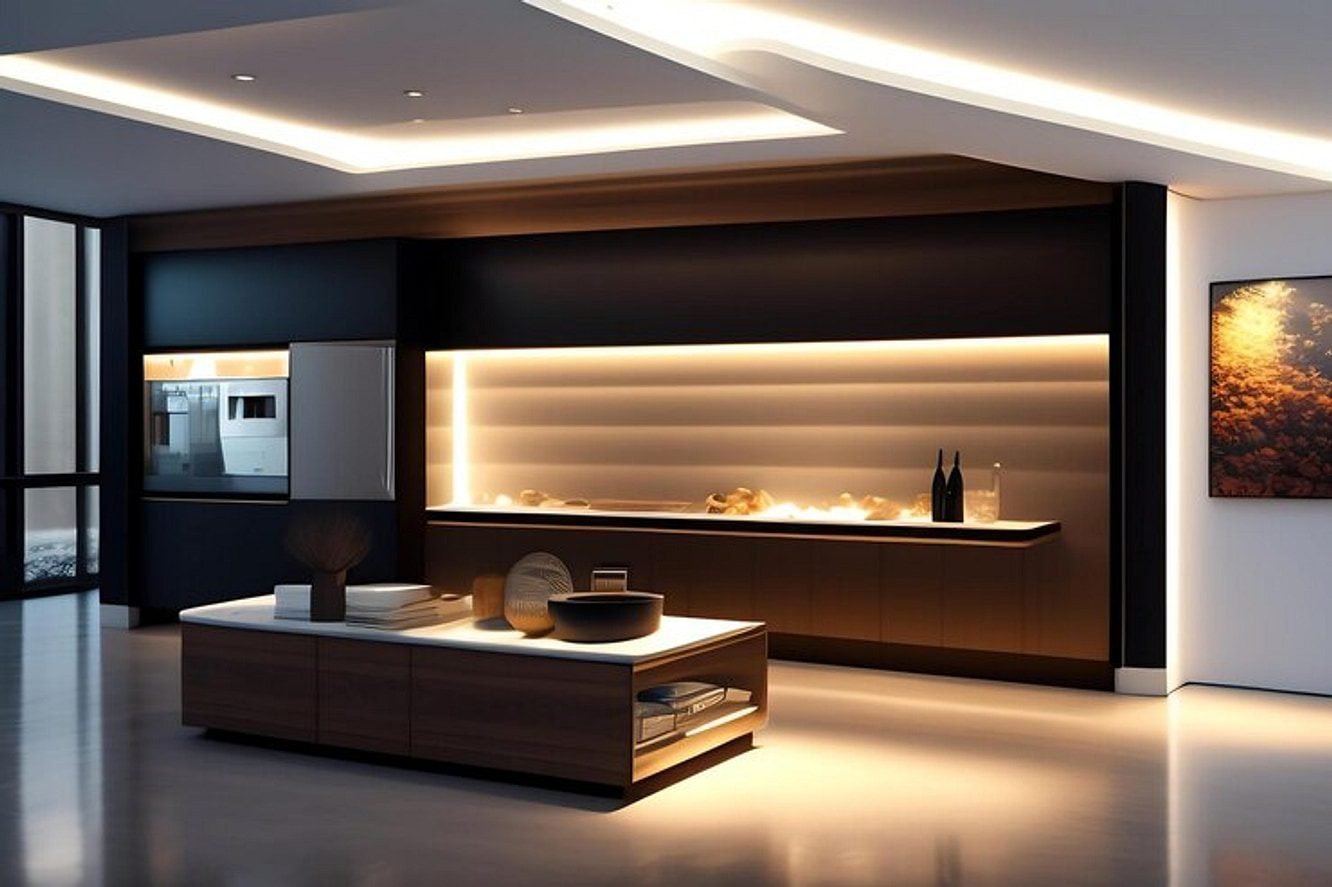
There’s nothing worse than a kitchen that lacks appropriate lighting. Not only can under cabinet lighting make food prep easier and improve visibility. It can also eliminate shadows on countertops while enhancing the room with a layered warmth that makes your kitchen feel finished. Here is your under cabinet lighting guide.
Benefits of Lighting Below Cabinets
Beyond making your countertops more usable under cabinet lights brighten the darkest space in your kitchen. They help eliminate shadows cast by ceiling fixtures while accentuating counter depth, finishes, tile work, and cabinetry.
You’ll also notice the difference when the kitchen lights are off. Well illuminated backsplashes add depth and create ambiance. Kitchens finished with under cabinet lighting feel more complete while avoiding becoming too bright.
Under Cabinet Lighting Guide: Types of Lights for Under Cabinets
There are several varieties of lighting that can work under cabinets depending on your application, budget, and confidence with installing. The most popular choices are LED light strips, puck lights, tape lights, and linear light bars.
- LED light strips create continuous lighting along virtually any length.
- Puck lights are ideal for targeted lighting on certain areas.
- Bars create uniform light with a sleek and modern look.
- Bulbs that plug into existing outlets allow you to add under cabinet lighting without wire
- (hard)wiring them to your home’s electrical system.
Look to how you want to use your counter space when deciding. If you do a lot of cooking and food prep. you may want a lightweight that provides even task lighting. A simpler room may benefit from something that offers bright light while still being invisible.
Under Cabinet Lighting Guide: How Bright Should Under Cabinet Lighting Be?
Under cabinet lighting should be bright enough to work below the counters without turning the entire kitchen into a daytime room. Most kitchens only require enough brightness to clearly see ingredients without glare on countertops or tile.
Color temperature should be considered as well. Light with a warm white color temperature creates a relaxing environment. Neutral white tends to be the better choice for task lighting because it provides a more accurate color when preparing food.
Placement & Installation Options
How you install your lighting can impact the finished look along with cost and convience. Lighting that plugs into existing outlets can typically be installed faster than hardwired options. However, hardwired lighting sits flat against the wall for a sleeker look.
Below is a quick comparison of popular under cabinet lighting installation options to help you decide the best fit for your needs.
| Installation Type | Ease of Installation | Appearance | Maintenance |
| Plug-In | Simple | Moderate | Low |
| Hardwired | Complex | Sleek | Low |
| Battery Operated | Easy | Flexible | High |
| Smart/Remote Controlled | Moderate | Modern | Moderate |
Now that you’ve seen how each installation type stacks up, let’s explore the features that make under cabinet lighting more functional.
Battery operated lights offer even more flexibility, but they may require bulb replacement more often. No matter what you select always measure your depth of cabinets. You don’t want to install lighting that shines directly in your eyes when looking straight up.
Under Cabinet Lighting Guide: Features to Consider
Controls and detection systems can make under cabinet light more practical on a daily basis. Many lights let you dim the brightness with a dial or remote control.
- Dimming your lights allows you to use them for both tasks and ambiance.
- Motion sensors can automatically turn on lights in high traffic areas.
- Smart home compatibility can allow you to set schedules and use voice control.
- Tunable white lets you change the color temperature to your liking.
- Thin lights sit flush with your cabinets for a smooth appearance.
Avoid chasing the latest gimmicks if they won’t be used. By focusing on features that matter to you. You’ll end up with lighting that feels customized.
Placement Is Key
The placement of your lighting can make it look DIY or professionally installed. As a rule of thumb your lighting should always be placed near the front of your cabinet bottom. You don’t want lights that are visible when looking straight down.
The distance between each fixture is important too. Even spacing creates an even layer of light. This means avoiding large gaps between hardwired lights or LED strips.
Under Cabinet Lighting Aesthetics
Lighting should always enhance your cabinets instead of fighting against them. Linear lights and fixtures with low profile designs will typically sit flush with your cabinets. Bulbs with warm tones also complement wood cabinets better than cooler whites.
If your kitchen features a tile or stone backsplash. you can use lighting to accentuate them as well. Don’t be afraid to look for lights with different beam angles to reduce glare on your countertops.
Longevity & Maintenance
Like any repair or upgrade you want your investment to last. Most LED lights have a long lifespan while drawing very little power. LEDs are a good option if you’re looking to reduce maintenance and save on energy costs.
Since grease and grime can build up under cabinets over time. You’ll want to look at how easily the light can be cleaned. Lighting with fewer crevices are easy to wipe down.
Quality always plays a role in durability and controls. Look for lighting that is easy to install and use. Once installed you should soon forget about your lighting and focus on what matters… cooking.