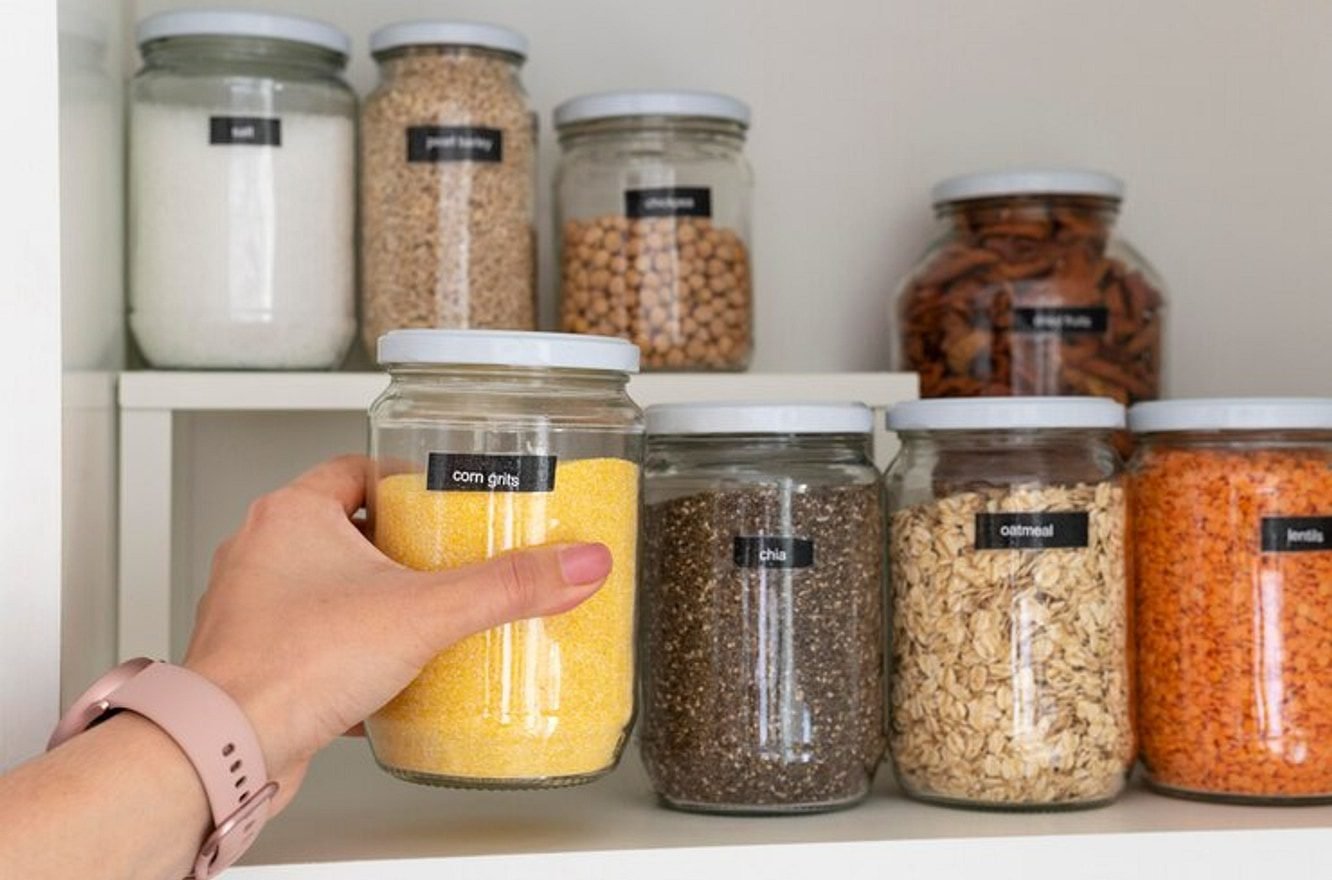
Want a pantry that saves you time, cuts down on waste, and makes cooking simple meals feel easy? Labelling systems should inform how you store items by keeping every container and shelf in your pantry clearly assigned a purpose.
Good labels can help you grab what you need faster, remember what needs replacing, and foster a calm kitchen rather than a cluttered one.
Begin With a Pantry Reset.
Dump everything out until you can see what you have. Sort similar items together to easily identify duplicates, expired products, or supplies that should not be kitchen clutter.
Note which foods you want to keep in permanent containers versus those that will stay in their original packaging. Starting with a clean pantry allows your labels to become more effective because they’re tailored to your habits.
Simple Pantry Labelling System: Select Labels That Fit Your Lifestyle.
You know your pantry habits best. If you switch up your food storage often or cook on busy weeknights when rushed, consider labels that are:
- Large and easy to read at a quick glance from a standing position.
- Simple to remove and replace, using the same style on every bin and shelf.
- Uniform in naming – does your family use singular item names (flour) or categories (pantry)?
- Optional for dates if you track freshness that way.
- Made of materials that will stick to your containers. The paper looks nice, but may not adhere to smooth surfaces.
- Limit colours so your labelling looks neat, not like you’re wrapping presents.
- Highlighted or unique for allergy-safe foods or staples you always need handy.
The simpler your style, the easier it will be for your family to maintain. No one wants to try deciphering your system every time they put something away.
Simple Pantry Labelling System: What Labels Should You Make First?
Label things you often reach for or frequently forget where you’ve placed. Dry goods like flour, rice, oats, pasta, cereal, baking supplies are some examples of pantry items that benefit from clear labeling due to their popularity, portable containers, and tendency to get shuffled around.
Next, label foods that will be moved to a jar or bin after opening. Anytime original packaging is gone, chances are it will be difficult to identify without a label. Avoid baking mistakes and make stock-checking easier by ensuring contents are clearly named on the containers you transfer them too.
Simple Pantry Labelling System: Sort Pantry Items by Category First.
Do yourself a favour and organise by groups before making your labels. When like items are together, it’s easier to find what you need, even if the label is missing.
- Breakfast items should all live in the same section.
- If possible, store baking goods near measuring cups/spoons.
- Canned goods should be sorted by content, not size.
- Snacks should be stored up or down based on how often you want to grab them.
- Keep staples you’d need for any meal separate from specialty ingredients.
- Pets foods and pantry supplies that are not food should also get their own zone.
Your categories don’t have to be perfect or permanent. Start with broad groupings that make sense to you and adjust as you discover what your family uses most.
Labels Should Be Easy to Read at a Glance.
Pick a label color that contrasts with the container. For dark jars or decorative bins, go with a white font that sticks. When labels look pretty but contain curly fonts or several font styles, they become harder to read.
Placement also makes a big difference. Labels on transparent containers should face forward. Labels for opaque bins should be placed toward the top so they can be read without moving them. Don’t stress about matching your label colors to the bins. Finding a system that looks right to you is more important than decorating tastes.
Simple Pantry Labelling System: Pair Labels With Simple Inventory Habits.
Your labels will work harder if you get in the habit of taking quick inventory before shopping. You don’t need Excel spreadsheets to track your food storage unless you love documenting every purchase.
- Take stock of what you need restocked before grocery shopping each week.
- Write low on items that need replacing soon.
- Don’t let your backup supplies live in the same container as your open item. One container empty = shopping.
- When adding new items to your pantry, move the older version to the front.
- Replace lost or damaged labels as soon as you notice they’re gone.
- Remove labels from containers you no longer use. This will help you during weekly checks.
Pantries get messy when clean up occurs once then never gets repeated. Stay one step ahead of clutter by adding these mini-checks to your routine.
Perfect Pantry Labels Don’t Exist: Accepting That Now Will Save You Time.
You don’t need to Pinterest every container to keep your pantry neat. In fact, professional kitchens have supply stations that are beautiful because they’re not meant to be decorated. Practicality always wins when it comes to high-use spaces.
Your labels should empower you to put items back where they belong every time. Inconsistent naming (brown sugar vs. sugar) might not seem like a big deal until you’re rushing to make breakfast and can’t find what you need.
Establish clear, cohesive rules for how you organize and label, then stick to them. You’ll be amazed at how much less time you spend searching for that thing.
Keep Your System Easy to Maintain.
Here’s the secret to labeling systems that last: Use tools you love and will continue to use. Have a hard time sticking with one method? Try these options:
- Washable chalk markers are great for temporary changes.
- Printable adhesive labels work well for long-term pantry items.
- Tag systems let you reuse labels if you change containers often or recipe ingredients.
Label maintenance will feel like a chore if you dread updating them. Place extra labels near your bins so when something needs replacing, you can do it right away. The best systems evolve with you and your family’s changing needs.