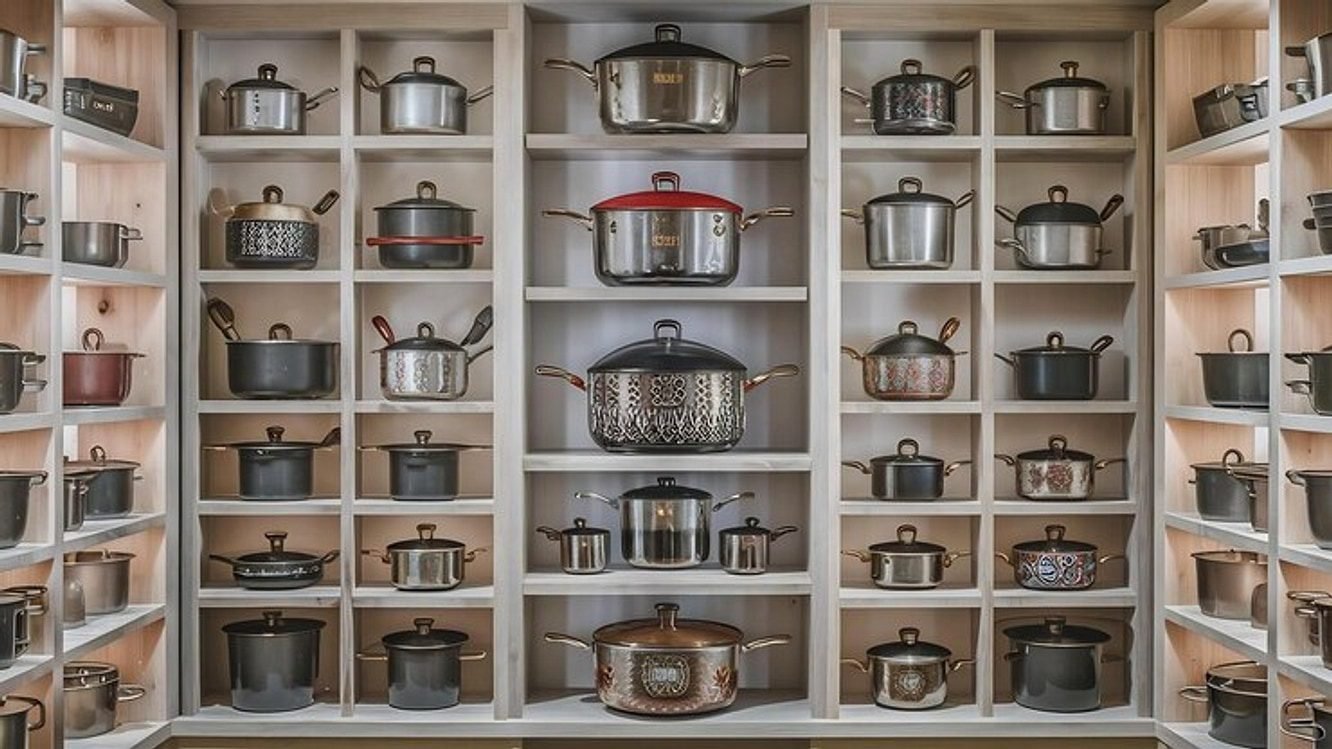
When pots and pans start overtaking every cabinet in your kitchen, it’s time to rethink storage. We show you how organize pots and pans. Simple adjustments can make everyday cookware more accessible, protect lids and pans from scratches, and create space for preparing meals instead of storing them.
How to organize pots and pans? Take Stock of What You Have First
Gather all pots, pans, lids and accessories into one place before changing how they’re organized. Taking stock of your collection helps you spot doubles, mismatched lids and pans that don’t deserve prime storage real estate.
Divide pots and pans into the categories you reach for daily, weekly, and those you rarely use. If you categorize your cookware this simply, you’ll easily see what belongs hanging within arms reach versus stored on higher shelves or in the back of your cabinet.
How to organize pots and pans? Taking everything out may feel like a lot of work. But starting with a realistic pot and pan inventory means your cabinets won’t become overcrowded again. It also makes it easier to choose practical storage solutions.
How to organize pots and pans? Vertical Is Your Friend
Floor space is limited in most small kitchens. Taking advantage of vertical storage on walls and inside cabinets can double your available storage.
- Invest in shelf risers to lift items up within deep cabinets.
- Consider hanging pans if you have empty wall space nearby.
- Stand lids up vertically instead of stacking them.
- Store lighter weight items on higher shelves.
- Add hooks underneath shelves to hang small saucepans or strainers.
Thinking vertical instead of horizontal declutters your storage and creates flexible space. Vertical pans and lids can also be seen at a quick glance, which prevents buying duplicates and saves cabinet frustration later.
Strategize Your Cabinet Placement
Heavy pots and skillets should ideally live nearest the stove. When you organize your cookware, place the items you grab daily close to where you need them and store smaller pans in less convenient spaces. Rarely used items should live on the top shelf or in the back corners of lower cabinets.
To optimize your cabinet layout, consider these key placement strategies for cookware.
| Cookware Type | Ideal Location | Frequency of Use | Storage Tip |
| Heavy Pots | Lower Cabinets | Daily | Store closest to the stove |
| Small Pans | Upper Shelves | Infrequent | Avoid clustering too many in one space |
| Lids | Mounted Panels | Varies | Organize upright or by diameter |
| Rarely Used Items | Back/Top Shelves | Occasional | Keep inaccessible areas for these |
By following these cabinet placement tips, you can ensure an organized and efficient cooking environment.
Every kitchen has a best zone for everyday items that are easy to grab without moving other cups or bending over too much. Stow frequently used pots and pans within this zone to save time and energy. Heavier Dutch ovens and stockpots that are cumbersome to lift should live in lower cabinets.
You don’t need to keep every skillet in the same cabinet either. Organizing by frequency and weight makes cooking more efficient and helps you avoid injury or scratched nonstick finishes.
Select Useful Storage Accessories
Instead of forcing your kitchen to mold around storage products, look for tools that work around you. The best organizers offer solutions to one specific problem without introducing clutter.
- Pan separators keep skillets stacked, organized and easy to remove.
- Lid racks are handy for keeping circular lids from slipping into a stack.
- Pull out drawers allow you to see inside deep lower cabinets.
- Install tension rods to create your own divider bins within cabinets.
- Over the cabinet door hooks offer hidden hanging storage.
You don’t need to buy every kitchen organizer on the market. Select a few that solve your pain points and match your cabinet configuration. A minimalist system that works for your space is better than a bulky organizer that gets in your way.
Stack Smartly
Stacking pans is sometimes necessary. But take precautions to prevent scratches on nonstick surfaces and make it easier to grab one item without having to move the whole stack.
Pad stacked pans with felt, paper towel or a hand towel. If you’re stacking cast iron with other cookware, ensure each piece is thoroughly dry before stacking to prevent rust spots.
Protected stacks allow you to utilize vertical space and properly care for your pieces. They can also be quieter if you need to pull one pan out of the pile to quickly grab what you need.
Get Your Lids Under Control
Few kitchen chores are more frustrating than tracking down the right lid. Try these lid storage tips to keep them accessible and matched with the right pan.
If space allows, store lids upright inside a lid rack or mount a slim divider panel on an inside cabinet door to keep lids visible without taking up much space. Place each lid next to its matching pot or pan before you put it away to prevent having to search for the right lid later.
If you have many lids to store, organize them by diameter before stacking or placing in a rack. Grouping by size allows you to immediately see the lids that will fit your pan without digging through every lid you own.
Make Drawers Work for You
If your kitchen has drawers deep enough to store pans, use them wisely. Drawers have many advantages over cabinet storage because you can see everything at once. You also won’t feel tempted to stack pans too high in order to reach your favorite skillet.
Keep pans from shifting around by installing drawer dividers so they stay put when you open and close the drawer. Another advantage is storing pan handles in the same direction for quick grabbing and easy return after cleaning.
Deep drawers work well for pans you reach for daily. If your kitchen only has one deep drawer near your stove, consider keeping your everyday saute pan and small saucepans here.
Place Everyday Items Within Reach
Roomy kitchen cabinets allow us to shove pans and lids to one corner. But if you practice the tips above and still have extra room, put your everyday pans within easy reach.
Having favorites isn’t a problem if you organize around the items you grab most often. Keep a row of everyday essentials like a skillet, medium saucepan, and your favorite lid pair close to the stove. Store pans and lids that you don’t reach for daily behind these or on higher shelves.
Small kitchens can stay neat and functional if you quickly return pots and pans to their assigned spot after washing. Taking one minute to return each dish to its proper home will save you time in the long run.