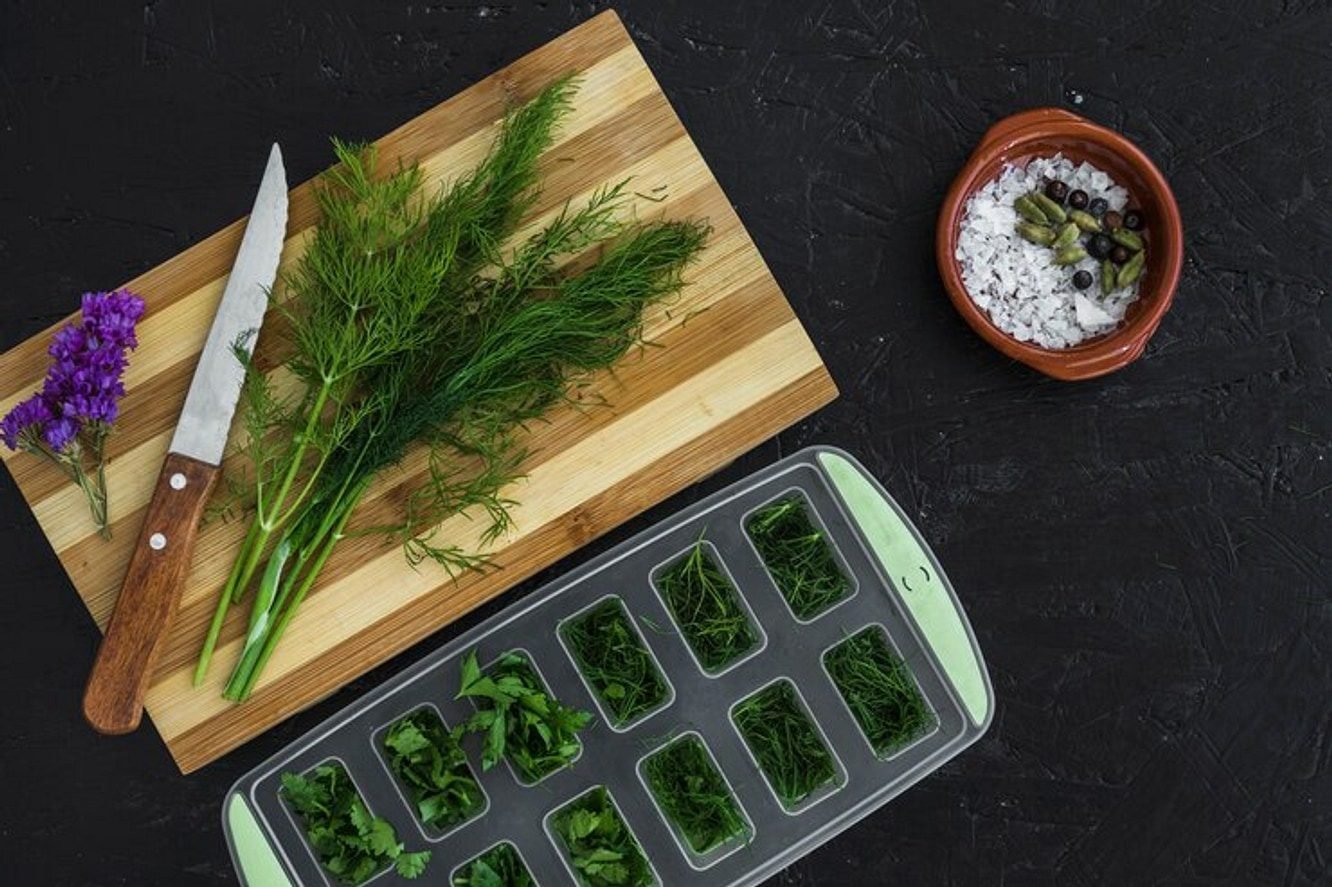
Fresh herbs can make a simple meal more interesting, but a bunch of parsley or basil is easy to forget once it goes into the kitchen. A few days later, the leaves may look tired before you have used more than a handful.
Knowing how to store fresh herbs helps you choose a suitable method for each bunch. Many herbs do well in the refrigerator, while basil generally benefits from a different approach. Freezing is useful when you have more than you can use soon.
The goal is to protect the herbs from drying out without leaving their leaves wet or crowded. Start with their condition, decide when you will use them, and choose a method that fits.
Check and Sort Herbs Before Putting Them Away
Look through each bunch and remove damaged or deteriorating leaves. Discard herbs that are moldy, slimy, or rotten rather than mixing them into a fresh bunch.
Loosen tight ties that crush the stems, and handle the leaves gently. If the herbs came with storage instructions, follow those first.
Next, decide whether you will use them soon or preserve a portion. Freezing herbs while they are still in good condition is more useful than waiting until they have begun to spoil.
You do not need a complicated storage system. A clean jar, suitable food-storage bag, or container may be enough.
Choose a Method That Suits the Herb
| Herb or group | Practical starting method | Important detail |
|---|---|---|
| Parsley and cilantro | Stand trimmed stems in water, loosely cover, and refrigerate. | Keep the leaves above the water. |
| Mint and dill | Use a refrigerated stem-in-water method or a suitable wrapped method. | Check regularly for excess moisture and damaged leaves. |
| Rosemary, thyme, and sage | Wrap in a lightly damp paper towel and refrigerate in a food-storage bag or container. | The towel should not be dripping wet. |
| Chives | Refrigerate using a gentle wrapped method. | Avoid crushing the delicate leaves. |
| Basil | Stand stems in water at room temperature. | Keep away from direct sunlight and excessive heat. |
These are practical starting points, not promises of a fixed storage life. The condition of the herbs when you buy them makes a difference.
Method 1: Store Suitable Herbs With Their Stems in Water
Parsley, cilantro, and several other leafy herbs can be stored upright in a jar, somewhat like a small bunch of flowers.
- Choose a clean jar that supports the stems without crowding the leaves.
- Trim the stem ends.
- Add enough clean water to cover the lower stems.
- Keep leaves out of the water.
- Loosely cover the leafy tops with a suitable bag.
- Refrigerate, except when using the separate basil method below.
- Check the herbs and change the water daily.
The distinction is important: the stems sit in water; the leaves do not need to be submerged.
Iowa State University Extension’s fresh-herb guidance describes this method and recommends daily water changes.
Choose a jar that fits safely on a shelf. A tall, unstable container that spills whenever you reach past it will make the routine harder to maintain.
Method 2: Wrap Herbs for Refrigerated Storage
A wrapped method can be convenient when you have limited shelf space or are storing herbs such as rosemary, thyme, sage, or chives.
Lay the herbs on a lightly damp paper towel, wrap them gently, and place them in a suitable food-storage bag or container. Refrigerate without packing them tightly beneath heavier produce.
The towel should help limit drying, not leave the herbs soaking wet. Check periodically and replace it if it becomes excessively wet or dirty.
Do not assume that every closed bag is harmful. Health Canada’s herb-storage guidance includes a damp-paper-towel method using a zip-top bag or plastic wrap. The condition of the herbs and the amount of moisture matter.
Store Basil Separately
Basil is sensitive to refrigeration and may develop darkened leaves when chilled.
For a whole bunch with stems, place the lower stems in a clean jar of water and keep it at room temperature, away from direct sunlight and excessive heat. Remove leaves that would otherwise sit below the waterline.
Refresh the water regularly and check the bunch each day. Use it while the leaves are still in good condition rather than expecting it to remain fresh for a guaranteed number of weeks.
This method applies to a bunch of fresh basil. Chopped basil mixed into a sauce, dressing, or oil needs the storage method appropriate to that finished mixture.
Should You Wash Herbs Before Storing Them?
You can store fresh herbs unwashed and wash them shortly before use. This avoids putting a wet bunch straight into storage.
If you wash herbs in advance, handle them gently and remove excess surface water before storing them appropriately. Do not leave the leaves dripping inside a bag.
Before preparation or eating, rinse herbs under cool running water. Follow any ready-to-eat or prewashed instructions on packaged products.
Keep your hands, utensils, and work surfaces clean, and protect herbs from raw meat, poultry, or seafood juices.
Health Canada’s fresh-herb safety advice covers preparation and storage in more detail.
How Long Do Fresh Herbs Last?
There is no reliable single answer for every herb and storage method.
A freshly harvested bunch and one that has already spent several days in transport may look similar at first but keep differently. Bruising, moisture, temperature, and handling also affect quality.
Health Canada gives a household refrigerator guideline of up to five days for its wrapped storage method. Treat that as guidance for the stated method, not a guarantee that every bunch will stay usable for that period.
Check the herbs when you use them. If your plans change and they are still in good condition, preserve a portion before deterioration begins.
Freeze Herbs You Will Use in Cooked Dishes
Freezing is useful for herbs you plan to add to soups, sauces, stews, and other cooked meals. Their texture may change, so they may be less suitable as a fresh garnish afterward.
A simple water-cube method is:
- Wash the herbs under cool running water.
- Remove damaged material and prepare the usable leaves.
- Chop as needed.
- Divide between clean ice-cube-tray compartments.
- Cover with water and freeze.
- Transfer the frozen cubes to a suitable freezer container or bag.
- Label with the herb name and freezing date.
Make portions that match how you cook. A small cube is easier to use in a sauce than a large block containing an entire bunch.
Follow herb-specific preservation guidance for storage times and preparation details.
Take Extra Care With Herbs in Oil
You can also freeze suitable herb-and-oil mixtures in small portions, but do not treat a jar of fresh herbs covered in oil as a room-temperature pantry product.
Low-acid ingredients in oil can create conditions that allow dangerous bacterial growth.
If making oil-based herb cubes, freeze them promptly. Do not leave the tray on the counter for an extended period while completing other kitchen tasks.
Commercial products and properly validated acidification methods are different situations; do not imitate them by adding an arbitrary splash of vinegar or lemon juice.
Know When to Discard a Bunch
Some loss of crispness is a quality change, but mold, slime, and obvious decay are reasons to discard affected herbs.
Do not blend deteriorating herbs into pesto or freeze them as a rescue method. Preservation starts with ingredients that are still suitable to eat.
Also remember that herbs can carry harmful microorganisms without obvious visible signs. Appropriate washing, handling, and storage still matter even when the leaves look fresh.
If a bunch spoils, clean its jar or container before using it again.
Build a Routine Around What You Cook
Instead of buying several large bunches without a plan, choose herbs that fit meals you already expect to make.
Parsley might be used in a grain salad and then scattered over roasted vegetables. Rosemary could season a tray bake, with an extra portion preserved for another meal.
Keep stored herbs visible enough that you remember them, without placing them where they will be crushed or exposed to unsuitable conditions.
I prefer simple kitchen routines, so checking the herbs when I plan the next meal feels more manageable than maintaining a complicated system. A little attention early on can prevent a whole bunch from being forgotten.
Learning how to store fresh herbs is mainly about choosing the right method and adjusting it to the condition of the ingredients. Start with one or two herbs you use regularly, then build from there.
Sources and Food-Safety Note
This guide provides general household storage advice. Follow package instructions and herb-specific preservation guidance. Storage methods cannot make spoiled herbs safe to eat.