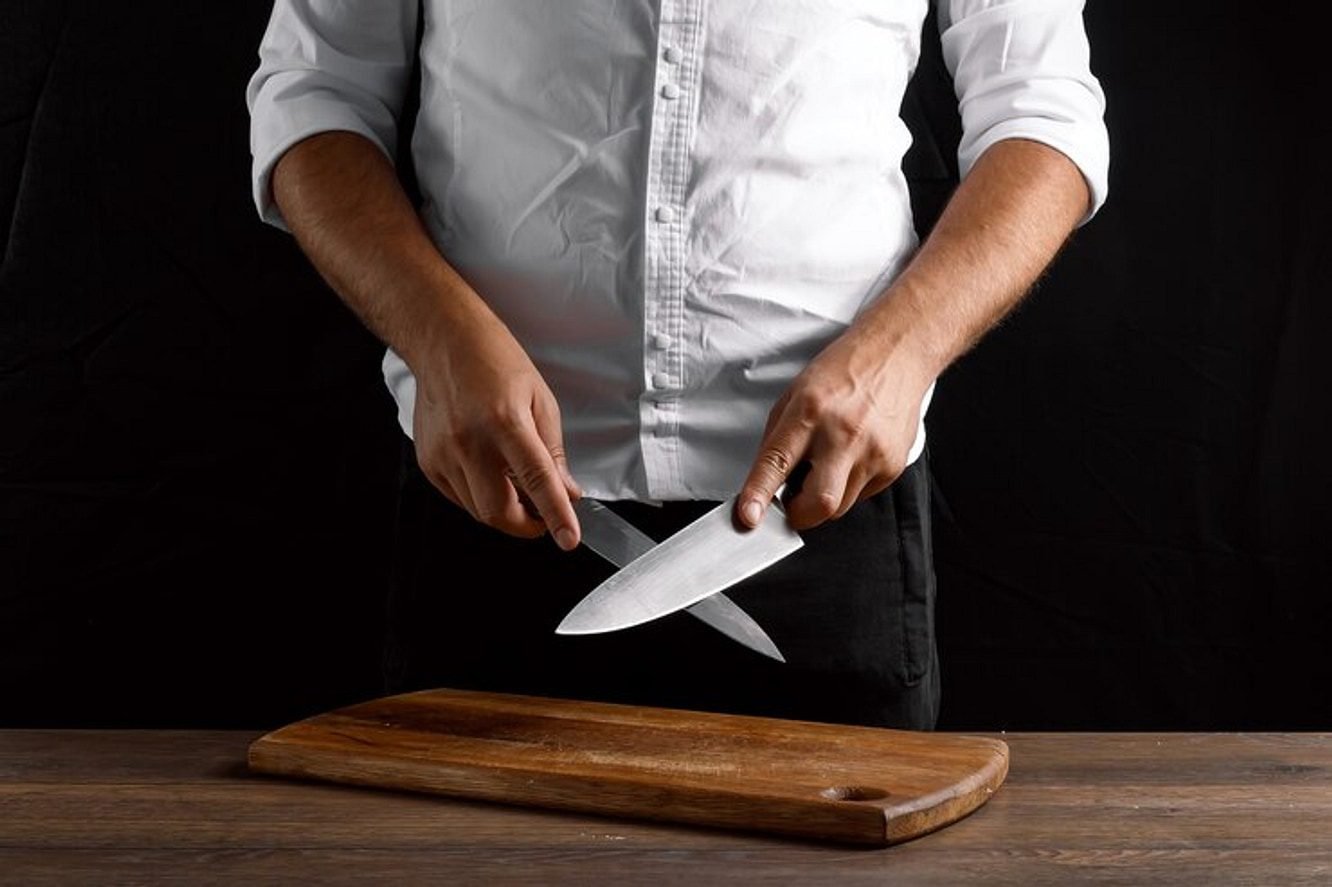
How to Sharpen a Knife is a popular question. Because sharping your knife can seem tedious when you’re used to dull knives. When a blade is razor sharp, food prep becomes quicker, easier, and more enjoyable. You have more control over the knife, reducing the chance of injury. Learning how to sharpen correctly will help you keep your knives safe, maintained, and inspiring confidence every time you slice.
How to Sharpen a Kitchen Knife? Why Should You Keep Your Knives Sharp?
Keeping knives sharp allows for more than just quick chopping. Sharp blades are more precise, cause less hand strain, and let you saw through food like vegetables, meats, and herbs with ease. Sharp knives are also safer than their dull counterparts.
Most cooks allow their kitchen knives to become dull before properly sharpening them. Continuing to use a dull knife requires you to put more pressure into cutting. Applying more pressure can cause your hands to tire quicker, give you less control, and create uneven slices.
Let’s Gather Our Materials.
To begin sharpening your blade, you will want to gather a few materials first. Having everything handy ensures you won’t lose your place when learning how to sharpen. A sharpening stone is ideal for beginners who want to learn how to sharpen correctly. A honing rod can help maintain your knife between sharpening sessions.
- Honing Steel/Rod
- Sharpening Stone
- Towel or Non-Slip Mat
- Water
- Soft Cloth
- Light Oil (optional)
Having these things prepared allows you to sharpen without distractions. You’ll know what you’re doing at each step and won’t have to stop to gather more materials.
How Exactly Do You Know What Angle to Use?
Depending on the knife you are sharpening changes the ideal angle to hold your blade. Most kitchen knives can go between 15-20 degrees on each side. Some Western style knives can have a higher angle such as 25 degrees due to their strength.
An easy way to remember what angle you should use is by lifting the spine of the knife till the bevel just barely touches your sharpening stone. Keep this angle consistent as you sharpen both sides of the blade.
Now That You Have Your Angle, How Do You Use a Whetstone?
Using a whetstone can seem intimidating when you don’t know what you’re doing. When sharpening, you’ll want to start with your coarsest stone if your blade is very dull. You can move to higher grit levels to polish it at the end. Don’t forget to keep your whetstone wet either.
- Lay your sharpening stone on a damp towel or your sharpener holder.
- Grab your knife at your desired angle.
- Pull your knife down and towards you sweeping from heel to tip.
- Apply even pressure as you pull down.
- Repeat on the other side of the blade.
- Rinse your blade off if you see too much build-up on the stone.
Take your time with sharpening until you get a feel for what you are doing. You should notice a difference after several sweeps on each side. If it feels like your blade is still dull, grab your whetstone and repeat.
What’s the Difference Between Honing Your Blade and Sharpening?
Many people think honing your knife is the same thing as sharpening. When you sharpen your knife, you are removing metal from the blade to create a new edge. Honing straightens out the edge of your blade that has slowly become distorted through normal use.
Using a honing rod can help your knife stay sharp longer. Give your blade a few gentle pulls on each side when you know you will be using your knife soon. If honing your blade doesn’t seem to be helping, then it’s time to sharpen.
What Are Some Mistakes Beginners Make?
It’s easy to feel discouraged when you started sharpening and realize you are doing something wrong. Don’t worry, everyone who learns how to sharpen makes mistakes at first.
- Changing your angle in the middle of sweeping down.
- Applying too much pressure on the stone.
- Not using your coarse stone enough if your knife is dull.
- Using a dry sharpening stone.
- Sharpening one side more than the other.
- Checking your blade is sharp by running your fingers down the blade.
Take your time and don’t forget to breathe. Consistency is key when learning how to sharpen like a pro.
How to Sharpen a Kitchen Knife: How Can I Test to See If My Knife Is Sharp?
Testing your knife should be done carefully to ensure you do not cut yourself or damage your blade. To test if your knife is sharp enough try cutting through a sheet of paper. Hold the paper in one hand with the tips facing upwards. Grab your knife with your cutting hand and place it under the edge of the paper. Pull your knife down slicing through the paper.
Another easy way to test if your knife is sharp is by slicing into an onion or tomato. If your knife cuts smoothly into the vegetable without crushing it, your knife is most likely sharp.
How Do You Maintain Your Knife’s New Edge?
After going through the trouble of sharpening your knife, you’ll want to keep it that way. Wash your knife by hand after each use and make sure the blade dries before you store it. Storing your knife in a blade block or on a magnetic strip will prevent your knife from knocking against other utensils.
Using your honing rod once a week will help you maintain your knife. Also, try to cut on wood or plastic cutting boards to help your knife last longer. Your knives will stay sharper for longer which will reduce how often you need to sharpen.
How to Sharpen a Kitchen Knife: Don’t Get Discouraged
Once you start sharpening your knives regularly you will start to get the hang of what you’re doing. Trust in the process and don’t forget that you are using your Dominant hand to sharpen.
If you have an old knife that you don’t care about ruining, now is a good time to start practicing with that. Remember that like any other skill, learning how to sharpen takes time and patience.