Everyday cooking is easier with non-stick pans. They’re also easier to damage than you might expect. Fortunately, it’s simple to clean these pans properly once you know what the coating needs and hates. Learn the habits that ensure your cookware lasts for years rather than months.
Why Non-stick Surfaces Require Delicate Treatment
Non-stick pans release food easily because they have very little friction. Scrubbing the pan clean is counterproductive and actually weakens the coating. So do metal utensils, paper scrubbers, and sudden temperature changes.
Think of these pans like a pampered baby instead of a workhorse. That attitude goes a long way toward preventing scratches and wear. It also helps your eggs, pancakes, and fish filets release easily after cooking.
Right After Cooking
Cooking isn’t really done until you clean the pan. Allow it to cool for a few minutes before washing. You’ll avoid burns while protecting the coating from dramatic temperature changes. Residue wipes away more easily when the pan is still warm.
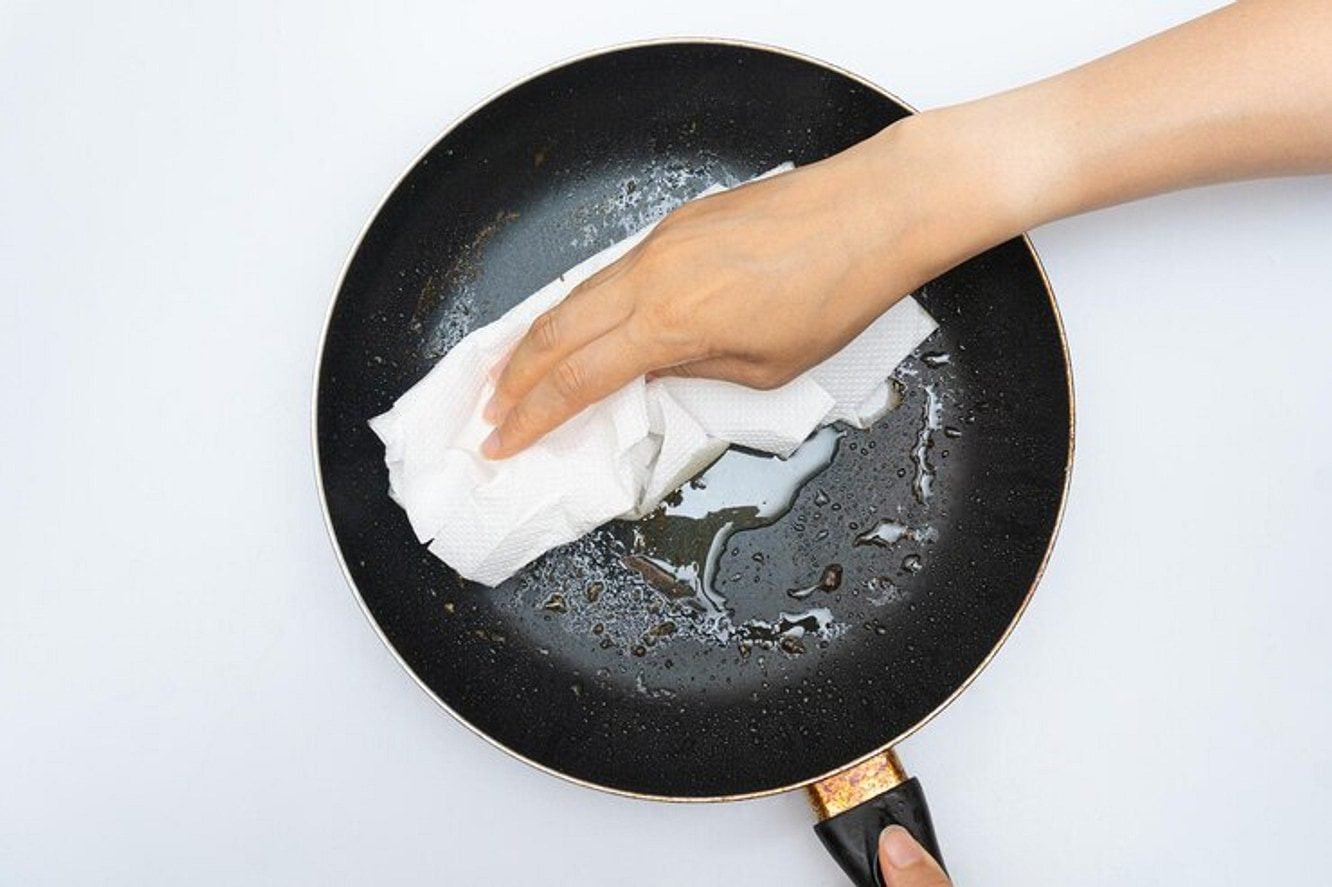
Wait long enough to wash that you can grab the pan comfortably. Then use a paper towel to wipe away excess oil and crumbs before washing. Less residue means fewer cleaning materials that can cling to the coating.
Gentle Washing Technique
Warm water, mild dish soap, and a soft sponge will clean most pans effectively. That combination cuts grease without stripping the surface or leaving abrasive deposits that dull the finish.
Don’t scrub hard. If food doesn’t come away with light wiping, soak the pan for a few minutes. Letting residue soak instead of forcing it comes off preserves the non-stick coating.
- Allow the pan to fill with warm water soon after washing.
- Squirt a little liquid dish soap into the water.
- Soak on stuck-on debris instead of trying to scrape it away.
- Wash the pan using a soft sponge or nonabrasive cloth.
- Rinse the pan until all the soap residue is gone.
- Dry the pan thoroughly with a towel.
The sooner you wash your pan after cooking, the easier it is to clean. Establishing these habits means your pan will always feel smoother. Food releases easily, cleaning is faster, and there’s less risk of damaging the coating.
Products to Avoid With Non-stick Surfaces
You should avoid using some cleaning products on your pans. Steel wool, powdered cleansers, abrasive scrubbers, and scouring pads create tiny scratches that build up. They may not be noticeable immediately, but they’ll damage the coating.
Avoid letting pans stack directly on top of each other if they can help it. Weak spots are harder to see, but they wear down the surface regardless. Pay attention to protecting the non-stick surface at all times, not just during washing.
- Do not scrub your pan with steel wool or a scouring pad.
- Use wooden or silicone spatulas instead of metal.
- Never use an oven cleaner on the exterior of non-stick pans.
- Never plunge a hot pan into cold water.
- Avoid leaving acidic foods in the pan for too long.
- Use a protective lining if pans must stack in storage.
Damage may take time, but it still impacts how long your pans lasts. You aren’t likely to ruin a pan with gentle cleaning. Avoiding harsh chemicals and abrasion will maintain non-stick performance much longer.
Removing Tough Leftovers
Sugar glazes, burned oils, and certain batter can adhere more stubbornly than the rest. Start by letting them soak whether food is loose or stuck. Force is the enemy of your pan’s coating.
Make a paste of baking soda and water if needed. Apply it gently with a sponge or cloth. Again, you want just enough pressure to remove residue. Rinse thoroughly to ensure no gritty baking soda remains on the pan.
Remember, degreasers and scrubbing are not your friends. If residue sticks no matter how long you soak and gently wipe, repeat the baking soda treatment as needed. Never use more force than necessary to protect your pan.
Why You Should Avoid Dishwashers
The label may say it’s okay to run your pan through the dishwasher. That doesn’t mean it’s a good idea. Heat, harsh detergents, and contact with other dishes damages coatings gradually. They might look fine but fail sooner than you think.
It’s better to stick with hand washing for the lifespan of your pans. If you must use the dishwasher, don’t let pans knock against metal utensils or pots. Placing them carefully minimizes wear on the coating.
Damage from cleaning eventually causes problems in performance. Sticking food, hot spots, and other issues typically appear after years of abuse. You don’t have to wash by hand every time, but think of placing your pan in the dishwasher as treating it gently.
Post Washing Care Tips
After washing, drying your pan is more important than most people realize. Remaining water spots contribute to grimy buildup around the handles and pan lip. Thoroughly towel drying your pan until it’s completely dry prevents buildup.
Storage is another consideration. Stacking non-stick pans with their coatings touching is asking for scratches. Pad your pans with a fabric liner or paper towel to protect surfaces. Non-abrasive materials preserve washing efforts.
Your pan will be easier to clean next time if you towel dry and store carefully. Smooth pans don’t let residue cling like rough ones do. When you integrate all these cleaning tips into your routine, they become habit instead of chores.
Seasoning Non-stick Pans?
Seasoning isn’t always necessary for non-stick pans. That doesn’t mean light coats of oil hurt either. Try seasoning a pan that seems sticky to restoreFactory performance.
Apply a small amount of oil to the pan with a paper towel. Don’t use too much or it will soak into the towel and become sticky. The goal is to restore the slick surface without leaving residue.
You shouldn’t have to repeat the process very often. Regular cleaning and careful storage are more important for non-stick pans than seasoning. Think of this as emergency maintenance rather than routine.
Creating a Sustainable Cleaning Routine
Clean all non-stick pans like you would the most fragile cookware in your kitchen. Let them cool, wash with gentle soap, don’t scrub hard, towel dry, and store carefully. Mistakes are minor when you have a routine to fall back on.
Food releases properly and cooks evenly when you maintain your pans. You spend less time scrubbing in the kitchen when food doesn’t stick. Don’t let a lack of information ruin these useful pans. Follow the care tips above to extend the life of your favorite pans.