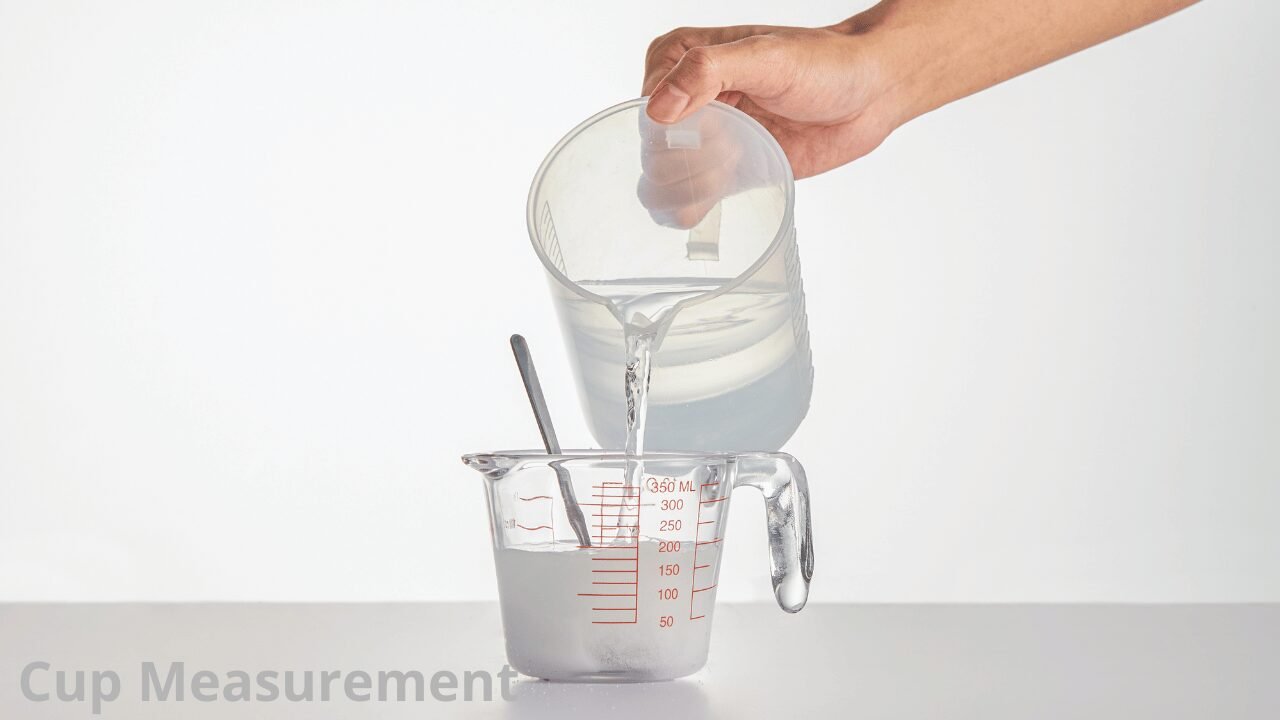
In American recipes, a cup is a unit of volume, used to measure both liquid and dry ingredients. It describes how much space an ingredient occupies—not how much it weighs.
A U.S. customary cup holds approximately 236.6 milliliters, often rounded to 237 ml. Many practical cooking conversion charts use 240 ml instead. If a recipe provides its own milliliter or gram measurements, follow those values rather than replacing them with a different conversion. NIST
A regular drinking mug is not a reliable substitute. Mugs and teacups vary considerably in size, even when they look similar.
Why Do Some Sources Say 237 ml and Others Say 240 ml?
The numbers come from different measurement conventions.
| Measurement convention | Volume of one cup |
|---|---|
| U.S. customary cup | Approximately 236.6 ml |
| Common rounded cooking conversion | 240 ml |
| U.S. nutrition-labeling cup | 240 ml |
| Metric cup, commonly used in Australian recipes | 250 ml |
The FDA specifically defines a cup as 240 ml for nutrition labeling. That does not change the underlying U.S. customary unit. Meanwhile, a metric measuring cup holds 250 ml. FDA
For everyday cooking, the small difference between 237 and 240 ml is often less important than measuring consistently. However, a 250 ml cup is larger, and differences can accumulate when a recipe uses several cups.
Check the recipe’s origin and measurement notes, especially when baking.
Common U.S. Cup Conversions
The following milliliter amounts are rounded kitchen equivalents, using 240 ml per cup:
| Recipe amount | Rounded volume |
|---|---|
| ¼ cup | 60 ml |
| ⅓ cup | 80 ml |
| ½ cup | 120 ml |
| ⅔ cup | 160 ml |
| ¾ cup | 180 ml |
| 1 cup | 240 ml |
| 2 cups | 480 ml |
Within the U.S. customary system, one cup also equals 16 tablespoons, 48 teaspoons, or 8 U.S. fluid ounces. These relationships refer to standardized measuring utensils, not ordinary eating spoons. NIST
How Many Grams Are in a Cup?
There is no single grams-per-cup conversion for every ingredient.
A cup of flour and a cup of sugar occupy the same volume, but they do not weigh the same. Ingredient density, particle size, and packing all affect the result.
For example, King Arthur Baking’s ingredient chart lists:
| Ingredient | Amount | Listed weight |
|---|---|---|
| All-purpose flour | 1 cup | 120 g |
| Granulated sugar | 1 cup | 198 g |
| Butter | 1 cup | 227 g |
These are ingredient-specific reference values, not universal definitions of a cup. Other recipe developers may use different weights, particularly for flour.
If your chosen recipe states “1 cup flour, 125 g,” use its 125 g measurement. Do not automatically replace it with 120 g from another publisher’s chart. King Arthur Baking
Fluid Ounces and Weight Ounces Are Different
The abbreviation fl oz means fluid ounces, a measure of volume. The abbreviation oz usually means ounces by weight.
One U.S. cup equals 8 U.S. fluid ounces. It does not follow that every cup of food weighs 8 ounces.
For instance, King Arthur’s 120 g cup of all-purpose flour weighs approximately 4¼ ounces. The flour still occupies one cup of volume.
There is no general rule that a cup of dry ingredients weighs “6.8 dry ounces.” To convert a dry ingredient from cups to weight, you need information for that particular ingredient and preparation method.
How to Measure Flour with a Cup
A kitchen scale is the clearest option when the recipe supplies grams. If you are using cups, follow the recipe developer’s stated method.
For a spoon-and-level method:
- Loosen the flour in its container.
- Spoon it gently into a dry measuring cup.
- Fill slightly above the rim without pressing it down.
- Sweep a straight edge across the top to remove the excess.
Avoid tapping the cup or compacting the flour unless the recipe specifically instructs you to do so.
Scooping directly from a flour bag can pack more flour into the same space. That may change the balance of a dough or batter. King Arthur recommends weighing flour for consistency and provides a gentle filling-and-leveling method when a scale is unavailable. King Arthur Baking
How to Measure Liquids
Use a graduated liquid measuring jug:
- Place it on a level surface.
- Pour in the liquid.
- Check the appropriate marking at eye level.
- Adjust the amount before adding it to the recipe.
For clear liquids such as water, read the bottom of the curved liquid surface, called the meniscus.
Holding the jug at an angle or looking down from above can make the level harder to judge accurately.
Are Dry and Liquid Measuring Cups the Same Size?
When made to the same measurement standard, both measure the same cup volume. Their designs make different tasks easier.
A dry measuring cup is designed to be filled to the rim and leveled. A liquid measuring jug has markings below its rim, leaving space for pouring without spilling.
The distinction is practical, not a separate “dry cup” volume. Use the appropriate tool when possible, particularly for flour and other ingredients that need leveling.
What If You Do Not Have a Measuring Cup?
If the recipe provides grams, use a kitchen scale and weigh each ingredient.
For liquids, a jug marked in milliliters is useful. For smaller quantities, standardized measuring spoons can work: in the U.S. customary system, ¼ cup equals 4 tablespoons.
Avoid estimating a cup of flour with an unfamiliar mug when baking. A small error repeated across several ingredients can noticeably change the result.
Also check your scale’s mode. A milliliter setting may assume the density of water or another specified liquid; it does not convert every ingredient’s weight into volume correctly.
A Simple Habit for More Consistent Results
Before measuring, check three things: which cup convention the recipe uses, whether it provides weights, and how it asks you to prepare the ingredient.
Then stay with that method throughout. You do not need to memorize every conversion—just remember that cups measure volume, grams measure mass, and the recipe’s own tested quantities are your best starting point.