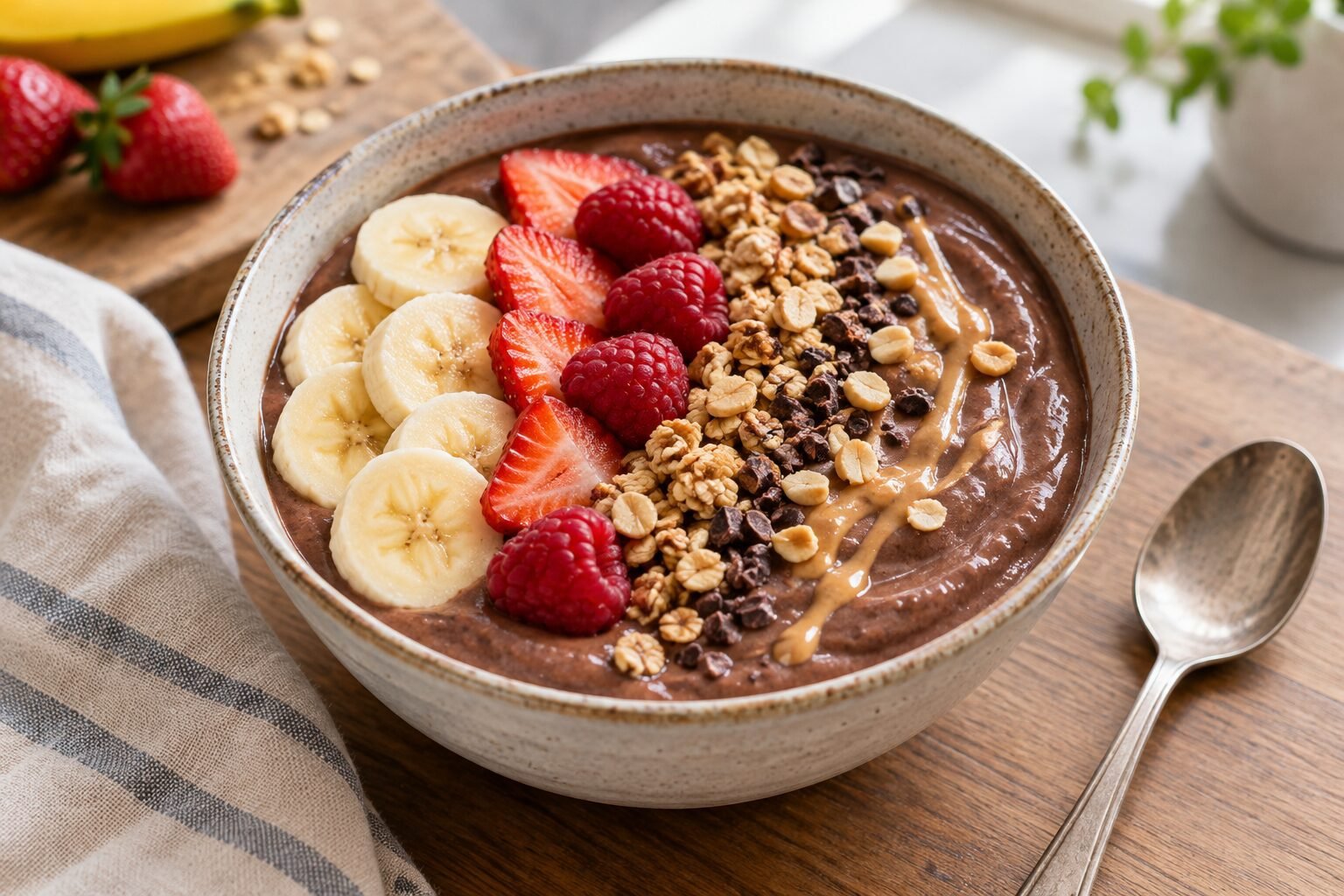
Protein shakes are convenient on their own, but they can also serve as useful ingredients when they are added to recipes that complement their texture and flavor. These three Premier Protein recipes turn familiar vanilla and chocolate products into overnight oats, a thick smoothie bowl, and tender banana-oat pancakes.
Rather than creating a long list of loosely described ideas, this collection focuses on three recipes with clear measurements and practical instructions. Each one uses the protein product differently: the overnight oats absorb a ready-to-drink shake, the smoothie bowl uses one as its blending liquid, and the pancakes incorporate protein powder into the dry ingredients.
That distinction matters. A bottled protein shake and a scoop of protein powder are not interchangeable. Ready-to-drink shakes already contain liquid, sweeteners, flavoring, and stabilizers. Protein powder is concentrated and absorbs moisture, which means it can make baked or cooked foods dry when too much is added.
Used thoughtfully, both products can fit naturally into simple breakfast and snack recipes.
The Three Recipes in This Collection
The Vanilla Berry Premier Protein Overnight Oats are the easiest option to prepare ahead. Rolled oats and chia seeds absorb the vanilla shake overnight, while Greek yogurt creates a creamier texture. Fresh berries keep the finished oats from tasting overly sweet.
The Chocolate Peanut Butter Banana Smoothie Bowl is a thicker alternative to a regular protein shake. Frozen banana provides body, cocoa deepens the chocolate flavor, and peanut butter adds richness. Only a limited amount of the bottled shake is added initially so the mixture remains thick enough to eat with a spoon.
The Banana Oat Premier Protein Pancakes use vanilla protein powder rather than a prepared shake. Banana and egg provide moisture, while oat flour keeps the pancakes tender. They require gentler heat than traditional pancakes because protein-enriched batters can brown quickly.
Together, the recipes offer three different textures and preparation methods without forcing protein products into savory dishes where their sweetness or flavor would be distracting.
Protein Shake or Protein Powder?
For the overnight oats and smoothie bowl, use a ready-to-drink Premier Protein shake. These bottled products already have a milk-like consistency and are designed to be consumed without mixing.
For the pancakes, use Premier Protein Vanilla Protein Powder. Protein powder behaves more like a dry ingredient and must be balanced with sufficient moisture.
Do not replace the powder in the pancake recipe with the same volume of bottled shake. Similarly, do not replace the shake in the overnight oats with dry powder without also adding milk. Making either substitution would change the consistency substantially.
Premier Protein offers numerous flavors, and formulations can vary between products and locations. Check the label before preparing a recipe, particularly if you are monitoring allergens, sugar, calories, or protein intake.
Avoiding an Overly Sweet Result
Flavored protein products are usually already sweetened, so these recipes do not begin with much additional sweetener. Taste the mixture before adding honey, maple syrup, or another sweet ingredient.
Bananas also become sweeter as they ripen. A smoothie bowl prepared with a very ripe banana and a chocolate shake will probably not require any extra sweetener.
Acidic or slightly tart ingredients provide useful balance. Berries, plain Greek yogurt, a small pinch of salt, and natural unsweetened cocoa can make the finished recipe taste more rounded without adding more sugar.
Toppings matter as well. Sweetened granola, chocolate chips, flavored yogurt, and syrup can quickly transform a moderately sweet breakfast into something closer to dessert. None of those ingredients is forbidden, but it helps to add them deliberately rather than automatically.
Tips for Cooking With Protein Powder
Protein powder does not behave exactly like flour. It absorbs liquid and can make pancakes firm or rubbery if the batter contains too much of it.
For that reason, the pancake recipe combines protein powder with oat flour instead of using protein powder as the only dry ingredient. Letting the batter rest for approximately five minutes allows the oats and powder to hydrate. After resting, the consistency can be adjusted with a small splash of milk.
Cook protein pancakes over medium-low heat. High heat may brown the exterior before the center has cooked. Smaller pancakes are easier to flip and cook more evenly than large ones.
Choosing Useful Toppings
Toppings should improve either the flavor or texture rather than simply decorate the bowl or plate.
For overnight oats, berries and chopped nuts provide freshness and crunch. For the smoothie bowl, a small amount of granola, banana slices, or cacao nibs creates contrast with the creamy base. The pancakes work well with Greek yogurt, fresh fruit, or a light drizzle of maple syrup.
A recipe image may show several toppings for visual interest, but you do not need to use all of them at once.
Nutrition and Serving Sizes
Adding a protein shake or protein powder does not automatically determine the nutritional value of the entire dish. Oats, yogurt, fruit, peanut butter, toppings, and serving size all contribute to the final totals.
Any nutritional figures attached to these recipes should therefore be treated as estimates. Product formulations can also change, so use the current package label when exact protein, calorie, sugar, or allergen information is important to you.
These Premier Protein recipes are intended as practical ways to use familiar products in foods that still taste and behave like overnight oats, a smoothie bowl, and pancakes—not simply as vehicles for adding the largest possible quantity of protein.
1. Vanilla Berry Premier Protein Overnight Oats
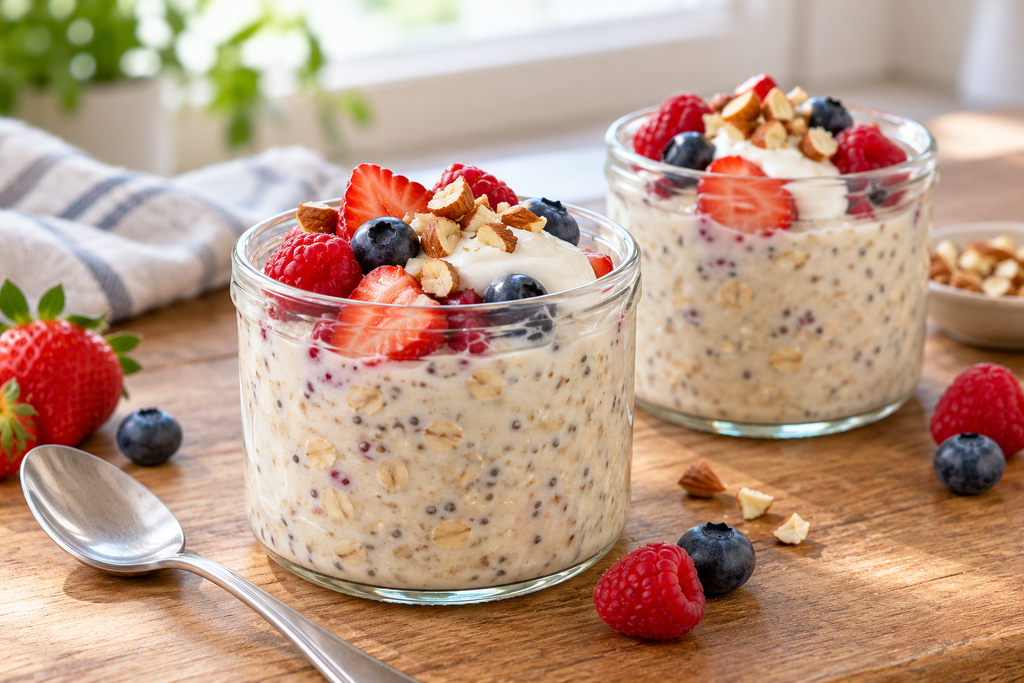
These vanilla berry overnight oats are the simplest make-ahead recipe in the collection. The rolled oats and chia seeds absorb the vanilla protein shake while the Greek yogurt adds creaminess and a slight tang that balances the sweetness.
Fresh berries can be added before chilling, but I prefer layering most of them into the jar shortly before serving. This preserves their texture and prevents delicate berries from breaking down overnight.
Prep Time: 10 minutes
Chilling Time: At least 6 hours
Total Time: 6 hours 10 minutes
Servings: 2
Course: Breakfast
Method: No-cook
Ingredients
- 1 cup (90 g) old-fashioned rolled oats
- 1 cup (240 ml) Premier Protein Vanilla Shake
- ½ cup (120 g) plain Greek yogurt
- 1 tablespoon chia seeds
- ½ teaspoon vanilla extract, optional
- ⅛ teaspoon ground cinnamon
- 1 small pinch of salt
- ¾ cup (110 g) mixed fresh berries
- 1–2 tablespoons milk, if needed after chilling
- 1 teaspoon maple syrup or honey, optional
Optional Toppings
- Chopped almonds or walnuts
- Unsweetened coconut flakes
- Additional fresh berries
- A spoonful of plain Greek yogurt
Instructions
- Place the rolled oats, chia seeds, cinnamon, and salt in a medium bowl or a large lidded jar.
- Add the Premier Protein Vanilla Shake, Greek yogurt, and vanilla extract.
- Stir thoroughly, scraping the bottom and sides to make sure no dry oats or clumps of chia seeds remain.
- Taste the mixture. Add maple syrup or honey only if you prefer a sweeter breakfast.
- Gently fold in approximately one-third of the berries. Reserve the remaining fruit for serving.
- Cover the bowl or jar and refrigerate for at least 6 hours, preferably overnight.
- Stir the oats before serving. If the mixture has become thicker than you prefer, add milk one tablespoon at a time until it reaches a creamy consistency.
- Divide the oats between two bowls or jars. Add the reserved berries and any other toppings immediately before serving.
Getting the Consistency Right
Overnight oats continue to thicken as they sit. Chia seeds absorb considerable liquid, while Greek yogurt makes the mixture denser than oats prepared with milk alone.
Do not add extra oats immediately if the freshly mixed ingredients seem loose. Wait until they have chilled before making adjustments.
If the finished oats are too thick, milk provides a more neutral correction than additional protein shake, which could make the flavor sweeter. If the mixture remains too thin, stir in another teaspoon of chia seeds and refrigerate it for 20–30 minutes.
Berry Options
Strawberries, blueberries, raspberries, and blackberries all work well. Cut large strawberries into small pieces so they distribute evenly.
Frozen berries may also be used, but they release more juice as they thaw. This can turn the oats pink or purple and create a slightly softer texture. Thaw and drain them first if you want the layers to remain visually distinct.
Useful Variations
For a chocolate-berry version, replace the vanilla shake with a chocolate Premier Protein Shake and add one teaspoon of unsweetened cocoa powder.
Sliced banana works well but should be added shortly before serving because it softens and darkens during storage.
For additional crunch, add nuts or granola only at serving time. Mixing them into the oats the night before will make them soft.
Storage
Store the overnight oats in covered containers in the refrigerator for up to three days. Keep the fresh toppings separate whenever possible.
The oats are intended to be eaten cold, but they may be warmed gently in the microwave. Transfer them to a microwave-safe bowl and heat in short intervals, stirring between each one. Do not microwave them in a sealed jar.
2. Chocolate Peanut Butter Banana Smoothie Bowl
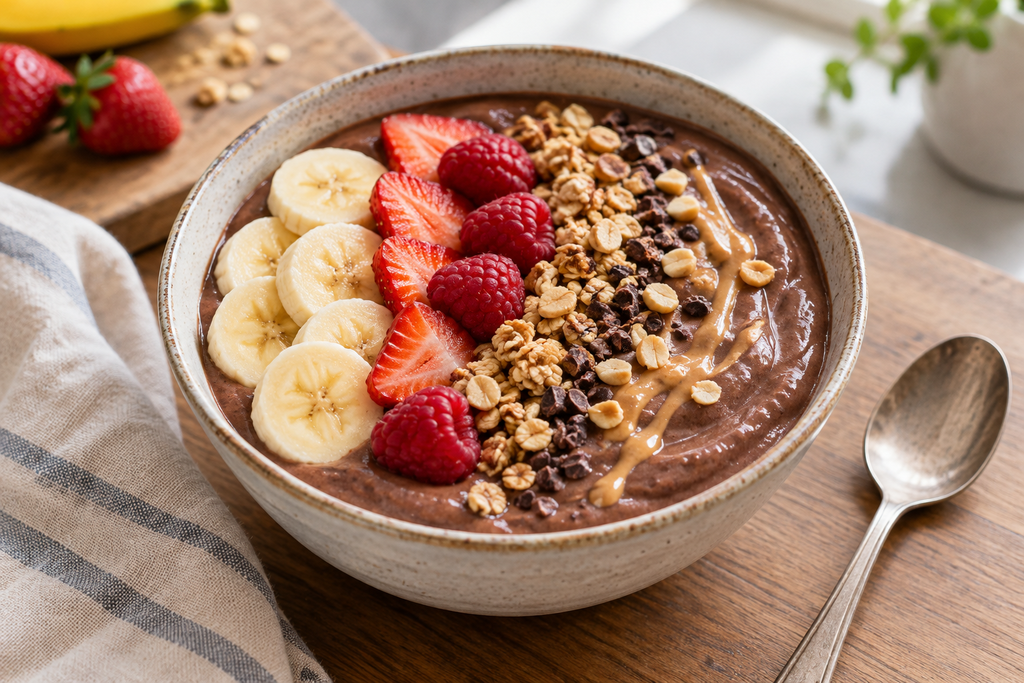
This chocolate peanut butter banana smoothie bowl has the flavor of a chocolate shake but a much thicker, spoonable consistency. Frozen banana provides most of the structure, while peanut butter and cocoa deepen the flavor of the chocolate protein shake.
The most important technique is adding the liquid gradually. Pouring in an entire bottle at once would produce a regular smoothie rather than a bowl. Begin with a small amount and add only enough to keep the blender moving.
Prep Time: 10 minutes
Total Time: 10 minutes
Servings: 1 large or 2 small bowls
Course: Breakfast, Snack
Method: Blending
Ingredients
- 2 medium ripe bananas, sliced and frozen
- ½ cup (120 ml) Premier Protein Chocolate Shake, plus more if needed
- 1 tablespoon smooth peanut butter
- 1 tablespoon unsweetened cocoa powder
- ½ teaspoon vanilla extract, optional
- 1 small pinch of salt
- 3–4 ice cubes, optional
Optional Toppings
- Sliced banana
- Fresh strawberries or raspberries
- 1–2 tablespoons granola
- Chopped peanuts
- Cacao nibs
- A light drizzle of peanut butter
Instructions
- Place the frozen banana slices, ⅓ cup of the chocolate protein shake, peanut butter, cocoa powder, vanilla extract, and salt in a high-powered blender or food processor.
- Blend on low speed initially. Stop and scrape down the sides as necessary.
- Add the remaining protein shake one tablespoon at a time, blending briefly after each addition. Use only enough liquid to create a smooth but thick mixture.
- Add the ice cubes if the mixture needs additional thickness or a colder, frostier texture. Do not add ice if your blender has difficulty processing thick mixtures.
- Continue blending until no pieces of banana remain. The finished smoothie should be thick enough to hold soft peaks and support light toppings without immediately sinking.
- Spoon the mixture into one large bowl or divide it between two smaller bowls.
- Add the selected toppings and serve immediately.
How to Achieve a Spoonable Texture
Freeze the banana slices in a single layer so they remain separate. Large frozen chunks are harder to process and often require more liquid.
Begin with less protein shake than you think you need. It is always possible to add another spoonful, but removing excess liquid is difficult.
Pause the blender and scrape down the sides rather than continuously increasing the speed. A tamper is useful if your blender includes one, but never push utensils into the blades while the appliance is running.
If the smoothie becomes too thin, add more frozen banana or a few ice cubes. Additional peanut butter will make it richer but will not provide the same frozen structure.
Choosing the Bananas
Use ripe bananas with some brown spots for the most balanced flavor. Green or barely ripe bananas may create a starchy, less sweet smoothie bowl.
Very ripe bananas contribute more sweetness. In most cases, the banana and flavored protein shake provide enough sweetness without honey or syrup.
Peel and slice the bananas before freezing. Store them in a freezer-safe container for up to two months.
Peanut Butter Options
Traditional smooth peanut butter creates the creamiest texture. Natural peanut butter also works, but stir it thoroughly before measuring because the oil may separate in the jar.
Powdered peanut butter can be used for a lighter peanut flavor. Begin with 1½ tablespoons and add a little additional protein shake if the mixture becomes too thick.
For a peanut-free option, use almond, cashew, or sunflower seed butter. Always check the relevant product labels when preparing the bowl for someone with an allergy.
Topping Advice
Limit the toppings to two or three complementary ingredients. A small amount of granola adds crunch, berries provide acidity, and chopped peanuts reinforce the peanut flavor.
Toppings can substantially change the nutrition and sweetness of the finished bowl. Measure calorie-dense additions such as nut butter, granola, cacao nibs, and nuts if those values are important to you.
Storage
This smoothie bowl should be eaten immediately. As the frozen banana melts, the texture becomes thinner and may begin to separate.
The bananas can be sliced and frozen well in advance, and the dry cocoa and salt can be measured ahead. Once blended, however, the bowl is not suitable for refrigerated storage.
3. Banana Oat Premier Protein Pancakes
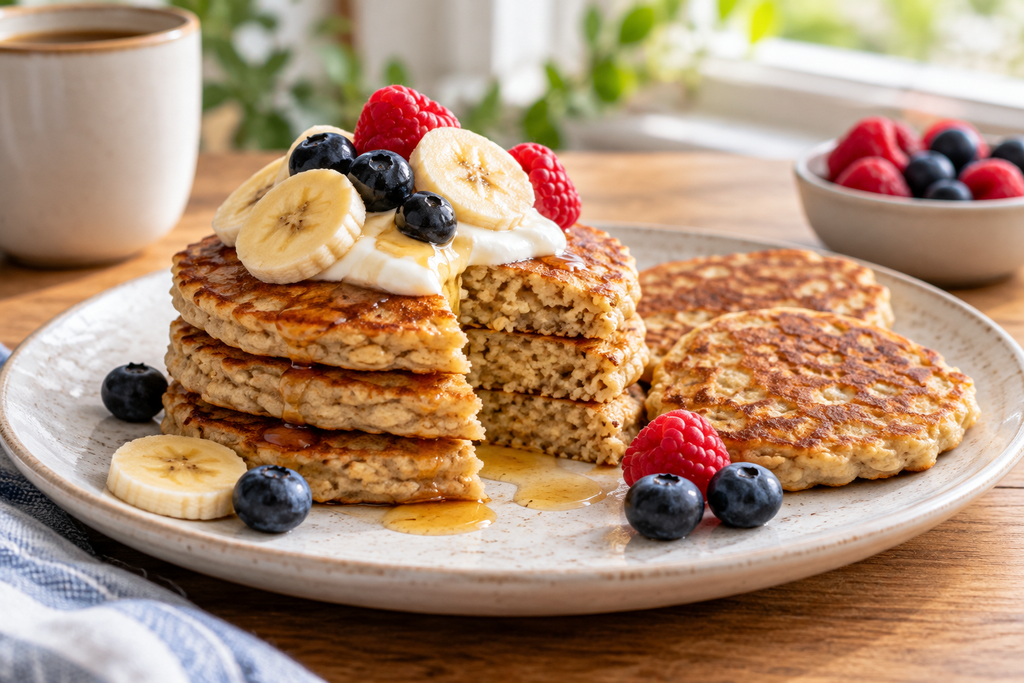
These banana oat protein pancakes combine oat flour, ripe banana, egg, and vanilla protein powder to create a tender breakfast with a lightly sweet flavor. Using oat flour alongside the protein powder prevents the pancakes from becoming as dry or rubbery as recipes made almost entirely from powdered protein.
Protein pancake batter thickens as it rests, so the milk should be adjusted only after the oats and protein powder have had time to hydrate. Keep the pancakes relatively small and cook them over medium-low heat for an evenly cooked center.
Prep Time: 10 minutes
Resting Time: 5 minutes
Cook Time: 15 minutes
Total Time: 30 minutes
Yield: Approximately 8 small pancakes
Servings: 2
Course: Breakfast
Method: Stovetop
Ingredients
- 1 medium ripe banana
- 2 large eggs
- ½ cup (45 g) oat flour
- ¼ cup (approximately 25–30 g) Premier Protein Vanilla Protein Powder
- ¼ cup (60 ml) milk, plus more if needed
- 1 teaspoon baking powder
- ½ teaspoon ground cinnamon
- ½ teaspoon vanilla extract, optional
- 1 small pinch of salt
- Butter or neutral cooking oil for the pan
Optional Toppings
- Plain Greek yogurt
- Fresh banana slices
- Blueberries, raspberries, or strawberries
- Chopped walnuts or almonds
- A light drizzle of maple syrup
- A small amount of warmed peanut butter
Instructions
- Place the banana in a medium mixing bowl and mash it thoroughly with a fork. A few very small pieces are acceptable, but large lumps can make the pancakes difficult to cook evenly.
- Add the eggs, milk, and vanilla extract. Whisk until the ingredients are well combined.
- In a separate bowl, mix the oat flour, vanilla protein powder, baking powder, cinnamon, and salt.
- Add the dry ingredients to the banana mixture. Stir gently until no dry pockets remain. Avoid mixing longer than necessary.
- Let the batter rest for 5 minutes. This allows the oat flour and protein powder to absorb some of the liquid.
- Check the consistency after resting. The batter should be thick but still fall slowly from a spoon. If it is too stiff, add milk one tablespoon at a time. If it pours like a thin crêpe batter, stir in one tablespoon of oat flour.
- Heat a large nonstick skillet or griddle over medium-low heat. Add a small amount of butter or oil and spread it across the surface.
- Spoon approximately 3 tablespoons of batter into the pan for each pancake. Gently shape it into a circle measuring about 3–4 inches (8–10 cm).
- Cook for approximately 2–3 minutes, until the edges look set and several bubbles appear on the surface.
- Slide a thin spatula underneath the pancake and turn it carefully. Cook the second side for another 1–2 minutes, or until golden and cooked through.
- Repeat with the remaining batter, adding more butter or oil as needed. Reduce the heat if the pancakes begin browning before their centers are ready.
- Serve the pancakes warm with your preferred toppings.
Why Small Pancakes Work Better
Protein-enriched batter tends to be more delicate before it sets. Smaller pancakes are easier to turn and cook more evenly than large ones.
A very large pancake may become dark on the outside while remaining wet in the center. Using approximately three tablespoons of batter per pancake provides a more reliable result.
Wait until the edges are visibly set before flipping. If the spatula cannot slide underneath without tearing the pancake, give it another 20–30 seconds.
Adjusting the Batter
Different protein powders absorb different amounts of liquid. Even products from the same brand may vary between flavors or formulations.
Always rest the batter before deciding whether it needs more milk. Adding too much liquid at the beginning can produce flat pancakes that are difficult to flip.
If the batter becomes thicker while later batches are cooking, stir in another teaspoon or two of milk.
Making Oat Flour at Home
If you do not have oat flour, blend old-fashioned rolled oats in a food processor or high-powered blender until they resemble fine flour.
Measure the oat flour after grinding. Half a cup of rolled oats may not produce exactly half a cup of flour because the particles settle differently.
A slightly coarse texture is acceptable, but large flakes can prevent the pancakes from holding together.
Flavor Variations
For chocolate banana pancakes, use chocolate protein powder and add one teaspoon of unsweetened cocoa. You may need an additional tablespoon of milk because cocoa also absorbs moisture.
A few blueberries or miniature chocolate chips can be scattered over each pancake immediately after the batter enters the pan. Avoid mixing large quantities into the entire bowl because heavy additions may make the pancakes harder to flip.
Finely chopped walnuts add texture, while a small pinch of nutmeg complements the banana and cinnamon.
Storage and Reheating
Allow leftover pancakes to cool completely, then refrigerate them in an airtight container for up to three days. Separate layers with baking paper to prevent sticking.
Reheat them in a dry skillet over low heat, in a toaster, or briefly in the microwave.
For longer storage, freeze the cooled pancakes in a single layer before transferring them to a freezer-safe container. Reheat directly from frozen in a toaster or a 325°F (165°C) oven until hot throughout.
Image Disclosure
The food images in this article were created with the assistance of artificial intelligence under our editorial direction. Each image was developed specifically for its accompanying recipe, using the listed ingredients, preparation method, texture, portion size, and expected finished appearance as visual references.
These images are illustrative rather than documentary photographs of dishes prepared in a physical kitchen. We reviewed them for culinary plausibility and avoided displaying ingredients, branded packaging, or preparation results that are not supported by the recipes. However, the appearance of food prepared at home will naturally vary depending on the product formulation, ingredient substitutions, equipment, technique, and serving choices.
All AI-assisted images were created specifically for Chef Olu. They were not copied from Premier Protein or third-party recipe websites and should not be interpreted as official manufacturer photography.
Brand Independence Notice
This is an independent recipe collection and is not sponsored, endorsed, approved, or produced by Premier Protein or its parent company. Chef Olu has no official affiliation with the brand unless expressly stated otherwise.
Premier Protein and all related product names, trademarks, packaging designs, and logos belong to their respective owner. References to the brand are used only to identify the products incorporated into the recipes.
Product availability, ingredients, flavors, package sizes, allergen information, and nutritional values may change over time or vary between countries. Always consult the current product packaging before preparing a recipe.
Nutrition and Dietary Disclaimer
The recipes and accompanying information are provided for general culinary and informational purposes. They are not medical or individualized nutritional advice and should not be used as a substitute for guidance from a physician, registered dietitian, or another qualified healthcare professional.
Any stated nutritional values are estimates. Actual values depend on the precise product formulation, brands, quantities, toppings, substitutions, and serving sizes used.
A product described as containing protein is not automatically suitable for every dietary goal or medical condition. Anyone managing an allergy, intolerance, kidney condition, diabetes, pregnancy-related dietary requirement, prescribed diet, or another health concern should review all product labels and seek appropriate professional guidance when necessary.
Premier Protein products may contain or be processed with common allergens. Check both the protein product and every additional ingredient rather than relying solely on the recipe description.
Recipe Results and Substitutions
The recipes were written to provide practical ratios and realistic preparation guidance, but results may vary between protein products. Ready-to-drink shakes and protein powders are not directly interchangeable: they differ in moisture, sweetness, concentration, and thickening behavior.
Substituting a different flavor, formula, or brand may change the texture and taste. Add liquids gradually when working with protein powder, and evaluate the consistency before cooking or serving.
Always follow standard food-safety practices, observe storage recommendations, and discard food that has been left at an unsafe temperature or shows signs of spoilage.