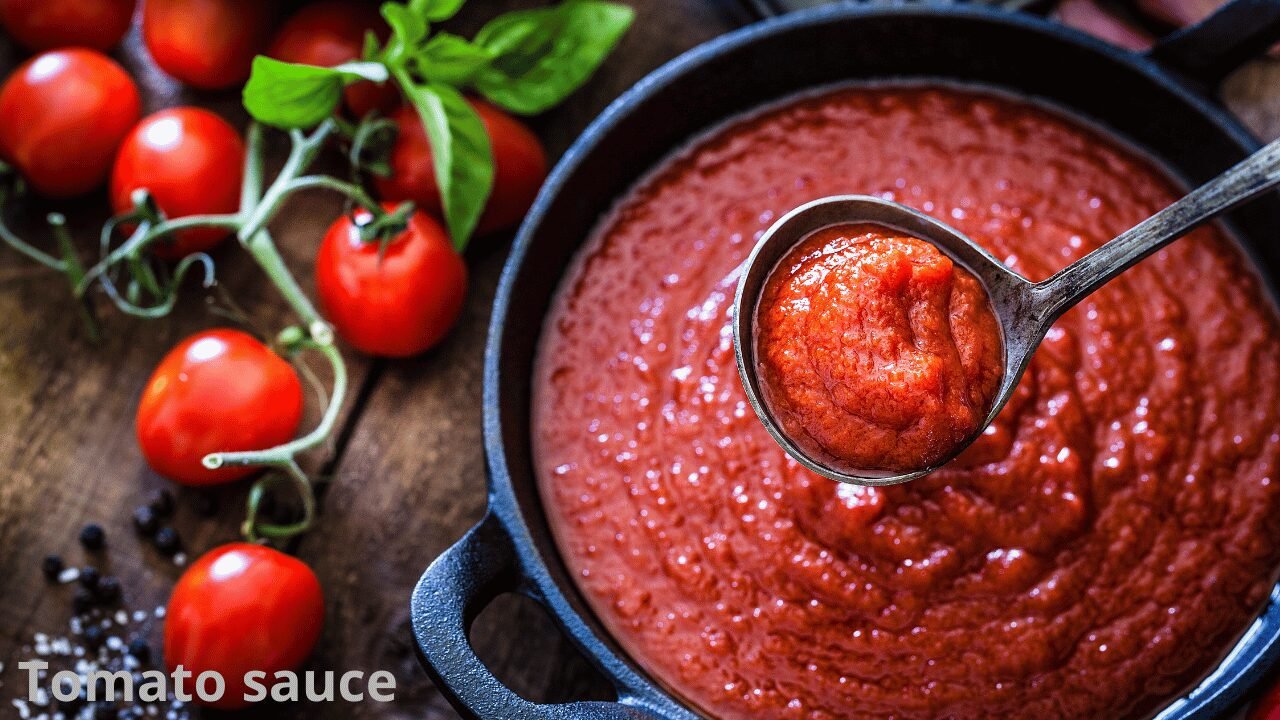
A good tomato sauce does not need a long shopping list. Canned tomatoes, onion, garlic and a little olive oil give you a straightforward base for pasta, baked dishes and other everyday meals.
This tomato sauce recipe uses whole peeled canned tomatoes, so you can make it without waiting for fresh tomatoes to be in season. Gently cooking the onion first builds flavour, while simmering the sauce uncovered lets excess moisture evaporate.
Leave it slightly chunky or blend it smoother, depending on how you plan to serve it. The instructions below explain what to look for as it cooks, how to adjust the consistency and how to save extra portions.
Recipe at a Glance
- Preparation time: approximately 10 minutes
- Cooking time: approximately 45–55 minutes
- Estimated yield: 1.2–1.4 litres, depending on reduction
- Servings: approximately 8 portions for pasta
- Equipment: a wide, heavy-based saucepan, approximately 4 litres in capacity; a wooden spoon; and an optional immersion blender
The yield and cooking time are estimates. Pan width, heat and the tomatoes’ water content will affect how quickly the sauce thickens.
Ingredients
- 2 tablespoons olive oil
- 1 medium onion, approximately 150 g, finely chopped
- 3 garlic cloves, finely chopped
- 2 × 800 g cans whole peeled tomatoes, including their juice
Two 28-ounce cans are a suitable equivalent. - 1 teaspoon dried oregano
- ½ teaspoon fine salt, plus more to taste
- ¼ teaspoon freshly ground black pepper
- A small handful of fresh basil leaves, roughly torn, optional
- ½–1 teaspoon sugar, only if needed after tasting
Choose plain canned tomatoes rather than tomatoes already seasoned with herbs. Salt levels vary between brands, so start with the modest amount listed and adjust at the end.
How to Make Tomato Sauce
1. Soften the onion
Heat the olive oil in the saucepan over a medium-low heat. Add the chopped onion and cook for 8–10 minutes, stirring regularly.
Look for softened, translucent pieces rather than browned edges. If the onion starts catching, lower the heat and add a tablespoon of water, allowing it to evaporate as cooking continues.
Taking time here helps avoid firm onion pieces in the finished sauce.
2. Add the garlic
Stir in the garlic and cook for approximately 30–60 seconds, just until fragrant.
Keep stirring and move to the next step before it turns dark brown. Burnt garlic can give the sauce an unpleasant bitter flavour.
3. Add the tomatoes and seasoning
Carefully add both cans of tomatoes with their juice. Stir in the oregano, salt and pepper.
Break the tomatoes into smaller pieces with your spoon, pressing gently against the side of the pan. Whole tomatoes can release juice suddenly when crushed, so keep the heat low while doing this.
For easier handling, you can roughly chop the tomatoes in a bowl before adding them, keeping all their juice.
4. Simmer uncovered
Bring the sauce to a gentle simmer, then lower the heat enough to maintain occasional small bubbles.
Cook uncovered for approximately 35–45 minutes, stirring every few minutes and scraping along the bottom to prevent sticking. A mesh splatter screen can help contain splashes while allowing steam to escape.
The sauce is ready when the onion is tender, the tomatoes have broken down and the mixture is thick enough to coat a spoon. It should still move easily when stirred.
If it remains watery, continue simmering and check it every five minutes. If it becomes too thick before the onion is tender, add a small splash of water.
5. Adjust the texture
For a chunky sauce, continue breaking up any larger pieces with the spoon.
For a smoother result, remove the saucepan from the heat and let the bubbling stop. If your immersion blender is suitable for hot liquids, follow its instructions, keeping the blade head submerged and using short pulses to limit splashing.
Avoid transferring piping-hot sauce into a sealed personal blender. If using a countertop blender, allow the sauce to cool and follow the manufacturer’s instructions for temperature, fill level and venting.
6. Taste and finish
Stir in the optional fresh basil near the end of cooking.
Taste a cooled spoonful and adjust the salt and pepper. If the sauce tastes sharper than you prefer, add ½ teaspoon sugar, stir and taste again before adding more.
Sugar balances the perception of sourness; it does not remove the tomatoes’ acidity or make the sauce suitable for canning.
Troubleshooting Your Tomato Sauce
Too watery?
Simmer uncovered for longer, stirring regularly. A wide pan allows moisture to evaporate more quickly than a narrow one. Avoid increasing the heat so much that the bottom catches.
Too thick?
Add water one tablespoon at a time until you reach the consistency you want. When serving with pasta, a little reserved pasta cooking water also works; taste before adding extra salt.
Too sharp?
Check the seasoning first, then consider the small optional addition of sugar. Different canned tomatoes have different flavours, so use your taste rather than automatically adding the full amount.
Bitter or burnt?
If the bottom has scorched, stop stirring and carefully transfer the unburnt sauce to a clean pan, leaving the stuck layer behind. Taste before continuing. Sugar will not reliably rescue a strongly burnt sauce.
Ways to Use Tomato Sauce
For pasta, start with approximately 150 ml sauce per person, then adjust to suit the pasta shape and your preference. Toss the cooked pasta with the sauce, adding a splash of pasta water if needed.
You can also use it in vegetable bakes or as a base for dishes with beans.
For pizza, reduce a portion further if it looks watery, then cool it before spreading a thin layer over the dough. A thick layer of loose sauce can leave the base soggy.
Storing and Reheating
Divide leftover sauce into shallow containers and refrigerate within 2 hours, or within 1 hour when the surrounding temperature is above 32°C / 90°F. Keep the refrigerator at 4°C / 40°F or below and use within 3–4 days.
For longer storage, freeze in suitable containers, leaving room for expansion. Label each portion with the date and amount. Aim to use it within 3–4 months for best quality.
Thaw in the refrigerator. Reheat in a saucepan, stirring to distribute the heat, until the sauce reaches 74°C / 165°F throughout. Add a splash of water if it has thickened.
These instructions follow the USDA’s guidance on leftovers and food safety.
This is not a canning recipe. Putting the sauce into jars does not make it shelf-stable. Keep it refrigerated or frozen as described above.
A Final Thought from Adam
I appreciate recipes that make everyday cooking feel manageable. As someone who is still building confidence in the kitchen, I find clear instructions and familiar ingredients more inviting than a long list of complicated techniques.
This tomato sauce recipe offers a chance to practise a few useful basics: softening onion, controlling a gentle simmer and tasting before adding more seasoning. You can take your time and adjust the texture to suit your meal.
There is no need to aim for a restaurant-style finish. A simple sauce, a bowl of pasta and a comfortable place at the table are a perfectly good starting point.
Recipe development note: This recipe was developed with AI assistance and has not been independently kitchen-tested for this article. Cooking times, yield and serving sizes are estimates.