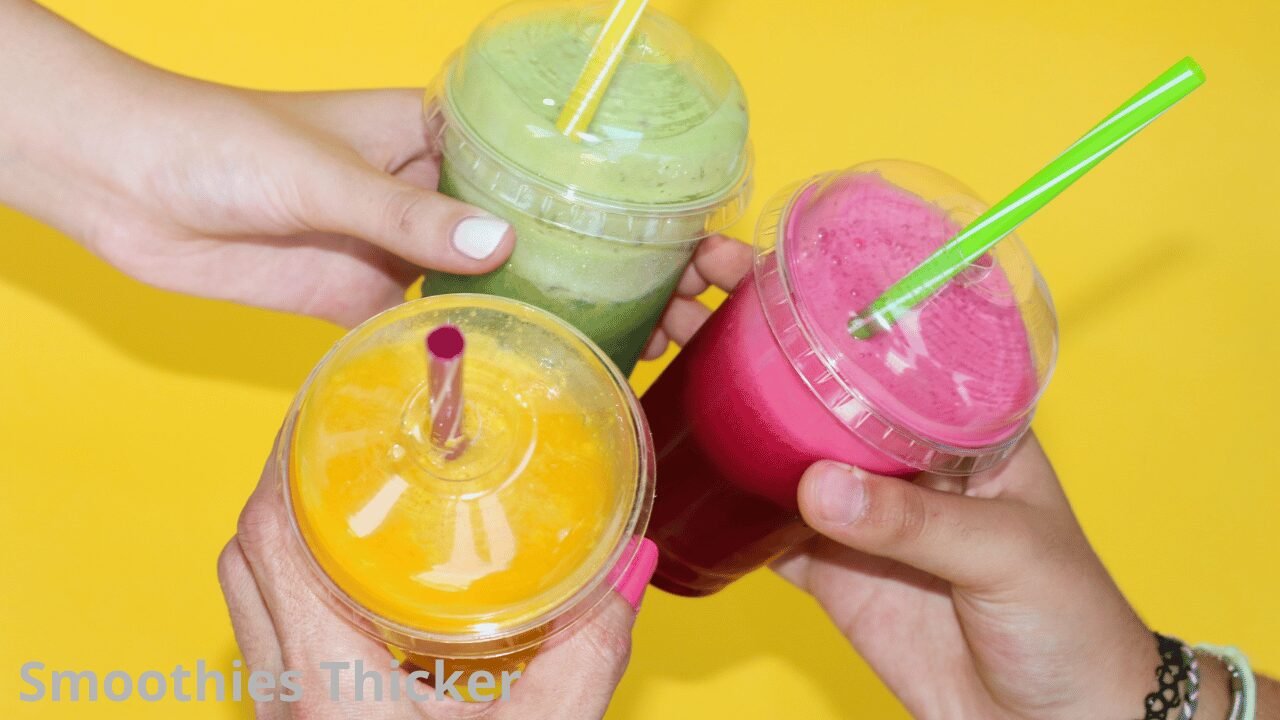
To make a smoothie thicker, use less added liquid, include ingredients that provide body, and adjust the mixture in small steps. Frozen banana, mango, thick yogurt, and oats can all help, but they change the flavor and texture in different ways.
The goal is a mixture that suits both your preference and your blender. A drinkable smoothie should pour comfortably, while a smoothie bowl needs enough structure to eat with a spoon.
If the ingredients stop circulating, making the mixture even thicker will not help. Your blender needs suitable quantities and enough movement to process everything evenly.
Start with a Useful Ratio
For a thick, drinkable smoothie, try this starting combination:
- 200 g frozen fruit, including some banana or mango.
- 100 g thick plain yogurt, such as Greek yogurt.
- 100 ml milk or a suitable alternative, with more available if needed.
Load and operate the blender according to its instructions. If it requires a higher minimum liquid amount or a larger batch, follow those requirements.
Once blended, adjust the consistency with small additions. Another tablespoon of liquid is easier to manage than an unmeasured splash.
This is a flexible starting formula. Frozen berries, banana, and pineapple do not produce identical textures, and yogurt thickness varies between products.
Choose Ingredients That Match the Texture You Want
| Ingredient | What it contributes | What to consider |
|---|---|---|
| Frozen banana | Body and a creamy texture | Adds sweetness and banana flavor |
| Frozen mango | Thickness and a smooth texture | Changes the fruit balance |
| Thick yogurt | Creaminess and body | Thin yogurt may loosen the mixture |
| Nut or seed butter | Richness and a fuller texture | Adds a noticeable flavor |
| Rolled oats | Body as they blend and hydrate | May leave some graininess |
| Chia seeds | Thickening as they absorb liquid | Can create a gel-like texture |
| Avocado | Creaminess without much sweetness | Its flavor may still be noticeable |
Choose one adjustment at a time. Adding oats, chia, nut butter, and avocado together makes it difficult to judge which change helped.
Use Frozen Fruit Instead of Relying on Ice
Frozen fruit can provide both thickness and flavor. Banana and mango are useful when you want a creamier result; berries bring a different balance of flavor, seeds, and texture.
Ice can make a freshly blended drink thicker and colder, so it is not automatically a mistake. However, it adds water as it melts and can dilute the flavor.
If your smoothie already tastes weak, adding more ice is unlikely to solve both problems. Try a small amount of frozen fruit instead, provided your blender can process it.
Frozen-fruit mixtures are also commonly used for smoothie bowls. Good Food’s smoothie bowl recipe, for example, combines frozen berries with banana and oat milk in a powerful blender. bbcgoodfood.com
Follow Your Blender’s Loading Instructions
Putting liquid into the container first does not make a smoothie inherently thin. The amount of liquid affects the consistency; the loading order affects how the machine processes the ingredients.
For its full-size containers, Vitamix recommends liquids first, followed by progressively firmer ingredients, with frozen ingredients and ice toward the top. Other containers and appliances may require a different order. vitamix.com
Follow the instructions for your exact machine rather than applying a universal “liquid first” or “liquid last” rule.
Likewise, pulsing does not guarantee that a blender will avoid overheating. Use the recommended speed, program, and operating limits.
How to Fix a Smoothie That Is Too Thin
First, stop blending and check the texture. Choose an adjustment that fits the flavor you already have.
For a single-serving batch, these are manageable starting additions:
- More frozen fruit: add approximately 30–50 g, then blend and reassess.
- Thick yogurt: add 1–2 tablespoons for more body and creaminess.
- Nut or seed butter: start with 1 teaspoon, then taste before adding more.
- Rolled oats: start with 1 tablespoon, blend thoroughly, and allow a short pause for hydration.
These additions do not work identically. Yogurt may soften a sharp fruit flavor, while peanut butter can become a dominant flavor even in a small quantity.
If using chia seeds, start sparingly and allow time for them to hydrate before deciding whether more is needed. Adding several spoonfuls at once can produce a texture closer to pudding than a drink.
What If the Blender Cannot Move the Mixture?
Do not keep running a struggling or stalled machine.
Switch it off and follow the manufacturer’s troubleshooting instructions. Depending on the appliance, you may need to add a little liquid, adjust the batch size, or redistribute the ingredients.
Before opening the container to scrape it down, unplug the blender and wait until the blades have stopped.
Only use a tamper designed for that exact container, in the configuration specified by the manufacturer. A spoon or ordinary spatula must never be inserted into a running blender.
Vitamix explains that an appropriate tamper can help move thick mixtures and break up air pockets around the blades. That guidance applies to compatible equipment, not every blender. Vitamix
Making a Smoothie Bowl
A smoothie bowl needs a spoonable consistency, but simply removing most of the liquid from a drink recipe may overload an unsuitable machine.
Start with a bowl recipe intended for your appliance. Some dedicated smoothie-bowl containers use minimum liquid fill lines and built-in paddles to process thicker mixtures. Ninja’s instructions for certain bowl systems, for example, specify both a liquid level and paddle operation. ninjakitchenapac.zendesk.com
Toppings can add crunch, but they do not repair a watery base. Get the blended mixture right before adding granola, fruit, or seeds.
Will a Smoothie Thicken as It Sits?
Sometimes—but not always.
Oats and chia can absorb liquid and increase thickness over time. A smoothie thickened mainly by frozen ingredients may instead become thinner as it warms.
Yogurt adds body when mixed in; it should not be described as working exactly like dry oats or chia seeds.
If you are adjusting a smoothie for immediate serving, check it after a short pause. Do not assume that a thin mixture will become thick simply by waiting.
Common Problems at a Glance
| Problem | Likely adjustment |
|---|---|
| Thin but flavorful | Add a small amount of a suitable thick ingredient |
| Thin and weak-tasting | Add flavorful fruit rather than more ice |
| Thick but grainy | Check ingredient preparation and whether the machine is blending effectively |
| Too thick to circulate | Stop and follow the appliance’s guidance |
| Thick at first, then watery | Frozen ingredients may be melting |
| Too strongly flavored | Avoid further additions of the ingredient causing the imbalance |
Find a Combination You Can Repeat
Once you like the result, note the fruit, yogurt, and liquid quantities. Include whether the fruit was fresh or frozen and which yogurt you used.
That small record is more useful than adding a different handful of ingredients every time. You can still experiment, but you will have a dependable starting point—and fewer smoothies that need rescuing.