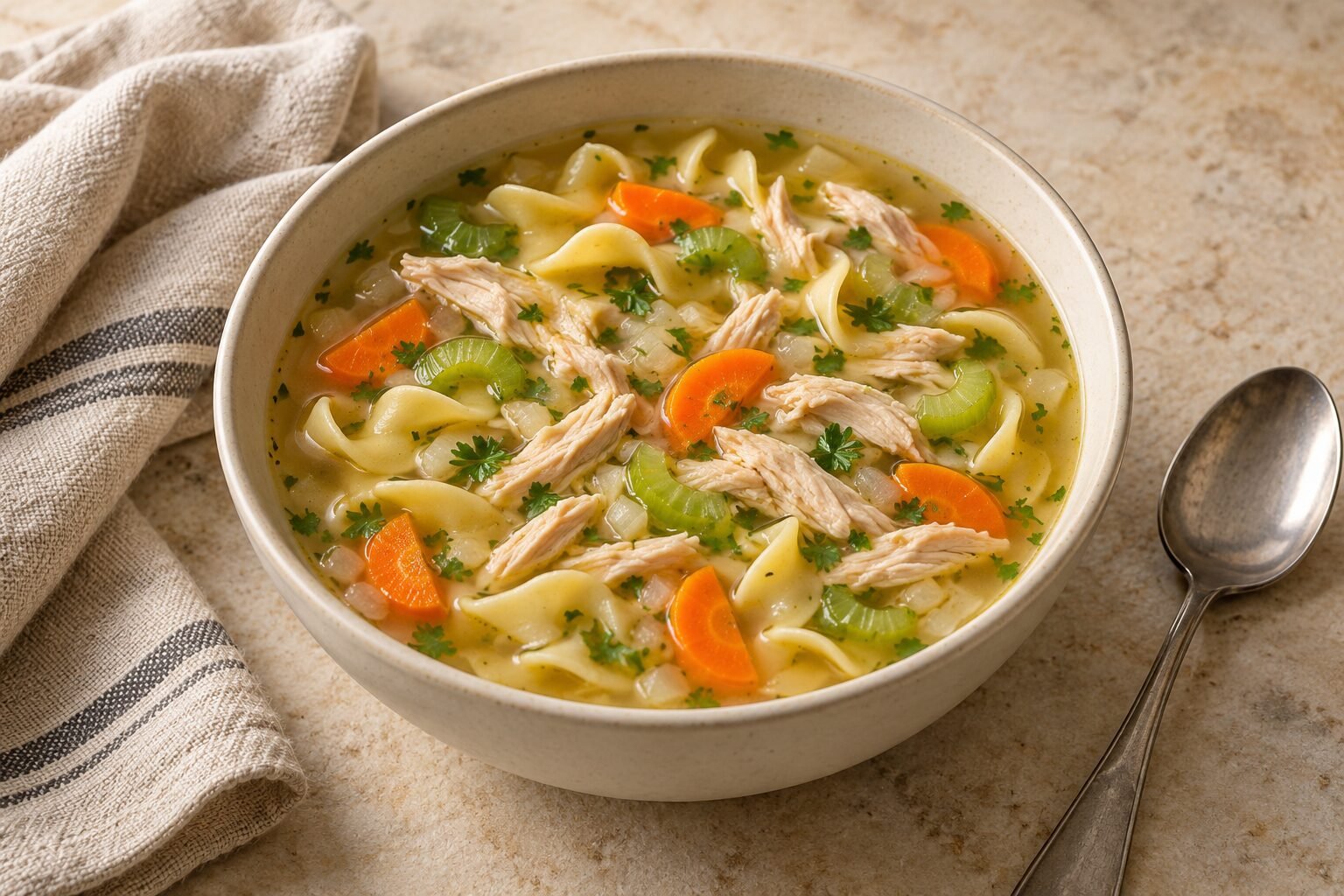
When you are feeling unwell, deciding what to cook can feel like another task you would rather put off. A warm bowl of soup may be an appealing option, especially when it uses familiar ingredients and does not require complicated preparation.
These three soup recipes for when you are sick focus on simple cooking and mild flavours: chicken noodle soup, smooth carrot and potato soup, and a vegetable soup with rice. Each includes measured ingredients, clear steps and practical advice for storing leftovers.
You can choose the texture that appeals to you, whether that means tender noodles in broth, a blended vegetable soup or a spoonful of soft rice. There is no need to add strong spices or elaborate toppings. Start with the basic recipe and adjust the seasoning to your preference.
Choose What Suits You
Feeling unwell means different things to different people, and no single soup suits every illness or dietary need. Choose ingredients you normally tolerate, take any allergies into account and follow any dietary advice you have been given by a healthcare professional.
Serve your soup comfortably warm rather than piping hot. If a full bowl feels unappealing, start with a smaller portion and save the rest using the storage instructions provided.
For convenience, the recipes use ready-made stock. A reduced-salt version gives you more control over the final seasoning, but check the label for ingredients and allergens before using it.
These recipes are meal ideas, not treatments for colds, flu or other illnesses. They are not intended to replace medical advice or prescribed care.
1. Easy Chicken Noodle Soup
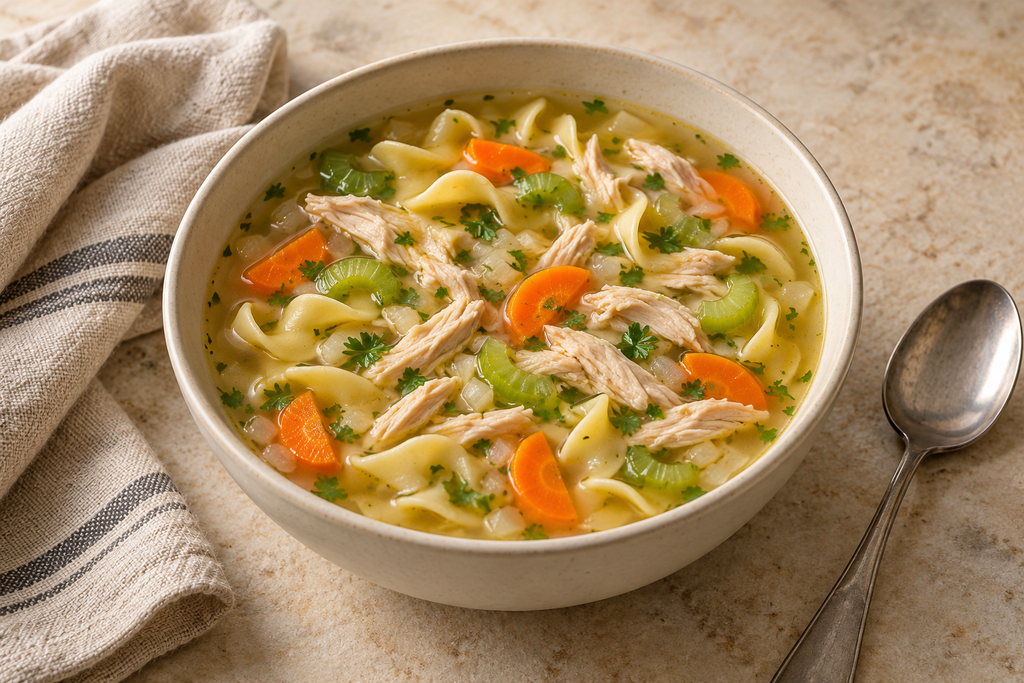
This chicken noodle soup combines tender vegetables, shredded chicken and egg noodles in a lightly seasoned broth. It uses already-cooked chicken to keep the preparation straightforward, with the noodles added near the end so they do not become overly soft.
Servings: 4
Preparation time: approximately 15 minutes
Cooking time: approximately 25 minutes
Ingredients
- 1 tablespoon olive oil
- 1 small onion, approximately 100 g, finely chopped
- 2 medium carrots, approximately 150 g, cut into thin half-moons
- 2 celery stalks, approximately 100 g, thinly sliced
- 1 garlic clove, finely chopped, optional
- 1.2 litres reduced-salt chicken stock
- 250 g cooked chicken, skin and bones removed, shredded into bite-sized pieces
- 100 g dried egg noodles
- ¼ teaspoon dried thyme
- Salt and black pepper, to taste
- 1 tablespoon chopped fresh parsley, optional
Use cooked chicken that has been stored safely in the refrigerator, or freshly cooked chicken. This method is not written for raw chicken.
Instructions
1. Soften the vegetables.
Heat the olive oil in a large saucepan over a medium-low heat. Add the onion, carrots and celery. Cook for 6–8 minutes, stirring regularly, until the onion softens.
The carrots will still be fairly firm at this stage. Avoid browning the vegetables; lower the heat if they begin to catch.
2. Add the garlic and stock.
Stir in the optional garlic and cook for approximately 30 seconds. Pour in the stock and add the thyme.
Bring to a gentle simmer, then partially cover and cook for 8–10 minutes, or until the carrots are almost tender.
3. Add the noodles.
Stir in the dried egg noodles. Simmer gently for the time indicated on the packet, stirring occasionally to separate them.
If using long noodles, break them into shorter lengths before adding them to make the soup easier to eat with a spoon.
4. Heat the chicken thoroughly.
Add the shredded cooked chicken for the final 3–5 minutes of cooking. Stir well and continue heating until the chicken reaches 74°C / 165°F, checked with a food thermometer.
The noodles should be tender and the carrots easy to pierce with a fork. Add a little hot water or stock if the soup becomes thicker than you prefer.
5. Taste and serve.
Taste a cooled spoonful before adding salt, since the stock and chicken may already provide enough. Add pepper only if you want it, and stir in the optional parsley.
Ladle into bowls and allow the soup to cool to a comfortable eating temperature.
Making It Easier to Prepare Ahead
If you plan to save several portions, cook the noodles separately according to the packet instructions. Add a portion to each bowl and ladle the hot chicken soup over them.
Store the remaining cooked noodles and soup separately in the refrigerator. This helps prevent the noodles from absorbing most of the broth and becoming very soft.
Storing and Reheating
Divide leftovers into shallow containers and refrigerate within 2 hours, or within 1 hour if the surrounding temperature exceeds 32°C / 90°F. Keep refrigerated at 4°C / 40°F or below.
Use within 3–4 days, counting from when the chicken was originally cooked if you used leftover chicken. Making it into soup does not restart its storage time.
Reheat the portion you need, stirring well, until it reaches 74°C / 165°F throughout. Add a splash of water or stock if the noodles have absorbed some of the broth.
For additional guidance, see the USDA’s advice on leftovers and food safety.
Recipe development note: This recipe was developed with AI assistance and has not been independently kitchen-tested for this article. Cooking times and serving sizes are estimates.
2. Smooth Carrot and Potato Soup
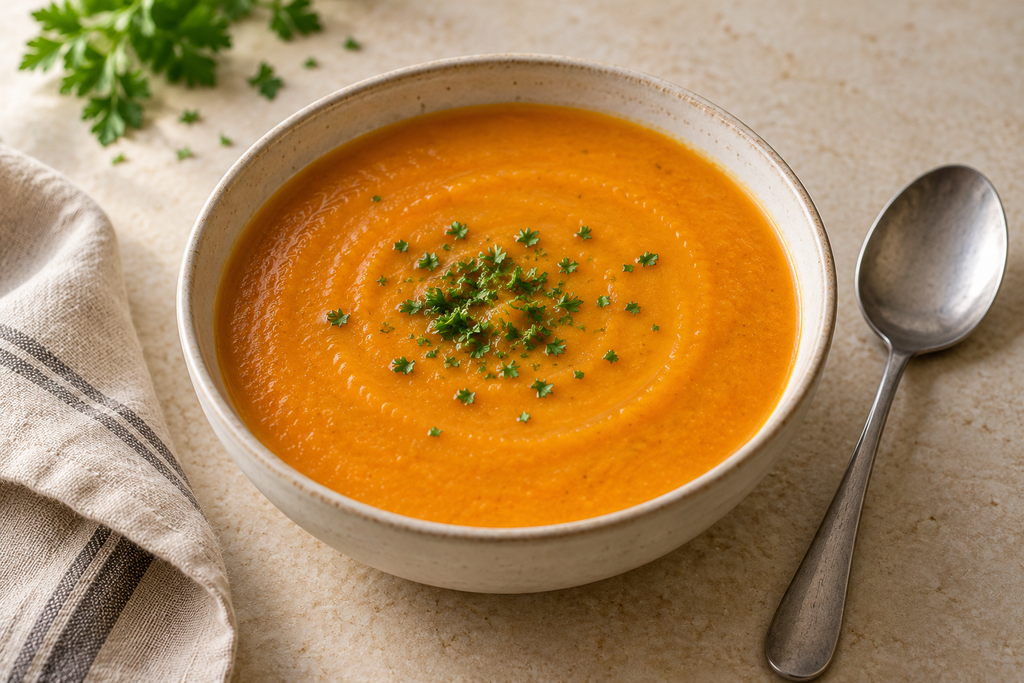
Carrots bring a gentle sweetness to this soup, while potatoes give it body without cream. The seasoning stays simple, allowing you to adjust it to your own preference.
The vegetables need to be completely tender before blending. Once they are soft, blend only as much as necessary: overworking potatoes can make the texture sticky.
Servings: 4
Preparation time: approximately 15 minutes
Cooking time: approximately 30 minutes
Ingredients
- 1 tablespoon olive oil
- 1 small onion, approximately 100 g, finely chopped
- 500 g carrots, peeled and cut into 1 cm rounds
- 250 g potatoes, peeled and cut into 2 cm cubes
- 900 ml reduced-salt vegetable stock
- Up to 200 ml additional stock or water, as needed
- Salt and black pepper, to taste
- 1 tablespoon chopped fresh parsley, optional
The carrot and potato weights are measured after peeling. Choose a vegetable stock you enjoy, and check its ingredients if you have dietary restrictions.
Instructions
1. Soften the onion.
Heat the olive oil in a large saucepan over a medium-low heat. Add the onion and cook for 5–7 minutes, stirring regularly, until softened but not browned.
If it begins to catch, lower the heat and add a tablespoon of water.
2. Add the vegetables and stock.
Stir in the carrots and potatoes, then pour in 900 ml vegetable stock.
Bring to a gentle simmer. Partially cover the saucepan and cook for approximately 20–25 minutes, stirring occasionally.
3. Check that the vegetables are tender.
Test a thick carrot slice and a potato cube with a fork. Both should yield easily without a firm centre.
If either is still firm, continue simmering and check again after a few minutes. Add a little water if the liquid level drops noticeably.
4. Blend carefully.
Remove the saucepan from the heat and let the bubbling stop.
If your immersion blender is suitable for hot liquids, follow its instructions and keep the blade head submerged. Blend in short bursts, moving carefully through the soup, until the texture is smooth enough for your preference. Avoid prolonged blending.
If using a countertop blender, allow the soup to cool to a temperature permitted by its manufacturer. Work in small batches and follow the instructions for filling and venting. Never blend hot soup in a sealed personal blender.
5. Adjust the consistency.
Stir in additional stock or water a little at a time if needed. Aim for a soup that pours easily from a ladle rather than sitting in a thick mound.
Return to a low heat and warm gently, stirring. Taste before adding salt, then add a little pepper if you want it.
6. Serve comfortably warm.
Ladle into bowls and add the optional parsley. Allow the soup to cool to a comfortable eating temperature before serving.
Simple Texture Adjustments
Too thick? Add warm water or stock in small splashes, stirring after each addition. The soup will also thicken slightly as it cools.
Too thin? Simmer uncovered over a low heat for a few minutes, stirring frequently to prevent sticking.
Prefer a chunkier soup? Skip the blender and use a potato masher to break down the vegetables directly in the saucepan. The result will be rustic rather than smooth.
Storing and Reheating
Divide leftovers into shallow containers and refrigerate within 2 hours, or within 1 hour if the surrounding temperature exceeds 32°C / 90°F. Keep at 4°C / 40°F or below and use within 3–4 days.
Reheat the portion you need in a saucepan, stirring frequently, until it reaches 74°C / 165°F throughout. Add a splash of water or stock if it has thickened during storage.
For additional information, see the USDA’s guidance on leftovers and food safety.
Recipe development note: This recipe was developed with AI assistance and has not been independently kitchen-tested for this article. Cooking times and serving sizes are estimates.
3. Mild Vegetable and Rice Soup
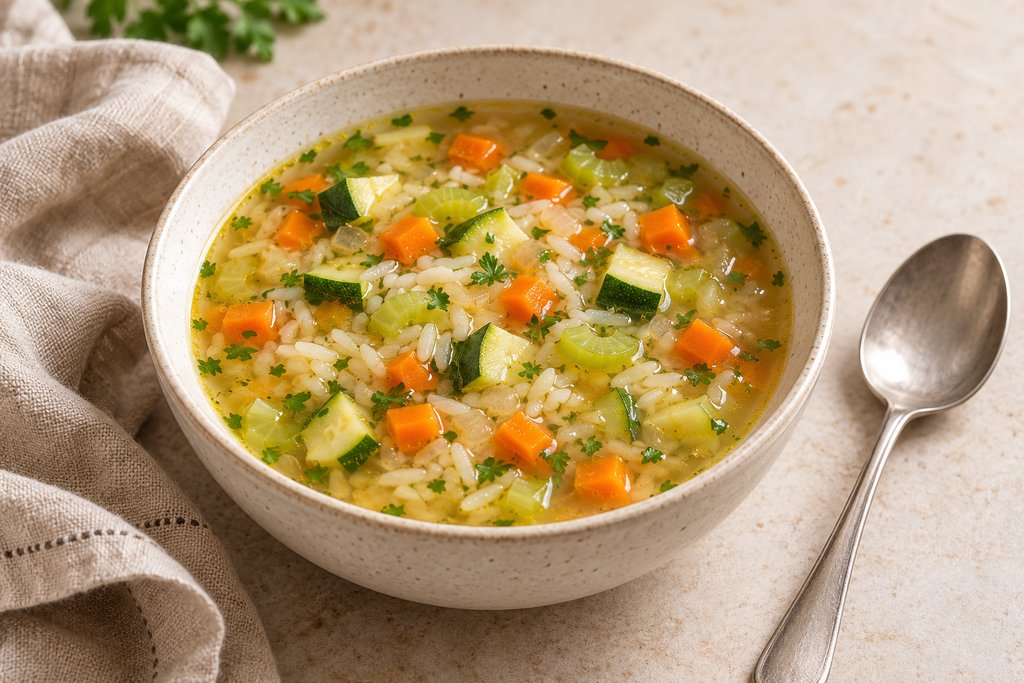
Soft rice, carrots, celery and courgette make this a simple vegetable soup with a little more texture than a blended version. The seasoning stays mild, and the rice cooks directly in the broth.
This soup is best served shortly after cooking. Rice continues absorbing liquid as it stands, so keep some extra stock or water available to adjust the consistency.
Servings: 4
Preparation time: approximately 15 minutes
Cooking time: approximately 30 minutes
Ingredients
- 1 tablespoon olive oil
- 1 small onion, approximately 100 g, finely chopped
- 2 medium carrots, approximately 150 g, cut into small dice
- 2 celery stalks, approximately 100 g, thinly sliced
- 1 small courgette, approximately 150 g, cut into 1 cm pieces
- 80 g uncooked long-grain white rice
- 1.2 litres reduced-salt vegetable stock
- Up to 300 ml additional stock or water, as needed
- ¼ teaspoon dried thyme, optional
- Salt and black pepper, to taste
- 1 tablespoon chopped fresh parsley, optional
Use ordinary white rice rather than brown rice or a ready-cooked pouch. Their cooking times and liquid requirements differ.
Instructions
1. Rinse the rice.
Place the rice in a fine-mesh sieve and rinse under cold running water until the water runs mostly clear. Drain well.
This removes some surface starch and helps keep the broth from becoming excessively thick.
2. Soften the vegetables.
Heat the olive oil in a large saucepan over a medium-low heat. Add the onion, carrots and celery.
Cook for 6–8 minutes, stirring regularly, until the onion softens. Avoid browning the vegetables; lower the heat if they begin to catch.
3. Add the rice and stock.
Stir in the drained rice, then pour in 1.2 litres vegetable stock. Add the optional thyme.
Bring to a gentle simmer. Partially cover and cook for 10 minutes, stirring occasionally so the rice does not settle and stick to the bottom.
4. Add the courgette.
Stir in the courgette and continue simmering for approximately 8–10 minutes, or until the rice and vegetables are tender.
Check a few grains of rice: they should be soft throughout, without a firm or chalky centre. If necessary, cook a little longer, adding hot water or stock if the liquid level becomes low.
5. Adjust and serve.
The finished soup should have plenty of broth around the vegetables and rice. Add some of the extra liquid if needed, then heat through.
Taste before adding salt and pepper. Stir in the optional parsley and ladle into bowls. Allow the soup to cool to a comfortable eating temperature before serving.
Keeping the Soup Brothy
Avoid adding extra dry rice without increasing the liquid. A small amount expands considerably during cooking.
If you prefer more distinct grains, cook the rice separately according to its packet instructions. Simmer the vegetables in the stock until tender, then add a portion of freshly cooked rice to each serving bowl.
For leftovers, storing cooked rice separately from the vegetable broth helps preserve the texture. Follow the rice storage guidance below even when storing it separately.
Cooling, Storing and Reheating
For this rice-containing soup, follow the UK Food Standards Agency’s rice-specific guidance: cool leftovers quickly, ideally within 1 hour, refrigerate and use within 24 hours.
Divide the soup into small, shallow containers rather than leaving a large saucepan to cool on the hob. A cold-water bath around suitable containers can help speed cooling; keep the cooling water out of the food. Refrigerate promptly.
Reheat only the portion you need, stirring frequently, until steaming hot throughout. Add a little water or stock to loosen the soup. Reheat only once.
For further information, see the Food Standards Agency’s guidance on cooking and reheating food.
Recipe development note: This recipe was developed with AI assistance and has not been independently kitchen-tested for this article. Cooking times and serving sizes are estimates.
A Warm Bowl and a Little Kindness
I’m Adam, and complicated cooking is not where I feel most at home. I appreciate familiar ingredients, clear instructions and meals that leave room for a few imperfectly chopped vegetables. That feels especially relevant on days when you have less energy to spend in the kitchen.
My aim with these soup recipes for when you are sick is to offer a few approachable meal ideas. Whether you prefer chicken and noodles, smooth carrot and potato soup or vegetables with rice, choose whichever sounds appealing and suits your dietary needs.
There is no pressure to prepare everything from scratch or make your bowl look like a photograph. Ready-made stock and a simple presentation are perfectly welcome. If someone offers to help with the chopping or washing up, let them—sharing those small tasks can be a kindness in itself.
I hope these recipes make choosing a meal a little easier. Take your time, follow the cooking and storage instructions, and leave yourself room to rest.
These soups are meal suggestions, not treatments for illness or substitutes for medical advice.
About the images: The pictures in this article are AI-generated illustrations of the ingredients and suggested presentation. They are not photographs of kitchen-tested results, and your finished soup may look different.