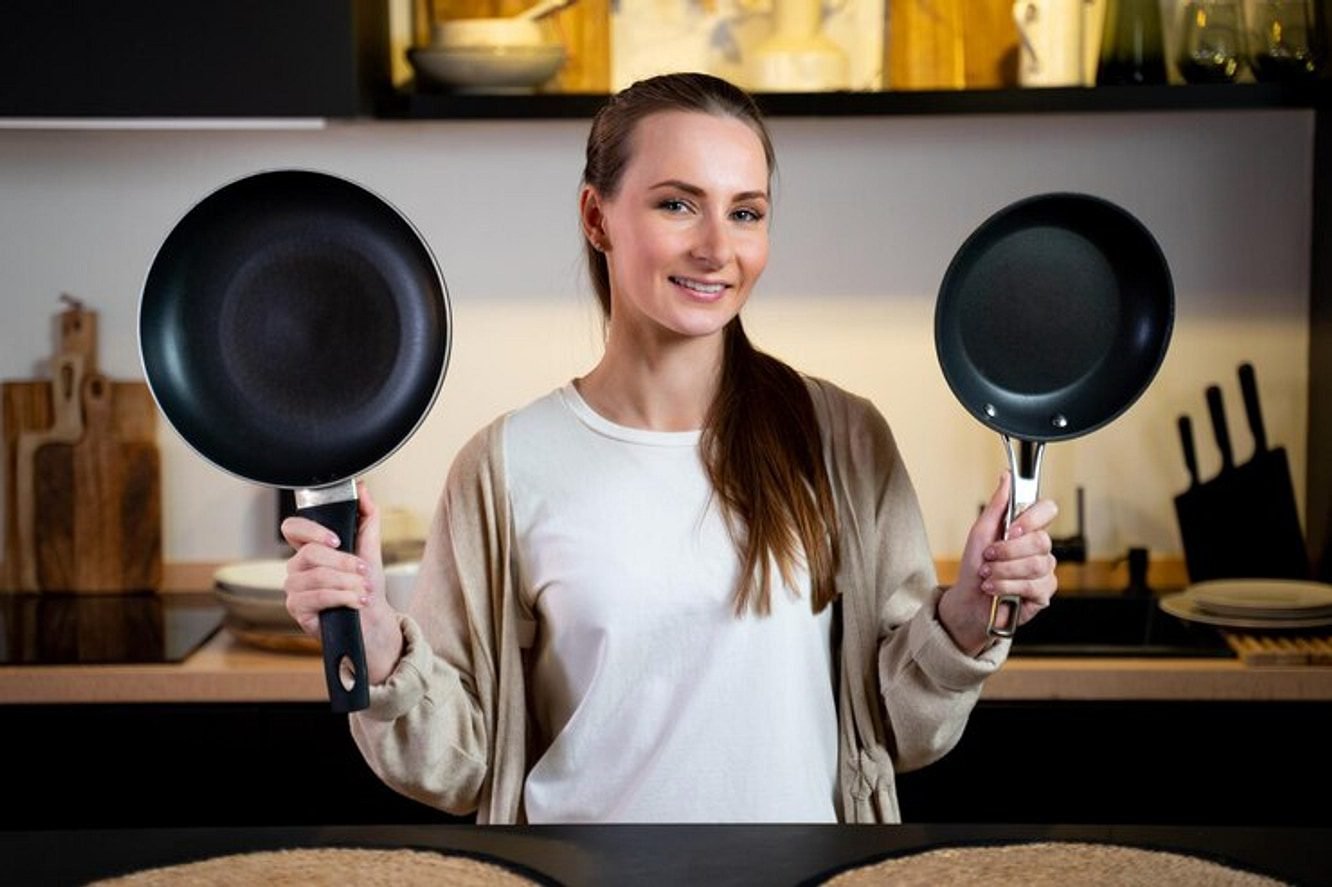
Stainless steel vs nonstick cookware is an interesting competition. We try to help to chose. Deciding between stainless steel and nonstick cookware is easy until you’re actually cooking with each. Both have great advantages in the right situations, so it mostly comes down to your habits, your favorite recipes, and how much clean-up time you want after dinner.
Stainless Steel vs Nonstick Cookware: What Makes Stainless Steel Different?
Stainless steel pans and pots are durable, responsive, and have attractive finishes that won’t wear off year after year. Ingredients won’t react with stainless steel like they might with aluminum or other cookware, so it’s great for sauces, searing, and day-to-day cooking on the stovetop.
Cooking enthusiasts often recommend stainless steel because it creates fond when browning meat or vegetables. While sticking is sometimes problematic, that’s helpful when you want flavor. As long as you manage your heat and wait to add oil or liquid until the right moment, stainless steel makes upping your food’s savory taste surprisingly easy.
Thanks to its non-coated surface, stainless steel pans tend to handle higher heat better than many kinds of nonstick cookware. If you want a pan that you can leave on the stovetop and then move to the oven without worry, stainless steel can be an excellent choice.
Stainless Steel vs Nonstick Cookware: Why Nonstick Wins for Certain Meals
Nonstick cookware offers the exact opposite benefits. Foods release easily with little to no fat required. For that reason, nonstick works best for eggs, pancakes, crepes, delicate fish, and anything else that you fear might stick to or fall apart when flipping in traditional pans.
Here’s a quick comparison to highlight why nonstick cookware excels for certain meals.
| Feature | Nonstick Benefits | Limitations | Best Uses |
| Heat Tolerance | Low to Medium | Not for high heat | Eggs, pancakes, and fish |
| Ease of Cleaning | Very easy | Avoid abrasive scrubbers | Quick clean-ups |
| Durability | Shorter lifespan | Coating can wear off | Best for daily light use |
| Oil Usage | Minimal required | Not ideal for browning | Low-fat cooking |
With this information in mind, it’s easy to see where nonstick cookware shines in everyday kitchens.
Cleaning is another huge benefit of nonstick. Sometimes all you’ll need to do is wipe out your skillet after cooking. Saving time on cleanup means spending less time in the kitchen overall. When cooking during busy weeknights, that freedom from stress can make nonstick your best friend.
Despite their limitations, nonstick pans hold their own when used correctly. Avoid using high heat, and don’t scrape with metal utensils if you want them to last. Otherwise, nonstick is convenient enough that many cooks use it daily.
How Do You Cook With Stainless Steel?
Stainless steel pans are all about finesse instead of force. By properly preheating your pan before adding oil, you’ll give yourself the best chance at preventing food from sticking. From there, it’s just a matter of adding food at the right time and using your burner controls correctly.
Here are a few tips that make stainless steel easier to cook with:
- Allow your pan to fully heat before adding your ingredients.
- Oil your pan once it’s hot enough that the oil sizzles on contact.
- Let food sear instead of moving it around too soon.
- Deglaze your pan with broth, wine, or water to lift browned bits after searing.
- Choose heavy-weight pans for more consistent heat retention.
- Wash your pans soon after cooking. Letting residue soak on makes it harder to remove.
Soon enough, stainless steel won’t intimidate you. Once you get the hang of it, you’ll reach for your stainless skillet again and again. Versatile enough to handle most cooking tasks with ease, stainless only struggles when you attempt to rush things.
Stainless Steel vs Nonstick Cookware: When Is Nonstick the Better Choice?
Buy nonstick cookware when you want easy release without worrying about food that brownes evenly on both sides. If eggs are a weekly staple for your family, nice nonstick skillet could eliminate morning headaches. The same goes for anyone who values speed and efficiency over robust cooking surfaces.
These scenarios call for nonstick:
- You fry, scramble, or poach eggs multiple times per week.
- You hate cleaning up after cooking simple meals.
- You like to sauté with little or no oil.
- You cook fish, ground meat, stir fry, or other delicate foods.
- You want a lightweight pan for rushed jobs.
- Convenience is valued over the longevity of your cookware.
While not ideal for aggressive browning or extremely high heats, nonstick pans often become the most-used in many kitchens. They remove barriers to cooking breakfast, custards, fish, and more.
What About Safety and Maintenance?
Safety is usually a non-issue when you cook with stainless steel and nonstick correctly. Remember that nonstick coatings begin to break down at high temperatures, making stainless steel a better option if you’re worried about leaching chemicals.
On the other hand, food can sometimes burn onto stainless steel if you aren’t careful. As long as you maintain your cookware properly, both are safe to use.
Maintenance is where stainless steel and nonstick further diverge. Stuck-on food may require soaking stainless steel pans until it loosens. Nonstick should never have to soak, but you’ll likely need to avoid metal scrubbers to care for it correctly.
Over time, stainless steel should outlive most nonstick pans. However, if convenience is more important to you than longevity, nonstick may still be right for your kitchen.
Which Cookware Fits Your Cooking Style?
Think about what you normally cook before buying too much of one type of cookware. Someone who sears steak, makes pan sauces, and cooks a wide variety of meals may lean toward stainless steel.
That’s because stainless can handle higher heat and encourages cooking techniques that result in fond. On the contrary, someone who cooks eggs daily or wants an easier time washing dishes after quick weeknight dinners would prefer nonstick.
Owning one of each isn’t mutually exclusive. Many cooks find that a single stainless skillet and one quality nonstick pan can cover 90% of their cooking needs. If you’re still unsure which type to buy first, consider what you’re missing out on with your current cookware collection.
Stainless Steel vs Nonstick Cookware: What Should You Look for Before Buying?
You don’t need to buy all your cookware from one brand. However, you should notice a difference in quality between cheap stainless steel pans and ones that cost a little more. The same goes for nonstick cookware.
Here are some features to look for in both:
- Thick builds promote even heating.
- Hold comfortably and stay put when you grab the handles.
- Are oven-safe if you plan to use them there.
- Rest flat on your burners without warping.
- Have high-quality coatings if you purchase nonstick.
- Feel nice in your hand without tipping the scale.
Reading the labels before you buy will prevent you from having to return cookware later. Stainless steel and nonstick cookware should match your stove type, desired maintenance, and how you intend to use them.
How Should You Build Your Cookware Set?
Begin with a single pan that fills your biggest need. Unless you already know you want a matching set, start with a skillet. They are the most versatile kitchen tools you can buy and work for anything from eggs to dinner.
From there, you can start expanding your cookware options to fill holes in your arsenal. Nonstick if you struggle to make eggs with your current pots and pans. If searing and oven finishing is more your style, start building your stainless steel collection before buying specialty cookware.
Your cookware doesn’t have to come together overnight. Instead, build your kitchen around what you like to cook. As you discover new hobbies or find workarounds for old ones, your cookware can grow with you instead of feeling like a rushed purchase.
Stainless Steel vs Nonstick Cookware: Which One Gives Better Value Over Time?
Value is subjective based on how often you use a pan and how long it lasts. For sheer lifespan, stainless steel is the obvious winner. You can cook just about anything in stainless steel and enjoy many years of use without replacement.
Nonstick isn’t necessarily cheap just because Teflon wears off eventually. If you use your nonstick cookware every chance you get because it’s easier, then it provides more value than a seldom-used expensive stainless steel pan.
Ultimately, the best cookware to buy is what suits your lifestyle. If that’s tough pots and pans you can use for decades, buy stainless steel. If convenient cooking means you’ll actually use your cookware more, buy nonstick. Value your time in the kitchen and choose accordingly.