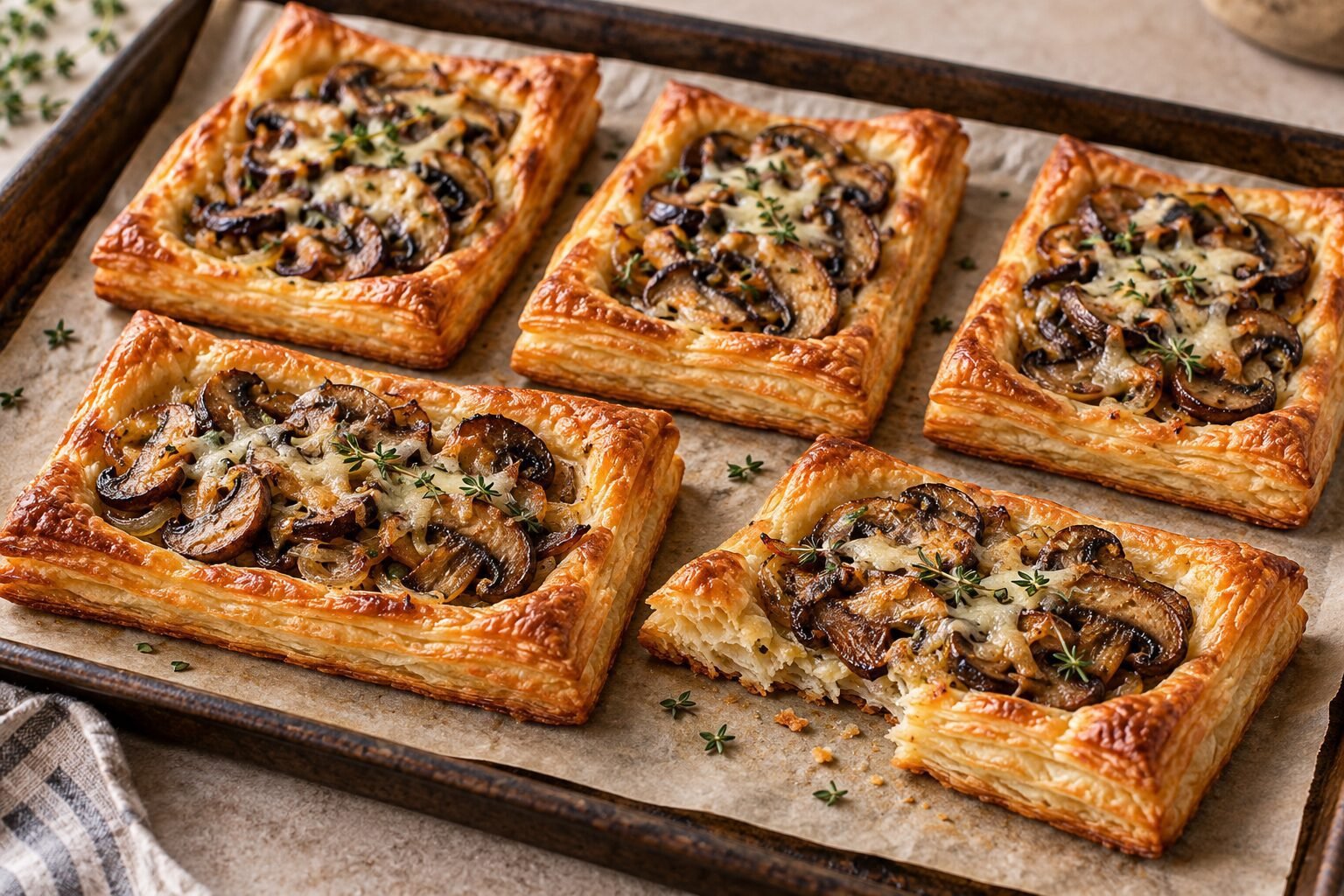
A box of puff pastry in the freezer can turn an ordinary morning into something that feels much more special. Its crisp, buttery layers provide an easy starting point for savory brunch tarts, cheese-filled pinwheels, fruit pastries, and portable breakfast pockets. The eight puff pastry breakfast recipes in this collection use that versatility to create dishes for busy weekdays, relaxed weekends, and occasions when you want breakfast to look impressive without preparing laminated dough from scratch.
Some of these recipes are hearty enough to serve as the main part of breakfast. The ham, egg, and cheddar braid, for example, combines familiar morning ingredients inside a golden pastry shell. The bacon, egg, and asparagus breakfast pizza is designed for sharing, while the spinach and feta pinwheels make tidy individual portions for a brunch platter.
There are lighter and sweeter choices as well. Cream cheese and berry jam danishes bring a bakery-inspired touch to the table, and the apple cinnamon turnovers provide a warm, comforting finish. Between those two ends of the collection, you will also find mushroom and Gruyère tartlets, sweet potato and bacon turnovers, and a tomato, basil, and ricotta tart.
Working With Store-Bought Puff Pastry
Store-bought pastry makes these breakfasts approachable, but a few details determine whether the finished layers become crisp and flaky or remain flat and soft. The most important rule is to keep the dough cold.
Frozen puff pastry should generally be thawed in the refrigerator according to its package directions. It needs to become flexible enough to unfold without cracking, but it should still feel cool and firm. If the dough becomes sticky, shiny, or difficult to handle, place it back in the refrigerator for 10–15 minutes before continuing. Cold pastry rises more successfully because the layers of fat remain separate until they enter the hot oven.
Avoid leaving the pastry on the counter while preparing a complicated filling. Cook and cool the filling first, then remove the pastry from the refrigerator when you are ready to assemble the recipe. This small change makes the process calmer and produces a more reliable result.
Keep Moisture Under Control
Excess liquid is one of the most common reasons puff pastry develops a soggy bottom. Ingredients such as spinach, mushrooms, tomatoes, apples, and scrambled eggs need a little preparation before they meet the dough.
Cook mushrooms until the moisture they release has evaporated. Squeeze cooked spinach thoroughly and allow scrambled eggs to cool before using them. Drain or seed juicy tomatoes, and thicken fruit fillings so their liquid does not escape during baking. Any cooked filling should reach room temperature before it is placed on the pastry. A hot filling can soften the butter layers before the baking even begins.
The amount of filling matters too. A pastry may look more generous when it is heavily filled, but overstuffed pockets are harder to seal and more likely to split in the oven. Leaving a clean border around the edges provides space for egg wash and proper sealing.
Scoring, Docking, and Sealing
Different puff pastry breakfast recipes require slightly different handling. Open tarts and breakfast pizzas benefit from a lightly scored border. Drawing a shallow line around the edge with a sharp knife allows the rim to rise while the center remains available for toppings. The center should usually be pricked with a fork—a technique known as docking—to control excessive puffing.
Larger tarts with moist toppings may also need to be partially baked before the filling is added. This gives the base a head start and helps it remain crisp beneath eggs, cheese, or vegetables.
For turnovers and enclosed pastries, brush the inside edges lightly with egg wash or water, then press them together firmly. Crimping with a fork creates an additional seal. Cut one or two small vents into the top so steam can escape instead of forcing the pastry apart.
An egg wash made with beaten egg and a small amount of water or milk gives the surface an attractive golden finish. Apply only a thin coating and avoid allowing it to run heavily down the cut edges, where it can seal the layers and limit their rise.
Serving and Reheating Puff Pastry Breakfasts
Puff pastry is at its best when freshly baked and allowed to rest for a few minutes. Serving it immediately from the oven can make the filling difficult to cut and may hide whether the center has completely set. A short resting period allows the pastry to firm while it remains warm and crisp.
Many of these recipes can be assembled partly in advance, but the best method depends on the filling. Cooked fillings can often be prepared the day before and refrigerated separately. Sweet and savory turnovers can sometimes be frozen unbaked, while egg-filled pastries are generally better baked fresh.
When reheating leftovers, use an oven or air fryer whenever possible. Gentle dry heat restores more of the pastry’s crisp texture than a microwave, which tends to make the layers soft. Store leftovers containing eggs, meat, cheese, or cooked vegetables promptly in the refrigerator and follow the individual storage guidance included with each recipe.
Whether you are planning a brunch for friends or preparing something more enjoyable for an ordinary morning, these puff pastry breakfast recipes provide eight distinct ways to begin. Each recipe includes exact quantities, clear preparation steps, practical tips, variations, and storage instructions, so you can create a breakfast that looks inviting and works reliably in a home kitchen.
1. Ham, Egg and Cheddar Puff Pastry Braid
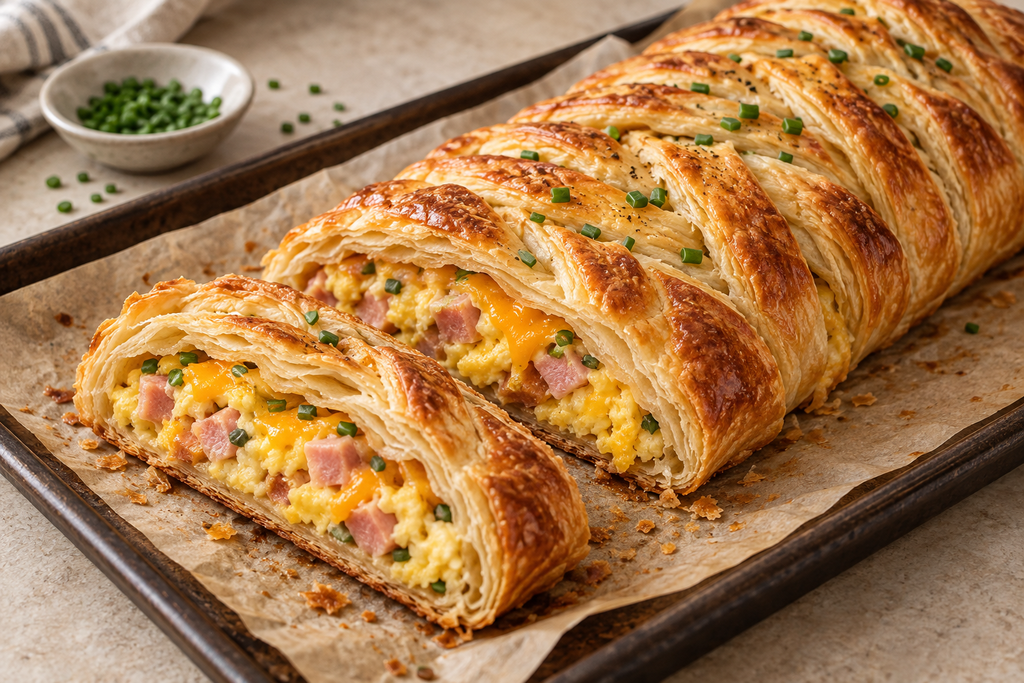
A Ham, Egg and Cheddar Puff Pastry Braid turns familiar breakfast ingredients into an inviting centerpiece for the table. Soft scrambled eggs, savory ham, and melted sharp cheddar are enclosed in crisp layers of golden pastry. The braided top makes the finished bake look elaborate, even though the shaping technique is surprisingly manageable.
This recipe is particularly useful when you have leftover cooked ham, but good-quality thick-cut deli ham works just as well. Serve the braid with fresh fruit for breakfast or add a lightly dressed green salad for brunch. Allow it to rest briefly after baking so the filling settles and the slices hold together neatly.
Servings: 6
Preparation time: 20 minutes
Cooking time: 22–26 minutes
Cooling time: 10 minutes
Total time: Approximately 55 minutes
Ingredients
- 1 sheet frozen puff pastry, thawed according to the package directions
- 1 tablespoon unsalted butter
- 5 large eggs
- 1 tablespoon milk or heavy cream
- ¼ teaspoon salt
- ⅛ teaspoon ground black pepper
- 1 teaspoon Dijon mustard
- 1 cup cooked ham, cut into small cubes
- 1 cup shredded sharp cheddar cheese
- 2 tablespoons chopped fresh chives or green onions
- 1 large egg mixed with 1 teaspoon water, for the egg wash
- All-purpose flour, for dusting the work surface
Instructions
- Melt the butter in a nonstick skillet over medium-low heat.
- Crack five eggs into a bowl. Add the milk, salt, and black pepper, then whisk until evenly combined.
- Pour the eggs into the skillet and cook slowly, stirring with a silicone spatula. Remove them from the heat while they are still slightly softer than you would normally serve them. They will continue cooking inside the pastry.
- Transfer the scrambled eggs to a plate and spread them into a thin layer. Allow them to cool completely. Warm eggs can soften the butter layers in the puff pastry and prevent them from rising properly.
- Preheat the oven to 400°F (200°C). Line a large baking sheet with parchment paper.
- Lightly flour the work surface. Unfold the cold puff pastry and gently roll it into a rectangle measuring approximately 10 by 12 inches. Transfer it to the prepared baking sheet.
- Visually divide the pastry lengthwise into three equal sections. Leave the center section intact. Using a sharp knife or pizza cutter, cut the two outer sections into diagonal strips approximately 1 inch wide.
- Spread the Dijon mustard in a thin layer down the center section, leaving approximately 1 inch uncovered at both ends.
- Arrange the cooled scrambled eggs over the mustard. Add the diced ham, cheddar cheese, and chopped chives. Keep the filling within the center section and avoid piling it too high.
- Fold the short top and bottom edges of the pastry over the filling. Working from alternating sides, bring the diagonal strips across the center to create a braided pattern. Allow the strips to overlap slightly and press the final ends underneath the braid.
- Brush the exposed pastry lightly with the egg wash. Do not allow a large amount to collect along the cut edges.
- Bake for 22–26 minutes, or until the pastry is deeply golden, puffed, and crisp on the bottom.
- Let the braid rest on the baking sheet for 10 minutes before transferring it to a board and cutting it into six slices.
A Practical Preparation Tip
The scrambled eggs should be soft but not wet when removed from the skillet. If they are cooked until completely firm at this stage, they may become rubbery during baking. If they remain runny, however, they can release liquid and make the bottom of the pastry soggy.
Cool all the filling ingredients before assembling the braid. If the pastry becomes soft while you are shaping it, refrigerate the entire baking sheet for 10–15 minutes before applying the egg wash and baking.
Easy Variations
Replace the ham with cooked crumbled breakfast sausage or chopped turkey. Swiss, Monterey Jack, or Gruyère can be used instead of cheddar.
For a vegetable variation, omit the ham and add sautéed mushrooms or roasted red pepper. Cook vegetables first and remove as much moisture as possible before adding them to the filling.
A thin layer of softened cream cheese can replace the Dijon mustard when you want a milder, creamier flavor.
Storage and Reheating
The Ham, Egg and Cheddar Puff Pastry Braid is best served on the day it is baked. Refrigerate leftovers in an airtight container within two hours and consume them within three days.
Reheat individual slices in a 350°F (175°C) oven or air fryer for 6–10 minutes. This restores more of the crisp texture than microwave reheating. Make sure the egg and ham filling is hot in the center before serving.
Freezing the completed braid is possible, but the scrambled egg filling may release some moisture after thawing. For the best result, prepare the filling one day ahead, store it separately in the refrigerator, and assemble the braid shortly before baking.
2. Bacon, Egg and Asparagus Puff Pastry Breakfast Pizza
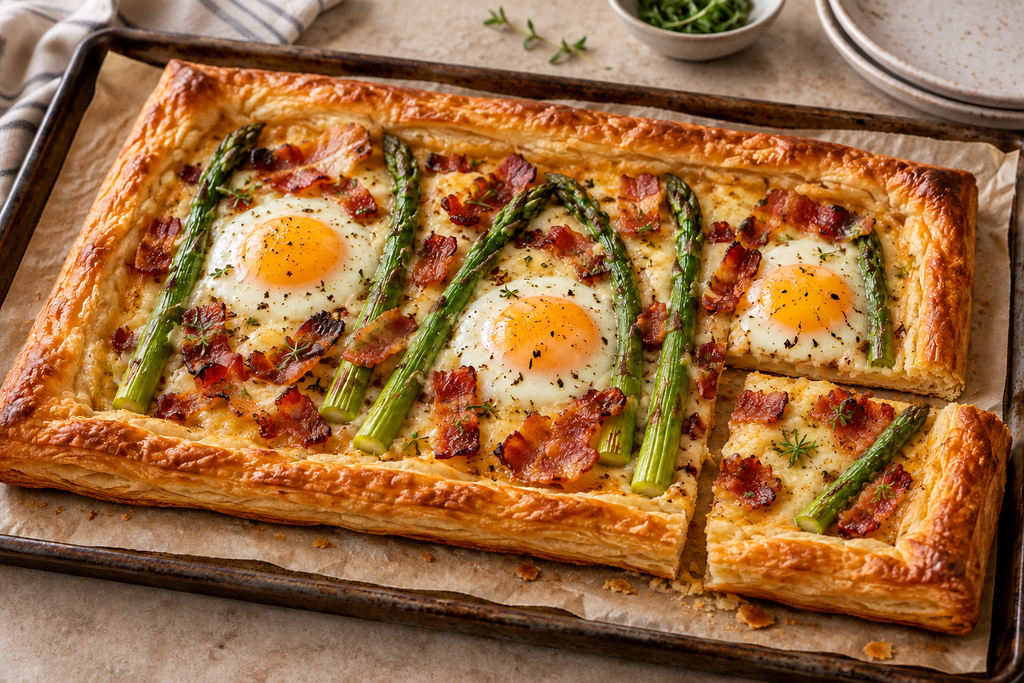
Bacon, Egg and Asparagus Puff Pastry Breakfast Pizza is a colorful, shareable option for a weekend brunch. Crisp pastry forms the base, while smoky bacon, tender asparagus, melted cheese, and baked eggs turn it into a complete savory breakfast.
The recipe may look elaborate when it reaches the table, but most of the work involves arranging the toppings. Scoring, docking, and partially baking the pastry before adding the eggs helps create a crisp center and a tall, flaky border. Serve the pizza directly from a cutting board and slice it into squares while it is still warm.
Servings: 4–6
Preparation time: 15 minutes
Cooking time: 20–24 minutes
Total time: Approximately 40 minutes
Ingredients
- 1 sheet frozen puff pastry, thawed according to the package directions
- 5 slices bacon
- 6 thin asparagus spears
- ¾ cup shredded Gruyère, cheddar, or Monterey Jack cheese
- 3 large eggs
- 1 teaspoon Dijon mustard
- 1 tablespoon milk or heavy cream
- 1 large egg mixed with 1 teaspoon water, for the egg wash
- ⅛ teaspoon ground black pepper
- A small pinch of salt
- 1 tablespoon chopped fresh parsley or chives
- All-purpose flour, for dusting
Instructions
- Preheat the oven to 400°F (200°C). Line a large baking sheet with parchment paper.
- Cook the bacon in a skillet until crisp. Transfer it to a paper-towel-lined plate, allow it to cool, and break it into small pieces.
- Trim the woody ends from the asparagus. If the spears are thicker than a pencil, slice them lengthwise so they cook at the same rate as the pastry.
- Lightly flour the work surface. Unfold the cold puff pastry and gently roll it into a rectangle measuring approximately 10 by 12 inches. Transfer it to the prepared baking sheet.
- Using a sharp knife, score a border approximately ¾ inch from the edge of the pastry. Do not cut all the way through. Prick the center section repeatedly with a fork, leaving the border untouched.
- Mix the Dijon mustard with the milk or cream. Brush this mixture in a very thin layer over the docked center of the pastry.
- Brush the outer border lightly with egg wash.
- Bake the pastry without the toppings for 9–10 minutes. Remove it from the oven. If the center has risen significantly, gently press it down with the back of a spoon while leaving the border puffed.
- Sprinkle the cheese evenly across the center. Arrange the asparagus and cooked bacon over the cheese, leaving three small spaces for the eggs.
- Crack each egg into a separate small bowl, then carefully slide it into one of the spaces on the pastry. Using a bowl first makes it easier to control the placement and remove any shell fragments.
- Season the eggs with black pepper and a very small amount of salt. The bacon and cheese already provide considerable seasoning.
- Return the pizza to the oven and bake for another 10–14 minutes. The pastry should be deeply golden, the cheese melted, and the egg whites completely set. Continue baking slightly longer if you prefer firm yolks.
- Let the breakfast pizza rest for 3–5 minutes. Sprinkle it with chopped parsley or chives, then slice and serve warm.
A Practical Preparation Tip
Choose thin asparagus spears whenever possible. Thick spears may remain too firm during the short second baking period. They can be blanched for 1–2 minutes and dried thoroughly before being placed on the pastry if thin asparagus is unavailable.
The initial baking stage is important. Adding raw eggs and vegetables to uncooked puff pastry can leave the center compressed and soft while the outside browns. Docking the center controls its rise, while the unpricked border expands into a crisp frame.
Easy Variations
Replace the bacon with diced cooked ham, smoked salmon, or sautéed mushrooms. Mushrooms should be cooked until their released moisture has evaporated.
Crumbled feta can replace the shredded cheese for a sharper flavor. Cherry tomatoes can also be added, but cut them in half, remove some of the seeds, and place them cut-side up to limit the amount of liquid reaching the pastry.
For a meat-free version, omit the bacon and add roasted red pepper or lightly sautéed spinach that has been squeezed dry.
Storage and Reheating
Bacon, Egg and Asparagus Puff Pastry Breakfast Pizza is best enjoyed shortly after baking. Refrigerate leftovers in an airtight container within two hours and consume them within two days.
Reheat the slices in a 350°F (175°C) oven or air fryer for approximately 6–8 minutes. Microwave reheating will warm the toppings but soften the pastry.
Freezing is not recommended because the baked eggs and asparagus can change texture after thawing. The bacon can be cooked and the asparagus trimmed one day ahead, allowing the pizza to be assembled quickly before serving.
3. Cream Cheese and Berry Jam Breakfast Danishes
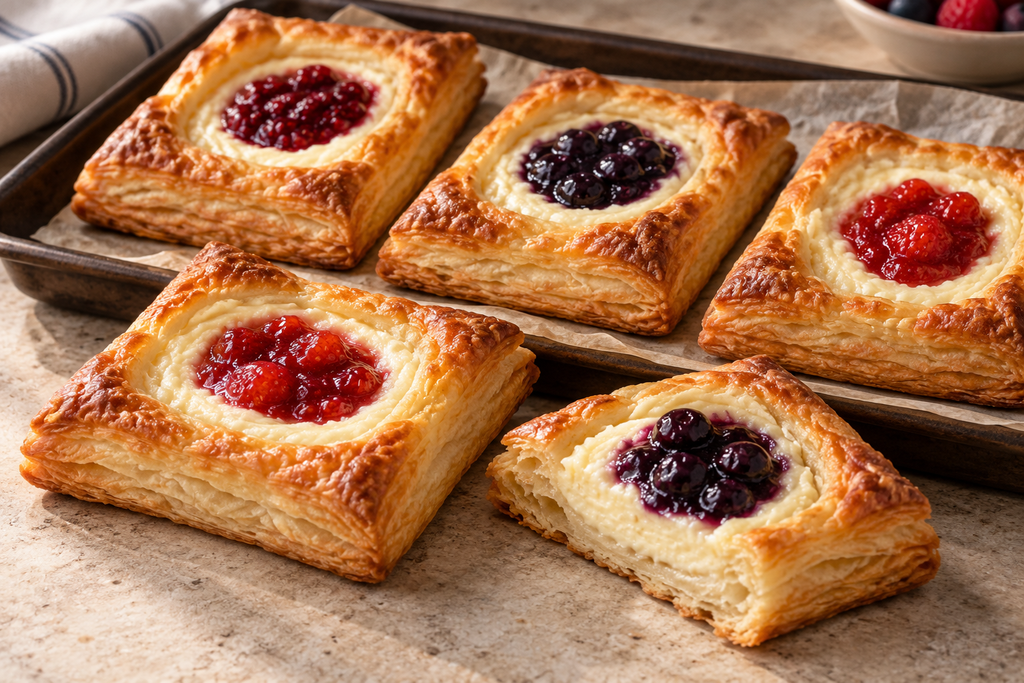
Cream Cheese and Berry Jam Breakfast Danishes bring a cheerful, bakery-inspired element to the morning table. Each pastry has a crisp, flaky border surrounding a soft vanilla cream cheese filling and a small spoonful of colorful berry jam. They look impressive enough for a celebration brunch but require only one sheet of store-bought puff pastry.
Raspberry, strawberry, blueberry, and mixed berry jam all work well, allowing you to create several flavors from one batch. The pastries are best served slightly warm or at room temperature, once the filling has had enough time to set.
Servings: 6 pastries
Preparation time: 20 minutes
Chilling time: 10 minutes
Cooking time: 16–20 minutes
Total time: Approximately 50 minutes
Ingredients
- 1 sheet frozen puff pastry, thawed according to the package directions
- 4 ounces cream cheese, softened
- 2 tablespoons granulated sugar
- 1 large egg yolk
- ½ teaspoon vanilla extract
- ½ teaspoon finely grated lemon zest
- A small pinch of salt
- 6 teaspoons thick berry jam
- 1 large egg mixed with 1 teaspoon water, for the egg wash
- All-purpose flour, for dusting
- Fresh berries, optional for serving
- Powdered sugar, optional for serving
Instructions
- Line a large baking sheet with parchment paper.
- Place the softened cream cheese in a medium bowl. Add the sugar, egg yolk, vanilla, lemon zest, and salt. Beat until the mixture is smooth and evenly combined. Refrigerate the filling while preparing the pastry.
- Lightly flour the work surface. Unfold the cold puff pastry and gently roll it into a rectangle measuring approximately 10 by 12 inches.
- Cut the pastry into six equal rectangles. Transfer them to the prepared baking sheet, leaving space between each one.
- Using the tip of a sharp knife, score a border approximately ½ inch from the edges of each rectangle. Do not cut all the way through the pastry.
- Prick the center section of each rectangle several times with a fork, leaving the scored border untouched.
- Spoon approximately one heaped tablespoon of cream cheese filling into the center of each pastry. Spread it gently within the scored border.
- Make a small indentation in the cream cheese and add one teaspoon of berry jam. Avoid spreading the jam to the edges.
- Brush the exposed pastry borders lightly with egg wash.
- Refrigerate the assembled danishes for 10 minutes. Meanwhile, preheat the oven to 400°F (200°C).
- Bake for 16–20 minutes, or until the borders are deeply golden and puffed. The cream cheese centers should appear set rather than liquid.
- Allow the pastries to cool on the baking sheet for 10 minutes before transferring them to a wire rack.
- If desired, add a few fresh berries after cooling or finish the danishes with a very light dusting of powdered sugar.
A Practical Preparation Tip
Use a thick jam or preserve rather than a thin fruit sauce. Runny fillings are more likely to spread over the pastry and burn on the baking sheet. One teaspoon may seem modest, but it provides enough fruit flavor without overwhelming the cream cheese or making the center unstable.
Keep the jam surrounded by cream cheese rather than placing it directly against the pastry. This creates a barrier that helps protect the crisp base from moisture.
Easy Variations
Use apricot, cherry, or peach preserves instead of berry jam. Lemon curd also works, but reduce the amount slightly because it tends to soften more quickly in the oven.
For a warmer flavor, replace the lemon zest with orange zest. A small amount of almond extract can be used with cherry or raspberry jam, but add no more than ⅛ teaspoon because its flavor is concentrated.
Chopped toasted almonds can be sprinkled over the borders after applying the egg wash.
Storage and Reheating
Cream Cheese and Berry Jam Breakfast Danishes are best on the day they are baked. Because they contain a dairy-and-egg filling, refrigerate leftovers in an airtight container and consume them within three days.
Reheat them in a 325°F (165°C) oven for 6–8 minutes. Let them rest briefly before eating, as the jam can become hotter than the surrounding pastry. Microwave reheating is not recommended because it softens the flaky layers.
The shaped, unbaked pastries can be frozen without the egg wash for up to one month. Freeze them on a tray, then transfer them to a freezer-safe container. Brush with egg wash and bake directly from frozen, adding several minutes to the cooking time.
4. Spinach and Feta Puff Pastry Pinwheels
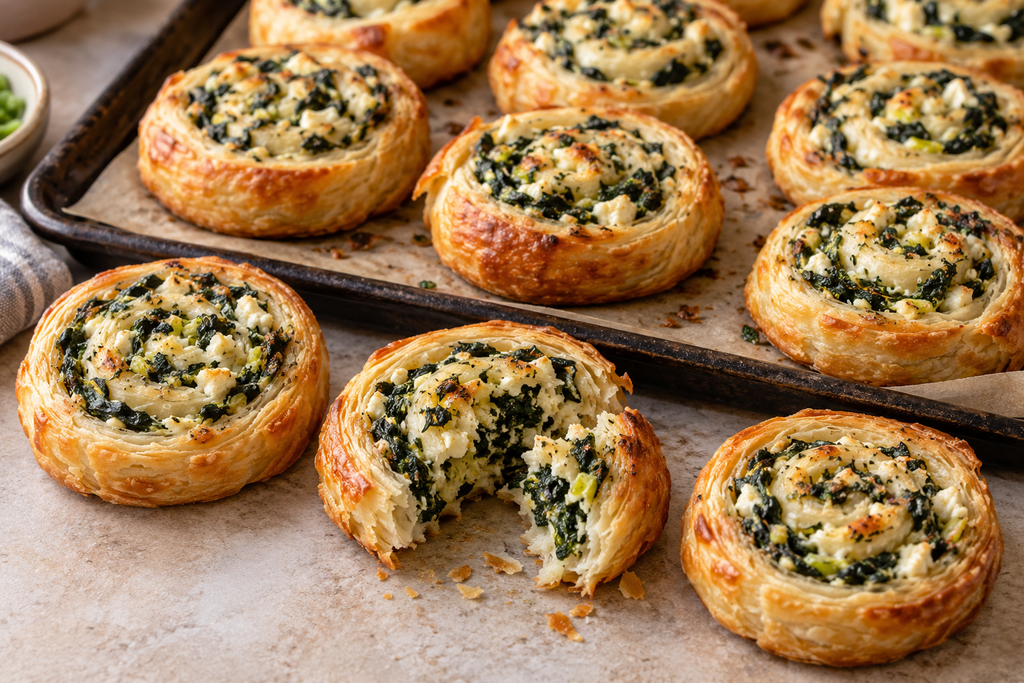
Spinach and Feta Puff Pastry Pinwheels combine a crisp, spiral-shaped pastry with a savory Mediterranean-inspired filling. Spinach, feta, garlic, and a small amount of cream cheese create a mixture that is flavorful enough for brunch but firm enough to remain inside the pastry as it bakes.
Their individual size makes these pinwheels especially convenient for a breakfast buffet or gathering. They can be served warm or at room temperature, and guests can pick one up without needing a knife and fork. Pair them with eggs, sliced tomatoes, or a bowl of thick yogurt seasoned with lemon and herbs.
Servings: 12 pinwheels
Preparation time: 20 minutes
Chilling time: 20 minutes
Cooking time: 18–22 minutes
Total time: Approximately 1 hour
Ingredients
- 1 sheet frozen puff pastry, thawed according to the package directions
- 1 teaspoon olive oil
- 5 ounces fresh baby spinach
- 1 small garlic clove, finely minced
- 3 ounces cream cheese, softened
- ¾ cup crumbled feta cheese
- 2 tablespoons finely chopped green onions
- 1 teaspoon finely grated lemon zest
- ¼ teaspoon dried oregano
- ⅛ teaspoon ground black pepper
- A small pinch of salt, if needed
- 1 large egg mixed with 1 teaspoon water, for the egg wash
- All-purpose flour, for dusting
Instructions
- Heat the olive oil in a large skillet over medium heat. Add the spinach and cook for 1–2 minutes, stirring until completely wilted.
- Add the minced garlic and cook for another 30 seconds. Remove the skillet from the heat and allow the spinach to cool.
- Transfer the cooled spinach to a clean kitchen towel or several layers of paper towel. Squeeze firmly to remove as much liquid as possible, then chop it finely.
- In a medium bowl, mix the cream cheese, feta, green onions, lemon zest, oregano, and black pepper. Fold in the chopped spinach and garlic.
- Taste the filling before adding salt. Feta can be quite salty, so additional seasoning may not be necessary.
- Lightly flour the work surface. Unfold the cold puff pastry and gently roll it into a rectangle measuring approximately 10 by 12 inches.
- Spread the spinach and feta filling evenly over the pastry, leaving a ½-inch border along one long edge.
- Starting from the opposite long edge, roll the pastry into a firm log. Keep the roll compact without pressing so hard that the filling escapes.
- Brush the uncovered border lightly with egg wash and press it against the log to seal the seam.
- Wrap the log loosely in parchment paper and refrigerate it for 20 minutes. Meanwhile, preheat the oven to 400°F (200°C) and line a large baking sheet with parchment paper.
- Using a sharp knife, cut the chilled log into 12 slices, each approximately 1 inch thick. Wipe the knife between cuts if filling begins to collect on the blade.
- Arrange the pinwheels flat on the prepared baking sheet, leaving approximately 2 inches between them. Reshape any flattened spirals gently with your fingers.
- Brush the exposed pastry lightly with egg wash.
- Bake for 18–22 minutes, or until the pinwheels are puffed, crisp, and deeply golden around the edges.
- Let them cool on the baking sheet for 5 minutes before transferring them to a wire rack or serving platter.
A Practical Preparation Tip
Removing the spinach’s moisture is essential. Even spinach that looks dry in the pan can hold enough water to soften the pastry and cause the spirals to separate. After squeezing it in a towel, the spinach should form a compact, relatively dry bundle.
Chilling the assembled log also makes a significant difference. Cold pastry is easier to slice cleanly, holds its spiral shape better, and produces more distinct flaky layers in the oven.
Easy Variations
Add 2 tablespoons of finely chopped sun-dried tomatoes that have been thoroughly drained and patted dry. Fresh dill can replace the oregano for a brighter flavor.
Ricotta can be used instead of cream cheese, but it should be well drained first. Since ricotta contains more moisture, use only ¼ cup and combine it with the feta before checking the filling’s consistency.
For a little heat, add a pinch of crushed red pepper flakes.
Storage and Reheating
Spinach and Feta Puff Pastry Pinwheels are best on the day they are baked. Refrigerate cooled leftovers in an airtight container for up to three days.
Reheat them in a 350°F (175°C) oven or air fryer for 5–8 minutes. This restores the crisp exterior more effectively than a microwave.
The unbaked sliced pinwheels can be frozen on a parchment-lined tray. Once firm, transfer them to a freezer-safe container and store for up to one month. Bake directly from frozen, applying the egg wash immediately before baking and allowing several additional minutes in the oven.
5. Mushroom and Gruyère Puff Pastry Tartlets
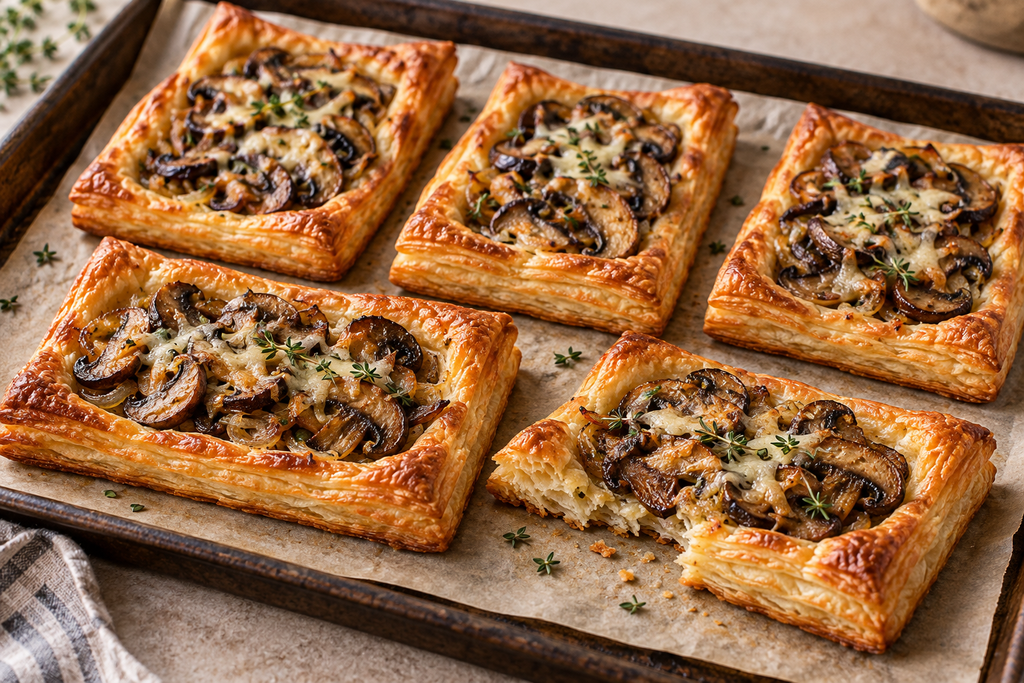
Mushroom and Gruyère Puff Pastry Tartlets combine crisp pastry with earthy mushrooms, nutty cheese, shallot, and thyme. Their open design allows the mushrooms to continue browning in the oven instead of steaming inside an enclosed pocket.
These tartlets make an elegant addition to breakfast or brunch without requiring complicated shaping. Serve them with softly scrambled eggs, a simple green salad, or sliced tomatoes. They are also enjoyable at room temperature, which makes them convenient when several dishes need to reach the table together.
Servings: 6 tartlets
Preparation time: 20 minutes
Cooking time: 20–24 minutes
Total time: Approximately 45 minutes
Ingredients
- 1 sheet frozen puff pastry, thawed according to the package directions
- 8 ounces cremini or button mushrooms
- 1 tablespoon unsalted butter
- 1 teaspoon olive oil
- 1 small shallot, finely chopped
- 1 garlic clove, finely minced
- 1 teaspoon fresh thyme leaves or ¼ teaspoon dried thyme
- ¼ teaspoon salt
- ⅛ teaspoon ground black pepper
- 1 teaspoon Dijon mustard
- ¾ cup shredded Gruyère cheese
- 1 large egg mixed with 1 teaspoon water, for the egg wash
- All-purpose flour, for dusting
- Chopped fresh parsley or additional thyme, for serving
Instructions
- Clean the mushrooms with a slightly damp paper towel and slice them thinly. Avoid soaking them in water.
- Heat the butter and olive oil in a large skillet over medium-high heat. Add the mushrooms in a relatively even layer.
- Cook for 6–8 minutes, stirring only occasionally, until the mushrooms are browned and the liquid they release has completely evaporated.
- Add the shallot and cook for 2 minutes. Stir in the garlic, thyme, salt, and black pepper, then cook for another 30 seconds.
- Transfer the mushroom mixture to a plate and spread it into a thin layer. Let it cool completely before assembling the tartlets.
- Preheat the oven to 400°F (200°C). Line a large baking sheet with parchment paper.
- Lightly flour the work surface. Unfold the cold puff pastry and gently roll it into a rectangle measuring approximately 10 by 12 inches.
- Cut the pastry into six equal rectangles and transfer them to the prepared baking sheet.
- Score a border approximately ½ inch from the edges of each rectangle without cutting all the way through. Prick the center sections several times with a fork.
- Brush the pastry borders lightly with egg wash.
- Bake the empty pastry rectangles for 7 minutes. Remove them from the oven. If the centers have puffed, gently press them down with the back of a spoon while keeping the raised borders intact.
- Spread an extremely thin layer of Dijon mustard inside each border.
- Divide half of the Gruyère among the pastry centers. Add the cooled mushroom mixture, then finish with the remaining cheese.
- Return the tartlets to the oven and bake for another 13–17 minutes, until the borders are deeply golden, the bottoms are crisp, and the cheese is melted.
- Allow them to rest on the baking sheet for 5 minutes. Garnish with parsley or fresh thyme and serve warm.
A Practical Preparation Tip
Do not crowd the mushrooms in a small skillet. When packed too tightly, they release moisture faster than it can evaporate and begin to steam. Use a wide pan or cook them in two batches if necessary.
The mushroom mixture must be cool and relatively dry before it reaches the pastry. If visible liquid remains in the pan, continue cooking for another minute or two. This step contributes more to a crisp tartlet than adding extra flour or breadcrumbs later.
Easy Variations
Use a mixture of cremini, shiitake, and oyster mushrooms for a more complex flavor. Remove any tough stems before slicing.
Swiss cheese, aged cheddar, or goat cheese can replace Gruyère. If using goat cheese, crumble it sparingly because its flavor is more pronounced.
A small handful of finely chopped cooked spinach can be added, provided it has been squeezed completely dry. For additional richness, spread a teaspoon of crème fraîche inside each pastry border instead of Dijon mustard.
Storage and Reheating
Mushroom and Gruyère Puff Pastry Tartlets are best served on the day they are baked. Cool leftovers completely, refrigerate them in an airtight container, and consume them within three days.
Reheat the tartlets in a 350°F (175°C) oven or air fryer for 6–8 minutes. Avoid using the microwave if maintaining the crisp pastry is important.
The mushroom filling can be prepared up to two days in advance and refrigerated separately. Assemble and bake the tartlets shortly before serving. Freezing the baked tartlets is possible for up to one month, although freshly assembled pastry will provide the best texture.
6. Sweet Potato, Bacon and Goat Cheese Turnovers
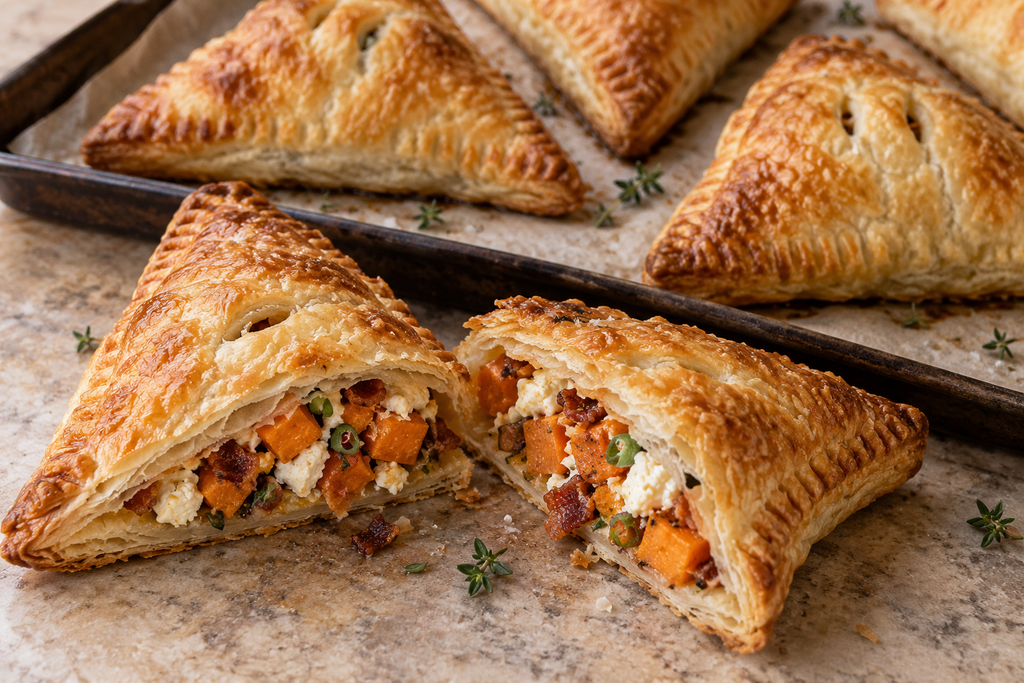
Sweet Potato, Bacon and Goat Cheese Turnovers balance several contrasting flavors in one crisp pastry pocket. Roasted sweet potato provides a mellow sweetness, bacon adds a smoky, salty note, and goat cheese brings a gentle tang that keeps the filling from feeling heavy. Fresh thyme and a small amount of maple syrup connect the ingredients without making the turnovers overly sweet.
These pastries work well as part of an autumn brunch, but their portable shape also makes them suitable for packed breakfasts or a light lunch. Serve them warm or at room temperature with fresh fruit, a green salad, or a spoonful of plain yogurt seasoned with black pepper.
Servings: 8 turnovers
Preparation time: 30 minutes
Cooking time: 40–45 minutes, including roasting
Cooling time: 15 minutes
Total time: Approximately 1 hour 30 minutes
Ingredients
- 2 sheets frozen puff pastry, thawed according to the package directions
- 1 medium sweet potato, approximately 12 ounces
- 1 teaspoon olive oil
- ¼ teaspoon salt
- ⅛ teaspoon ground black pepper
- 4 slices bacon
- 4 ounces soft goat cheese, crumbled
- 1 teaspoon pure maple syrup
- 1 teaspoon fresh thyme leaves or ¼ teaspoon dried thyme
- 1 tablespoon finely chopped green onions, optional
- 1 large egg mixed with 1 teaspoon water, for the egg wash
- All-purpose flour, for dusting
Instructions
- Preheat the oven to 400°F (200°C). Line a large baking sheet with parchment paper.
- Peel the sweet potato and cut it into small cubes measuring approximately ¼ inch. Smaller pieces cook more evenly and make the turnovers easier to seal.
- Toss the sweet potato with the olive oil, salt, and black pepper. Spread the cubes in a single layer on the prepared baking sheet.
- Roast for 18–22 minutes, stirring once, until the sweet potato is tender and lightly browned but still holds its shape.
- While the sweet potato roasts, cook the bacon in a skillet until crisp. Transfer it to a paper-towel-lined plate and let it cool before breaking it into small pieces.
- Transfer the roasted sweet potato to a large plate and allow it to cool completely.
- In a medium bowl, gently combine the cooled sweet potato, bacon, goat cheese, maple syrup, thyme, and green onions. Avoid mashing the sweet potato completely; some small pieces should remain visible.
- Line a second large baking sheet with parchment paper.
- Lightly flour the work surface. Unfold the cold puff pastry sheets and gently roll each one into a square measuring approximately 10 inches.
- Cut each sheet into four equal squares to create eight portions.
- Place approximately ⅓ cup of filling slightly to one side of the center of each square, leaving a clean border around the edges. Do not overfill.
- Brush the pastry edges lightly with egg wash. Fold each square diagonally over the filling to form a triangle.
- Press the edges together firmly, then crimp them with a fork. Cut two small steam vents in the top of every turnover.
- Arrange the turnovers on the prepared baking sheet, leaving space between them. Brush the tops lightly with egg wash.
- If the pastry has softened during assembly, refrigerate the baking sheet for 10–15 minutes before baking.
- Bake at 400°F (200°C) for 20–24 minutes, or until the turnovers are deeply golden, puffed, and crisp on the bottom.
- Allow them to rest for at least 10 minutes before serving because the filling remains hot longer than the exterior.
A Practical Preparation Tip
All three major filling ingredients should be cool and relatively dry before assembly. Drain the bacon thoroughly and roast the sweet potato instead of boiling it. Boiled sweet potato absorbs water and can create a softer pastry base.
Do not mash the filling into a smooth paste. Distinct pieces of sweet potato, bacon, and goat cheese provide a better texture and make it easier to judge how much filling is going into each turnover.
Easy Variations
Replace the goat cheese with crumbled feta or shredded sharp cheddar. Feta creates a saltier result, while cheddar produces a milder and more familiar breakfast flavor.
Cooked turkey bacon can replace pork bacon. For a meat-free version, omit the bacon and add toasted chopped pecans or sautéed red onion.
A pinch of smoked paprika or cayenne can be added for warmth. If you prefer a less sweet filling, omit the maple syrup entirely.
Storage and Reheating
Sweet Potato, Bacon and Goat Cheese Turnovers are best on the day they are baked. Refrigerate cooled leftovers in an airtight container within two hours and consume them within three days.
Reheat the turnovers in a 350°F (175°C) oven or air fryer for 7–10 minutes. Let them rest briefly before eating. Microwave reheating will soften the pastry.
Unbaked turnovers can be frozen on a parchment-lined tray. Once solid, transfer them to a freezer-safe container and store for up to one month. Brush them with egg wash immediately before baking from frozen and add approximately 5–8 minutes to the cooking time.
7. Tomato, Basil and Ricotta Puff Pastry Breakfast Tart
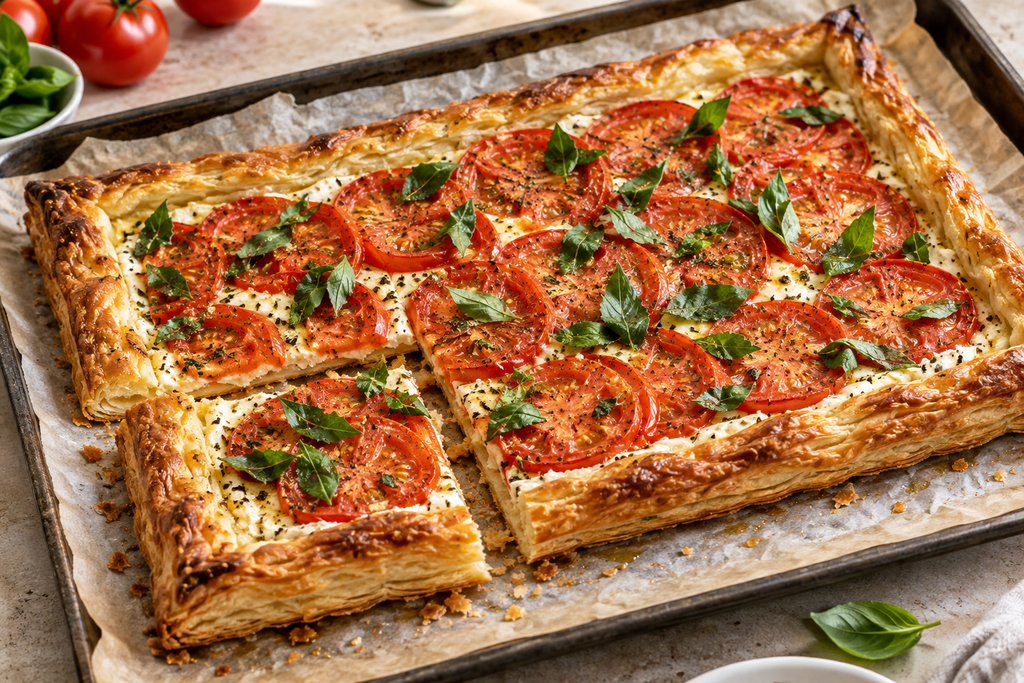
Tomato, Basil and Ricotta Puff Pastry Breakfast Tart is a fresh, colorful option for mornings when you want something savory without relying on bacon or sausage. A crisp rectangular pastry base supports a thin layer of seasoned ricotta and overlapping tomato slices. Fresh basil added after baking provides fragrance and a clean contrast to the warm cheese and pastry.
This tart works particularly well for a late breakfast or brunch. Cut it into larger portions as a main dish or smaller squares for a buffet. It can be served warm or at room temperature alongside eggs, salad, or fresh fruit.
Servings: 6
Preparation time: 25 minutes
Resting time for the tomatoes: 15 minutes
Cooking time: 22–27 minutes
Total time: Approximately 1 hour
Ingredients
- 1 sheet frozen puff pastry, thawed according to the package directions
- 2–3 medium ripe tomatoes
- ½ teaspoon salt, divided
- ¾ cup whole-milk ricotta, well drained
- ¼ cup finely grated Parmesan cheese
- 1 large egg yolk
- ½ teaspoon finely grated lemon zest
- ¼ teaspoon garlic powder
- ⅛ teaspoon ground black pepper
- 1 teaspoon Dijon mustard
- 1 large egg mixed with 1 teaspoon water, for the egg wash
- ⅓ cup fresh basil leaves
- 1 teaspoon extra-virgin olive oil, optional
- All-purpose flour, for dusting
Instructions
- Slice the tomatoes approximately ¼ inch thick. Arrange them in a single layer on several sheets of paper towel.
- Sprinkle the tomato slices with ¼ teaspoon salt and let them rest for 15 minutes. Blot the tops thoroughly with additional paper towel to remove the released moisture.
- Preheat the oven to 400°F (200°C). Line a large baking sheet with parchment paper.
- In a medium bowl, combine the drained ricotta, Parmesan, egg yolk, lemon zest, garlic powder, black pepper, and the remaining ¼ teaspoon salt. Mix until evenly combined.
- Lightly flour the work surface. Unfold the cold puff pastry and gently roll it into a rectangle measuring approximately 10 by 12 inches. Transfer it to the prepared baking sheet.
- Score a border approximately ¾ inch from the edges of the pastry without cutting all the way through. Prick the center section repeatedly with a fork, leaving the border untouched.
- Brush the outer border lightly with egg wash.
- Bake the pastry without its toppings for 8 minutes. Remove it from the oven. If the center has risen, press it down gently with the back of a spoon while leaving the border puffed.
- Spread the Dijon mustard in a very thin layer over the center of the pastry.
- Spoon the ricotta mixture over the mustard and spread it evenly within the scored border.
- Arrange the dried tomato slices over the ricotta. Overlap them only slightly so that moisture can escape during baking.
- Return the tart to the oven and bake for 14–19 minutes, until the pastry is deeply golden, the bottom is crisp, and the tomatoes are tender around the edges.
- Allow the tart to rest for 5–10 minutes.
- Tear or slice the fresh basil and scatter it over the warm tart. Drizzle with a small amount of olive oil if desired, then cut into six portions and serve.
A Practical Preparation Tip
Tomatoes contain enough liquid to soften even well-baked puff pastry. Salting and blotting them is therefore an important part of the recipe rather than an optional step. Choose firm, ripe tomatoes and avoid using pieces with a large amount of watery seed pulp.
Drain the ricotta in a fine-mesh strainer before measuring it. If it appears particularly wet, let it drain in the refrigerator for at least 30 minutes. The finished mixture should be spreadable but should not release visible liquid.
Easy Variations
Use a combination of red and yellow tomatoes for additional color. Small cherry tomatoes can also be used; cut them in half, remove some of the seeds, and arrange them cut-side up.
Goat cheese can replace part of the ricotta for a sharper flavor. Pesto can be used instead of Dijon mustard, but apply only a thin layer because excess oil can soften the pastry.
For a more substantial tart, add a small amount of finely shredded mozzarella beneath the tomatoes. Avoid using fresh mozzarella unless it has been drained and blotted very thoroughly.
Storage and Reheating
Tomato, Basil and Ricotta Puff Pastry Breakfast Tart is best served on the day it is baked. Refrigerate cooled leftovers in an airtight container and consume them within two days.
Reheat slices in a 350°F (175°C) oven or air fryer for 6–8 minutes. Add a few fresh basil leaves after reheating to restore the bright flavor.
Freezing is not recommended because both tomatoes and ricotta can release additional moisture after thawing. The ricotta mixture can be prepared one day ahead and refrigerated separately, while the tomatoes should be sliced and drained shortly before assembly.
8. Apple Cinnamon Puff Pastry Breakfast Turnovers
8. Apple Cinnamon Puff Pastry Breakfast Turnovers
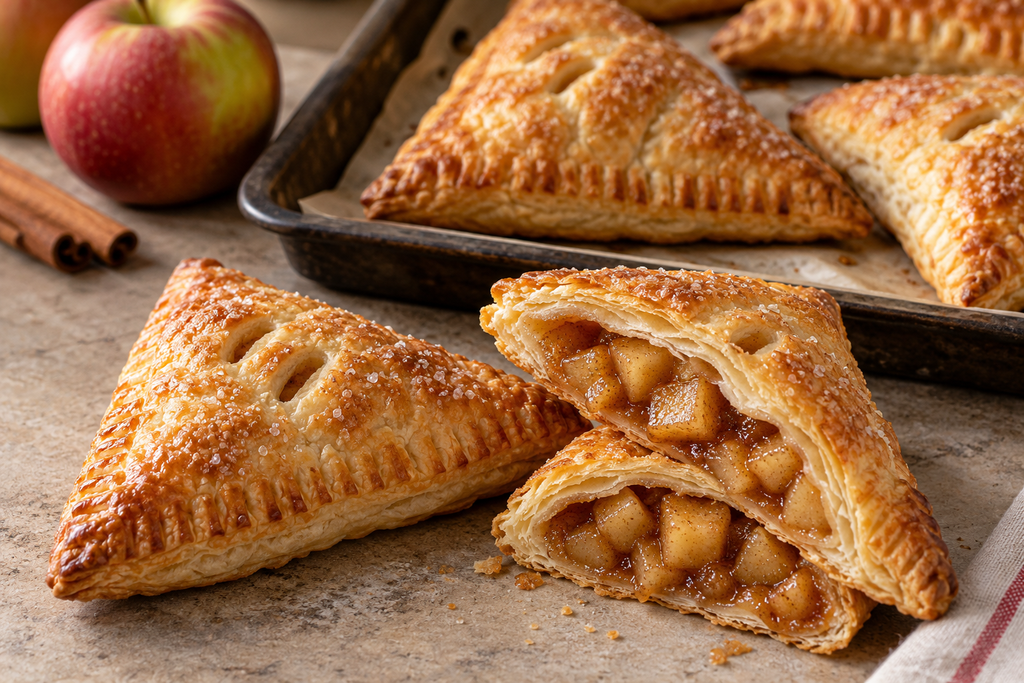
Apple Cinnamon Puff Pastry Breakfast Turnovers provide a warm, familiar ending to this breakfast collection. Their crisp, flaky shells contain tender apple pieces cooked with brown sugar, cinnamon, lemon, and a touch of nutmeg. The filling is prepared before the pastries are assembled, allowing its flavor and consistency to be adjusted while also preventing raw apples from releasing too much liquid inside the dough.
These turnovers are sweet enough to feel special without requiring frosting or a heavy glaze. Serve them slightly warm with coffee, tea, plain yogurt, or fresh fruit. Their sealed shape also makes them convenient for sharing or packing once they have cooled completely.
Servings: 8 turnovers
Preparation time: 30 minutes
Cooling time: 20 minutes
Cooking time: 20–24 minutes
Total time: Approximately 1 hour 15 minutes
Ingredients
- 2 sheets frozen puff pastry, thawed according to the package directions
- 3 medium firm apples, approximately 1¼ pounds before peeling
- 1 tablespoon unsalted butter
- ¼ cup packed light brown sugar
- 1 teaspoon ground cinnamon
- ⅛ teaspoon ground nutmeg
- A small pinch of salt
- 1 tablespoon fresh lemon juice
- 1 teaspoon finely grated lemon zest
- 2 teaspoons cornstarch
- 1 tablespoon cold water
- 1 large egg mixed with 1 teaspoon water, for the egg wash
- 1 tablespoon coarse or granulated sugar, optional for topping
- All-purpose flour, for dusting
Instructions
- Peel and core the apples, then cut them into small cubes measuring approximately ¼ inch. Firm varieties such as Granny Smith, Honeycrisp, Braeburn, or Pink Lady hold their shape particularly well.
- Melt the butter in a medium saucepan or skillet over medium heat.
- Add the diced apples, brown sugar, cinnamon, nutmeg, salt, lemon juice, and lemon zest.
- Cook for 7–10 minutes, stirring occasionally, until the apples have softened slightly but still retain their shape.
- In a small bowl, stir the cornstarch and cold water together until completely smooth.
- Add the cornstarch mixture to the apples. Cook for another 1–2 minutes, stirring continuously, until the juices become thick and coat the apple pieces.
- Transfer the filling to a wide plate and spread it into a thin layer. Allow it to cool completely before assembling the turnovers. Refrigerate it briefly if necessary.
- Preheat the oven to 400°F (200°C). Line a large baking sheet with parchment paper.
- Lightly flour the work surface. Unfold the cold puff pastry sheets and gently roll each one into a square measuring approximately 10 inches.
- Cut each sheet into four equal squares, creating eight pastry portions.
- Place approximately ⅓ cup of cooled apple filling slightly to one side of the center of each square. Leave a clean border around the edges.
- Brush the edges lightly with egg wash. Fold each pastry square diagonally over the filling to form a triangle.
- Press the edges together firmly, then crimp them with a fork. Cut two or three small vents in the top of every turnover.
- Arrange the turnovers on the prepared baking sheet, leaving space between them.
- Brush the tops lightly with egg wash and sprinkle with coarse sugar, if using.
- If the pastry has become soft, refrigerate the assembled turnovers for 10–15 minutes before baking.
- Bake for 20–24 minutes, or until the turnovers are puffed, deeply golden, and crisp on the bottom.
- Let them rest on the baking sheet for 10 minutes before transferring them to a wire rack. The apple filling will remain very hot, so allow additional cooling time before serving.
A Practical Preparation Tip
The filling should be thick enough that a spoon drawn through the pan leaves a visible path for a moment. If liquid immediately flows back into the space, continue cooking for another minute.
Do not place warm apple filling onto puff pastry. Heat melts the pastry’s butter layers before they enter the oven, reducing their ability to rise. A cooled, thickened filling also makes the turnovers easier to seal.
Easy Variations
Replace one apple with a firm pear, or add ⅓ cup of dried cranberries while cooking the filling. Chopped toasted pecans or walnuts can provide additional texture.
For a deeper caramel flavor, add one teaspoon of maple syrup. Avoid adding too much additional liquid, or increase the cornstarch slightly if needed.
Cardamom, ginger, or allspice can replace the nutmeg. Use these spices sparingly so they do not overpower the apple and cinnamon.
Storage and Reheating
Apple Cinnamon Puff Pastry Breakfast Turnovers are best on the day they are baked. Store completely cooled leftovers in an airtight container at room temperature for one day or refrigerate them for up to three days.
Reheat the turnovers in a 350°F (175°C) oven or air fryer for 6–10 minutes. Allow them to rest briefly before eating because the filling may become very hot.
Unbaked turnovers freeze particularly well. Arrange them on a parchment-lined tray and freeze until firm, then transfer them to a freezer-safe container for up to one month. Apply egg wash and sugar immediately before baking from frozen, adding approximately 5–8 minutes to the cooking time.
Image Advisory
The recipe images in this article were created with the assistance of artificial intelligence. They were not produced as generic decorative pictures: each image was developed specifically around the corresponding recipe’s listed ingredients, preparation method, pastry shape, filling consistency, and expected appearance after baking.
The images were also reviewed for important visual details, including the type of pastry, the arrangement of the filling, the level of browning, and the serving style. When an initial result did not accurately reflect the written recipe, it was adjusted to provide a more reliable visual reference.
These images are intended to illustrate the likely finished appearance of each dish rather than serve as photographic records of a particular test batch. Puff pastry brands, ingredient sizes, ovens, preparation techniques, and baking trays can all influence the final color, rise, shape, and texture. For the most dependable result, follow the written quantities, preparation steps, temperatures, and visual doneness cues provided with each recipe.