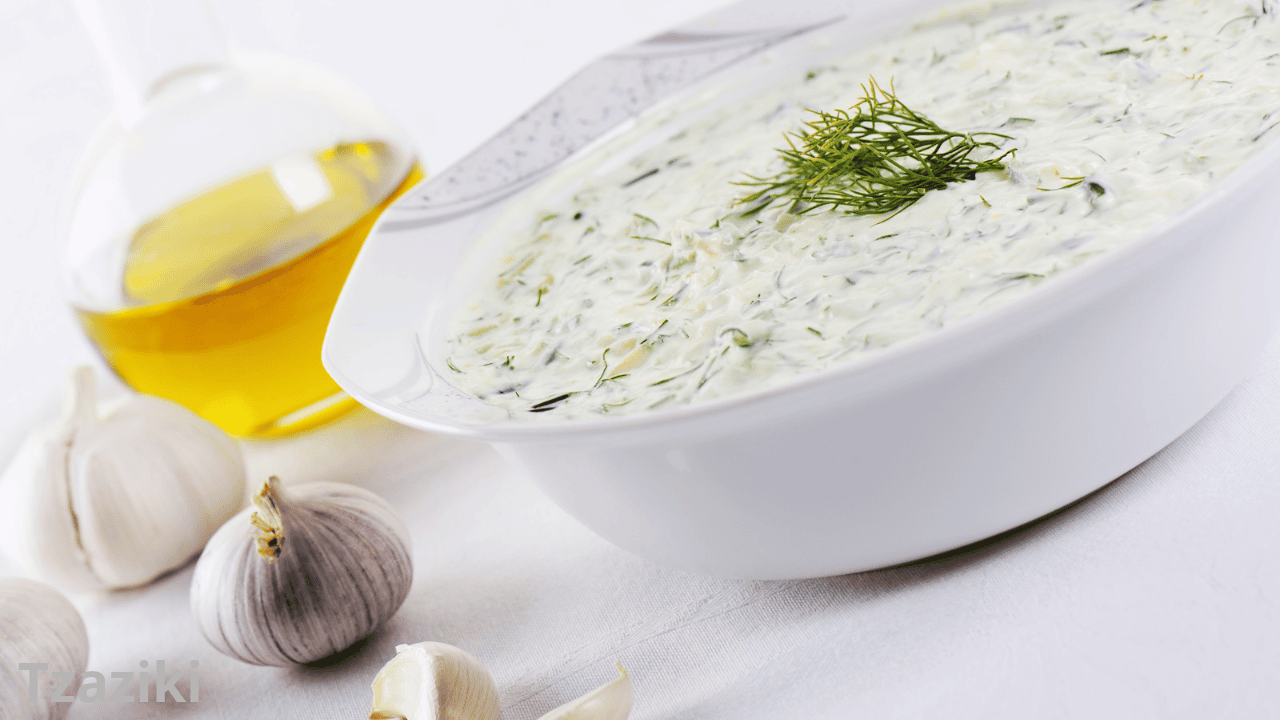
Tzatziki is a refreshing combination of yogurt, cucumber, garlic, and seasonings, but it needs careful refrigeration. Whether you have made a bowl for dinner or opened a store-bought tub, its storage history matters as much as the date.
For homemade tzatziki, a cautious household approach is to use it within three to four days when promptly refrigerated at 40°F (4°C) or below. This applies the USDA’s general guidance for refrigerated leftovers; it is not a shelf-life test for every tzatziki recipe. Follow a shorter recipe-specific instruction when one is provided. ask.fsis.usda.gov
For packaged tzatziki, follow the product’s storage directions, printed date, and after-opening instructions.
Homemade and Store-Bought Tzatziki Have Different Guidelines
Use the following distinctions when deciding what to keep:
| Type | Storage approach |
|---|---|
| Homemade tzatziki | Refrigerate promptly and use the general three-to-four-day leftovers guideline unless a shorter period applies. |
| Unopened refrigerated tub | Keep refrigerated and follow the date and instructions on the package. |
| Opened store-bought tub | Follow the manufacturer’s after-opening directions alongside the printed date. |
| Tzatziki served at the table | Consider its total time outside refrigeration before saving any leftovers. |
A commercial product may have a different after-opening period from a homemade mixture. For example, published package directions for Cedar’s Cucumber Garlic Tzatziki say to keep it refrigerated and enjoy it within seven days after opening. That is a product-specific example, not a rule for every brand. Check the actual tub because packaging instructions can change. shop.sprouts.com
Does the Yogurt’s Date Apply to the Finished Dip?
Do not assume that it does.
Once yogurt becomes part of a prepared dip, you have introduced other ingredients and additional handling. A yogurt container with several days remaining on its date does not automatically give the finished tzatziki the same storage period.
Similarly, mixing older ingredients into a fresh batch does not restart their storage clock. Begin with ingredients that are still suitable to use, and label the finished container with the preparation date.
For a small household, making enough for a few meals is often easier than preparing a large bowl and trying to stretch its life.
How to Store Tzatziki After Making or Opening It
Transfer homemade tzatziki to a clean container with a well-fitting lid and refrigerate it promptly. Keep your refrigerator at 40°F (4°C) or below, checking with an appliance thermometer if necessary. CDC
A few practical habits help:
- Use a clean spoon each time you take some.
- Put a small portion into a separate serving bowl.
- Keep the main container refrigerated during the meal.
- Avoid returning dip from a shared serving bowl to the original container.
- Mark homemade batches with the preparation date and commercial tubs with the opening date.
These habits also make it easier to know which portion has remained cold and which has spent time on the table.
How Long Can Tzatziki Sit Out?
Treat tzatziki as a perishable dairy-based dip.
CDC guidance limits perishable food to two hours outside refrigeration, or one hour when the temperature exceeds 90°F (32°C). Count preparation, transport, and serving time together. Putting the bowl back in the refrigerator does not reset that time. CDC
For an outdoor meal, serve small amounts and replenish them from a chilled container. A bowl sitting on ice can help maintain temperature, but check that the dip itself stays cold rather than assuming the presence of ice is enough. ask.fsis.usda.gov
Discard tzatziki that has exceeded the applicable time limit.
Does a Watery Layer Mean It Has Gone Bad?
Not necessarily. Yogurt can release whey, creating a watery layer through a process called separation. The U.S. Dairy Export Council explains that this can happen when the yogurt’s structure is disturbed and that the liquid can be stirred back into otherwise suitable yogurt. thinkusadairy.org
For tzatziki, however, separation should never be your only check. Consider when it was made or opened, whether it stayed refrigerated, and whether there are other signs of deterioration.
Stirring can improve consistency. It cannot correct unsafe storage.
When Should You Throw Tzatziki Away?
Discard it if you see mold, notice an unusual unpleasant odor, or know it has been kept outside safe storage conditions.
Do not scrape mold from the top and use the dip underneath. Do not taste a questionable batch to decide whether it is safe. Food can be unsafe even without obvious changes in appearance or smell. www.fda.gov
Tzatziki naturally tastes tangy, so sourness alone is not a useful safety test. The preparation or opening date and temperature history provide more useful information.
Can You Freeze Tzatziki?
Freezing may preserve a properly handled batch for later use, but its texture may be less appealing after thawing. Colorado State University notes that freezing yogurt can cause separation and graininess. That makes a smooth, yogurt-based dip a less predictable freezing candidate than some cooked sauces. extension.colostate.edu
If you choose to freeze homemade tzatziki, do so while it is still within its appropriate storage period, use a freezer-safe container, and thaw it in the refrigerator. Follow any freezing restrictions on a commercial product’s label.
For the best texture, making a smaller fresh batch is often the simplest choice.
Keep It Simple, Fresh, and Clearly Labeled
You do not need a complicated system to manage leftover tzatziki. A clean container, a written date, and a reliably cold refrigerator do most of the work.
Prepare a quantity that fits your next few meals, serve only what you need, and let the storage instructions guide you when deciding whether to keep the remainder.
Sources and Further Reading
FDA: Are You Storing Food Safely?
USDA: How Do I Handle Leftovers Safely?
CDC: Preventing Food Poisoning
USDA: What Is the Danger Zone?
Cedar’s Cucumber Garlic Tzatziki: Package Directions Listed by Sprouts