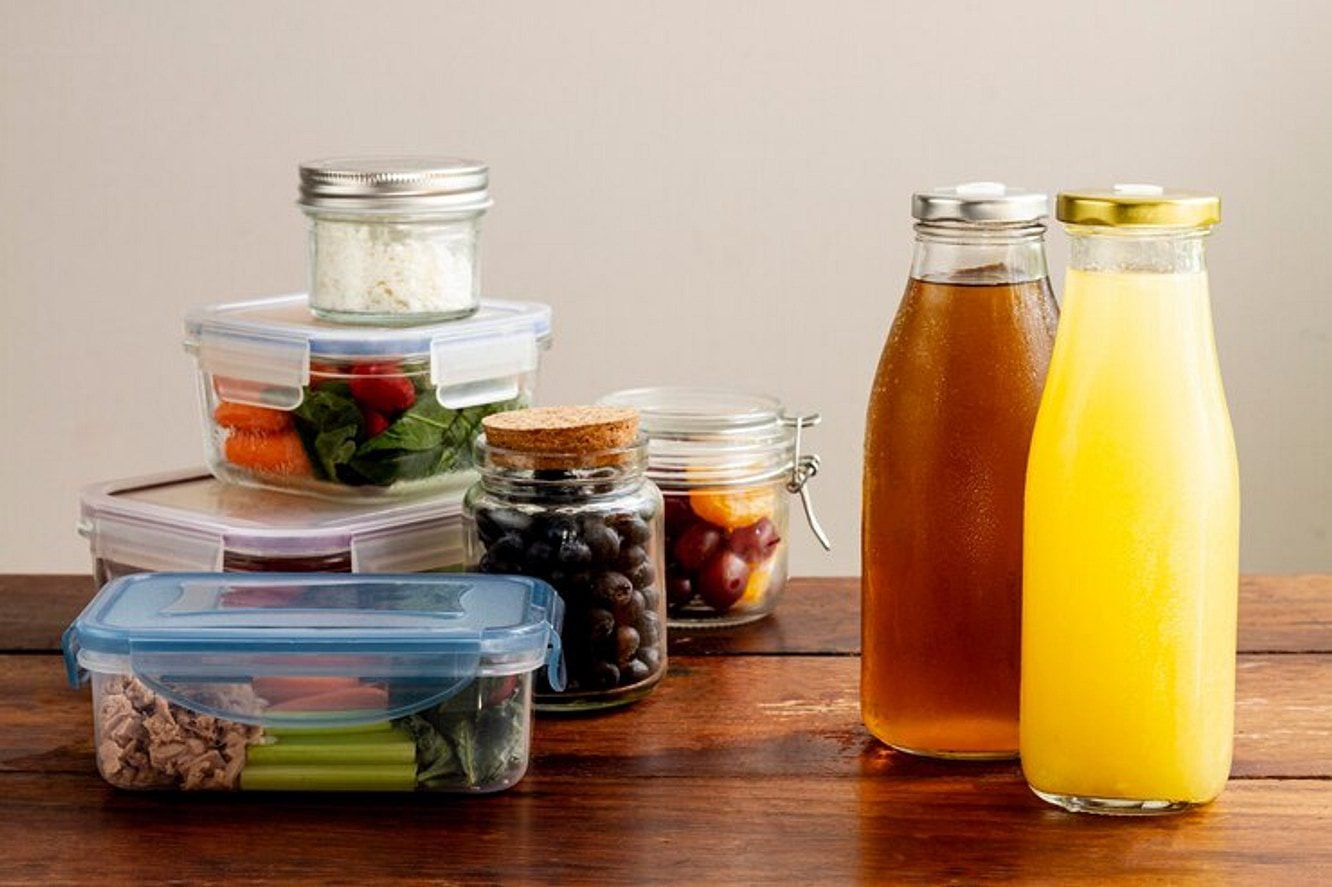
Choosing food containers becomes easier when you start with how you will use them. A container for carrying lunch has different priorities from a dish used for reheating dinner at home.
Glass and plastic can both be useful. Glass is generally heavier and can break, while plastic is lighter but may develop scratches, stains, or persistent odors. Neither material is automatically suitable for every temperature or appliance.
This glass vs plastic food containers guide focuses on everyday decisions: storage, transport, reheating, cleaning, and knowing when a container needs replacing.
Glass vs Plastic Food Containers at a Glance
These are general tendencies. Check the specifications of the individual product before using it.
| Consideration | Glass containers | Plastic containers |
|---|---|---|
| Weight | Generally heavier | Generally lighter |
| Carrying lunch | Useful when weight and breakage are manageable | Often convenient for travel |
| Visibility | Usually easy to see through | Available in clear, translucent, and opaque versions |
| Drops and impacts | Can chip, crack, or shatter | Often tolerates minor knocks better, but can still crack |
| Microwave use | Only when suitable for microwave use | Only when suitable for microwave use |
| Conventional oven use | Some products are oven-safe, with restrictions | Ordinary plastic storage containers should not be assumed oven-safe |
| Freezer use | Check freezer suitability and handling instructions | Check freezer suitability and handling instructions |
| Cleaning | Follow instructions for the container and lid | Follow instructions for the container and lid |
A good choice may be a small collection of different containers rather than replacing everything with one material.
When Glass Containers Are Useful
Glass can be convenient when you store and serve food at home. Its transparency makes the contents easy to identify, and its surface is generally resistant to absorbing food odors.
Some products are designed for several uses, such as refrigeration and microwave reheating. Others may also be suitable for a conventional oven.
However, those uses must be confirmed for the specific product. A glass storage jar is not automatically an oven dish, and a glass container with a plastic lid does not necessarily have the same instructions for both parts.
Glass is also not scratch-proof or unbreakable. Inspect it for chips, cracks, and other damage, and follow the manufacturer’s replacement advice.
When Plastic Containers Are Useful
Plastic is often practical for packed lunches, snacks, and situations where carrying several heavy containers would be inconvenient.
It comes in many shapes and sizes, including shallow meal-prep boxes and small containers for dressings. Some products nest when empty, which can help in a small kitchen.
Choose containers intended for food use and suitable for the task. A box designed for cold storage may not be designed for heating.
Price alone does not establish safety or suitability. An expensive container still needs to be used within its instructions, and an inexpensive one should be judged by its stated purpose rather than its price tag.
Read the Use Instructions Before Comparing Materials
When choosing a container, look for clear information about:
- Food-storage suitability.
- Microwave use.
- Conventional oven use, if relevant.
- Freezer use.
- Dishwasher use.
- Temperature limits.
- Whether the lid has different requirements.
- Any restrictions on moving between cold and hot conditions.
These are separate permissions. “Dishwasher-safe” does not mean “oven-safe,” and “freezer-safe” does not automatically mean the container can move directly from the freezer into a hot oven.
If a marking is unclear, check the manufacturer’s instructions. Do not guess based on the container’s thickness, appearance, or resemblance to another product.
Microwaving Food in Glass or Plastic
For either material, use a container specifically suitable for microwave heating.
The USDA’s microwave guidance recommends appropriate microwave cookware and warns against heating food in cold-storage packaging such as margarine tubs and yogurt cartons.
Check the lid separately. It may need to be removed, loosened, or vented according to its instructions. Do not heat a tightly sealed container unless the product explicitly provides a suitable method.
Stir or rotate food where practical, follow the required standing time, and check that reheated leftovers reach 165°F / 74°C. A suitable container does not guarantee even heating throughout the meal.
For more detail, see our Food Safety Temperature Guide.
Oven Use and Sudden Temperature Changes
A glass container may be suitable for an oven, but you still need to follow its limits.
Depending on the product, instructions may address preheating, direct heat, broilers, handling hot glass, and moving between different temperatures. Sudden temperature changes can cause some glass products to break.
Do not place an ordinary plastic storage lid in a conventional oven simply because the glass base is oven-safe.
For example, Pyrex’s safety and usage instructions provide product-specific restrictions. Use them for the applicable product rather than assuming every brand or type of glass behaves identically.
If you cannot confirm that a storage container is suitable for your intended heating method, transfer the food to cookware that is.
Choosing Containers for the Freezer
Both materials are available in freezer-suitable versions.
Choose a product designed for freezing, then follow its filling and handling instructions. Liquids expand as they freeze, so do not fill containers beyond the manufacturer’s recommended level.
Think about portion size before freezing. Individual portions can be easier to thaw and use than a large block of food.
Label containers with their contents and preparation or freezing date. Neither glass nor plastic tells you how long the food has been stored or whether it was handled properly before freezing.
Avoid assuming that a freezer-safe glass container can go directly into a hot appliance. Check the instructions for that transition.
Cleaning Containers and Lids
Follow the care instructions rather than using the same cleaning method for every item.
Some products allow dishwasher cleaning, while others specify handwashing or restrict where parts should be placed. Lids, seals, and removable components may have separate instructions.
Clean corners and sealing surfaces where food can collect. If a seal is designed to be removed for cleaning, follow the manufacturer’s method and replace it correctly.
Avoid abrasive tools where the instructions prohibit them. Let components dry before putting them away.
A stain does not automatically establish that a container is unsafe, but persistent residue, damage, or a surface that can no longer be cleaned properly deserves attention.
When Should You Replace a Food Container?
Inspect containers periodically instead of waiting until they fail.
Consider replacement when you notice:
- Cracks, chips, or damaged glass.
- Warping that affects the shape or fit.
- A lid that no longer closes properly.
- Broken clips or damaged seals.
- Deep damage or persistent residue that prevents effective cleaning.
- Signs of melting or damage from inappropriate heating.
Follow the manufacturer’s guidance for the particular product. Do not continue using damaged glass because the crack looks small, or assume a warped plastic container remains suitable for heating.
The Lid Matters as Much as the Base
A well-fitting lid helps contain food and protect it during storage, but different closures serve different purposes.
Before using a container in a bag, check whether it is described as leakproof and whether that claim has conditions. A loose storage lid may be fine on a refrigerator shelf but unsuitable for carrying soup.
For heating, check venting requirements. For freezing, check the lid’s suitability as well as the base.
When replacing a lost lid, use a compatible one rather than forcing a similar-looking lid onto the container. A poor fit can make storage and transport less dependable.
Match the Container to the Meal
Here are a few practical ways to make the choice.
Lunch carried in a backpack:
Prioritize weight, a dependable closure, and a shape that fits the bag. Keep perishable food cold during transport.
Dinner reheated at home:
Choose a container suitable for the appliance, or transfer the food into appropriate cookware before heating.
Soup for the freezer:
Choose a freezer-suitable container with room for expansion and clear filling instructions.
Small portions of dressing or toppings:
Choose a size that avoids wasted space and has a closure suited to transport.
A dish intended for oven reheating:
Use explicitly oven-safe cookware and follow the instructions for its lid and temperature changes.
These decisions are more useful than declaring one material the winner for every meal.
Does the Material Change How Long Food Is Safe?
Changing containers does not reset the food’s storage time.
Cooked food still needs prompt cooling and appropriate refrigeration. Most refrigerated cooked leftovers should be used within three to four days, according to the USDA’s leftovers guidance.
A tightly sealed lid, clear glass, or an expensive container cannot make improperly stored food safe.
Keep preparation dates visible and choose container sizes that make appropriate cooling and portioning easier.
Choose a Small Collection You Will Actually Use
As someone who prefers simple kitchen routines, I find it more helpful to think about the next meal than to search for a perfect set of containers.
You might need a lightweight lunch box, a few suitable containers for leftovers, and one dependable dish for reheating. They do not all need to be made from the same material.
When comparing glass vs plastic food containers, start with the task, read the instructions, and keep the collection manageable. Containers are most useful when they make storing, finding, and using food easier.
Sources and Scope
This article compares common household uses rather than reviewing or independently testing particular products. Suitability varies between products, so follow the manufacturer’s instructions for the container, lid, and accessories.