
Easter lunch is a lovely opportunity to slow down, gather around the table and enjoy the fresh flavours of spring. The meal can feel special without becoming overly formal—or keeping you in the kitchen for the entire morning. With a little planning, you can prepare an inviting menu that gives you plenty of time to enjoy the occasion alongside your guests.
These Easter lunch recipe ideas include light starters, impressive centrepieces, colourful side dishes and traditional sweet treats. You will find spring lamb prepared in several different ways, elegant seafood options, a comforting vegetarian lasagne and useful accompaniments such as crisp asparagus and creamy potato gratin.
To finish the meal, you can choose between classic carrot cake and warmly spiced hot cross buns.
You certainly do not need to prepare all 15 recipes. Think of this collection as a flexible menu from which you can select the dishes that best suit your gathering.
For a balanced lunch, choose one starter, one main course, two complementary sides and one dessert. A smaller celebration might need only a main dish, a vegetable side and something sweet, while a larger buffet can include several starters and sharing plates.
How to Build an Easter Lunch Menu?
Begin by choosing the main course. Roast lamb makes a memorable centrepiece for a traditional Easter table, while lamb skewers are more relaxed and particularly convenient for an outdoor lunch. If you would prefer a meat-free menu, spanakopita or wild garlic and mushroom lasagne can provide a satisfying alternative.
Next, add side dishes with contrasting textures. Rich potato gratin works well with fresh asparagus or a crisp seasonal salad. When the main course is substantial, begin the meal with a lighter starter such as pea and mint soup, seafood with lime aïoli or smoked trout tartines.
It is also worth considering which dishes can be prepared in advance. Soup, aïoli, carrot cake and several salad components can be made earlier, while vegetables can be washed and trimmed before guests arrive. Even setting out serving dishes and utensils the night before can make Easter morning feel noticeably calmer.
Whether you are planning an intimate family meal, a colourful garden lunch or a generous holiday buffet, these Easter lunch recipe ideas will help you create a seasonal menu that feels festive, welcoming and manageable.
1. Pea, Mint & Spring Onion Soup With Parmesan Biscuits
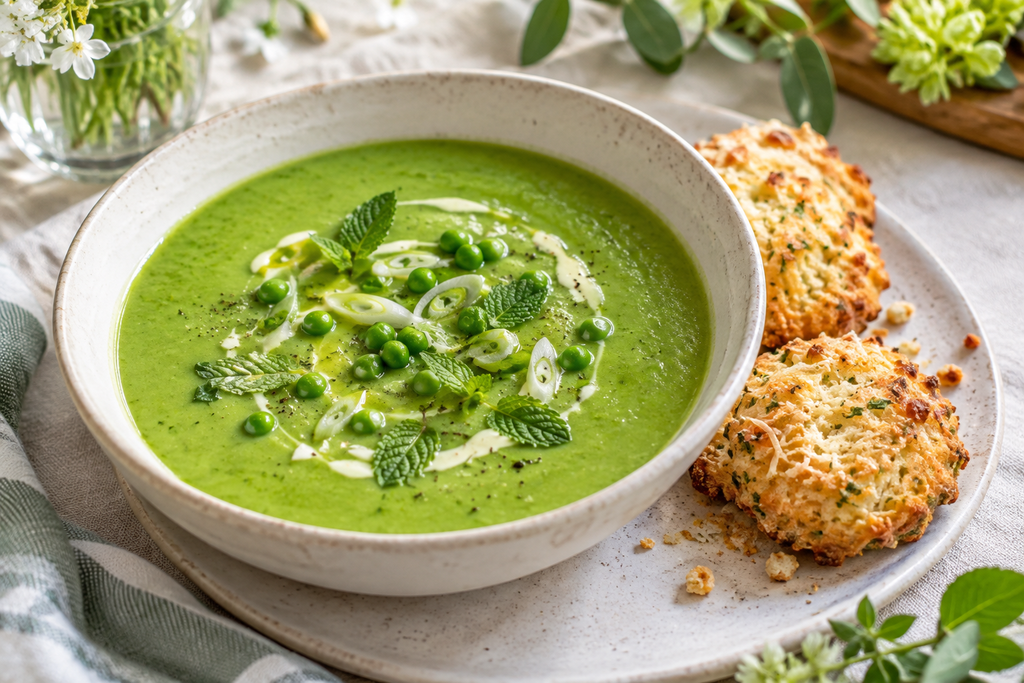
Fresh, colourful and pleasantly light, this Pea, Mint & Spring Onion Soup With Parmesan Biscuits is an ideal way to begin an Easter lunch. The peas provide a naturally sweet base, the spring onions add a gentle savoury flavour, and the mint brings the freshness that makes the soup feel perfectly suited to the season. Crisp Parmesan biscuits served alongside turn a simple bowl of soup into a starter worthy of a celebration.
Begin by gently cooking the sliced spring onions in a little butter or olive oil. Keep the heat low so they soften without browning, as too much colour can affect both the delicate flavour and the bright appearance of the finished soup. Add the peas and stock, then simmer only until the peas are tender. Frozen peas work particularly well and are often sweeter and more consistent than fresh ones. Avoid cooking them for too long, or the soup may lose its vibrant green colour.
Add the mint shortly before blending. Start with a modest amount, taste the soup and add more if required—the mint should lift the flavour rather than overpower the peas. Blend until smooth, adding a little extra stock if the consistency feels too thick. For a particularly refined Easter starter, pass the blended soup through a fine sieve before reheating it gently.
The Parmesan biscuits can be prepared ahead of time and kept in an airtight container once completely cool. Their salty, crisp texture provides a welcome contrast to the velvety soup. If you are serving several courses, offer one or two small biscuits per guest rather than making the starter too filling.
The soup itself can also be made a day in advance and refrigerated in a covered container. Reheat it slowly without allowing it to boil, then finish each bowl with a few peas, thinly sliced spring onion, a small mint leaf or a restrained swirl of cream. Serve the Pea, Mint & Spring Onion Soup With Parmesan Biscuits in warmed bowls for a relaxed yet elegant opening to your Easter meal.
2. Salmon & Prawns With Dill & Lime Aïoli
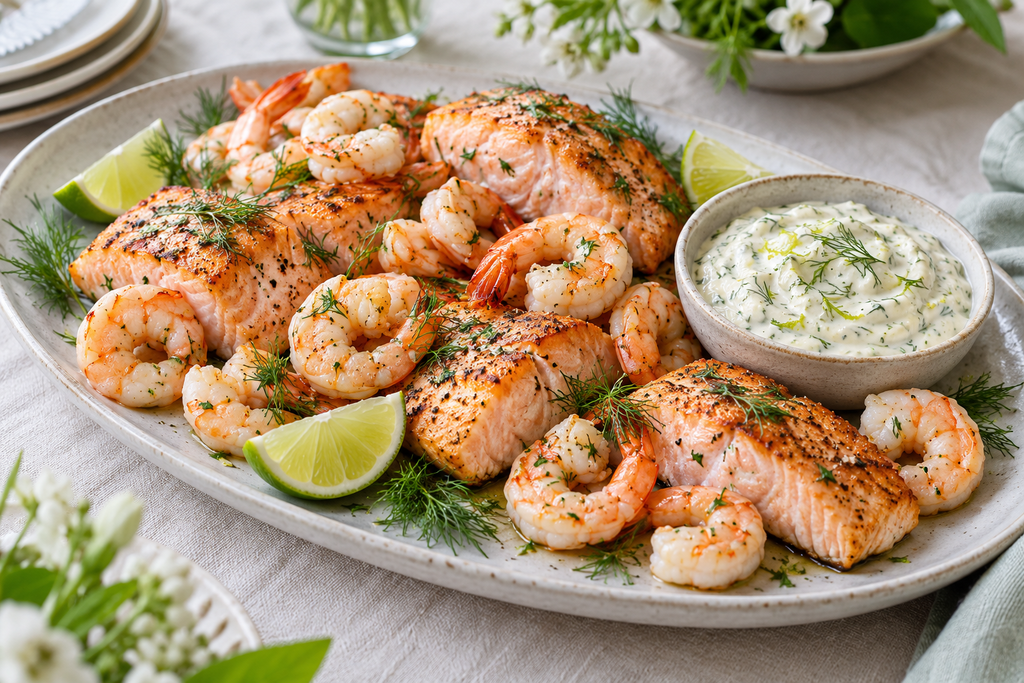
Colourful, fresh and elegant without being overly complicated, Salmon & Prawns With Dill & Lime Aïoli makes an impressive starter or sharing dish for Easter lunch. The rich salmon and sweet prawns are balanced by a creamy sauce flavoured with fresh dill and zesty lime. Served on a large platter, the dish creates a beautiful centrepiece while still feeling light enough to leave room for the main course.
For the best result, cook the salmon and prawns separately, as they are unlikely to need the same amount of time. Season the salmon simply with salt and black pepper, then roast or pan-sear it until the flesh flakes easily but remains moist in the centre. Allow it to rest briefly before dividing it into generous pieces. The prawns require only a few minutes of cooking and should be removed from the heat as soon as they turn pink and opaque. Overcooking either ingredient can make the seafood dry or rubbery.
Prepare the dill and lime aïoli by combining good-quality mayonnaise with finely chopped fresh dill, lime zest and a small amount of lime juice. Add the juice gradually so the sauce remains thick enough for dipping. A little crushed garlic can provide extra depth, although it should not overpower the delicate seafood. Taste before adding salt, as mayonnaise can already be well seasoned.
The aïoli may be prepared the day before and refrigerated in a covered container. This also gives the flavours time to develop. The salmon can be cooked a few hours in advance, but the prawns are best prepared closer to serving. Allow chilled seafood to lose some of its refrigerator coldness before arranging the platter, as its flavour will be more pronounced.
Serve Salmon & Prawns With Dill & Lime Aïoli with fresh dill, lime wedges and perhaps a few peppery salad leaves. Keep the garnish restrained so the salmon and prawns remain the focus. It is a practical choice for a relaxed Easter gathering because guests can help themselves while the host prepares the next course.
3. Smoked Trout & Radish Remoulade Tartines
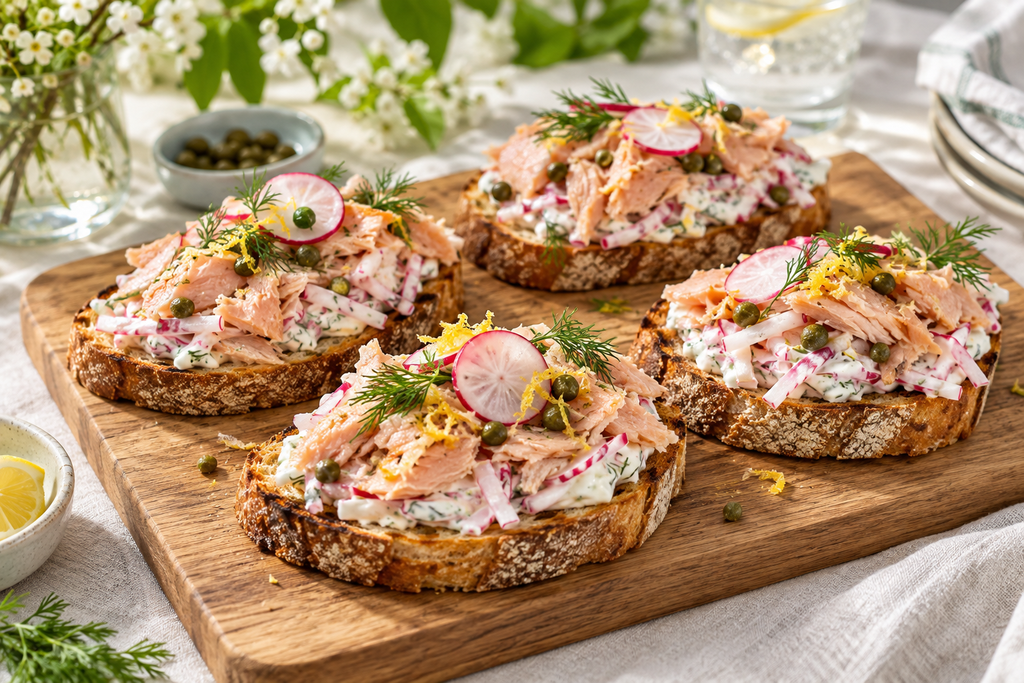
Crisp toast, smoky fish and a creamy radish topping make these Smoked Trout & Radish Remoulade Tartines a fresh and satisfying addition to an Easter lunch. They work equally well as a starter served at the table or as small open sandwiches placed on a sharing platter. Their combination of colours and textures looks impressive, yet most of the preparation can be completed before guests arrive.
Choose a sturdy sourdough or rustic country loaf and cut it into slices thick enough to support the toppings. Brush the bread lightly with olive oil, then toast it in the oven or on a grill pan until golden and crisp around the edges. Allow the slices to cool before adding the remoulade; spreading it over warm bread would cause the creamy mixture to loosen and the toast to soften too quickly.
For the remoulade, cut the radishes into fine matchsticks or thin slices. If they seem particularly watery, pat them dry with a clean kitchen towel before combining them with mayonnaise, a little Dijon mustard, lemon juice and chopped dill. Season carefully, remembering that smoked trout and capers can already contribute plenty of salt. A spoonful of crème fraîche or natural yogurt can be added for a lighter, slightly tangier finish.
Break the smoked trout into generous flakes rather than crushing it into the dressing. Assemble each tartine with a layer of radish remoulade followed by the fish, then finish with fresh dill, thin radish slices, lemon zest or a few capers. Keeping the layers visible makes the finished platter more colourful and inviting.
The remoulade may be prepared several hours in advance and refrigerated, while the bread can be toasted earlier in the day. Store the toast at room temperature once it has cooled completely. Assemble the Smoked Trout & Radish Remoulade Tartines shortly before serving so the bread remains crisp. For smaller appetisers, cut each finished tartine in half and arrange the pieces on a large wooden board for guests to share.
4. Minted Melon, Tomato & Prosciutto Salad

Sweet melon, ripe tomatoes and salty cured ham give this Minted Melon, Tomato & Prosciutto Salad a colourful balance of flavours that feels just right for a spring celebration. It can be served as a light starter, added to a buffet or placed in the centre of the table as a refreshing accompaniment to a richer main course. Best of all, it requires very little cooking, leaving more time to prepare the rest of the Easter meal.
The quality and ripeness of the ingredients make a noticeable difference here. Choose a cantaloupe or similar orange-fleshed melon that feels heavy for its size and has a sweet aroma near the stem. It should be ripe and juicy while still firm enough to hold its shape after cutting. Use the most flavourful tomatoes available; a mixture of red and yellow cherry tomatoes adds extra colour and usually requires less preparation than larger varieties.
Cut the melon into bite-sized wedges or irregular chunks, then halve the tomatoes. If the tomatoes release a great deal of juice, let them drain briefly before assembling the salad. This prevents excess liquid from collecting on the serving platter. Arrange the melon and tomatoes loosely, then tuck thin folds of prosciutto between them instead of laying the meat flat. This gives the dish height and ensures that every serving contains a little of each ingredient.
A simple dressing of extra-virgin olive oil and lemon or lime juice is all the salad needs. Use it sparingly so it enhances rather than masks the natural flavours. Add freshly ground black pepper and scatter the mint leaves over the platter immediately before serving. Taste before adding salt because the prosciutto may provide enough seasoning by itself.
The melon and tomatoes can be cut several hours ahead and refrigerated separately. Assemble the Minted Melon, Tomato & Prosciutto Salad shortly before lunch, adding the prosciutto, dressing and mint at the last moment. Serve it cool rather than refrigerator-cold so the sweetness of the melon and the aroma of the tomatoes can be fully appreciated.
5. Spring Lamb Skewers With Lightly Pickled Allotment Salad
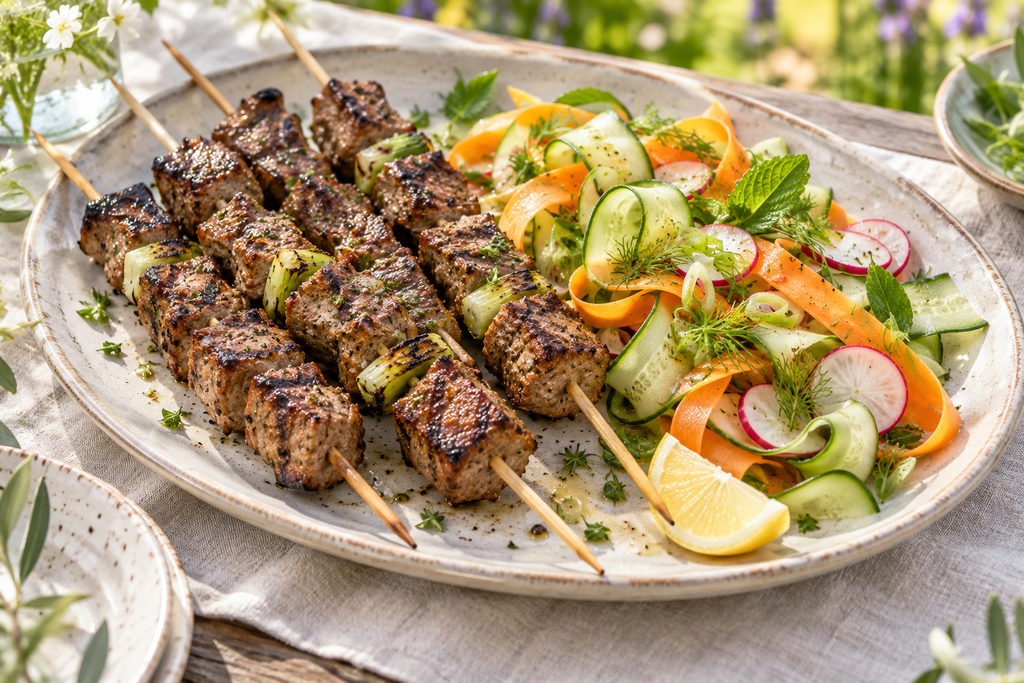
These Spring Lamb Skewers With Lightly Pickled Allotment Salad offer a relaxed alternative to a traditional Easter roast. The lamb is rich, savoury and lightly charred, while the crisp pickled vegetables bring freshness and acidity to every serving. The skewers are especially convenient for an informal lunch, a garden gathering or a buffet where guests can help themselves.
Choose a tender cut of lamb, such as leg or loin, and cut it into evenly sized pieces. Uniform cubes will cook at approximately the same rate, reducing the chance of some pieces drying out while others remain underdone. Marinate the lamb with olive oil, lemon zest, garlic and fresh herbs such as rosemary, thyme or mint. A few hours will add plenty of flavour; if marinating overnight, keep the mixture refrigerated and avoid using too much acidic lemon juice, which can affect the meat’s texture.
Thread the lamb onto skewers without packing the pieces too closely together. Small gaps allow the heat to circulate and encourage the edges to brown. If using wooden skewers, soak them in water beforehand to help prevent scorching. Cook the skewers on a hot grill, barbecue or grill pan, turning regularly until the lamb develops a caramelised exterior. Rest them for several minutes before serving so the juices can settle.
For the allotment salad, use a colourful mixture of thinly sliced seasonal vegetables such as cucumber, radish, carrot and spring onion. Toss them with a quick pickling liquid made from vinegar, a small amount of sugar and salt. Leave the vegetables for around 20–30 minutes—long enough to absorb the bright flavour while retaining their crunch. Drain away excess liquid before adding fresh dill, parsley or mint.
The vegetables and marinade can be prepared earlier in the day, but cook the lamb shortly before lunch. Serve the Spring Lamb Skewers With Lightly Pickled Allotment Salad on a large platter with lemon wedges and extra herbs. For a more substantial meal, add warm flatbreads or small roasted potatoes, although the skewers and crisp salad are satisfying enough to stand on their own as a lighter Easter main course.
6. Roast Lamb Studded With Rosemary & Garlic
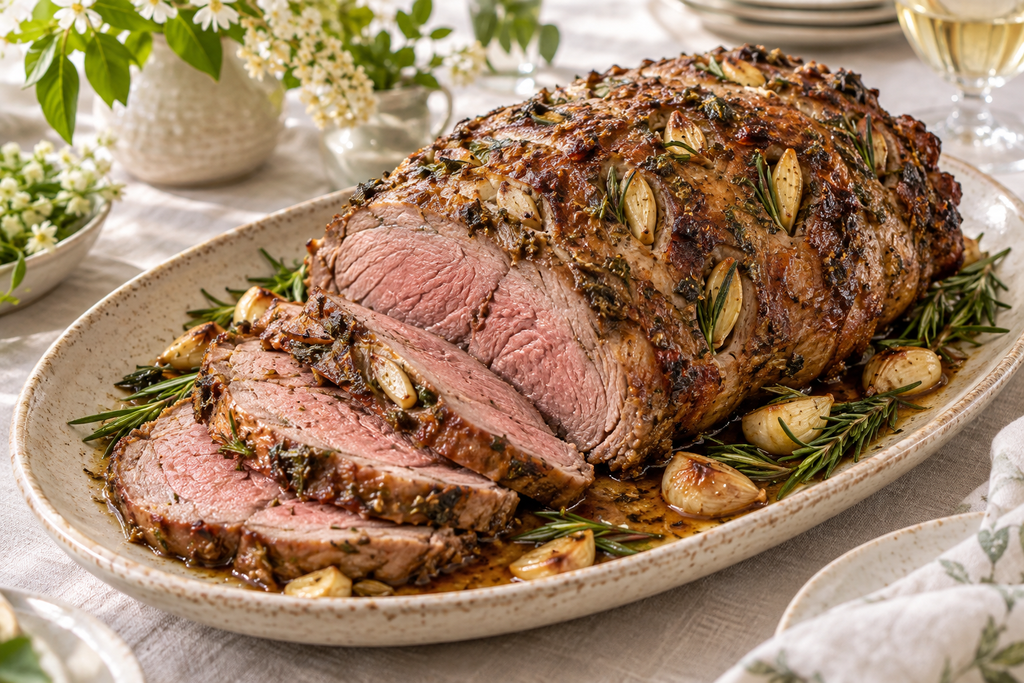
Few dishes create a more traditional Easter centrepiece than Roast Lamb Studded With Rosemary & Garlic. The small pockets of garlic and rosemary season the meat from within, while a hot oven produces a deeply browned, aromatic crust. Although the finished roast looks impressive, the preparation is straightforward and leaves plenty of time to organise the accompanying vegetables and side dishes.
Remove the lamb from the refrigerator approximately 45–60 minutes before cooking so it can lose some of its chill. Pat the surface dry with kitchen paper, as excess moisture can prevent proper browning. Using the tip of a small sharp knife, make evenly spaced incisions across the meat. Insert a thin sliver of garlic and a few rosemary needles into each opening. Keep the garlic pieces relatively small so they soften fully during roasting and flavour the meat without creating large, overpowering pockets.
Rub the lamb with olive oil, salt and freshly ground black pepper. Begin roasting it at a relatively high temperature to encourage caramelisation, then reduce the heat so the centre cooks more evenly. Because cooking time varies according to the size and shape of the joint, a meat thermometer is far more reliable than timing alone. Insert it into the thickest part without touching bone, then cook the lamb to your preferred level of doneness while following appropriate food-safety guidance.
Once the lamb leaves the oven, transfer it to a warm platter and cover it loosely with foil. Allow it to rest for at least 20 minutes before carving. This step gives the juices time to redistribute and makes the meat noticeably easier to slice. Use the resting period to finish the gravy, reheat prepared side dishes or bring everyone to the table.
Much of the work can be completed earlier in the day. Stud the lamb with rosemary and garlic, cover it and refrigerate it until shortly before cooking. Serve Roast Lamb Studded With Rosemary & Garlic with potato gratin, roasted spring vegetables or lemony asparagus. Spoon a little of the resting juice over the carved slices and take the whole roast to the table before carving if you want to make the most of its impressive appearance.
7. Spice Crusted Roasted Leg of Lamb With Marinated Artichokes
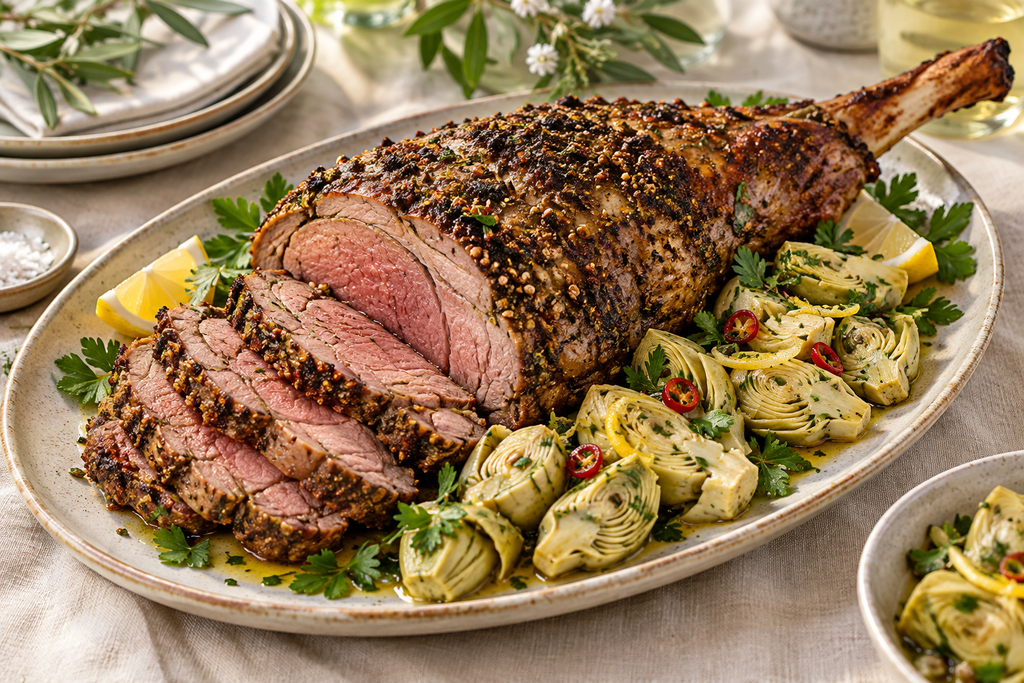
Boldly seasoned and beautifully presented, this Spice Crusted Roasted Leg of Lamb With Marinated Artichokes offers a Mediterranean-inspired alternative to a more traditional Easter roast. The toasted spice crust gives the lamb a fragrant, savoury exterior, while the lemony artichokes provide the acidity and freshness needed to balance the richness of the meat.
For a flavourful crust, combine ground spices such as cumin, coriander and black pepper with salt, finely grated lemon zest and a small amount of olive oil. Optional additions might include smoked paprika, fennel seeds or a pinch of chilli. Toasting whole spices briefly in a dry pan before grinding them will intensify their aroma, but allow them to cool before preparing the paste.
Pat the lamb completely dry and coat it evenly with the spice mixture, pressing the seasoning firmly onto the surface. The lamb can be prepared several hours in advance and refrigerated uncovered or loosely covered. This gives the flavours time to develop while helping the exterior remain relatively dry, which encourages better browning in the oven.
Roast the lamb until the crust is deeply coloured and the centre reaches your preferred level of doneness. A meat thermometer inserted into the thickest part—without touching the bone—provides a more reliable result than cooking by time alone. If the spices begin to darken too quickly, cover the lamb loosely with foil for the remainder of the cooking time. Once roasted, let the meat rest for at least 20 minutes before carving.
For the accompaniment, drain quartered artichoke hearts thoroughly and toss them with olive oil, lemon juice, lemon zest, parsley and a little sliced chilli. If using jarred marinated artichokes, taste them before adding salt or extra vinegar because they may already be strongly seasoned. Prepare them several hours ahead so they can absorb the dressing, but bring them closer to room temperature before serving.
Present the Spice Crusted Roasted Leg of Lamb With Marinated Artichokes on a large platter, spooning the artichokes and a little of their marinade around the carved meat rather than over the crust. This keeps the exterior textured and allows guests to take as much of the bright, tangy accompaniment as they like.
8. Pistachio Crusted Rack of Lamb
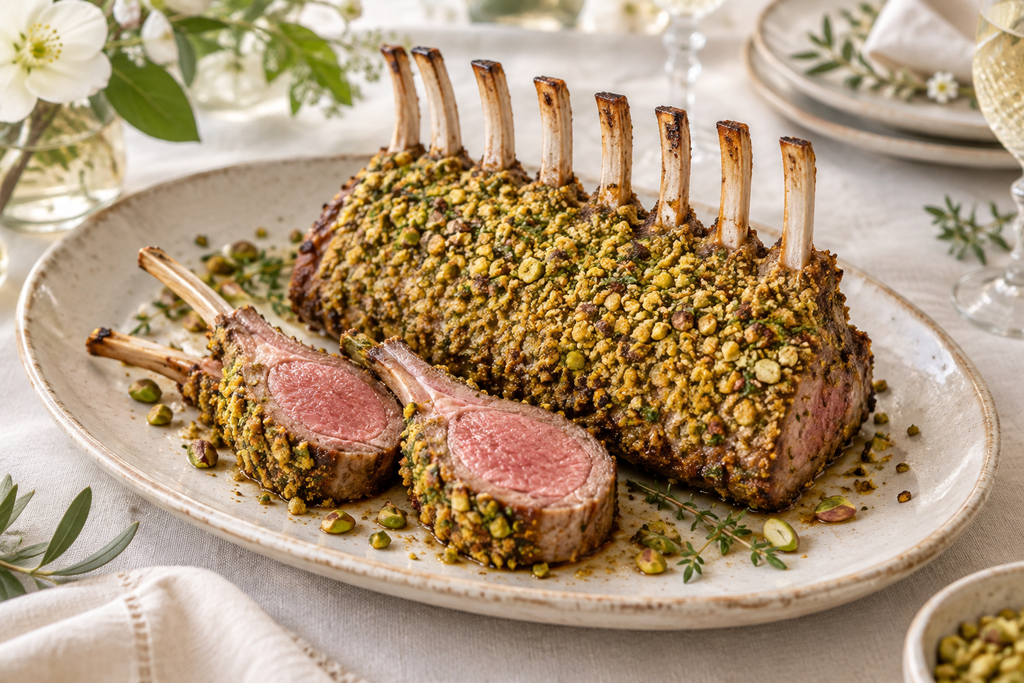
Elegant enough for a special occasion yet surprisingly manageable to prepare, Pistachio Crusted Rack of Lamb makes a striking centrepiece for Easter lunch. The tender lamb cooks relatively quickly, while the golden-green coating adds crunch, colour and a pleasantly nutty flavour. When the rack is carved into individual chops at the table, the contrast between the crisp crust and rosy meat looks particularly inviting.
Ask your butcher for a French-trimmed rack, which means the ends of the rib bones have been cleaned. Before cooking, remove the lamb from the refrigerator and allow it to lose some of its chill. Pat the meat dry, season it with salt and black pepper, then sear the fatty side in a hot ovenproof pan until nicely browned. This initial step develops flavour and helps render some of the fat.
For the crust, combine roughly chopped unsalted pistachios with fine breadcrumbs, fresh parsley or thyme and a little lemon zest. The pistachios should retain some texture rather than being ground into a powder. Brush the browned meat with a thin layer of Dijon mustard, avoiding the exposed bones, then press the pistachio mixture firmly onto the curved surface.
Transfer the rack to the oven and roast it until the centre reaches your preferred level of doneness. Use a meat thermometer in the thickest part, taking care not to touch a bone. Pistachios can darken quickly, so check the crust towards the end of cooking. If it is browning faster than the lamb is cooking, cover only the coated section loosely with foil.
Allow the rack to rest for 10–15 minutes before carving. Hold it steady and use a sharp knife to cut cleanly between the rib bones. Resting helps preserve the juices and also makes the crust less likely to fall away during slicing.
The pistachio mixture can be prepared a day ahead and kept in a covered container. Serve Pistachio Crusted Rack of Lamb with roasted asparagus, spring vegetables or a lightly dressed salad. Rich accompaniments are unnecessary—the colourful crust and tender lamb already provide plenty of flavour and make the dish feel suitably celebratory.
9. Spanakopita
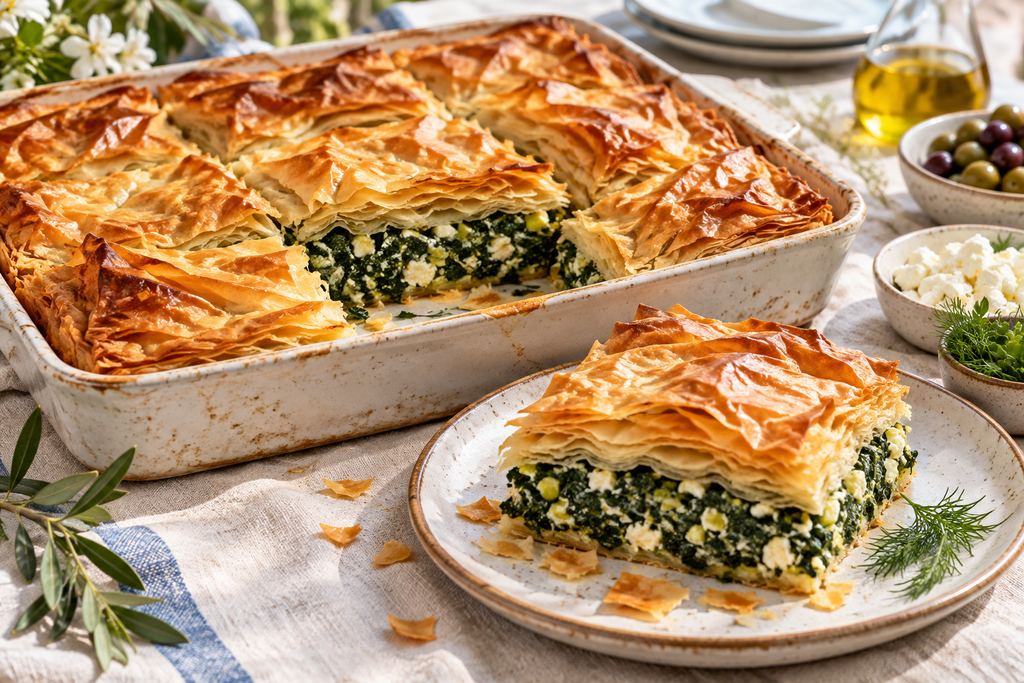
With its crisp golden pastry and savoury spinach-and-feta filling, Spanakopita is a versatile addition to an Easter lunch. It can be served warm as a vegetarian main course, cut into smaller squares for a buffet or offered alongside lamb and seasonal vegetables. The contrast between the delicate, flaky phyllo and the soft, herby filling makes each portion satisfying without feeling excessively heavy.
The most important step is removing as much moisture as possible from the spinach. If using fresh spinach, wilt it briefly, let it cool and squeeze it thoroughly in a clean kitchen towel. Frozen spinach is equally practical, but it must be completely thawed and pressed dry. Excess water can make the base of the pie soggy and prevent the pastry from becoming crisp.
Combine the spinach with crumbled feta, finely sliced spring onions and fresh herbs such as dill, parsley or mint. An egg can help bind the filling, while a small amount of black pepper and grated nutmeg adds depth. Taste before adding salt because feta is naturally salty. The mixture should hold together without appearing wet or creamy.
Phyllo pastry dries quickly once opened, so keep unused sheets covered with a slightly damp kitchen towel while assembling the pie. Lay several sheets in a greased baking dish, brushing each one lightly with melted butter or olive oil. Spread the filling evenly, then cover it with more individually brushed sheets. Crumpling the upper layers slightly creates extra ridges that become particularly crisp in the oven.
Score the top into portions before baking, cutting through the upper pastry layers without pressing deeply into the filling. This makes the finished pie easier to divide without shattering the entire crust. Bake until the surface is evenly golden and the filling is hot throughout, then allow it to rest briefly before cutting.
Spanakopita can be assembled several hours ahead and refrigerated until baking. It is at its crispiest when freshly cooked, although leftovers reheat well in the oven. Avoid using a microwave, which tends to soften the phyllo. Serve the pie with a tomato salad, lemon wedges or a spoonful of thick yogurt for a fresh and relaxed Easter dish.
10. Wild Garlic & Mushroom Lasagne
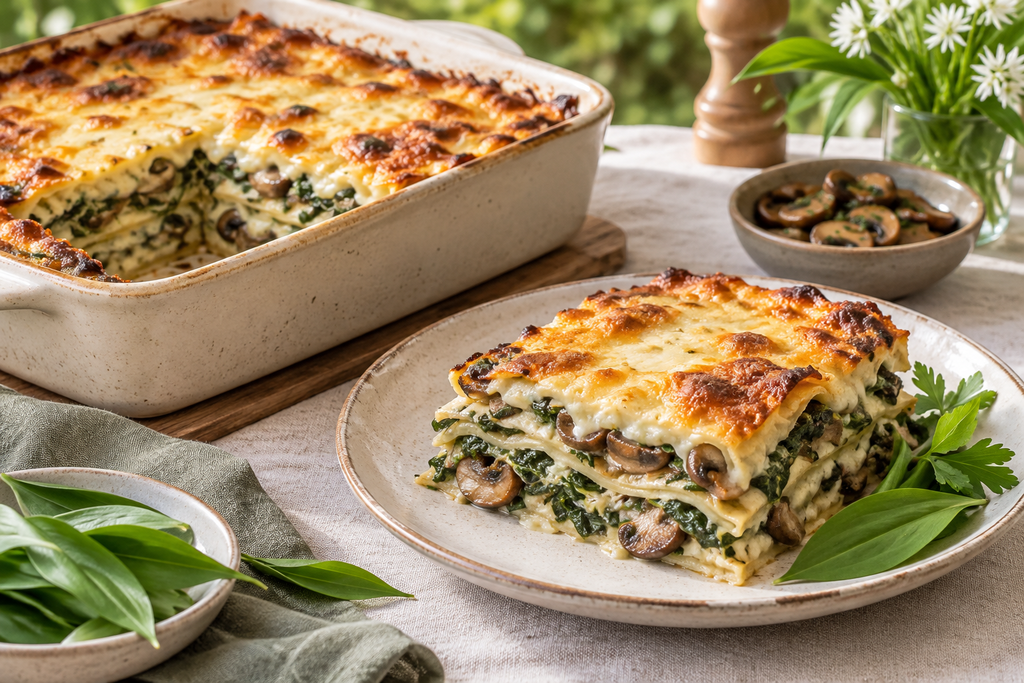
Creamy, savoury and filled with seasonal flavour, Wild Garlic & Mushroom Lasagne is an excellent vegetarian centrepiece for Easter lunch. The mushrooms provide a satisfying depth, while fresh wild garlic adds a gentle allium flavour and a welcome touch of spring. Its familiar, comforting layers make this lasagne especially useful when the table includes guests with different tastes.
Begin by cooking the mushrooms in batches over medium-high heat. Giving them enough room in the pan allows their moisture to evaporate and encourages the edges to brown. If the pan is overcrowded, the mushrooms will steam and may make the finished lasagne watery. Season them only after they have started to colour, then add a little thyme or black pepper for extra warmth.
Wild garlic is more delicate than ordinary garlic and requires very little cooking. Wash and dry the leaves thoroughly, then slice them and stir them into the mushrooms near the end of cooking. They should wilt while retaining their fresh green colour. If wild garlic is unavailable, a combination of baby spinach, parsley and a small amount of crushed garlic makes a practical substitute.
Prepare a smooth béchamel sauce that is thick enough to coat the back of a spoon but still easy to spread. A pinch of nutmeg complements both the mushrooms and the creamy sauce. When assembling the dish, begin with a thin layer of sauce, followed by pasta sheets, mushrooms, wild garlic and more béchamel. Continue layering without making any one section excessively thick, then finish with sauce and a generous but balanced layer of grated cheese.
Bake until the pasta is tender, the sauce bubbles around the edges and the top develops golden patches. Allow the lasagne to rest for 15–20 minutes before cutting. This gives the layers time to settle and produces neater portions.
Wild Garlic & Mushroom Lasagne is an especially convenient choice for entertaining because it can be assembled the day before, covered and refrigerated. Allow a little additional baking time if cooking it directly from chilled. Serve it with a crisp green salad or roasted asparagus; lighter side dishes will balance its creamy texture and keep the Easter meal feeling fresh.
11. Lemon Panko Parmesan Asparagus
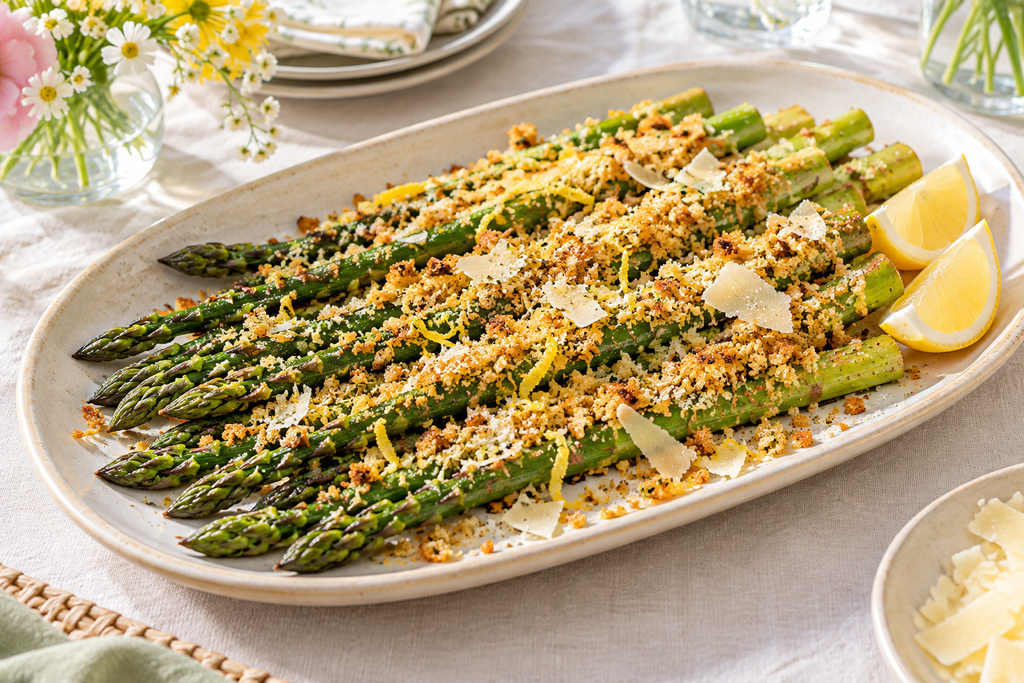
Bright, crisp and full of spring flavour, Lemon Panko Parmesan Asparagus is an easy side dish that looks at home on an Easter table. Tender green asparagus is topped with a golden mixture of crunchy breadcrumbs, savoury Parmesan and fragrant lemon zest. It pairs particularly well with roast lamb, salmon or a vegetarian main course, providing a lighter contrast to richer dishes.
Choose firm asparagus with tightly closed tips and smooth, brightly coloured stalks. To remove the tough ends, bend each spear near the base until it snaps naturally, or trim the entire bundle with a knife after checking where the stalks become tender. If the spears are especially thick, peel the lower section lightly rather than removing too much of the edible stem.
Wash the asparagus and dry it thoroughly. Remaining water can cause the vegetables to steam and make the crumb topping soft. Arrange the spears in a single layer on a baking tray, drizzle them lightly with olive oil and season with black pepper. Use salt carefully because Parmesan already contributes plenty of savoury flavour.
Combine panko breadcrumbs with finely grated Parmesan and fresh lemon zest. Panko is preferable to ordinary fine breadcrumbs because its larger, irregular flakes produce a lighter and crunchier finish. Sprinkle the mixture evenly over the asparagus and press it down very gently so some of the crumbs make contact with the oiled spears. Avoid creating a thick, solid coating—the topping should remain loose enough to turn crisp.
Roast the asparagus in a hot oven until the stalks are just tender and the crumbs are golden. Cooking time will depend on their thickness, so begin checking early. If the vegetables are ready before the topping has browned, place the tray briefly under the grill, watching carefully to prevent the Parmesan and breadcrumbs from burning.
Prepare the crumb mixture and trim the asparagus earlier in the day, but keep them separate until shortly before cooking. Serve Lemon Panko Parmesan Asparagus immediately, finished with a little extra lemon zest and lemon wedges. Adding lemon juice only at the table preserves the crunchy topping and lets each guest adjust the acidity to taste.
12. Potato Gratin
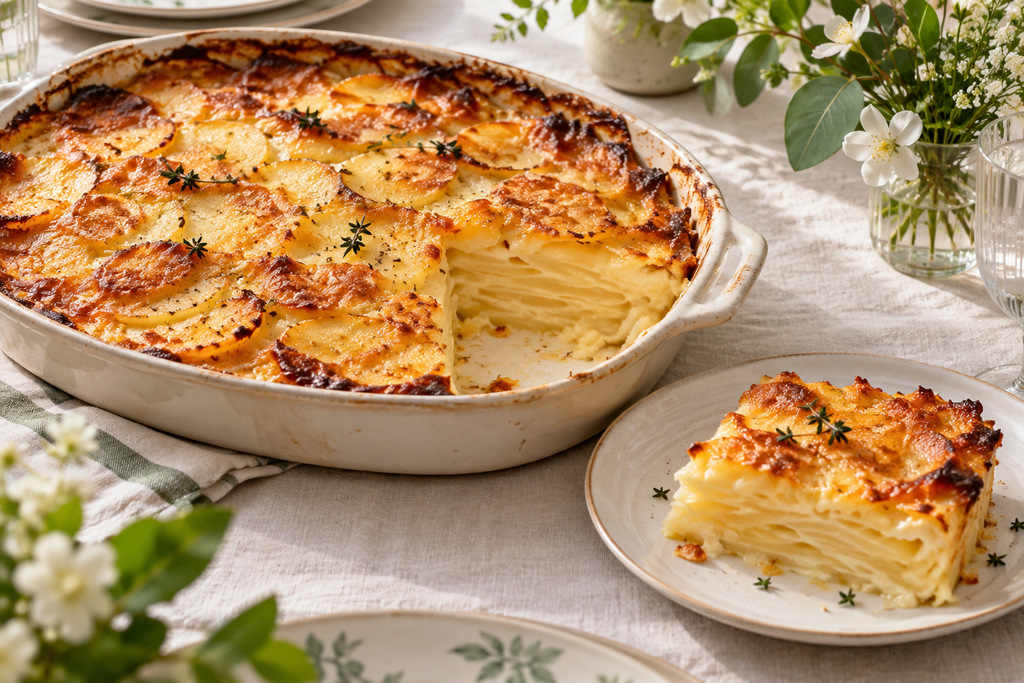
Creamy beneath the surface and deeply golden on top, Potato Gratin is a dependable side dish for an Easter lunch. Its rich but uncomplicated flavours work especially well with roast lamb, although it can also accompany salmon or a vegetarian main course. Since the gratin can be prepared in advance, it is particularly useful when several dishes need to reach the table at the same time.
Choose a floury or all-purpose potato that becomes tender while releasing enough starch to thicken the cream. Peel the potatoes and slice them as evenly as possible, ideally with a mandoline. Slices of consistent thickness cook at the same rate and form tidy layers. Take care when using a mandoline and always use its hand guard.
Do not rinse the potatoes after slicing, as their surface starch helps bind the cream and gives the finished dish its silky texture. Gently warm the cream with garlic, thyme, black pepper and a small pinch of nutmeg. Heating the mixture first helps distribute the seasoning and encourages the potatoes to begin cooking evenly.
Rub the baking dish with butter and arrange the slices in overlapping rows. Season lightly between the layers, remembering that both cheese and reduced cream will intensify the saltiness during baking. Pour over the warm cream gradually, allowing it to work its way between the potatoes. The liquid should surround the layers without completely drowning them. Finish with grated Gruyère, Parmesan or another good melting cheese.
Cover the dish for the first part of baking so the potatoes soften without the top becoming too dark. Remove the cover later and continue cooking until a knife slides easily through the centre and the surface is bubbling and golden. If necessary, place the gratin briefly under the grill for additional colour, watching it carefully.
Allow Potato Gratin to rest for 15–20 minutes before serving. The cream will thicken slightly, and the portions will hold together more neatly. It may be baked earlier in the day, cooled and reheated uncovered before lunch. This second warming often makes the layers even easier to cut while restoring the crisp, caramelised surface.
13. Carrot Cake
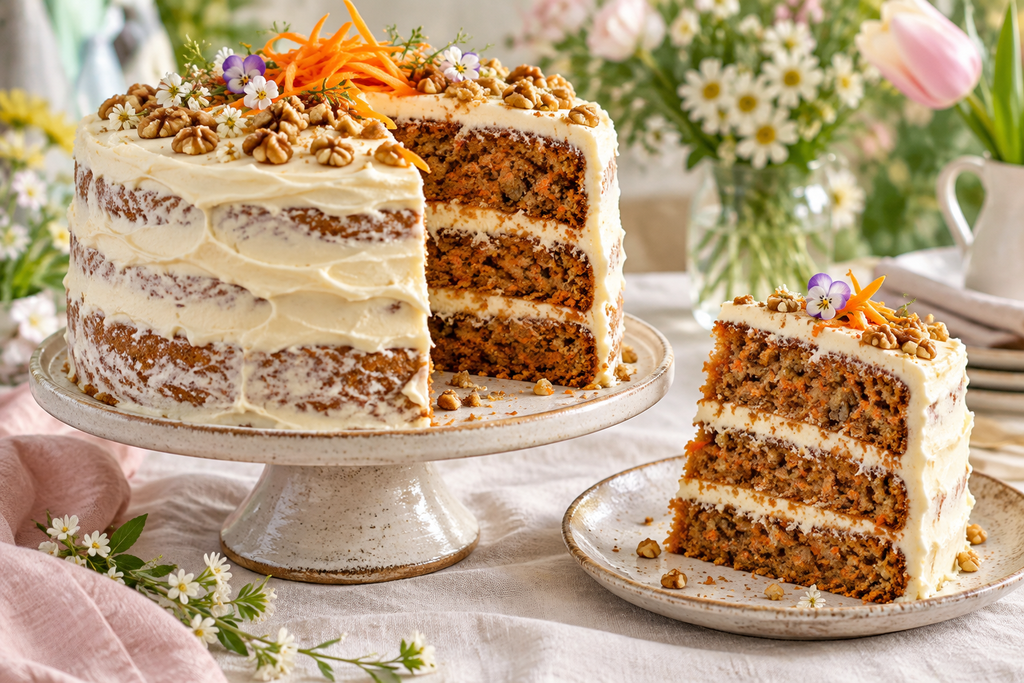
Moist, gently spiced and finished with a creamy topping, Carrot Cake is a natural choice for an Easter dessert. Its warm flavours provide a comforting finish to the meal, while the carrots, nuts and soft cream-cheese frosting give every slice plenty of texture. It can also be prepared in advance, making it particularly convenient when the oven is needed for the main course and side dishes.
Finely grate the carrots so they distribute evenly through the batter and soften fully during baking. Freshly grated carrots are preferable to pre-shredded ones, which are often dry and cut too thickly. Avoid squeezing out their natural moisture unless the recipe specifically instructs you to do so; that liquid helps create the cake’s characteristic tender crumb.
Combine the dry ingredients separately to distribute the cinnamon, ginger or nutmeg evenly. Once the wet and dry mixtures are brought together, stir only until no visible streaks of flour remain. Overmixing can make the cake heavy or rubbery. Fold in the carrots and chopped walnuts or pecans at the end. Raisins, orange zest or crushed pineapple can also be included, but using too many additions may make the layers difficult to handle.
Divide the batter evenly between prepared cake tins and bake until a skewer inserted into the centre comes out with a few moist crumbs rather than wet batter. Let the cakes cool in their tins briefly, then transfer them to a rack. The layers must be completely cold before frosting, or the cream-cheese mixture will soften and slide.
For a stable frosting, use full-fat block cream cheese rather than a soft spread from a tub. Beat the butter and sugar first, then mix in the cold cream cheese only until smooth. Excessive beating can make the frosting loose. If necessary, chill it briefly before assembling the cake.
Carrot Cake often tastes even better the following day, once the spices and moisture have settled. Bake the layers in advance, then frost the cake the evening before Easter lunch and refrigerate it. Bring it out around 30 minutes before serving so the sponge and frosting can soften slightly. Decorate simply with chopped nuts, fine carrot curls or a few edible spring flowers for an inviting seasonal finish.
14. Hot Cross Buns

Soft, warmly spiced and filled with dried fruit, Hot Cross Buns are one of the most recognisable Easter bakes. They can be served as part of a relaxed breakfast, offered with coffee before lunch or placed in a breadbasket for guests to enjoy throughout the day. Their glossy tops and traditional crosses also bring an unmistakably festive touch to the table.
Begin with ingredients at room temperature so the enriched dough rises more predictably. Warm the milk until it feels lukewarm rather than hot; excessive heat can damage the yeast. Mix the flour with cinnamon and other spices such as nutmeg or allspice, then add the yeast, milk, egg, sugar and softened butter according to the recipe.
The dough may initially feel sticky, but avoid adding large amounts of extra flour. Kneading gradually develops the gluten and creates a smoother, more elastic texture. Add the raisins, currants, mixed peel or other dried fruit once the dough has begun to strengthen. Knead only until they are distributed evenly, as vigorous mixing can tear the fruit and discolour the dough.
Allow the dough to rise in a covered bowl until noticeably expanded. Rather than relying only on a fixed time, pay attention to its volume; the temperature of the kitchen can make the process faster or slower. Divide the dough into equal portions and shape each one into a smooth ball. Arrange the buns with a little space between them so they can grow together during the second rise, producing soft sides that pull apart easily.
Pipe the crosses using a smooth paste of flour and water. The mixture should be thick enough to hold a clean line but soft enough to pass through a small piping bag. Bake the buns until evenly golden and they sound lightly hollow when tapped underneath.
Brush the freshly baked Hot Cross Buns with warmed apricot jam or a simple sugar glaze for their characteristic shine. They are best eaten on the day they are baked, although they can be prepared ahead and refreshed briefly in a warm oven. Split and serve them with salted butter, or toast day-old buns until the edges become lightly crisp.
15. Deviled Eggs

These disappear faster than anything else.
What Works best:
- Keep the filling simple
- Add a small twist (mustard, chives, or pickles)
Dyeing egg whites adds a colorful touch, making them visually appealing for guests.
For fun, I often add crispy bacon or dill pickle relish.
Garnishing with chives makes them not just tasty, but beautiful too!
Easter Lunch Recipe Ideas: What I’d Do Differently Next Time?!
If I had to plan it again (and I will), I’d stick to this:
- 1 starter
- 1 main
- 2 sides
- 1 dessert
That’s it.
Trying to prepare 10–15 dishes sounds impressive—but it usually just creates stress.
A great Easter lunch isn’t about how many dishes you serve.
It’s about choosing the right ones—and actually enjoying the moment with your guests.
If you’re planning your own menu this year, keep it simple.
Trust me—it works better.