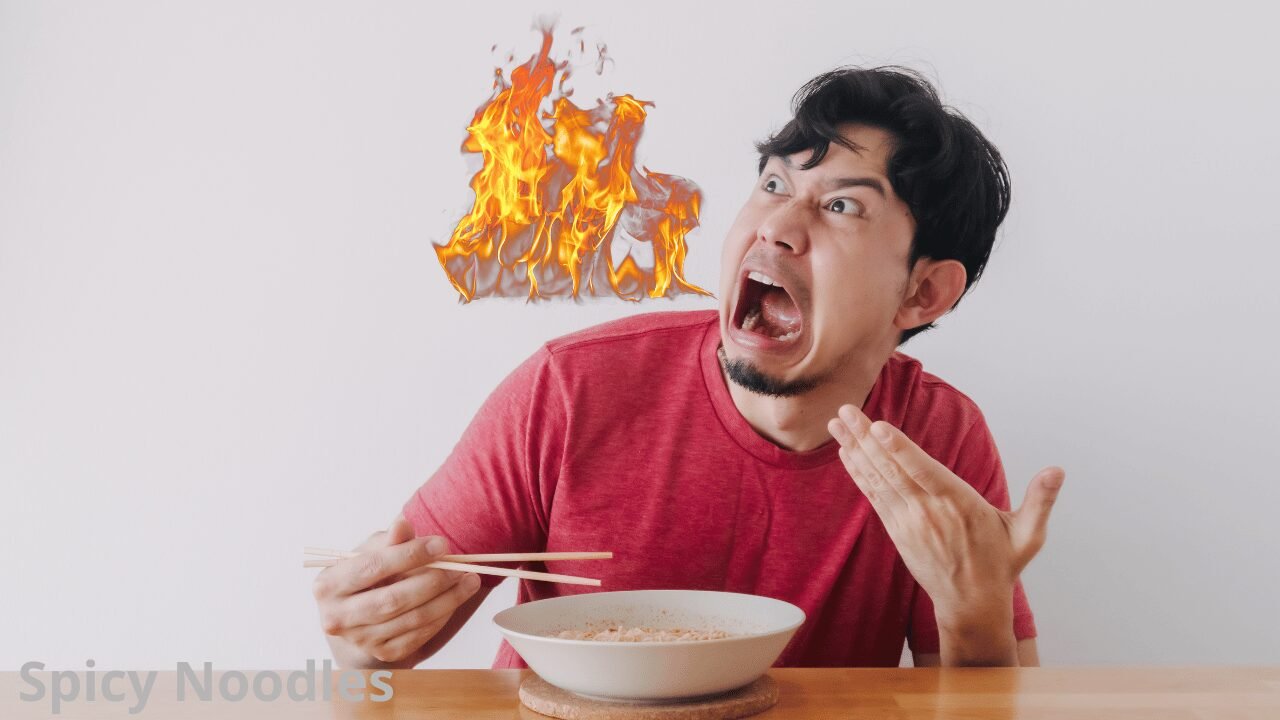
The most dependable way to make spicy noodles less spicy is to spread the existing seasoning through more unseasoned food or replace part of an overly spicy broth or sauce.
Creamy ingredients can also help when they suit the dish, but there is no single spoonful of sugar, butter, or lime juice that reliably fixes every bowl.
Start by identifying what you have: noodle soup needs a different adjustment from noodles coated in a concentrated sauce. Then test a small portion before changing the entire batch.
Choose the Fix That Matches Your Noodles
| Type of dish | Useful first adjustment | Main trade-off |
|---|---|---|
| Noodle soup | Replace some spicy broth with mild, unsalted broth | Other seasonings become less concentrated |
| Saucy noodles | Add separately cooked, unseasoned noodles | You may need more non-spicy sauce ingredients |
| Creamy noodles | Add a compatible creamy ingredient gradually | Texture and flavor will change |
| Extremely spicy noodles | Use a small amount in a larger, mild dish | You will make more food than originally planned |
These methods reduce the concentration of spicy ingredients or change how the dish tastes. They do not remove every trace of chili.
1. Add More Plain Noodles
For noodles coated in sauce, cook an additional portion separately according to its package instructions. Drain as appropriate, then toss it with some of the spicy noodles.
As a practical test, combine equal amounts of spicy noodles and plain cooked noodles in a separate bowl. Taste a small bite once it has cooled enough to eat comfortably.
If the result is still too hot, increase the proportion of plain noodles. If it becomes bland, adjust the non-spicy elements of the sauce rather than adding more of the original hot seasoning.
Doubling the food while keeping the same amount of chili reduces its average concentration, but the perceived heat will not necessarily feel exactly halved.
Adding suitable unseasoned ingredients is also a recognized approach to moderating an overly spicy dish. tollbit.bbcgoodfood.com
2. Replace Some Broth in Noodle Soup
If most of the heat is in the liquid, replacing part of that liquid can be more effective than adding toppings.
- Take the pot off the heat.
- Remove a portion of the spicy broth.
- Replace it with mild, unsalted broth or water.
- Stir thoroughly and taste cautiously.
- Repeat if needed, then adjust the remaining seasoning.
For example, replacing roughly one-quarter of the broth is a manageable first trial. It is not a guaranteed correction: the required amount depends on the original heat level and your preference.
Avoid simmering already cooked noodles for a long time while making adjustments. They can become overly soft. If practical, lift them out temporarily and return them once the broth is ready.
3. Try a Creamy Addition That Suits the Dish
Milk, cream, plain yogurt, or coconut milk may help create a milder-tasting sauce, but choose according to the flavor you want.
For a small trial portion, start with about a tablespoon of the chosen ingredient, mix, and reassess. A larger serving will require a different amount.
Keep these differences in mind:
- Milk can loosen a thick sauce.
- Cream adds richness.
- Plain yogurt adds tanginess and may split under excessive heat.
- Coconut milk introduces its own flavor.
- Cheese can add substantial salt as well as richness.
Creamy additions and dilution are useful kitchen adjustments, but they can also change the original dish considerably. tollbit.bbcgoodfood.com
For dairy-free cooking, check product labels and choose a compatible alternative. Do not assume that every plant-based drink will behave like dairy milk.
4. Add Mild Ingredients for a More Substantial Meal
Plain tofu, cooked vegetables, or fully cooked, lightly seasoned protein can spread the spicy sauce through a larger quantity of food.
Choose additions that are ready to eat or cook them separately first. Do not stir raw meat or a raw egg into finished noodles and assume the remaining heat will cook them adequately.
Vegetables are not selective “spice sponges.” Their main contribution is extra food, texture, and a different balance in each bite.
If you add a large amount, you may also need a little non-spicy liquid or sauce to keep the noodles evenly coated.
Will Sugar or Lime Juice Fix Spicy Noodles?
They may improve the flavor balance, but neither is a dependable way to remove chili heat.
A little sweetness can make some sauces taste more rounded. Lime juice or vinegar can brighten a rich dish. Too much, however, leaves you with noodles that are both spicy and excessively sweet or sour.
Make these adjustments after addressing the concentration of the spicy sauce. Test a few drops of acid or a small pinch of sugar in a sample portion first.
Do not keep adding them in the hope that a sufficiently large quantity will “neutralize” the chili.
Can Peanut Butter Help?
Peanut butter can turn some spicy sauces into a richer, nutty coating. It works best when that flavor suits the noodles.
Try a small amount in a separate portion before committing the whole dish. Thin it with a suitable liquid if necessary so it mixes evenly.
It is not a universal rescue ingredient: the amount needed varies, and it can make an already thick sauce heavy. Avoid it when serving someone with a peanut allergy.
How to Make Instant Noodles Less Spicy Next Time
If the packet contains a separate chili sauce or spicy seasoning, begin with less than the full amount. Mix thoroughly, taste, and add more only if wanted.
When salt, aromatics, and chili are combined in one packet, using less will reduce more than just the heat. You can adjust the finished dish with appropriate non-spicy ingredients.
Follow the package’s cooking and draining instructions. Extra cooking water may not make a drained noodle dish milder if you still add the entire concentrated sauce packet afterward.
Different products—even within the same brand—have different formulations, so there is no universal “use half” rule that guarantees comfortable heat.
What Helps If Your Mouth Is Already Burning?
Changing the food and easing the sensation in your mouth are separate tasks.
Research from Penn State found that dairy milk reduced capsaicin-related oral burn more effectively than water in the tested conditions. Both skim and whole milk performed well in an earlier beverage comparison, so the effect should not be attributed to fat alone.
That evidence does not establish that every dairy ingredient will fix a spicy recipe. It also does not support recommending beer or wine as reliable remedies; the earlier comparison tested non-alcoholic beer. Penn State University
You do not need to keep eating a dish that feels painfully hot.
Know When to Change the Plan
Sometimes the best result comes from using a small amount of the spicy noodles in a much larger mild meal. In other cases, the flavor changes so much during rescue that starting again is more practical.
A kitchen mistake does not need an elaborate solution. Work with a small sample, make one adjustment at a time, and stop when the noodles are enjoyable to eat. The goal is a comfortable meal—not proving that you can finish the hottest bowl.
Sources and Further Reading
Research Paper — Efficacy of Common Beverages in Reducing Oral Burn from Capsaicin
Good Food — How to Make a Curry Less Spicy
Penn State — Milk: Best Drink to Reduce Burn from Chili Peppers