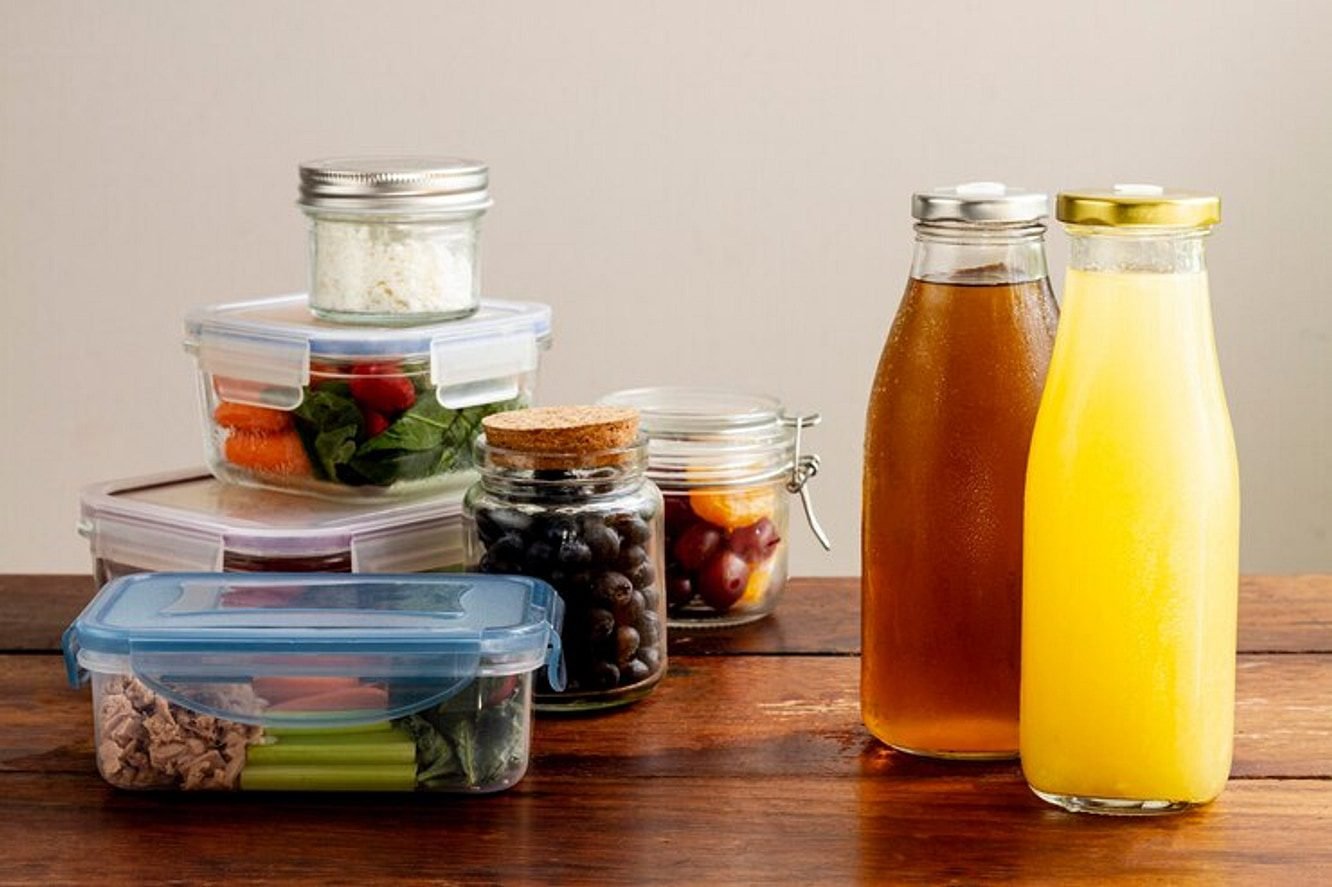
At first glance, this feels like an easy question. But when you consider factors like freshness, safety, convenience, and budget, it’s not so clear cut. Which food containers are better for you depends on how you pack leftovers, prep meals, and store pantry items.
Let’s evaluate the pros and cons of each material so you can make an informed decision the next time you’re shopping for food storage containers.
Glass vs Plastic Food Containers: What Makes Glass Containers Better?
Lots of people prefer glass because it lasts longer and doesn’t create storage headaches. Glass won’t absorb smells, stain easily, or cling to sauce like some plastics can. If you hate having flavored remnants ghosting your food containers, glass is great for strong-smelling meals.
Another benefit? Visibility. Glass containers allow you to quickly see what’s inside without taking the lid off. That saves time and means forgotten leftovers are less likely to go to waste. For many meal preppers, that one advantage makes grocery shopping and cooking more streamlined.
Glass vs Plastic Food Containers: Where Plastic Containers Still Rule
Plastic wins best-in-category awards for durability. They’re lightweight, inexpensive, and simple to transport. If your family is always on the go, that can be a game-changer. They also work well for lunchboxes, travel snacks, school lunches, or any situation where breakage is likely.
- Plastic is typically cheaper than glass.
- It’s also much lighter, which makes it easier to transport.
- Many varieties stack together easily in a crowded kitchen.
- Freezer-safe varieties can be useful.
- Dropping plastic won’t send you into cleanup mode.
These conveniences make plastic attractive for everyday use. When you choose high-quality containers and replace them as needed, plastic has not screamed unsustainable.
How Do Glass and Plastic Stack up on Safety?
If you’ve started questioning your container collections, safety is probably the reason. Glass tends to come out on top because it never scratches or stains. Think about how that stain happens. It’s usually from years of subtle wear and tear.
Even when food containers are dishwasher-safe, harsh detergents increase wear over time. Glass also doesn’t leech chemicals when exposed to heat or contain food.
Plastic is perfectly safe for food storage as long as you do your research. temperature, scrubs, and age can impact how well it performs over time. Cheap plastic containers were not designed to withstand high temperatures or microwaves. But if you invest in food-grade containers and follow care instructions, your plastic containers can be just as safe.
Which Material Is Better for Meal Prep?
Meal preppers take pride in their consistency. Typically, the better option for your food containers is the one you’ll use. If you eat at home or in an office microwave daily, glass provides more visibility and reliability when reheating meals.
Here’s a quick comparison of glass and plastic containers specifically for meal prep purposes.
| Feature | Glass | Plastic | Best Use Case |
| Weight | Heavy | Lightweight | Plastic for portability |
| Microwave Safety | High (if microwave-safe) | Varies | Glass for reheating |
| Durability | Fragile | Resilient | Plastic for travel |
| Visibility | Clear | Opaque or semi-clear | Glass for quick identification |
Understanding these factors can help you choose the right containers for your meal prep routine.
However, if you commute or transport meals often, plastic may be more practical. A combination of both can also work well. Glass containers are our favorite at home for food storage. But we swap to plastic when taking meals on the go.
Glass Vs. Plastic: Microwaving and Reheating
How you reheat food also plays a role in which containers are best. Glass performs better when reheating most foods in the microwave. First, you need to ensure it’s microwave-safe glass. But if it is, glass won’t warp like plastic containers. This makes glass a more dependable option for microwaving soups, freezer meals, casseroles, and saucy dishes.
You can certainly reheat food in plastic. However, the container needs to be made for high heat. Older containers or inexpensive ones can easily become warped or discolored from microwave use. If you microwave lots of food at home, getting in the habit of reading container labels can help you avoid health concerns.
Which Containers Last Longer?
Price isn’t the only consideration with food storage containers. How long they last should factor into your decision too. Glass containers are more likely to look and work great for years. They won’t stain, and proper care means they may never show signs of wear.
Plastic will inevitably start to wear out faster. Lids don’t snap on as tight, scratching are more noticeable, and food smells may start to leak into containers. However, if one breaks, replacing plastic containers is hardly a inconvenience. Consider how often you cook when deciding which containers are better for longevity.
Glass or Plastic: Cleaning up
How easy it is to clean your containers will determine whether you use them over and over. Glass rinses quicker because the smooth material won’t absorb oily leftovers or pungent spices like plastic can.
- Glass won’t stain from tomato sauce.
- Garlic chili makes plastic smell like grocery day.
- Run plastic through the dishwasher and it will age faster.
- Plastic containers are more likely to get scratched.
- Glass containers typically look cleaner.
If you cook a variety of foods, you’ll notice these problems quickly. The less time you spend scrubbing, the more likely your containers will become a part of your meal prep routine.
When to Choose Glass? When to Choose Plastic?
There’s no one-size-fits-all answer here. Glass should be your go-to when storage longevity, microwaving, resisting stains, and avoiding scratches are priorities. We keep glass containers at home for bulk food storage. Glass containers are also great for leftovers.
If you care more about weight, breaking, or budget, give plastic a second chance. For flexibility, keep both on hand. Glass is perfect for home. But portable doesn’t get much easier than plastic for lunches, picnics, and travel-sized servings.