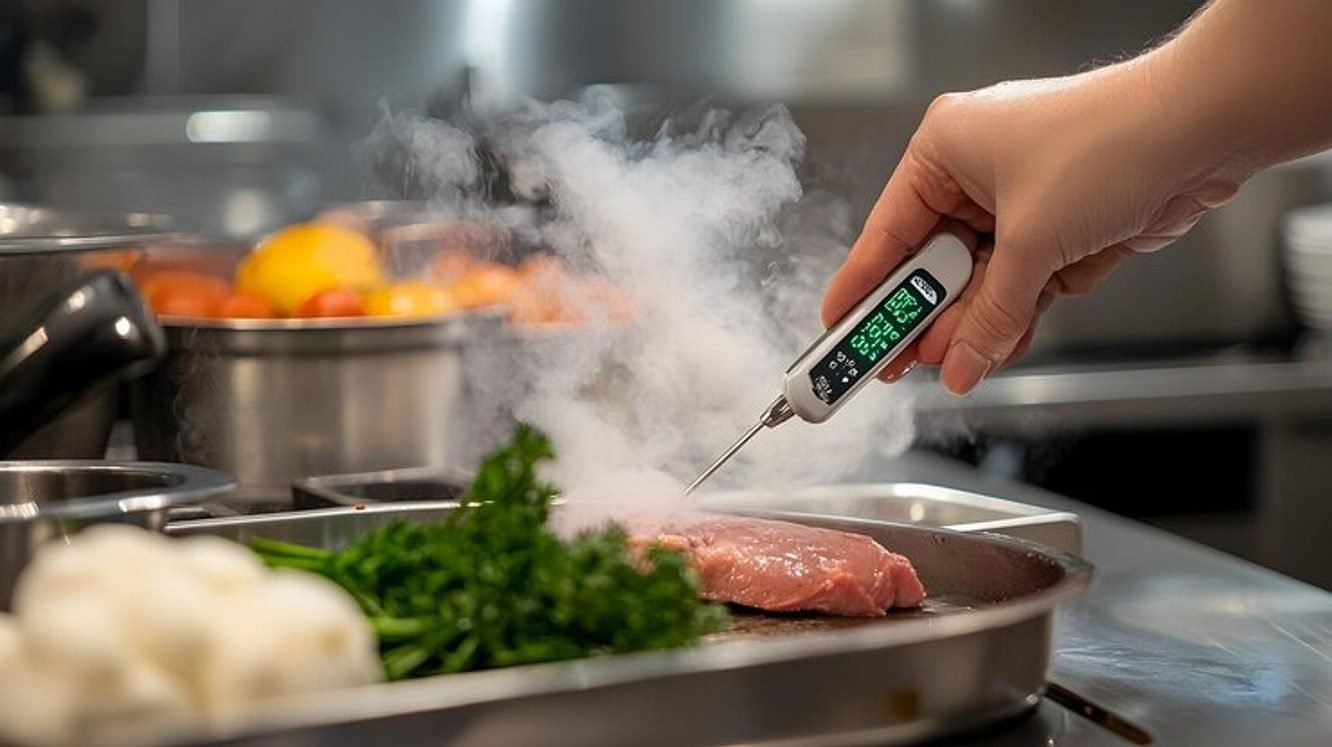
Food safety temperature doesn’t get much easier than this. Use our guide. We show you one of the best ways to guard your family against foodborne illness is to learn which temperatures are important, why they matter, and how to confidently use a thermometer every time you cook.
Food Safety Temperature Guide: Why Is Food Temperature Important?
Food can look and feel done long before it reaches temperatures required to be safe from bacteria. Meat, poultry, eggs, seafood and leftovers can harbor dangerous bacteria if they’re not cooked properly. That’s why temperature is such an important part of kitchen safety.
Food also just tastes better when properly cooked. The right internal temperature ensures even textures andsettled juices so you don’t have to worry about dry overcooking or serving undercooked foods.
Food Safety Temperature Guide: What Temperatures Should You Know?
You don’t need to memorize exact temperatures for every possible food. A few key temperatures will help you check food for doneness instead of estimating it by color or texture alone.
- Safest internal temperature for poultry is 165° F.
- Ground meats should be cooked to 160° F.
- Beef, pork, veal, and lamb steaks or roasts should be cooked to 145° F.
Include a rest time after you take steaks and roasts off the grill or stove. During this time, its temperature remains constant or rises.
- Cook fish to 145° F or until it flakes easily with a fork.
- Leftovers should be reheated to 165° F.
- Hot holding of foods should be at least 140° F.
Write these numbers down on a sticky note and keep it next to your stove. Even if you think you’ll remember, taking a second to confirm tempers will become second nature after a few weeknights of chopping, stirring, and boiling.
Food Safety Temperature Guide: How Do You Use a Thermometer correctly?
If you take your food’s temperature incorrectly, you won’t get accurate results. Food thermometers are only helpful when used properly and thoroughly.
Insert the thermometer into the thickest part of your food, away from bone, fat, or gristle. And make sure the thermometer isn’t touching the pan itself. Wait for the temperature to register before removing the thermometer and deciding whether to serve.
If your food is fairly thin, try inserting the thermometer from the side so the probe reaches the middle. And always wipe down your thermometer between checks, especially when checking multiple items on the grill or stovetop.
What Are Safe Cooking Temperatures for Food?
Each food has different temperature recommendations. And there’s a good reason why they don’t all cook to the same temp.
- Cook chicken breasts and thighs to 165° F.
- The same goes for turkey. Cook to 165 degrees F, but check the thickest part.
- Ground beef and ground turkey burgers should be cooked to 160° F.
- Pork chops and pork roast should be cooked to 145° F.
- Beef, veal and lamb steaks should be cooked to 145° F.
- Cook fish to 145° F or until it flakes easily with a fork.
- Egg dishes should be cooked to 160° F.
- Casseroles should reach an internal temperature of 165° F throughout the dish.
When you’re cooking a meal with several different ingredients, it can be hard to know where to start. If one of your ingredients is risky raw meat or you just aren’t sure if it’s cooked through, check that food item first.
Why Is Rest Time Important?
Rest time isn’t just a suggestion, it’s an important part of the cooking process. Just because you finished cooking your meat on the grill or in the oven doesn’t mean it’s finished cooking.
As soon as meat rests, its internal temperature will continue to rise. This helps kill off bacteria that could be living in your food. Plus, rest times let the juices redistribute themselves instead of running out onto your cutting board.
Food Safety Temperature Guide: Reheating and Cooking Leftovers
Just because your food has been cooked once doesn’t mean it won’t kill you the next time you eat it. Every time food cools, gets refrigerated and reheated, it has the potential to grow dangerous amounts of bacteria.
If you don’t quickly cool down and refrigerate your leftovers within 2 hours (1 hour if outside temperature is over 90° F), bacterial growth can occur. Even in the refrigerator.
Make sure reheated leftovers reach 165° F from edge to edge. Heat soups and sauces in between stirs to avoid hidden pockets of lukewarm leftover soup.
Temperature Tips for Foolproof Meals
You might know all of these temperature facts, but do you know how to properly cook without a hassle? If you cook often, you probably don’t want to think about thermometer use every time you cook. Make these tips part of your kitchen routine.
- Keep your instant-read thermometer clean and never let it touch raw meats more than necessary.
- Learn how to calibrate your thermometer and check it regularly.
- Always check more than one spot if you’re cooking something thick.
- Don’t let the probe touch bone or your metal pan.
- Don’t forget to thaw foods safely. When in doubt, thaw in the refrigerator.
- Colour can be deceiving. Don’t rely on colour alone to determine doneness.
- Speaking of hands, wash your hands after touching raw meat or poultry.
Once you start using a thermometer and following these easy tips, using one will become second nature. Before you know it, cooking with food temperatures will become easy.
Safe Cooking Temperatures: How to Avoid Food Safety Mistakes?
Cooking to a temperature is only part of the battle. Safe cooking temperatures should be paired with safe kitchen habits every time you prepare a meal.
Don’t let raw meats and ready-to-eat foods touch on your countertop. Whether it be a cutting board or a plate, make sure you sanitise areas where raw meats have been and store your perishables in the fridge quickly. You’ll be preventing bacteria from having the opportunity to spread and grow.
Give yourself enough time to safely serve food to your guests. Thermometers don’t lie, so leave yours out before cooking begins. Keep track of time while food is on the grill and keep those serving dishes warm until it’s time to eat.