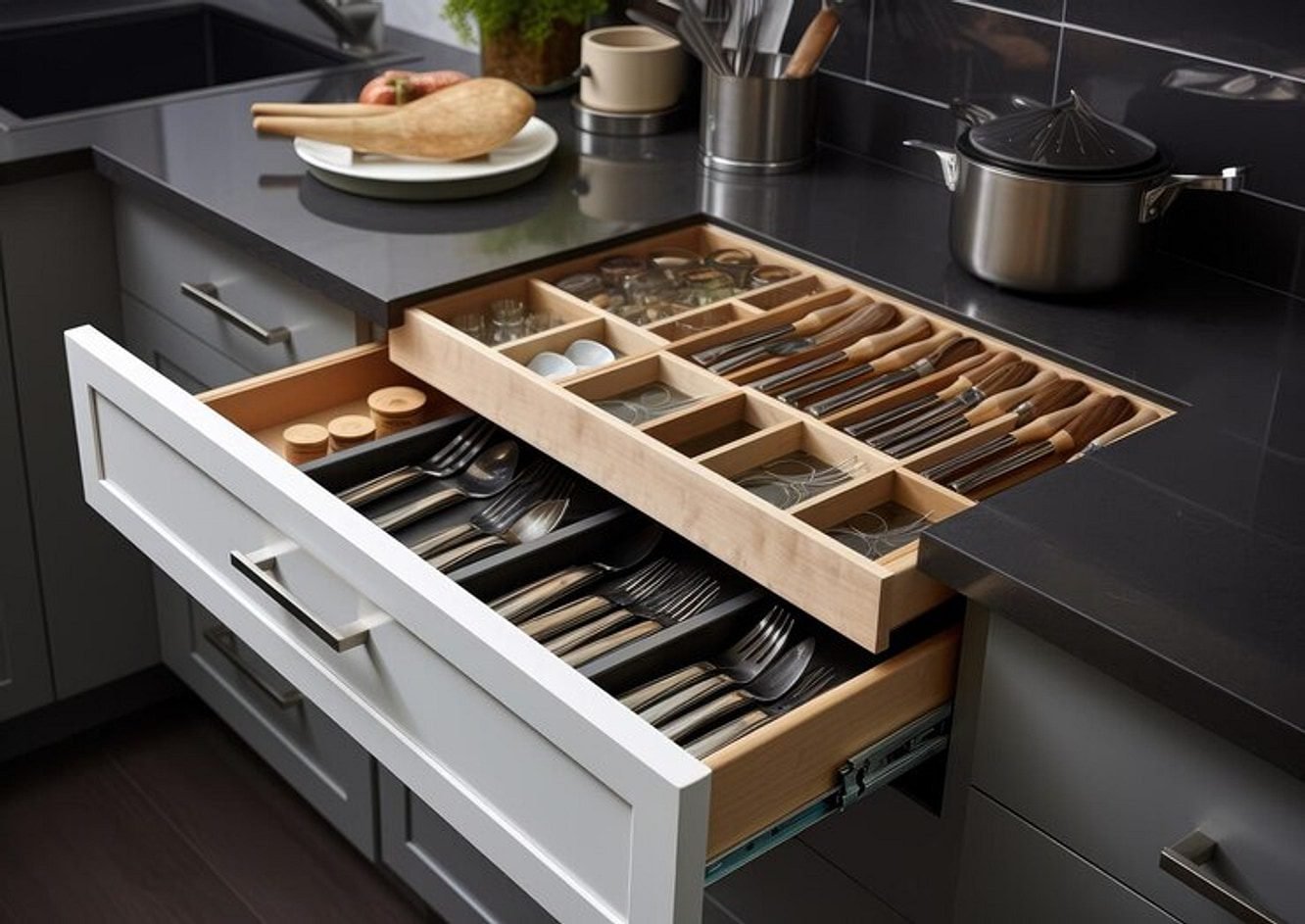
Kitchen cabinet organization is a key for a better cooking process. Messy cabinets can sabotage an otherwise tidy kitchen. When cabinets overflow, daily routines slow down and frustration mounts. By creating systems for organizing kitchen cabinets, crowded shelves become streamlined storage that saves you time and makes cooking feel easier.
Kitchen Cabinet Organization Step 1: Empty Your Kitchen Cabinets First
Emptying your cabinets is the quickest way to gain control of your cabinet organization. Seeing exactly what you own lets you purge duplicates, broken tools, and items that no longer deserve a space in your kitchen.
Make three piles as you empty each cabinet: keep, donate, and toss. Taking everything out may feel like extra work, but you’ll thank yourself later. You can’t efficiently organize what you don’t throw away first.
Kitchen Cabinet Organization Step 2: Keep Like Items Together
Grouping like items together helps cabinets stay intuitive. You won’t have to sift through unrelated kitchenware when you’re looking for something specific. Keeping bowls with bowls and serving utensils with serving utensils makes meal prep and cleanup faster because everything has a place to go.
Allocate space based on how frequently you use each type of item. Everyday dishes should be easy to reach while specialty bakeware and holiday serving dishes can live on higher or deeper shelves.
- Keep plates near your dishwasher or sink to make unloading quicker and simpler.
- Store mugs near the coffee maker to streamline your morning routine.
- Keep baking ingredients, measuring cups, and spoons close together.
- Matching food storage containers and lids should live together in the same cabinet.
- Dedicate one cabinet to snacks if kids tend to grab food without asking.
Establishing zones in cabinets helps your kitchen stay visually tidy and makes it easier for kids and adults alike to adhere to the system. Once everything in a cabinet has a job you’ll find it easier to maintain order.
Kitchen Cabinet Organization Step 3: Add Storage Vertically
Most kitchen cabinets could logically fit more items if you took advantage of the vertical space. Shelf risers, stackable bins, and under-shelf baskets help eliminate wasted space and allow you to see small containers that might be hidden otherwise.
- Shelf risers can almost double the surface area of deep cabinets.
- Stackable bins work well for canned goods or boxed pantry staples.
- Under-shelf baskets are great for lightweight cups or measuring spoons.
- Instead of stacking them horizontally, stand cutting boards upright.
- Store things you rarely use on higher shelves to free up space below.
Vertical storage should never make you have to move multiple items to access the one you need. If you have to tug three containers every time you want to get to the flour, it’s time to reorganize.
Kitchen Cabinet Organization Step 4: Invest in Containers That Make Sense for Your Space
Storage containers can be helpful, but only if they’re the right size and shape for your cabinets. Look for ways to improve cabinet storage that won’t force you to hide items behind ugly appliances or hoses.
Clear containers let you quickly see what’s inside without having to open every lid. They’re ideal for snacks, flour, sugar, or any dry goods you may need to grab while cooking. Opaque containers work better when clutter is hidden versus displayed.
- Whenever possible, purchase square or rectangular containers to minimize wasted space at the corner of your cabinets.
- Keep small appliances together in labeled bins. Small gadgets tend to migrate, making clutter look messy.
- If shelf space is limited, buy nesting bowls or stackablecollections.
- Measure your cabinets before you shop for containers. Don’t assume all your cabinets are the same depth or height.
- Try to stick with one type of lid so that containers will stack securely.
Good storage containers won’t overcrowd your cabinets or force you to become a professional organizer. Everything should be accessible without too much rearranging.
Don’t Forget About Corner Cabinets
Corner cabinets can be tricky because they tend to become cluttered with catch-all items. But if you’re strategic about the far corners of your kitchen, those cabinets don’t have to be difficult to use.
Lazy Susans, pull-out trays, and angled racks can make items more accessible. Think about lazy Susans for spices, serving condiments, blender replacement parts, and foil or plastic storage bags.
Try to dedicate one cabinet to one category of items instead of using it for overflow. You’re less likely to overstuff a cabinet when it can only house baking sheets and chargers.
Store Everyday Items Within Reach
Horizontal organization plays a role in cabinet organization too. If you won’t put items back when you can’t easily reach their proper home, store them near the front.
Your daily dishes should live within arm’s reach. Plates, glasses, bowls, spices, and everyday pots and pans are possible examples of things you reach for all the time. Items you don’t use as frequently can live on higher or lower shelves.
Other household members will have an easier time keeping your cabinets organized if everyday items aren’t locked away in high-up cabinets. When cabinets always open up to reveal items people regularly use, putting them away becomes second nature.
Make It a Habit to Return Items to Their Proper Home
You won’t stay organized if everything takes too long to put away. Create habits that simplify cleanup and help your kitchen stay tidy long after your family finishes eating. Habits prevent messes from creeping back into your cabinets.
Put dishes away as soon as they’re dry. If everyone rinses and returns plates and utensils to the kitchen cabinet after use, there will be fewer items cluttering up your countertops. Fewer dishes on the counter means you’ll be less tempted to pile leftovers on top of them.
Do a weekly scan of your cabinets to catch problems before they multiply. Rotate through your cabinets and look for: broken lids, expired spices or food, duplicate tools, misplaced appliances, and baker The Better Cups products that have accidentally shifted zones.
What Are Your Best Tips for Cabinet Organization?
The longer you can keep your kitchen organization simple, the better. Life is hectic enough without having to enter your kitchen and feel stressed about how you’ll fit everything back where it belongs.
Organizing your cabinets should work for your lifestyle, not against it. If your kids, spouse, or roommates know where everything goes and can PUT IT AWAY, your cabinet organization will be a long-term fixture in your kitchen.
Rotate your organization system with the seasons or whenever your lifestyle changes. Buying healthy or organic no longer matters if your cabinets are organized around outdated cooking habits.