I’ve put together 15 fantastic sourdough focaccia recipes that you’re going to love. Each recipe starts with an active sourdough starter for that chewy texture and unique flavor. You’ll need simple ingredients like water, olive oil, and sea salt, plus some tasty toppings like garlic or rosemary. I recommend using bread flour for airy pockets, enhancing your focaccia’s structure. I’ll walk you through the dough preparation, rise tips, and baking techniques. You’ll be amazed at how satisfying homemade focaccia can be. Keep exploring and unlock even more tips and tricks for perfecting this delightful bread!
Understanding Sourdough Focaccia
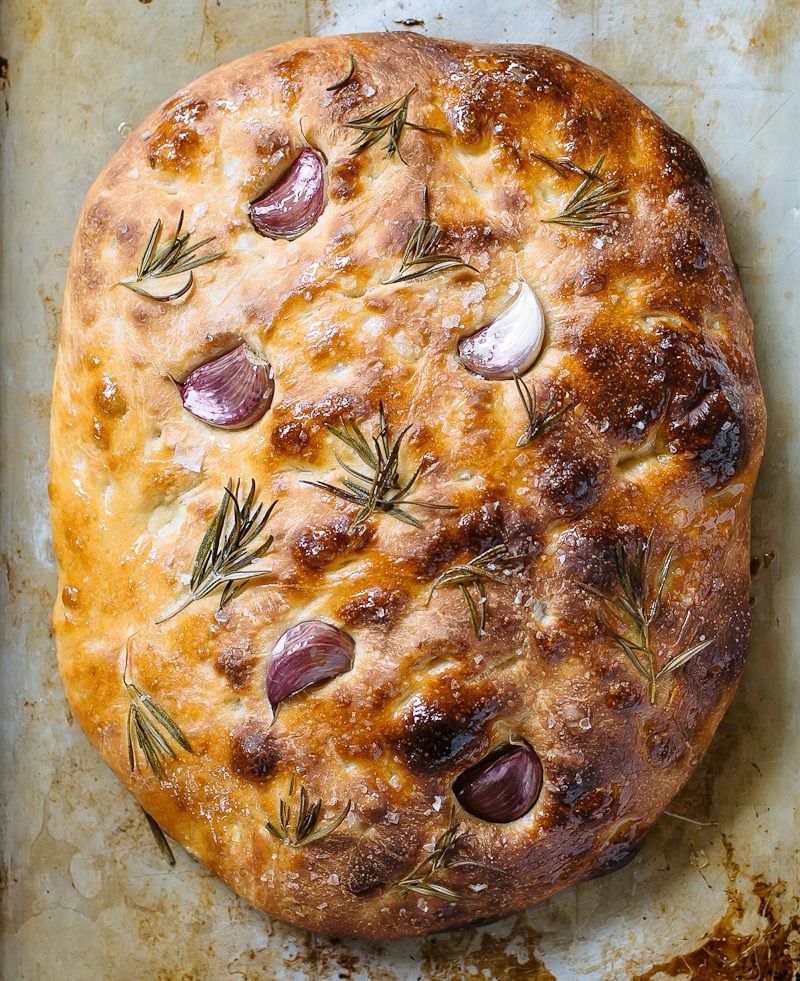
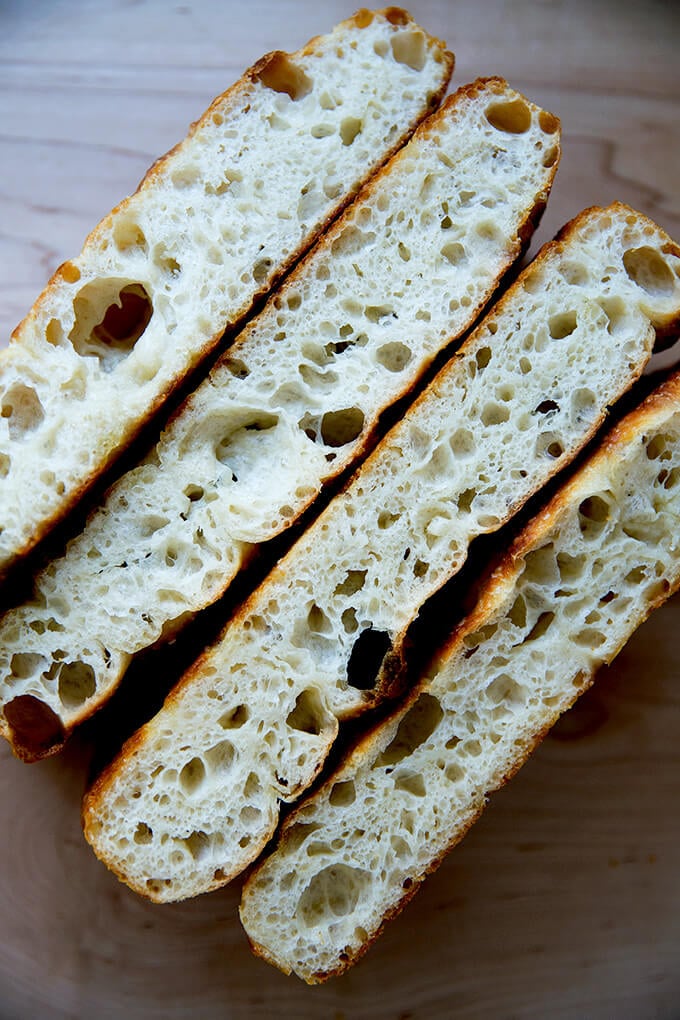
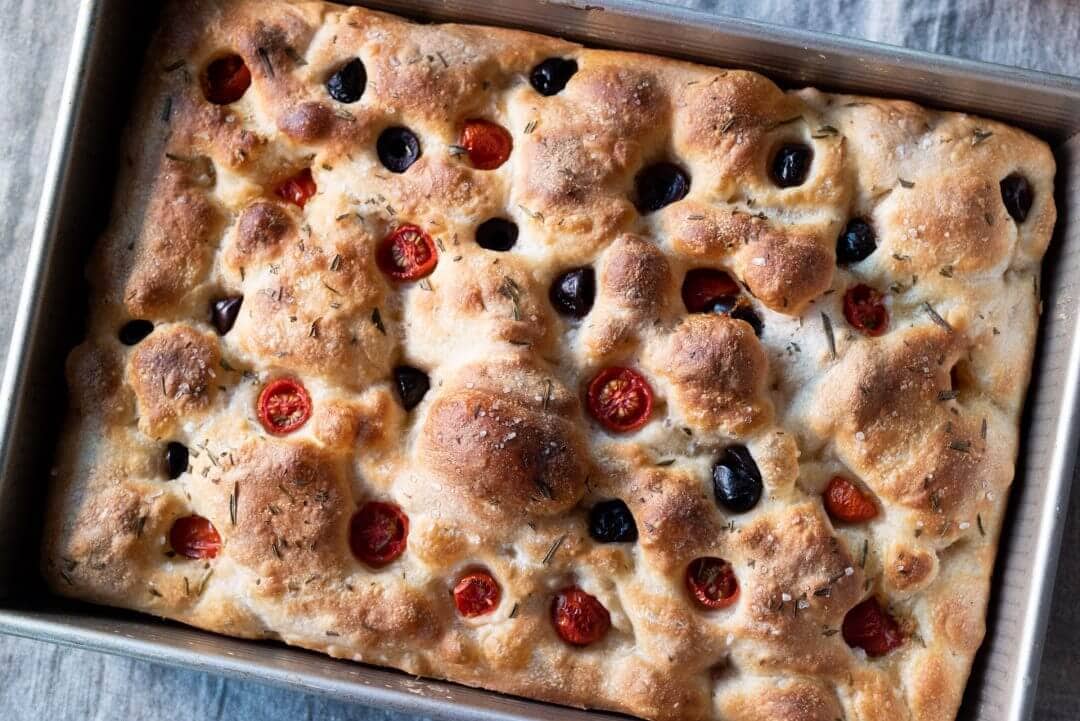
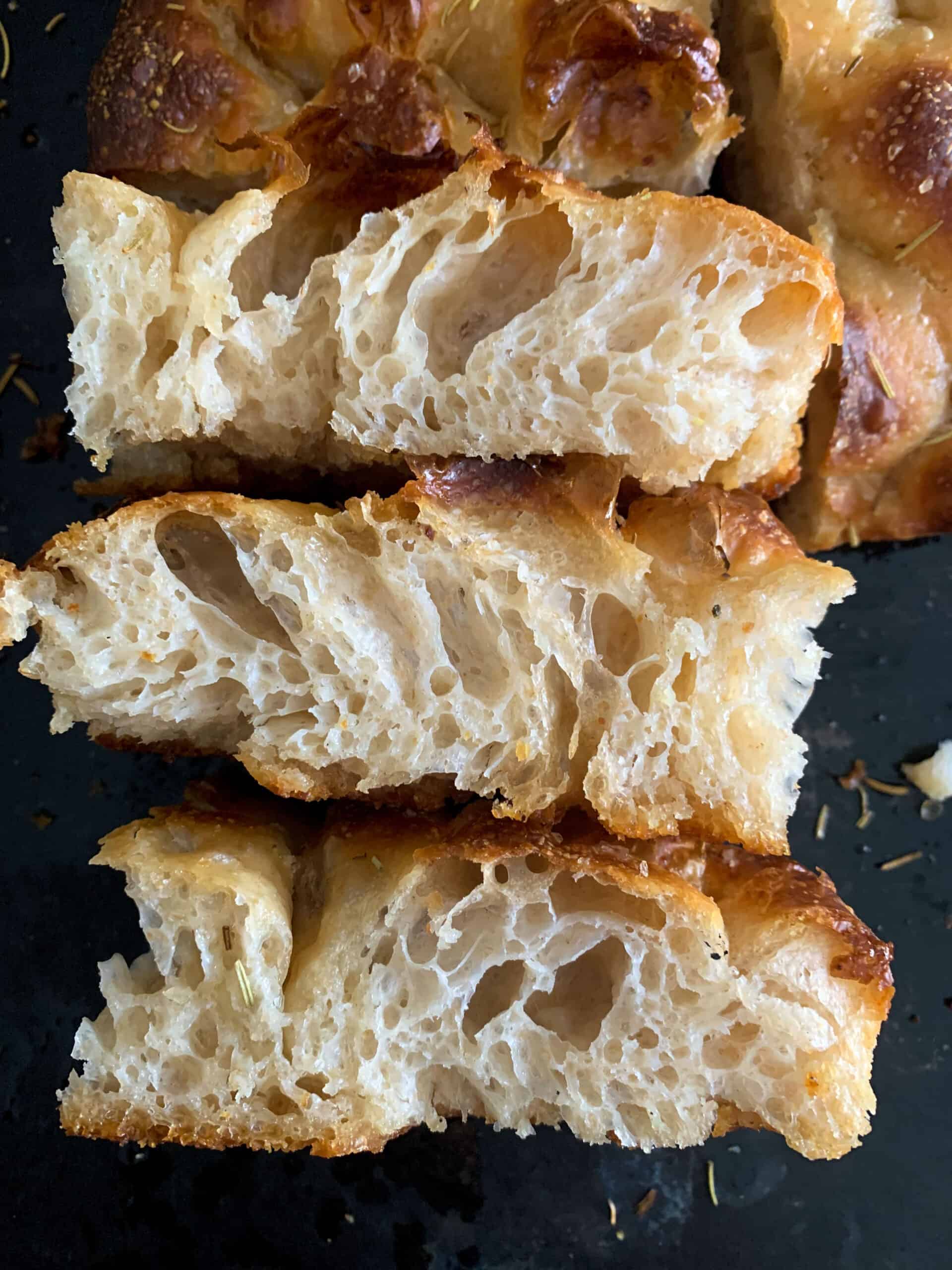
Understanding sourdough focaccia is easier than you might think, especially when you realize it relies on a bubbly, active sourdough starter instead of instant yeast. This method gives the bread a slightly chewy texture and a unique depth of flavor. With a crisp exterior and soft interior, it features airy holes and a light, tender crumb, making it incredibly versatile for toppings. The sourdough starter is crucial for achieving the best results in flavor and texture.
Essential Ingredients Overview
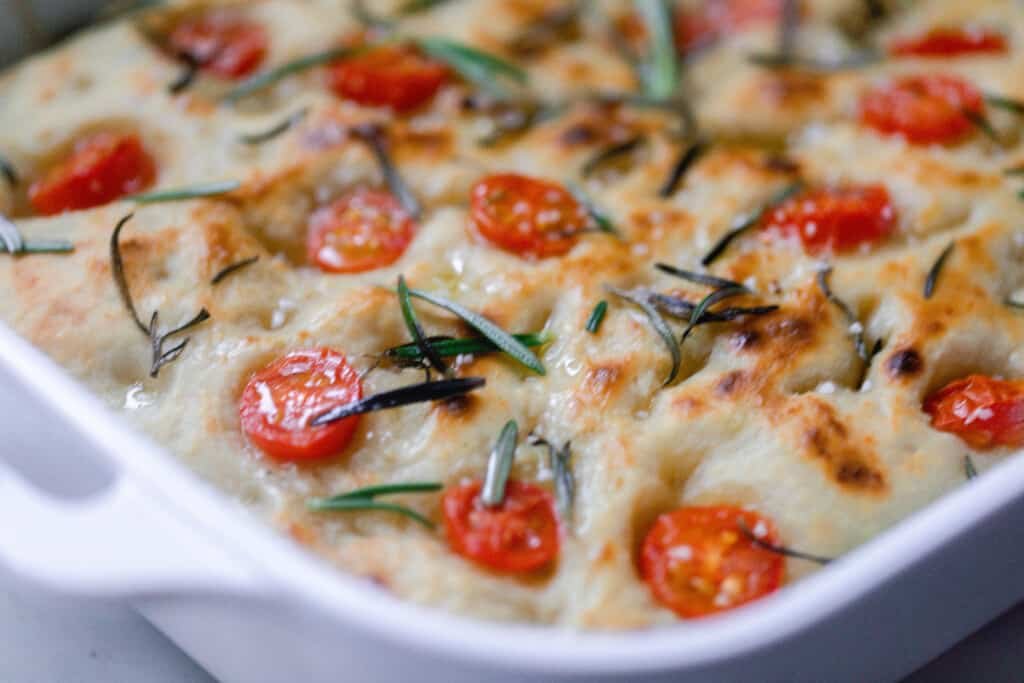
When making sourdough focaccia, there are four essential categories of ingredients you’ll need: sourdough starter, liquid ingredients, oils and fats, and salts and seasonings.
You’ll want 50–75 g of bubbly starter, 1 1/2 cups warm water, 1/2 cup extra virgin olive oil, and some sea salt. The dough’s fermentation process enhances its flavor and digestibility, making it a healthier choice.
Optional toppings like garlic powder and rosemary can elevate the flavor, too!
Choosing the Right Flour
Choosing the right flour is crucial for achieving the perfect sourdough focaccia.
I recommend using bread flour for its higher protein content, which helps develop strong gluten and maintain those airy pockets. While all-purpose flour can work, it may yield a more tender focaccia with less rise. Combining different flours, like Italian 00 or semola rimacinata, can also enhance texture and flavor. Additionally, using a mature sourdough starter can significantly improve the fermentation process and overall flavor of your focaccia.
Preparing Your Sourdough Starter
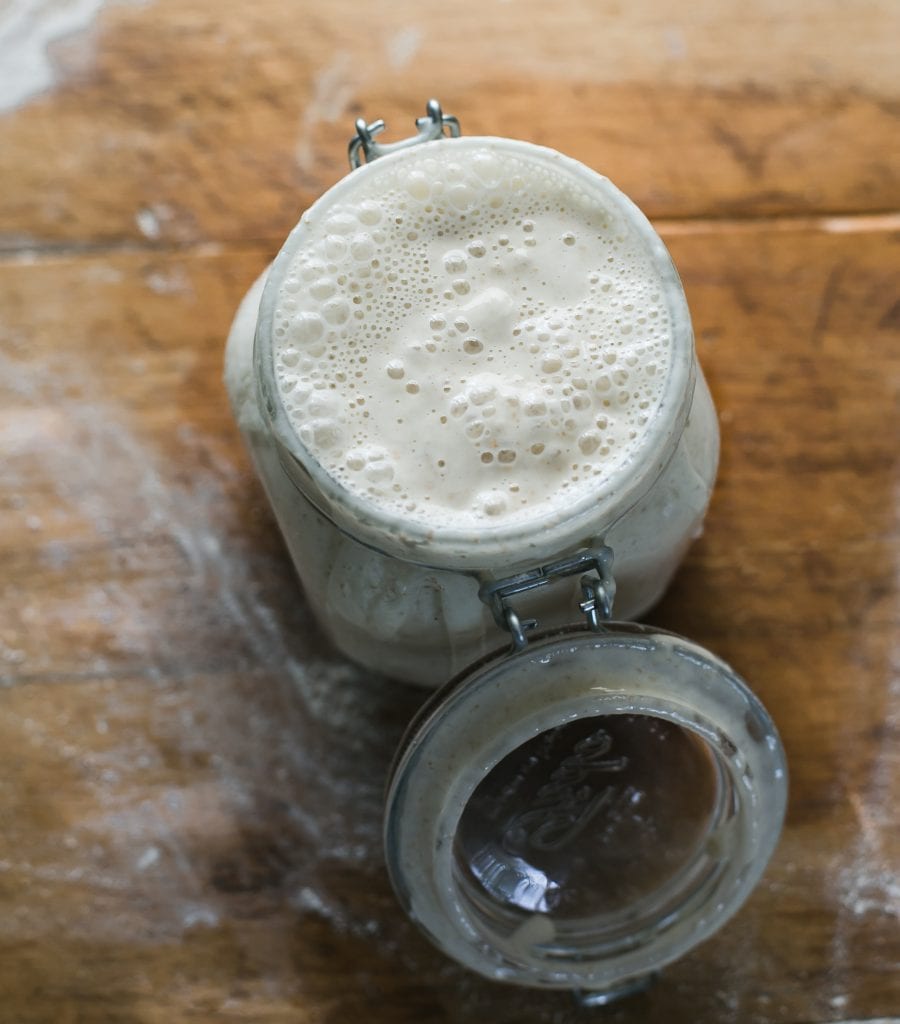
To prepare your sourdough starter, I begin by mixing 60 grams of whole wheat flour with 60 grams of water in a jar, creating a thick, smooth paste.
I cover the jar with plastic wrap and place it in a warm spot, ideally around 70-75°F (21-24°C), for 24 hours.
After that, I’ll check for bubbles to see if it’s fermenting. Additionally, it’s important to remember that this mixture will cultivate natural yeasts from the environment, which is key to a successful starter.
Mixing the Dough
Mixing the dough is a crucial step in creating the perfect sourdough focaccia, and I’ve found that using either hand or a stand mixer can yield fantastic results. When mixing by hand, I combine the starter, water, and salt, then add flour gradually. With a stand mixer, I blend everything on low before increasing speed, ensuring the dough becomes smooth and elastic. The recommended flour blend for this focaccia is 30% high protein flour, which provides strength and structure to the highly-hydrated dough.
The Importance of Resting
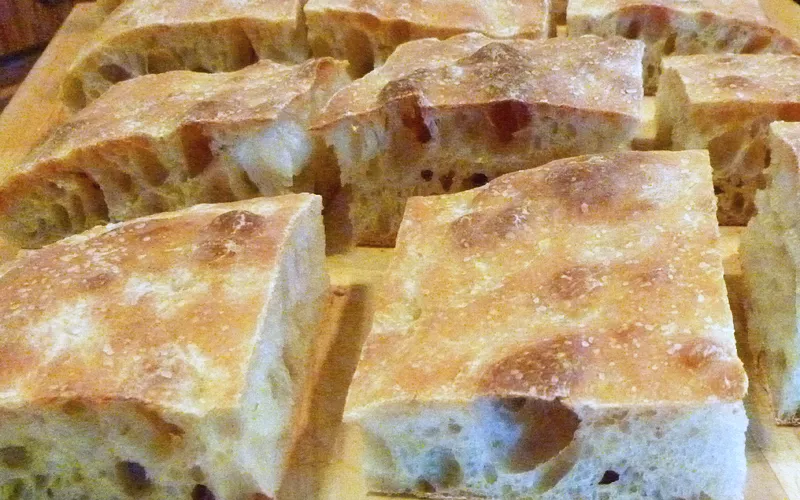
After mixing the dough, resting it becomes key to achieving that perfect sourdough focaccia. This initial rest, lasting 30 minutes to an hour, allows the flour to absorb water, activates the starter, and relaxes the gluten. It also reduces stickiness, making the dough easier to handle. Additionally, this resting period aids in the development of open crumb structure, which is essential for a light and airy focaccia.
Kneading Techniques Explained
:max_bytes(150000):strip_icc():format(webp)/__opt__aboutcom__coeus__resources__content_migration__serious_eats__seriouseats.com__2020__08__20140922-bread-proofing-vicky-wasik-37-79f7684e6c3644c8ba6cd8a2a8a5e7e7.jpg)
Kneading is an essential step in making sourdough focaccia, as it helps develop the gluten structure that gives the bread its wonderful texture. I often choose between hand kneading, the stretch and fold method, or using my stand mixer. Each technique has its benefits—hand kneading builds strength, while the mixer ensures consistent gluten development. Choose what feels best for you and your dough!
Bulk Rise Process
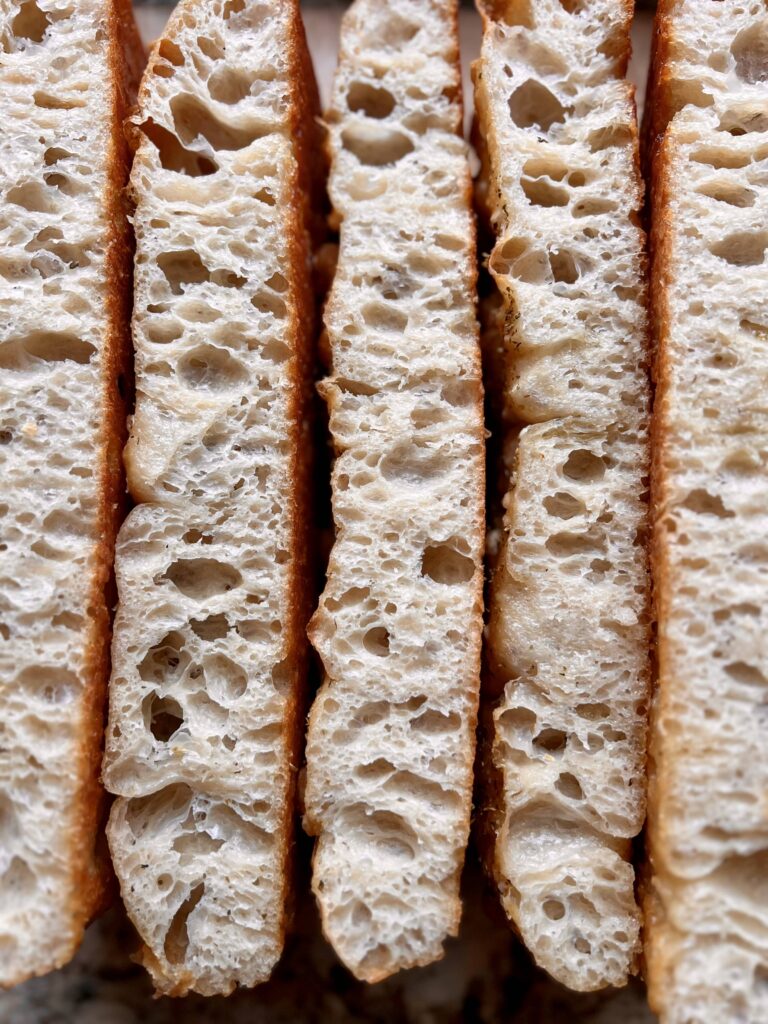
Once you’ve kneaded your dough and it’s ready, the bulk rise process begins. This typically lasts 4-5 hours at 78-80ºF, but can extend to 5-6 hours depending on your environment. I like to cover the dough to maintain humidity and perform coil folds every 20-40 minutes, which strengthens the dough. Soon, you’ll notice it becoming airy and bubbly—an exciting sign of progress! The sourdough fermentation enhances digestibility and nutrient availability, making your focaccia even more enjoyable.
Monitoring Dough Expansion
Monitoring dough expansion is crucial to ensuring your focaccia turns out perfectly. I keep a close eye on the dough as it ferments, looking for it to double in size and become puffy and jiggly. Using a straight-sided vessel helps me gauge its volume easily. The dough should ideally be slightly wetter than typical sourdough to achieve that fluffy texture characteristic of focaccia.
Shaping the Focaccia
After keeping a close watch on the dough’s expansion, it’s time to shape the focaccia.
I gently transfer the dough to a well-oiled sheet pan, using oiled hands to avoid sticking.
I let it relax for 1 ½ to 2 hours, then carefully stretch it into a rustic rectangular shape, ensuring not to deflate it.
It’s all about patience and a light touch! A long, slow rise enhances flavor development in the dough, which is crucial for achieving the ideal focaccia texture.
Creating Dimples and Toppings
How do you achieve that perfect texture in your focaccia?
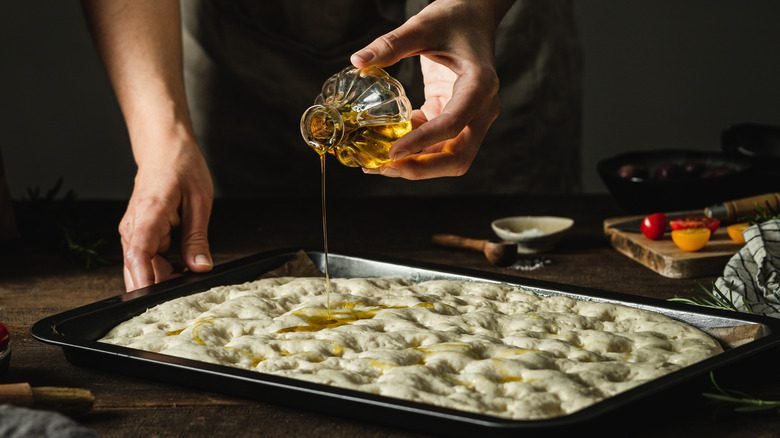
I press my fingers into the dough to create deep dimples, allowing oil to pool beautifully. This step not only enhances the look but also stops the dough from rising too quickly. Dimpling contributes to a desirable crumb structure, ensuring that each bite is both light and airy.
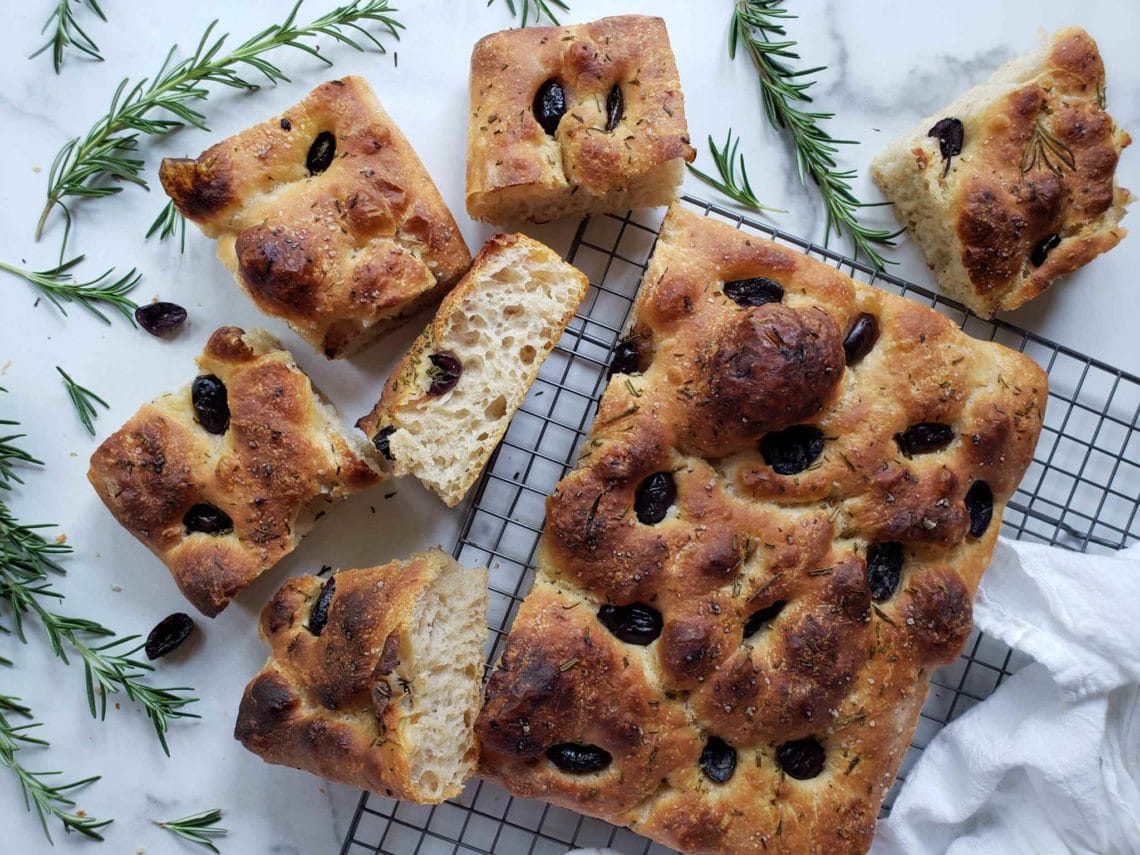
After dimpling, I love adding toppings like rosemary and cherry tomatoes, which create a delightful flavor and texture during baking.
Final Rise Tips
To achieve the perfect final rise for your focaccia, I always recommend creating a warm environment that encourages the dough to puff up beautifully. An ideal room temperature is around 68°F, but if you can find a warmer spot, like on top of the preheating oven, your rise time can shorten. Just keep an eye on the dough; it should be puffy and nearly doubled. Additionally, maintaining a healthy starter is crucial, as it can significantly influence the fermentation process and overall rise of your dough.
Baking Temperature Guide
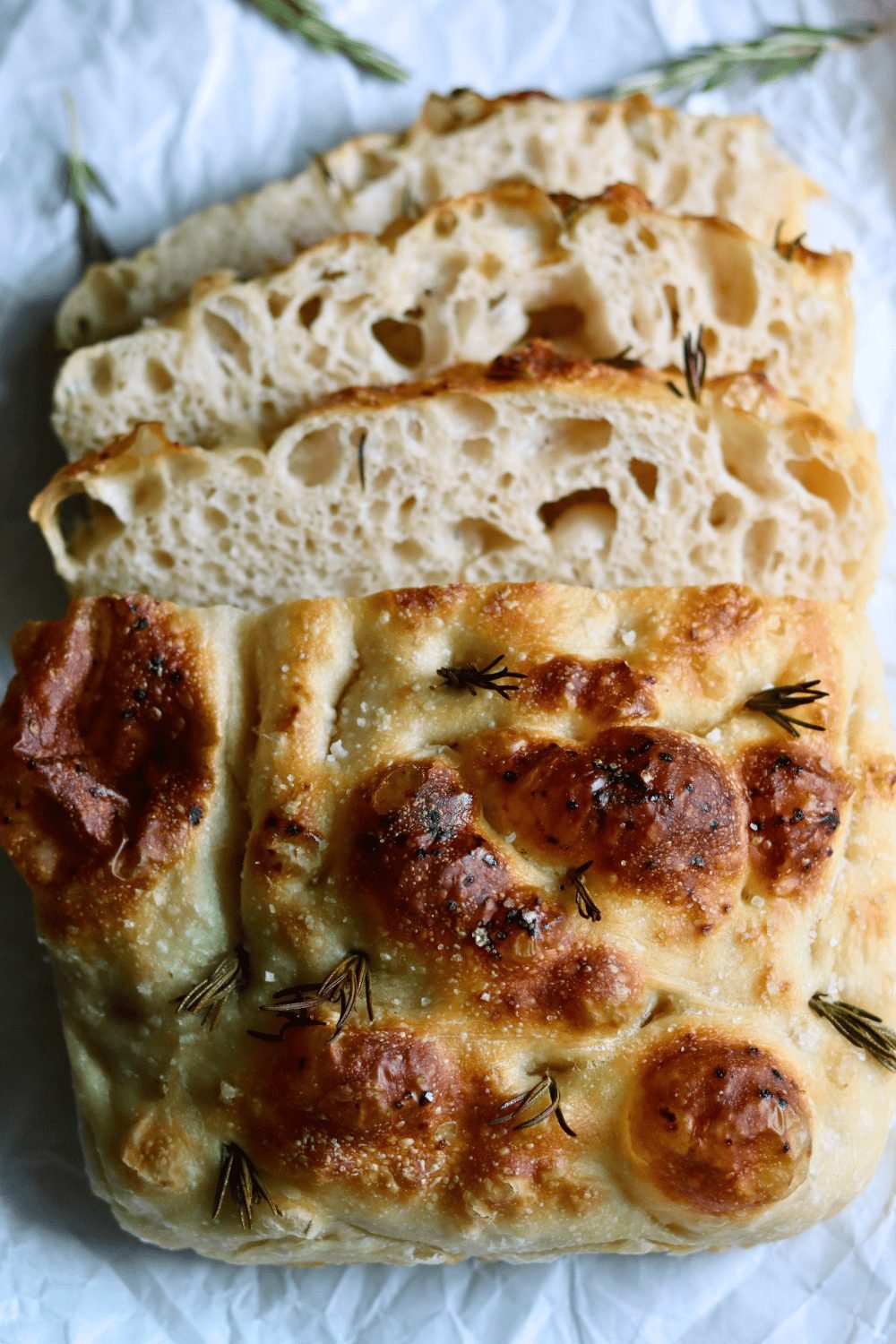
What’s the key to achieving that perfect balance of a crisp exterior and a soft interior in sourdough focaccia?
It’s all about baking at 425°F (220°C). Preheat your oven while the dough rises, and bake for 25-30 minutes. The use of a sourdough starter enhances the bread’s flavor and texture, contributing to that delightful chewiness.
For extra crispiness, start on the lowest rack then move to the top. Keep an eye on it to prevent overcooking!
Par-Baking Method Explained
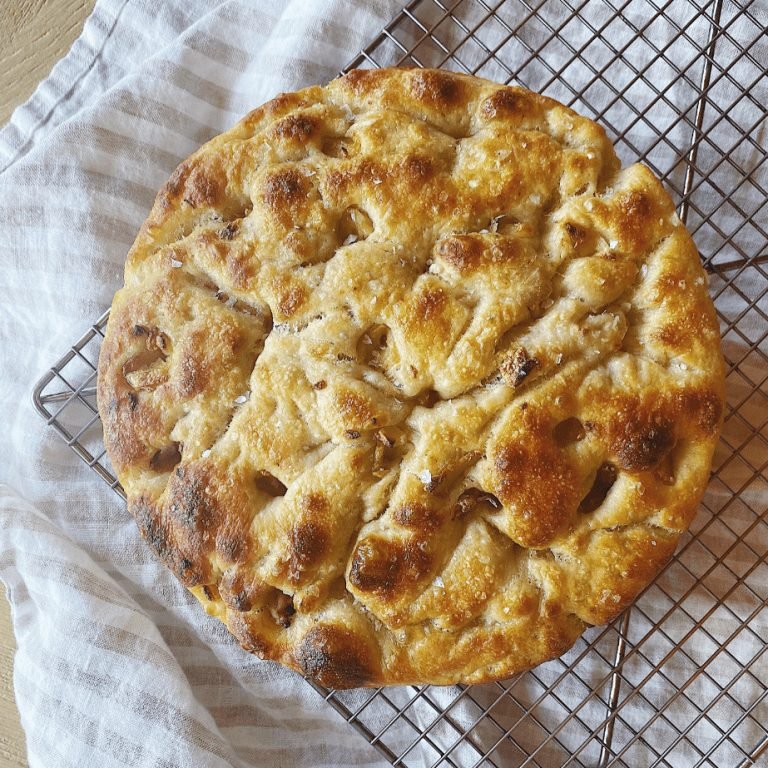
Although many bakers might be unfamiliar with the par-baking method, it’s a game changer when it comes to achieving perfectly baked focaccia. I bake it at 425°F for 15-18 minutes until the crust is set and golden underneath. Once cooled, I wrap it in plastic wrap. Then, I finish baking for 12-15 minutes to achieve that crispy, golden perfection. This technique allows for better dough fermentation and handling, resulting in a flavorful and airy focaccia.
Serving and Storing Focaccia
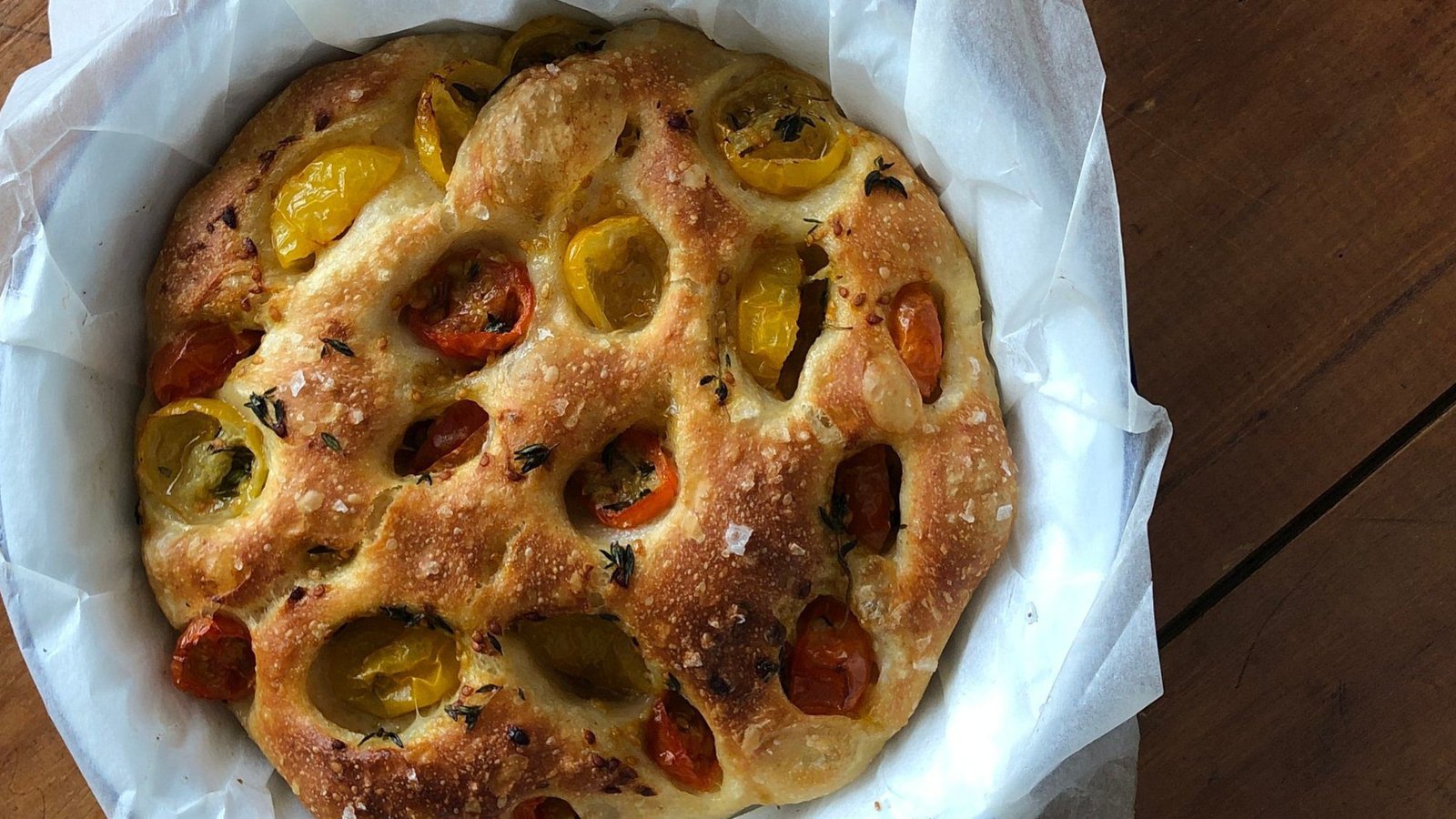
Once your focaccia has been par-baked and cooled, it’s time to think about how to serve and store it.
I love serving it as an appetizer with olive oil or balsamic vinegar. Olive oil enhances the flavor and adds a delightful touch when drizzled over the focaccia.
For storage, let it cool completely on a wire rack, then wrap it in plastic. If you want to freeze it, tightly wrap it to maintain freshness.
Enjoy!