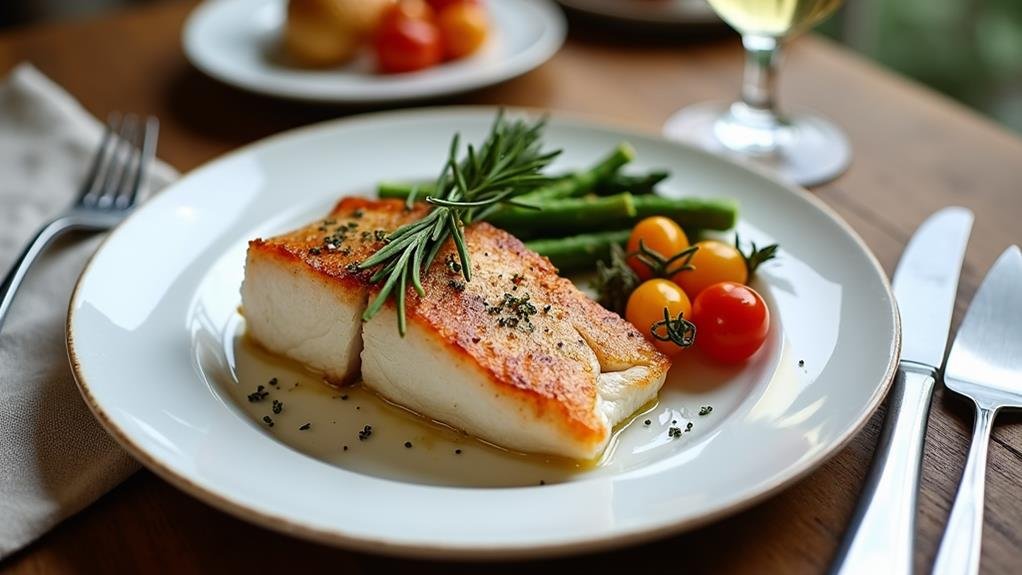
Blackened Amberjack is a simple, yet sophisticated dish that seafood lovers rave about. It’s all about the intense fusion of savory, robust flavors that come alive when a piece of mild, firm Amberjack fillet hits the blazing heat of a well-seasoned cast-iron skillet. This cooking technique, popularized by Chef Paul Prudhomme in the 1980s, is a tribute to Louisiana’s culinary traditions. And the sizzling sound that fills your kitchen? That’s your amberjack fillet crusting up nicely. Trust me, with every bite of this dish, you’re in for a surprise. Let’s walk together on this culinary journey into the heart of southern cuisine next.
Cooking Steps
Now, let’s get cooking! The process begins with drying and seasoning the amberjack fillets to ensure our spices adhere properly.
Then, we’ll heat our skillet, add the oil, and start the sizzle by adding our fillets to the hot pan; flipping them at just the right moment is crucial for that perfect crust.
Step 1. Drying and Seasoning Fillets
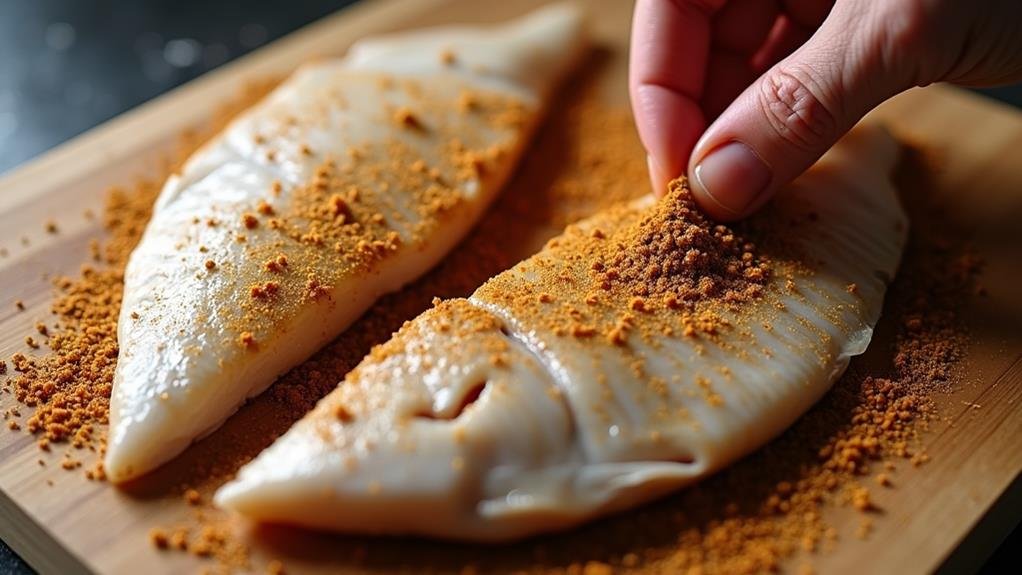
Preparing your amberjack fillets is the first step to creating this flavorful dish. Start by patting the fish dry with paper towels. It’s essential to get them as dry as possible because the blackening spice mix will adhere better to a dry surface. Trust me, the drier the better!
Next, let’s move on to the seasoning. The seasoning is where the “blackening” in blackened amberjack comes into play. You’ll need a blackening spice mix. This mix typically includes ingredients like paprika, cayenne pepper, garlic powder, and onion powder.
Feel free to explore with your own mix, but remember, the goal is to create a bold, spicy flavor profile.
Now, generously coat each fillet with the spice mix. Don’t skimp on this part; the more seasoning, the more flavor. Press the spice mix slightly into the fish to make sure it sticks.
Step 2. Heating Skillet and Adding Oil
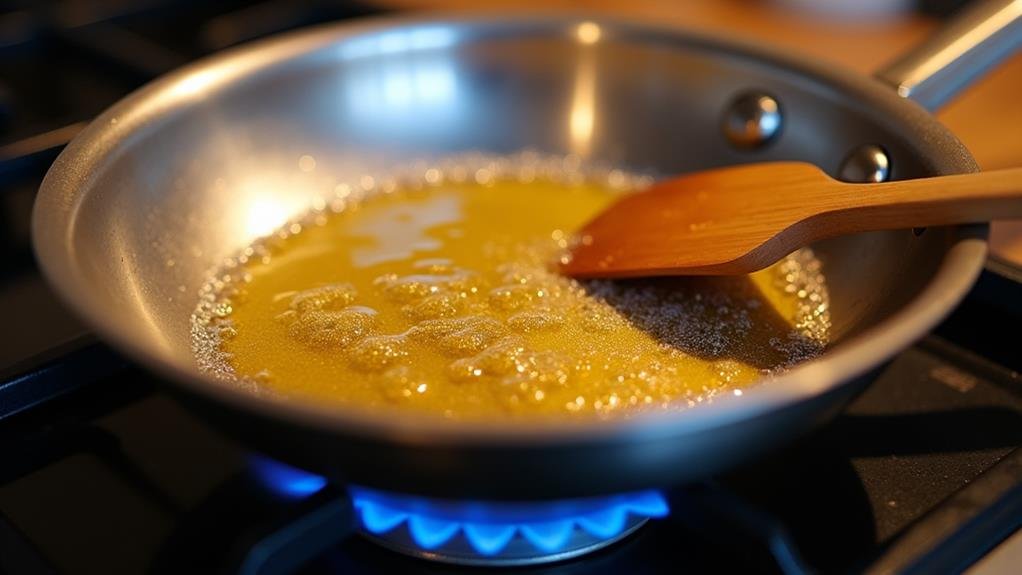
Let’s get that skillet sizzling! A well-heated skillet is key to achieving the perfect crust on your amberjack fillets. I recommend a cast-iron skillet for this job. They’re brilliant at retaining heat which will give us that gorgeous blackened effect we’re after. Place your skillet over medium-high heat and let it sit for a minute or two until it’s nice and hot.
Now, we’re going to add our oil. I prefer a mix of olive oil and butter. The olive oil can handle the high heat, while the butter adds a rich depth of flavor to the fish. We’re not deep-frying here, just a thin coating at the bottom of the skillet is enough.
Be careful at this stage. The oil and butter mix can spit and pop, so stand back once you add it to the hot skillet. Allow it to heat up until it’s shimmering and slightly smoking. That’s our sign that it’s ready for the fillets.
We don’t want to add the fish in too early, or else we won’t get that lovely crust. And remember, the next step is adding the fillets, but we’ll tackle that in the next subtopic.
Step 3. Adding Fillets to Hot Skillet
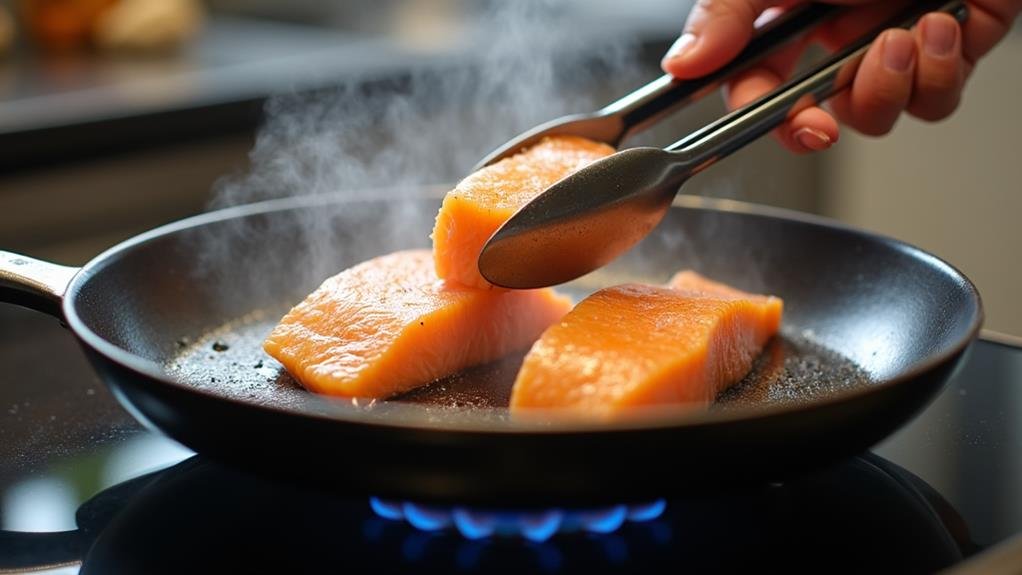
With our skillet hot and ready, it’s time to introduce our amberjack fillets to the heat. Remember, we’ve already patted them dry and given them a generous coating of our blackening spice mix. Now, they’re just begging to be seared.
Carefully lay each fillet into the skillet, giving them plenty of room. We don’t want any overlap here. Overcrowding can cause the fillets to steam rather than sear, and we’ll lose that crisp, spicy crust we’re aiming for.
Listen to that sizzle, it’s the sound of flavor being locked in!
Make sure your kitchen is well-ventilated as the spices start to heat up. Blackening can create a bit of smoke, but don’t worry, that’s just part of the process. The aroma of the spices hitting the hot oil and butter will tell you we’re on the right track.
Cook the fillets for about 3 to 4 minutes. You’ll see the edges start to darken, forming that delectable crust.
Resist the urge to flip them too soon; we’ll get to that in the next step. For now, let’s let the heat do its magic.
Step 4. Flipping the Seasoned Fillets
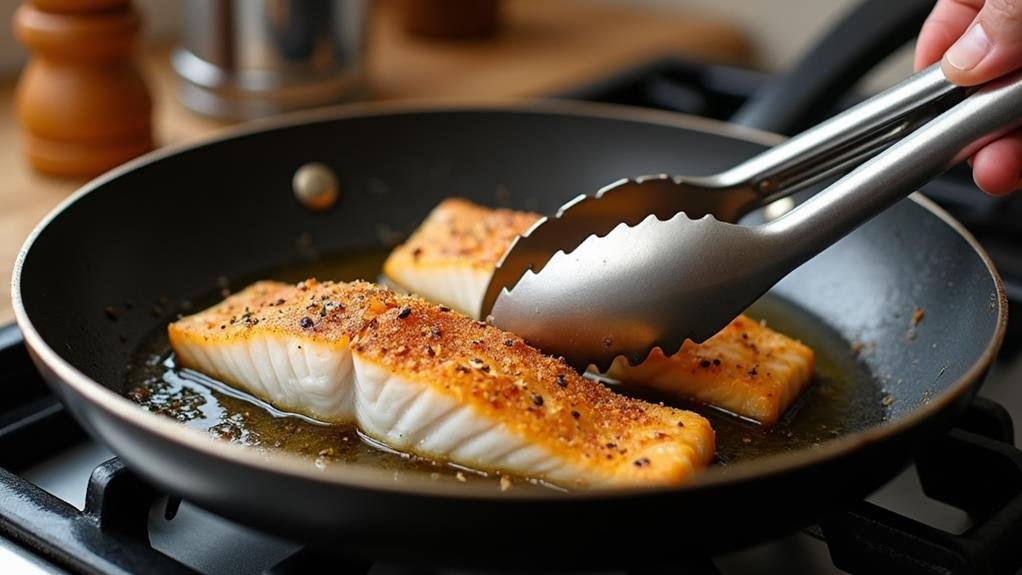
After about four minutes of sizzling in the skillet, it’s time to flip your amberjack fillets. You’ll know it’s time when the edges of the fillets start to look opaque, and a dark, aromatic crust forms on the bottom.
Now, flipping the fish can be a bit tricky. It’s important to be gentle so you don’t knock off that flavorful crust you’ve worked so hard to develop. Using a large spatula, carefully slide it under the fillet and ensure it’s fully supported before you flip. Then, quickly but carefully, turn it over.
Once flipped, you’ll immediately notice the stunning contrast between the cooked and uncooked sides. The top side, now blackened beautifully, presents a mouthwatering sight.
Let the other side cook for another three to four minutes. Remember, the second side usually cooks a bit faster because the fish is already heated through, so keep an eye on it. You’re aiming for the same blackened, crusty exterior.
Stay patient, my friend. We’re almost there. The final cooking and serving stage is up next, and trust me, it’s worth every minute spent in anticipation.
Step 5. Final Cooking and Serving Stage
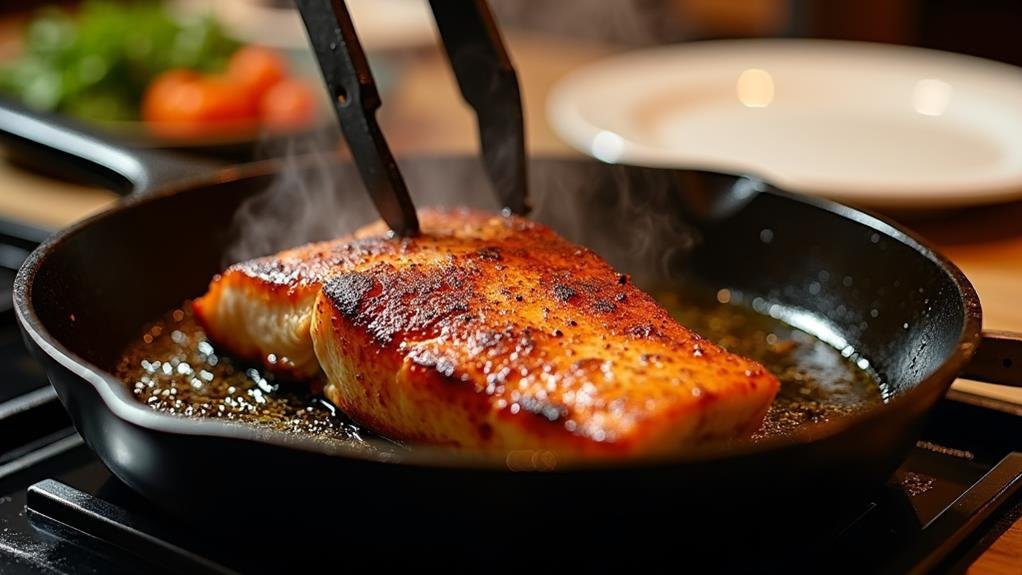
The moment of truth is here as we enter the final cooking stage. After you’ve flipped your spiced fillets, let them sizzle for another 3-4 minutes. You’re looking for a dark, crusty coating, signifying your amberjack is perfectly blackened and cooked through.
It’s key to resist the urge to peek or flip early; patience ensures that beautiful crust.
When the time’s up, carefully lift the fillets from the skillet. They should release easily if that crust has formed. Transfer them to a warm plate, then take a moment to admire your work before digging in.
Now, for the grand finale: the serving. Trust me, a squeeze of fresh lemon juice over your fillets will elevate this dish. The zesty freshness cuts through the spiciness of the blackening spices, enhancing the rich flavors of the amberjack.
Serve it up with your favorite sides – perhaps some coleslaw or a refreshing cucumber salad.
And there you have it, my friend, a perfectly cooked, mouthwateringly spicy blackened amberjack. It’s a feast for the senses and an absolute delight for your palate. Enjoy every bite!
Brief history of this recipe
Although it’s tough to pinpoint the precise origins of blackened amberjack, it’s widely believed that the method of “blackening” seafood came into prominence in the 1980s, thanks to renowned Louisiana chef, Paul Prudhomme.
He used a high-heat cooking technique combined with a unique blend of spices that resulted in a flavorful, crusty exterior while keeping the inside moist and tender. This method was first applied to redfish, but it soon became popular with other types of fish like amberjack.
Amberjack, a staple in the Gulf of Mexico, was a natural choice due to its firm texture and mild flavor that holds up well to the intense blackening process.
Since then, blackened amberjack has become a favorite among seafood lovers, gracing the menus of many Southern and coastal restaurants. It’s a dish that’s both simple and sophisticated, offering a burst of flavor with every bite.
Despite its roots in the South, this recipe has found its way into kitchens around the world.
It’s been adapted and tweaked, with chefs adding their own twist to the classic. But no matter the variation, the essence of blackened amberjack remains – a celebration of bold flavors and fresh seafood.