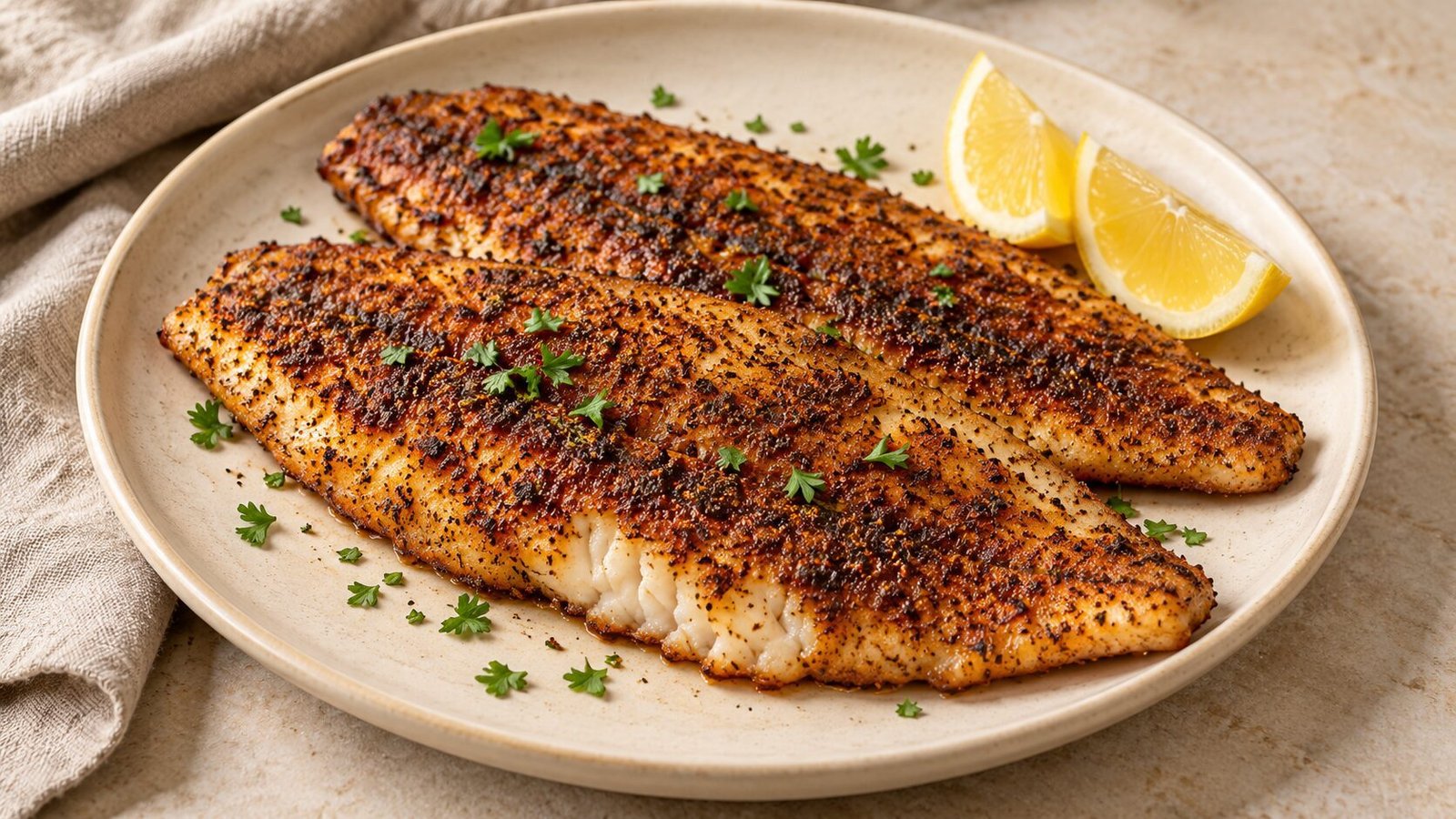
Cooking fish can feel intimidating when you are still finding your confidence in the kitchen. The fillets look delicate, the cooking time seems short, and it is easy to wonder whether they are ready. This blackened swai recipe breaks the process into manageable steps, with a simple seasoning blend and a clear way to check doneness.
Swai has a mild flavor that works well with paprika, garlic, dried herbs, and a little cayenne. As the seasoned fish cooks, the spices form a dark, savory crust. A squeeze of lemon adds brightness before serving.
You do not need a complicated sauce or a long ingredient list of fresh produce. Have your seasonings measured, dry the fish thoroughly, and keep a thermometer nearby.
What Does “Blackened” Mean?
Blackening is a cooking technique in which seasoned food develops a deeply browned spice crust in a hot pan. For this home-kitchen version, the aim is a reddish-brown to dark brown coating with some darker patches.
The spices should smell toasted and aromatic. A uniformly coal-black coating, an acrid smell, or heavy smoke means the heat is too high. You can develop plenty of flavor without pushing the pan to that point.
Smoked paprika gives this recipe an extra smoky note, while cayenne controls the heat. Start with the smaller amount if you prefer a gentler seasoning.
Recipe at a Glance
- Servings: 4
- Preparation time: Approximately 15 minutes
- Cooking time: Approximately 12–16 minutes in two batches
- Total time: Approximately 30 minutes, excluding thawing
- Equipment: Large heavy skillet, wide spatula, small bowl, paper towels, and an instant-read thermometer
Cooking times are estimates. Fillet thickness, pan size, and stove heat will affect the timing.
Ingredients
For the fish
- 4 boneless swai fillets, approximately 5–6 oz (140–170 g) each, fully thawed
- 2 tablespoons (30 ml) refined avocado oil or canola oil, divided
- 1 lemon, cut into wedges
- 1 tablespoon chopped fresh parsley, optional
Choose fillets of similar thickness where possible. The timing below is a starting point for fish roughly ½–¾ inch (1.3–2 cm) thick at its thickest part.
For the homemade blackening seasoning
- 2 teaspoons smoked paprika
- 1 teaspoon garlic powder
- 1 teaspoon onion powder
- ½ teaspoon dried thyme
- ½ teaspoon dried oregano
- ½ teaspoon ground black pepper
- ½ teaspoon fine salt
- ⅛ teaspoon cayenne pepper, or up to ¼ teaspoon for more heat
Use garlic powder and onion powder rather than garlic salt or onion salt. Check the fish packaging, too: if the fillets contain added salt, reduce the salt in the seasoning.
For a version without chili heat, omit the cayenne. Sweet paprika can replace smoked paprika if you prefer a less smoky flavor.
How to Make Blackened Swai
1. Thaw and dry the fish
If your fish is frozen, thaw it in the refrigerator according to the package instructions. For vacuum-packed fish, remove it completely from the vacuum packaging before refrigerator thawing.
Pat every fillet thoroughly dry with paper towels, including the underside and any folds. Excess surface moisture encourages steaming and makes it harder for the seasoning to form a crust.
Check for any remaining bones and remove them. Wash your hands after handling raw fish.
2. Mix the seasoning
Combine the paprika, garlic powder, onion powder, thyme, oregano, black pepper, salt, and cayenne in a small bowl.
Mix well so that the salt and cayenne are evenly distributed. Having the blend ready before heating the skillet makes the cooking process easier to manage.
3. Coat the fillets
Use 2 teaspoons of the measured oil to lightly coat both sides of all four fillets. Sprinkle the seasoning evenly over both sides and gently press it onto the surface.
Aim for a thin, even coating. Thick piles of loose spice are more likely to scorch or fall into the pan.
4. Heat the skillet
Use a heavy cast-iron or stainless-steel skillet and heat it over medium heat. Add 2 teaspoons of oil and swirl to coat the cooking surface.
The oil should shimmer gently without smoking heavily. Turn on your extractor fan before adding the fish.
If using a nonstick skillet, follow its manufacturer’s heat limits and preheating instructions. Do not heat it empty over high heat.
5. Cook the first batch
Place two fillets in the skillet, leaving space between them. They should sizzle gently when they touch the surface.
Cook the first side for approximately 3 minutes without repeatedly moving the fish. Slide a wide spatula underneath and turn carefully once the coating has set.
Cook the second side for another 2–4 minutes, checking thinner fillets sooner. If the spices darken too quickly, reduce the heat.
Insert an instant-read thermometer from the side into the thickest part of each fillet. Cook until it reaches 145°F (63°C) before removing it from the pan. The flesh should also look opaque and separate easily with a fork.
6. Repeat and serve
Transfer the cooked fish to a clean plate. Check the skillet before starting the second batch. If loose spices have burned, take the pan off the heat and carefully remove the scorched residue before continuing.
Add the remaining 2 teaspoons of oil and cook the other two fillets in the same way.
Serve promptly with lemon wedges and a little parsley, if using.
Troubleshooting Your Blackened Swai
The seasoning is burning before the fish is cooked.
Lower the heat. Move the pan off the burner briefly if needed, then continue cooking more gently until the fish reaches the required temperature.
The fillets are breaking when I turn them.
Use a wide spatula that supports most of the fish. Avoid repeatedly lifting the edges, and turn each fillet gently once the first side has cooked.
There is liquid pooling in the skillet.
The fish may have been insufficiently dried, or the pan may be overcrowded. Cook fewer fillets at a time and dry the next batch thoroughly.
The fish tastes too spicy.
Use less cayenne next time, or leave it out. Lemon adds freshness, but it does not reliably remove chili heat.
What to Serve with It
Plain rice, couscous, or boiled potatoes make an easy base for the seasoned fish. Add green beans, steamed broccoli, or a cucumber salad for a simple meal.
You can also serve the fillets in warm tortillas with shredded cabbage. Add a spoonful of plain yogurt and a squeeze of lime if you enjoy a creamy topping.
Keep accompaniments fairly mild so that the seasoning remains the main flavor.
Storing and Reheating Leftovers
Refrigerate cooked fish in a shallow, covered container within two hours of cooking, or within one hour if the surrounding temperature is above 90°F (32°C).
Keep the refrigerator at 40°F (4°C) or below and use leftovers within 3–4 days.
Reheat covered, with a small splash of water to help limit drying, until the fish reaches 165°F (74°C). The crust will soften during storage and reheating.
A Final Note from Adam
I appreciate recipes with a short ingredient list and clear instructions because I am still very much a beginner in the kitchen. Knowing what to look for—and when to lower the heat—makes a dish feel more approachable.
If you are building that same confidence, give yourself time to prepare everything before turning on the stove. Measure the spices, get your spatula ready, and leave room beside the cooker for a clean serving plate.
Your fillets do not need to look identical. A slightly uneven coating or a piece that breaks during serving does not undo your effort. Focus on cooking the fish safely, adjusting the seasoning to your taste, and enjoying the meal.
Food Safety Sources
For additional guidance on handling and cooking fish safely, see the FDA’s Selecting and Serving Fresh and Frozen Seafood Safely.
For advice on refrigerating, storing, and reheating cooked food, consult the USDA’s Leftovers and Food Safety.
These resources support the food safety guidance in this article; they do not represent testing or endorsement of this recipe.
Recipe development note: This recipe was developed with AI Assistance and has not been independently kitchen-tested for this article. Cooking times are estimates; use a food thermometer to check doneness. Any images identified as AI-generated are illustrative and do not document a cooked or tested result.