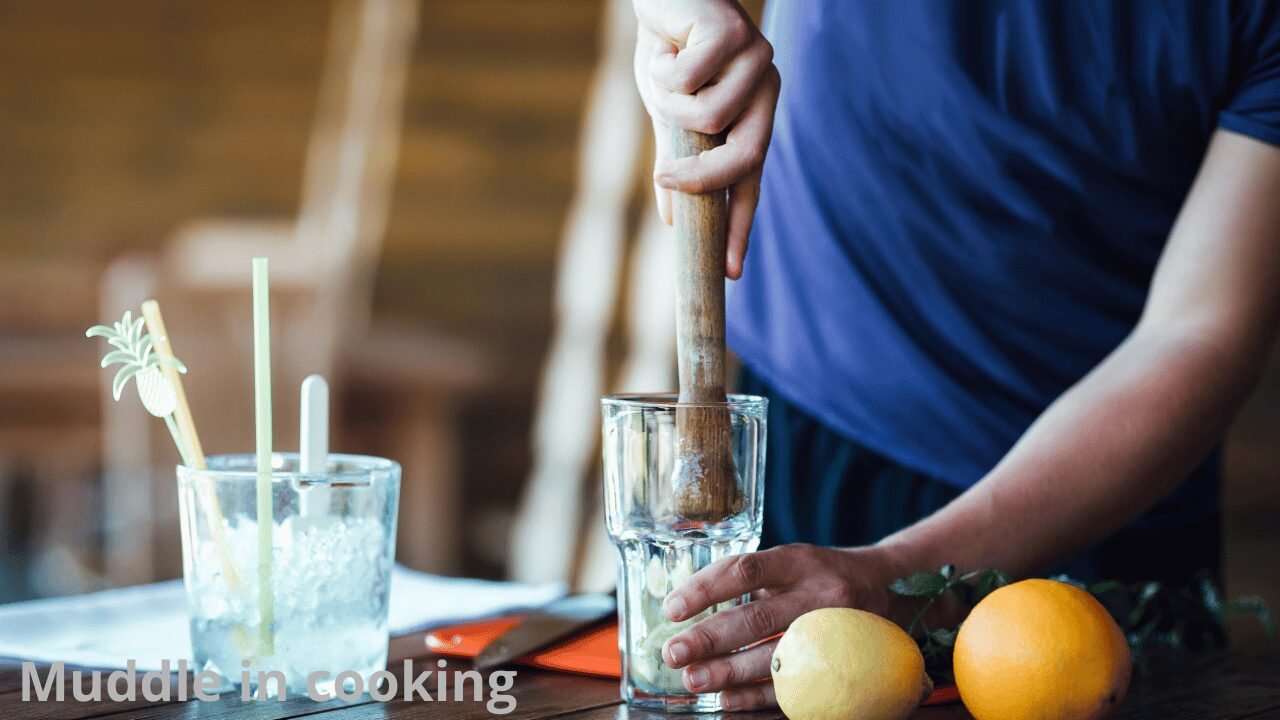
To muddle means to press ingredients to release their juices, aromatic oils, and flavour. You will most often encounter the instruction in drink recipes, where fresh herbs or fruit are pressed in a suitable container before the remaining ingredients are added.
The important detail is how much pressure you use. Mint needs a gentle touch, while pieces of fruit usually need more deliberate pressing. Muddling does not automatically mean crushing everything into a smooth paste.
What Is Muddling Used For?
Muddling helps fresh ingredients flavour the liquid around them. Instead of leaving a whole strawberry or mint leaf floating in a drink, you press it to release some of its flavour first.
It is particularly useful when making one drink at a time. You can work directly with a small amount of fresh produce without preparing a separate fruit purée or infused syrup.
The technique works in alcohol-free drinks too. Fruit, herbs, citrus juice, and sparkling water offer a straightforward way to practise.
What Equipment Do You Need?
A muddler is a handheld tool with a broad end for pressing ingredients. A smooth, flat end is especially useful for delicate leaves because it allows controlled pressure without aggressively shredding them.
Choose a sturdy vessel suitable for muddling, such as a metal cocktail shaker tin. Avoid delicate drinking glasses, and never press ingredients in a stemmed glass. Diageo Bar Academy specifically cautions against using stemware for this technique. Diageo Bar Academy
For an occasional drink, a clean wooden spoon with a broad, rounded handle can be a practical substitute. IKEA’s strawberry mocktail recipe uses this alternative. Avoid sharp or pointed utensils that make it difficult to apply even pressure. IKEA UK
How to Muddle Mint and Other Delicate Herbs
Place the leaves in your chosen vessel and press lightly with a flat-ended muddler. A small, gentle turn can help, but vigorous grinding is unnecessary.
Stop when the herb becomes fragrant. The leaves should be bruised rather than shredded into tiny pieces. European Bartender School recommends this gentle approach for mint and advises against using a jagged muddler end on delicate leaves. European Bartender School
Do not treat a specified number of presses as an exact rule. The size of the leaves, the tool, and your pressure all affect the result.
When combining herbs with fruit, a useful approach is to press the fruit first and add the delicate leaves afterwards. This lets you handle each ingredient separately.
How to Muddle Fruit
Cut larger fruit into manageable pieces before putting it in the vessel. Smaller pieces are easier to reach and press evenly, a preparation tip also recommended by Diageo Bar Academy. Diageo Bar Academy
Press fruit firmly enough to release its juice. Soft berries will collapse readily, while citrus wedges need more pressure. With citrus, avoid repeatedly grinding the peel and white pith, which can introduce unwanted bitterness. The aim is to release flavour without pulverising every part of the fruit. European Bartender School
Some pulp is normal. Whether you keep it or strain it out depends on the texture you want in the finished drink.
A Simple Strawberry and Mint Practice Drink
This alcohol-free example lets you practise pressing fruit and handling herbs in the same drink. The quantities are a starting point: adjust the lime and sweetness to suit your strawberries.
Makes: 1 drink
Preparation time: About 5 minutes
Ingredients
- 3 medium ripe strawberries, washed, hulled, and quartered
- 4 fresh mint leaves, rinsed
- 2 teaspoons fresh lime juice
- 1–2 teaspoons simple syrup, to taste
- 150 ml chilled sparkling water
- Ice, as needed
Method
- Press the strawberries. Put them in a metal shaker tin with the lime juice and 1 teaspoon of syrup. Press until the berries release juice and break into soft pieces.
- Add the mint. Give the leaves a few gentle presses, stopping when their aroma becomes noticeable.
- Choose your texture. Transfer the mixture to a serving glass, or strain it into the glass if you prefer less pulp.
- Finish the drink. Add ice and sparkling water, then stir gently. Do not shake the carbonated mixture.
- Taste and adjust. Add a little more syrup if needed. Serve immediately.
For a published variation using the same broad combination of strawberries, mint, lime, and a fizzy mixer, see IKEA’s strawberry mojito mocktail.
Is Muddling the Same as Mashing or Blending?
These techniques can all break ingredients down, but their intended results differ.
| Technique | Typical purpose |
|---|---|
| Muddling | Release flavour and juice by pressing ingredients |
| Mashing | Break food down into a softer, more uniform texture |
| Blending | Use moving blades to combine and process ingredients |
| Stirring | Mix ingredients together without deliberately crushing them |
A blender is therefore not a direct replacement for a muddler. It changes the texture much more extensively, especially when herbs, skins, or seeds are involved.
Getting Comfortable with the Technique
If you are new to muddling, begin with a single serving and check the ingredients as you work. It is easier to add another gentle press than to undo excessive crushing.
You do not need an elaborate bar setup to understand the method. A suitable vessel, a clean tool, and a little attention to texture are enough to begin. Let the ingredient guide your pressure, and remember that the goal is flavour—not the finest possible mash.