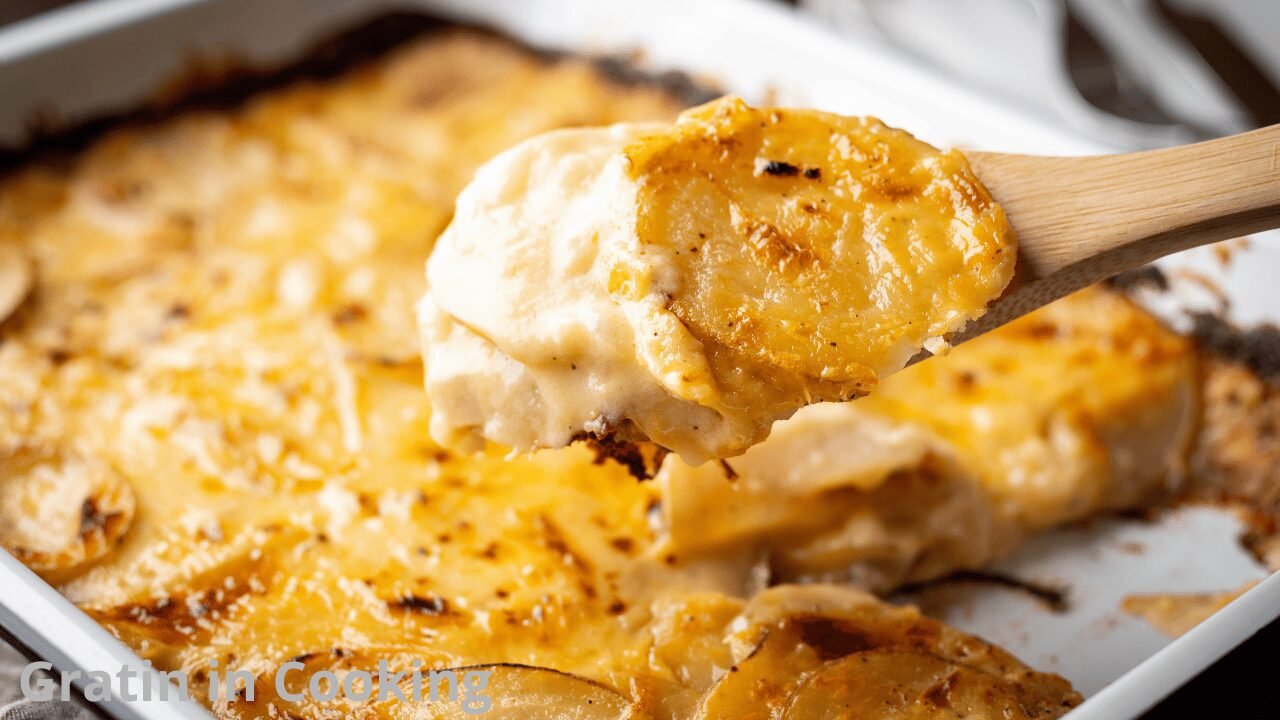
In cooking, a gratin is a dish with a browned crust on its surface, usually developed in the oven or under a broiler. Cheese and breadcrumbs are common toppings, but they are not compulsory ingredients in every gratin.
The term au gratin describes food prepared with this browned finish. Potato gratin is a familiar example, but vegetables, pasta, and other ingredients can also be cooked this way.
The defining feature is the surface crust—not a particular vegetable, sauce, or baking dish. Dictionnaire de français Larousse
Does a Gratin Always Contain Cheese?
No. Cheese is popular because it can add flavor, color, and a browned topping, but some gratins develop their crust without it.
Gratin dauphinois illustrates the distinction: traditional versions rely on potatoes and cream, with seasonings, rather than a mandatory cheese layer. Good Food’s dauphinoise guide specifically describes a version without cheese. bbcgoodfood.com
Breadcrumbs are optional too. Some recipes use them alone, some combine them with cheese, and others use neither.
Instead of adding cheese automatically, follow the recipe’s intended finish.
Is Cream Essential?
Cream is common in potato gratins, but it is not part of the definition.
A gratin may use a milk-based sauce, another suitable liquid, or a vegetable preparation that does not need a creamy sauce at all. Good Food’s baked courgette and tomato gratin, for example, demonstrates a vegetable-based approach with a breadcrumb topping. bbcgoodfood.com
The sauce and topping should suit the ingredients underneath. A watery vegetable mixture and thinly sliced raw potatoes need different preparation.
The Two Jobs of Gratin Cooking
A successful gratin needs both:
- A properly cooked interior.
- A suitably browned surface.
These do not always happen at the same time.
A topping may turn golden while raw potato slices underneath remain firm. Alternatively, the filling may be ready before the surface has developed enough color.
This is why recipes sometimes combine covered baking with an uncovered finish, or cook ingredients before assembling the dish. Browning alone does not prove that the food underneath is ready.
How to Approach a Gratin Recipe
1. Prepare the main ingredient as directed
Check whether the recipe starts with raw, partially cooked, or fully cooked ingredients.
Thin potato slices may cook in the dish, while a pasta gratin usually begins with pasta that has already been boiled. Do not substitute one preparation method for another without adjusting the recipe.
2. Keep pieces reasonably consistent
Even slices help the same ingredient cook at a similar rate.
For potatoes, follow the specified thickness. Thick slices need different timing from paper-thin ones.
If using a mandoline, use its food holder or guard and follow the manufacturer’s instructions.
3. Manage moisture before assembly
Vegetables such as zucchini and mushrooms can release liquid during cooking. Depending on the recipe, they may need sautéing, roasting, salting and draining, or another preparation step.
Do not assume that a cheese topping will absorb excess water. Good Food’s courgette gratin includes a draining step to address moisture before baking. bbcgoodfood.com
4. Use the specified dish size
A shallow dish provides more surface area for browning. A deep dish produces a thicker layer of filling that may take longer to heat through.
Changing the dish can therefore change both cooking time and the balance between crust and filling. Avoid squeezing the same quantity into a much smaller dish.
5. Cook the interior before chasing more color
Follow the recipe’s temperature and timing, then check the intended texture.
For a potato gratin, a small knife or skewer should pass through the central layers without meeting hard slices. Check more than one spot if the thickness is uneven.
6. Brown the top carefully
If the filling is ready but the top is pale, the recipe may call for a brief broiler finish.
Only do this in a dish specifically suitable for broiling. “Oven-safe” does not automatically mean safe under direct broiler heat. Watch continuously: a pale topping can quickly become burnt.
Should You Rinse Potato Slices?
Not automatically.
Some potato gratins depend on the potatoes’ starch to help thicken the surrounding liquid. Rinsing the cut slices can remove starch that the recipe intends to retain.
Good Food’s dauphinoise guidance advises against rinsing the slices for this reason. Chef Bryan Webb’s gratin recipe likewise uses starch released during gentle cooking to thicken the sauce. bbcgoodfood.com
Wash the potatoes before preparation, then follow the recipe’s instructions about rinsing or soaking after slicing.
Choosing Cheese and Breadcrumbs
If the recipe includes cheese, select it for the intended flavor and texture.
Gruyère, cheddar, and Parmesan produce different results. Mozzarella can be appropriate when a stretchy topping is wanted; its ability to melt is not a reason to exclude it. However, fresh mozzarella brings more moisture than lower-moisture varieties.
Breadcrumb texture matters too. Fine crumbs produce a different finish from coarse crumbs or panko. Use the type and any added fat specified in the recipe rather than piling on a thick, dry layer.
Common Gratin Problems
| Problem | What to check |
|---|---|
| Golden top, firm potatoes | Slice thickness, dish depth, and whether the interior needs more cooking |
| Watery filling | Vegetable preparation, drainage, and the amount of added liquid |
| Burnt topping | Heat intensity, rack position, and when the topping was added |
| Dry interior | Excessive cooking, insufficient liquid, or an unsuitable dish size |
| Pale surface | Whether the filling is ready for an uncovered or broiler finish |
If the top browns too early during ordinary baking, loosely covering it with foil may help protect it while the interior finishes. Follow the recipe and appliance guidance, and keep foil away from heating elements.
Do You Need a Special Gratin Dish?
A dedicated gratin dish is often shallow and broad, but you can use another suitable baking dish when its dimensions and heat rating match the recipe.
Check capacity, depth, and whether the material is suitable for the proposed cooking method. A dish that works for moderate oven baking may be unsuitable for a final blast under the broiler.
Start with One Reliable Recipe
A gratin is easier to understand when you treat the filling and browned surface as two connected parts of the dish.
Start with a complete recipe that specifies quantities, slice thickness, dish size, and doneness cues. Once you know how those details work together, changing a cheese or adding a herb becomes much easier to judge.
The goal is more than an attractive golden top: it is a dish that tastes just as good underneath.