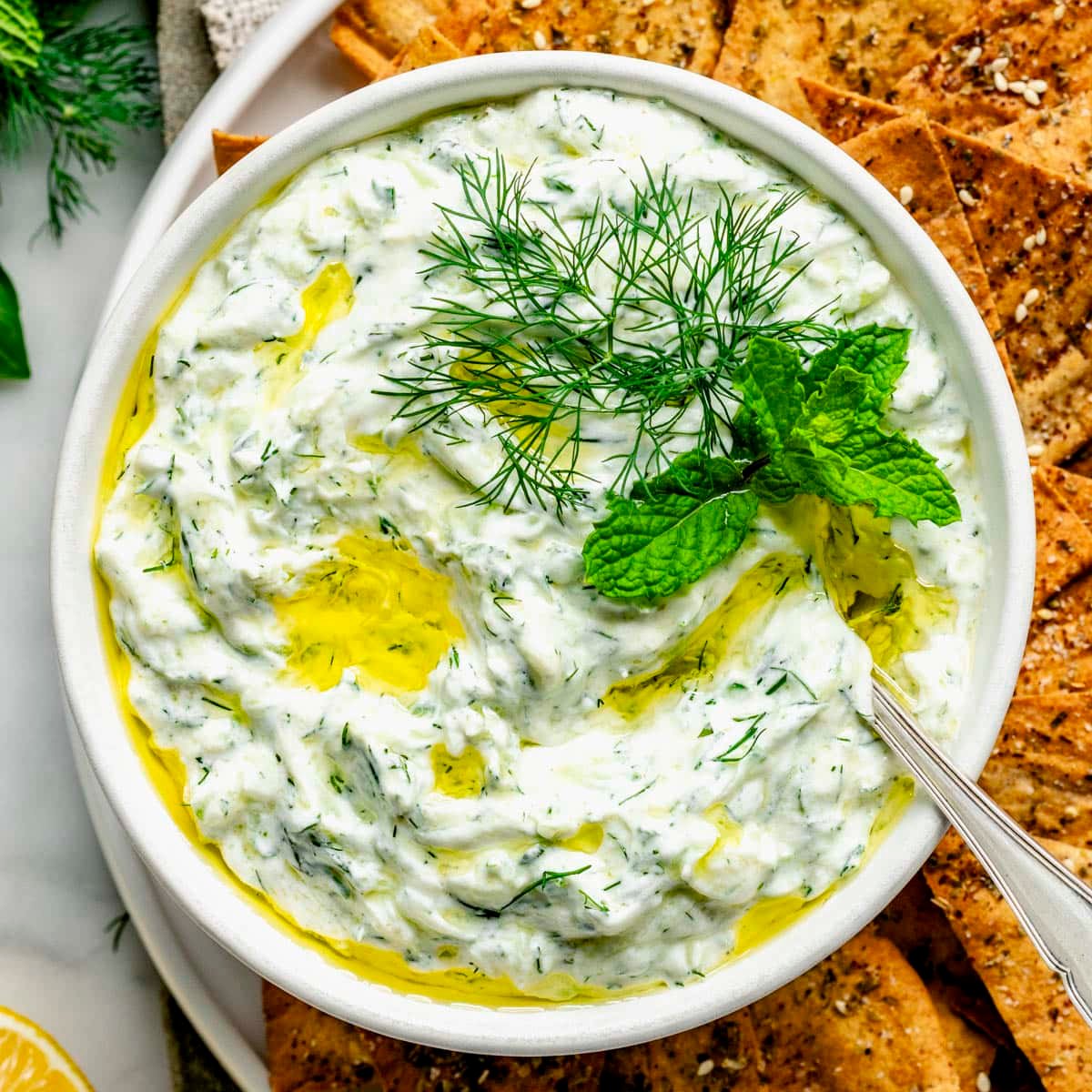
To make a refreshing tzatziki sauce, I start by grating a large cucumber and squeezing out the excess moisture. In a bowl, I mix together 2 cups of Greek yogurt, 2 minced garlic cloves, 2 tablespoons of olive oil, and 1 tablespoon of red wine vinegar. I stir in the grated cucumber and season with salt. After chilling for an hour, it’s ready to serve with pita or veggies. There’s so much more to explore about this delicious dip!
Cucumber Yogurt Dip
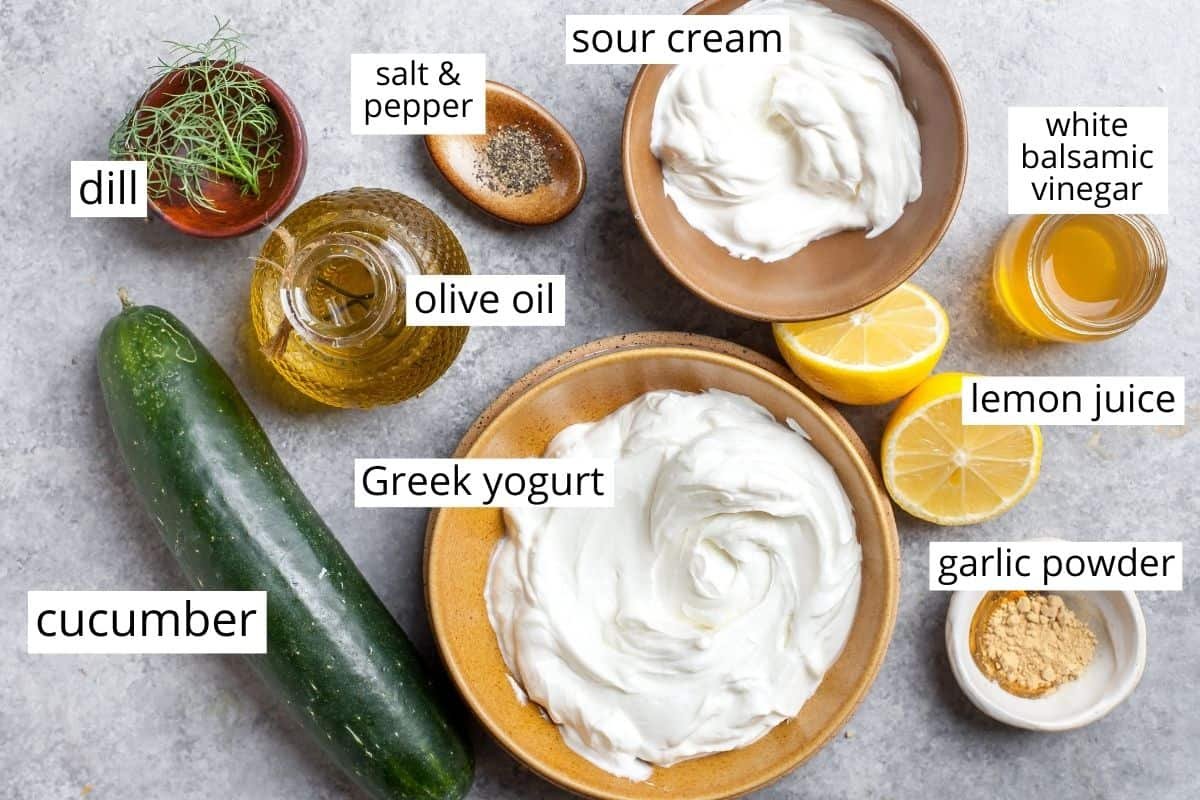
Ingredients:
- 1 large cucumber
- 2 cups Greek yogurt
- 2 cloves garlic, minced
- 2 tablespoons olive oil
- 1 tablespoon red wine vinegar
- 1 tablespoon fresh lemon juice
- Salt to taste
- Fresh dill or mint for garnish (optional)
Cooking Instructions:
- Start by washing the cucumber thoroughly. If the skin is thick or waxy, you may want to peel it; otherwise, leave the skin on for added texture.
- Grate the cucumber using a box grater or food processor. Once grated, place it in a clean kitchen towel and squeeze out excess moisture. This step is crucial to prevent the dip from becoming watery.
- In a medium mixing bowl, combine the Greek yogurt, minced garlic, olive oil, red wine vinegar, and lemon juice. Stir until smooth and well blended.
- Add the grated cucumber to the yogurt mixture and stir until everything is evenly incorporated.
- Season with salt to taste, adjusting as needed for your preference.
- Transfer the tzatziki to a serving dish and garnish with fresh dill or mint if desired.
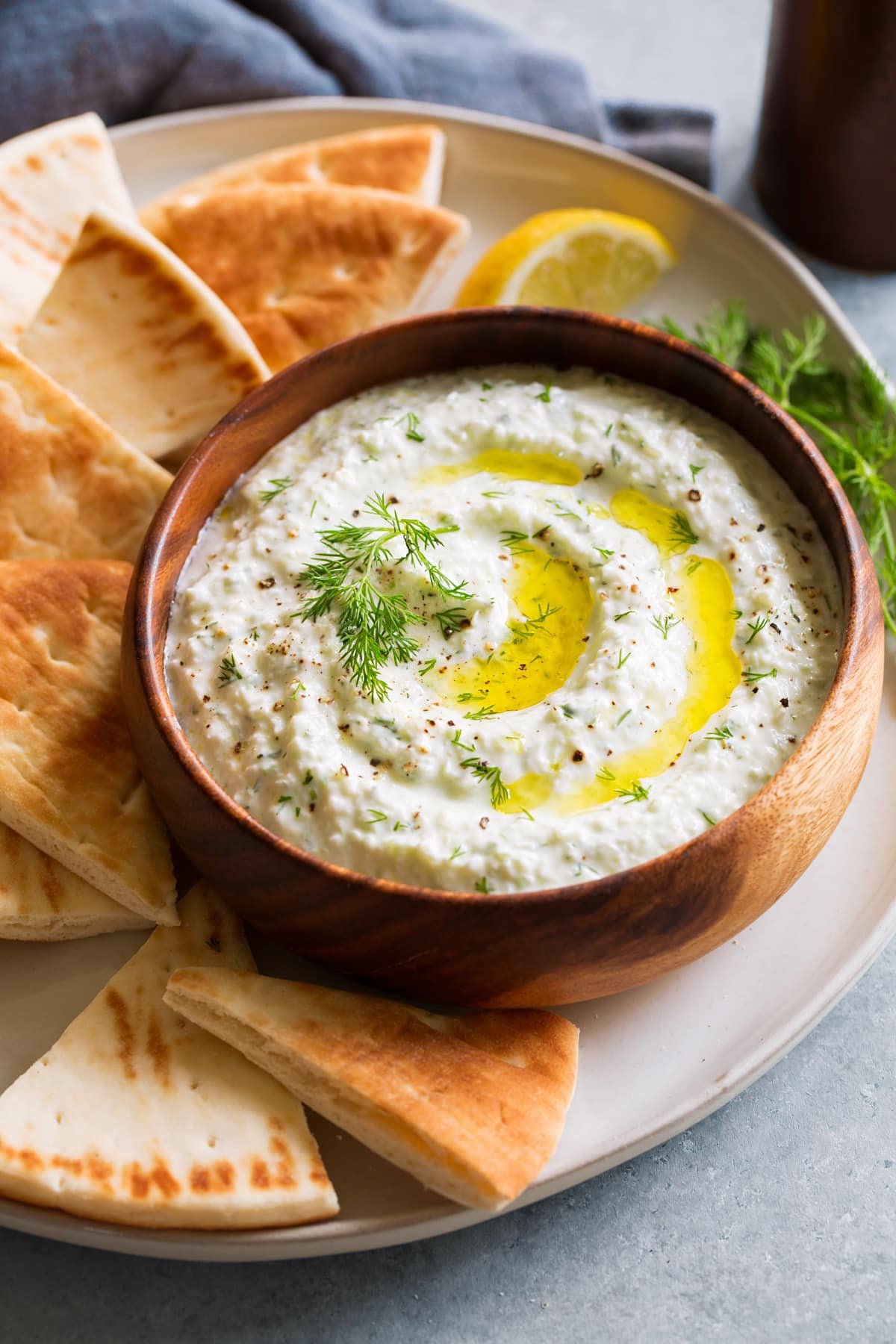
When making tzatziki, I always find that using high-quality Greek yogurt really enhances the flavor and texture.
I also like to let the dip chill in the refrigerator for at least an hour before serving, as this allows the flavors to meld beautifully.
Don’t be shy about adjusting the garlic or lemon juice to suit your taste, and remember that fresh herbs can elevate the dish even further.
Serving it with warm pita bread or fresh veggies is a must for the perfect appetizer or side dish!
Ancient Greek Culinary Tradition
While many of us enjoy modern variations of Greek dishes, the roots of Ancient Greek culinary tradition reveal a rich tapestry of flavors and ingredients that have shaped Mediterranean cuisine.
I find it fascinating how staples like olives, grains, and fresh herbs were vital in their meals. These ingredients not only nourished but also connected communities, reflecting their culture and daily lives beautifully.