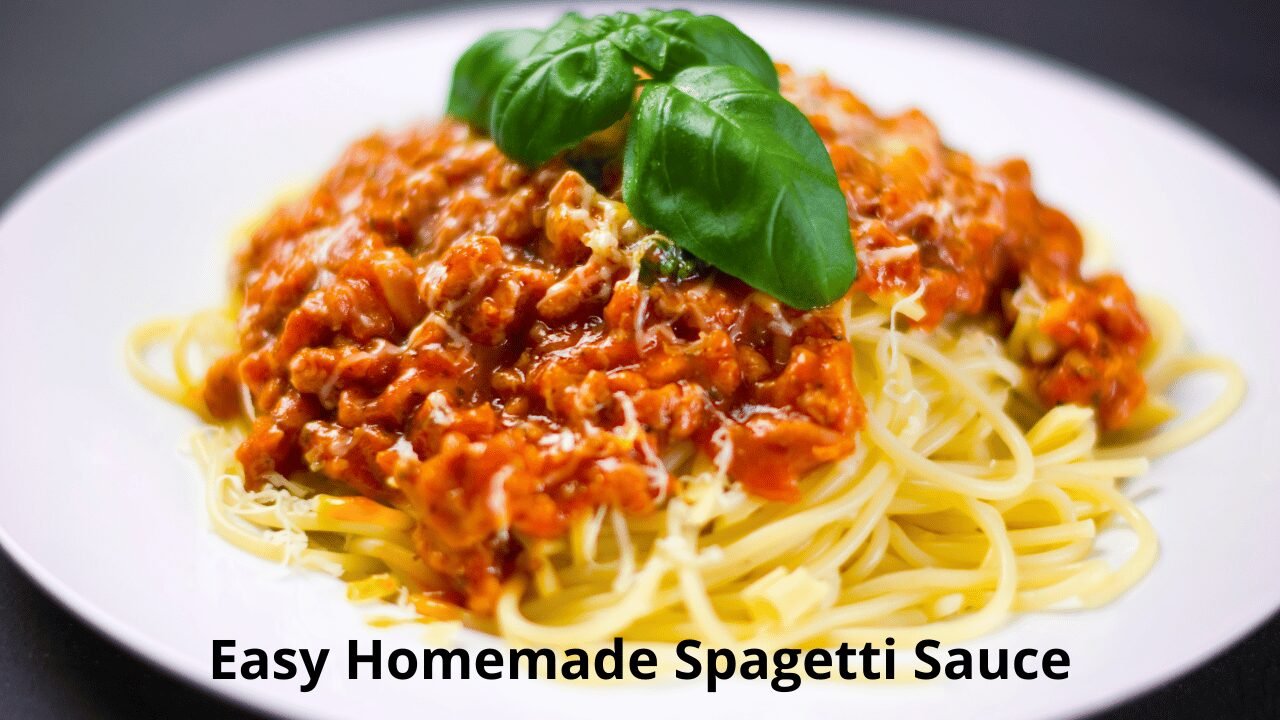
There is something wonderfully reassuring about a pot of tomato sauce simmering quietly on the stove. The ingredients are familiar, the method is uncomplicated, and the aroma gradually fills the kitchen long before dinner reaches the table. This Easy Homemade Spaghetti Sauce Recipe is designed for exactly those evenings when you want a comforting meal made from everyday pantry ingredients.
A good spaghetti sauce does not need to contain dozens of seasonings or cook for an entire afternoon. What matters most is how the ingredients are handled. Giving the onion enough time to soften, stirring the tomato paste briefly in the hot pan, and allowing the tomatoes to simmer gently all help create a sauce that tastes rounded rather than rushed.
This version is completely meat-free, so it can be used as a dependable base for many different meals. Serve it simply over spaghetti, spoon it onto baked pasta, layer it into lasagna, or use it as the starting point for a meat sauce. It is also useful for making homemade pizza, although you may want to simmer it a little longer to produce a thicker consistency.
Why Make Spaghetti Sauce at Home?
Jarred sauce is undeniably convenient, and there is nothing wrong with keeping one in the pantry for especially busy days. Homemade sauce offers something different: you can decide exactly how smooth, thick, sweet, garlicky, or herb-forward it should be.
Some canned tomatoes are naturally sweeter, while others have a brighter and more acidic flavor. By tasting the sauce as it develops, you can adjust it according to the tomatoes in your own kitchen instead of following an inflexible formula. Sugar is therefore optional in this Easy Homemade Spaghetti Sauce Recipe. It should be added only after tasting and only when the sauce genuinely needs it.
Preparing sauce at home is also an easy way to turn cooking into part of the evening rather than another hurried task. While the tomatoes simmer, you can make a salad, set the table, or simply enjoy the scent of garlic, basil, and oregano. The sauce does not require constant attention—an occasional stir is enough.
Choosing the Tomatoes
Good canned tomatoes make the greatest difference in a simple sauce because they provide most of its body and flavor. Crushed tomatoes create a consistent texture with very little work. They are an excellent choice if you want a sauce that coats the spaghetti but still feels homemade.
Whole peeled tomatoes can also be used. Crush them by hand in a bowl before adding them to the pot, or break them apart carefully with a wooden spoon while they cook. This produces a more rustic texture with occasional pieces of tomato.
Avoid heavily seasoned canned tomatoes for the basic recipe. Starting with plain tomatoes gives you complete control over the salt, herbs, garlic, and sweetness. If possible, compare the ingredient labels and choose a product in which tomatoes are the clear main ingredient.
Tomato paste plays a different role. It contributes concentration and depth, especially when it is cooked briefly with the onion and garlic before the crushed tomatoes are added. This short step removes some of its raw, metallic edge and develops a richer flavor.
A Sauce for More Than Spaghetti
Although the title focuses on spaghetti, this sauce is not limited to one type of pasta. It works with penne, rigatoni, fusilli, ravioli, and many other shapes. Pasta with ridges or curved surfaces captures more sauce, while spaghetti creates the familiar experience of long strands coated in tomato and herbs.
The sauce can also be customized without changing its basic character. Sautéed mushrooms, finely diced bell pepper, grated carrot, red pepper flakes, cooked ground beef, or Italian sausage can all be added. If you plan to include meat, brown it separately or before the onion, drain excessive fat if necessary, and then continue with the remaining steps.
For a creamier finish, stir in a small amount of cream at the end. For extra richness without turning it into a cream sauce, add a tablespoon of butter after removing the pan from the heat. Fresh basil should also be added close to serving so its fragrance remains noticeable.
Making an Ordinary Dinner Feel Memorable
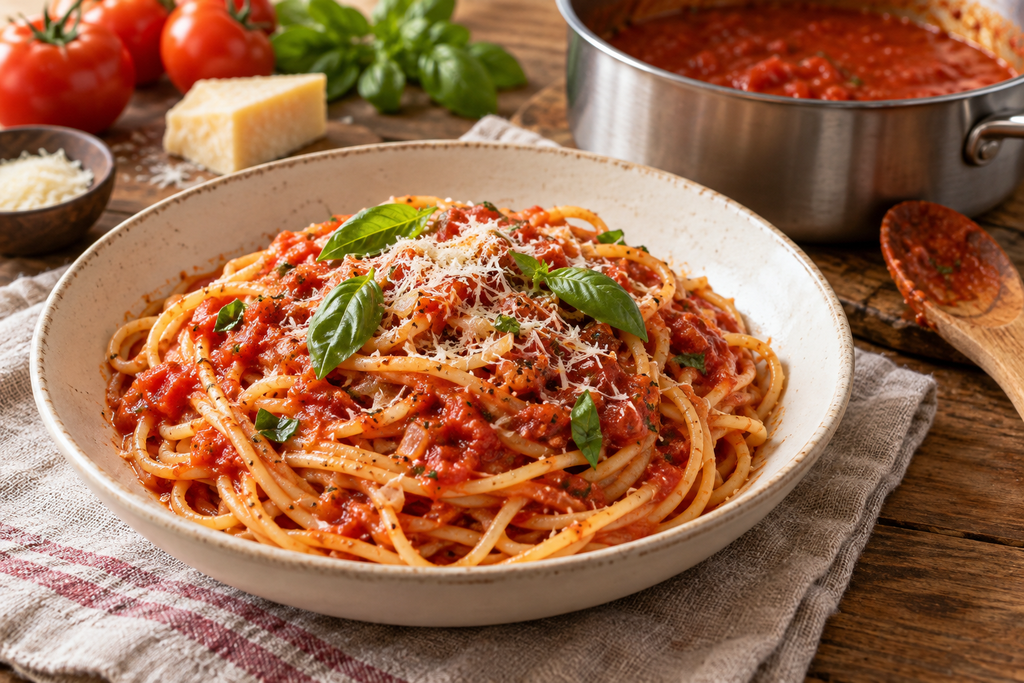
Spaghetti with tomato sauce is often treated as an emergency meal, but it can become one of the most enjoyable dinners of the week. Place the pasta in a large warm bowl, spoon over enough sauce to coat it generously, and finish it with fresh basil and Parmesan. Add garlic bread and a simple green salad, and the table immediately feels more complete.
This is also an easy meal to share. A large bowl of spaghetti in the center of the table feels relaxed and welcoming, particularly when everyone can add their own cheese, herbs, or red pepper flakes. It may not be elaborate, but it creates the kind of dinner where people stay seated and continue talking after their plates are empty.
One of the best reasons to prepare this Easy Homemade Spaghetti Sauce Recipe is that tomorrow’s portion may taste even more settled and harmonious. Making a double batch gives you the foundation for another dinner without repeating all the work. Freeze the extra sauce in practical portions, and a homemade meal will already be waiting on a future busy evening.
The recipe that follows provides a reliable base rather than a set of rigid rules. Taste as you cook, adjust the consistency to suit the pasta you are serving, and allow the sauce enough time to develop. Those small decisions are what transform canned tomatoes and a few pantry staples into a dinner that feels genuinely homemade.
Tomato-Based Sauce Preparation
A dependable tomato sauce made with onion, garlic, crushed tomatoes, herbs, and a touch of tomato paste. It is ready in under an hour and provides enough sauce for approximately 12 oz or 340 g of dried spaghetti.
Course: Main Course, Sauce
Cuisine: Italian-Inspired
Servings: 4
Yield: Approximately 3½ cups
Preparation time: 10 minutes
Cooking time: 40 minutes
Total time: 50 minutes
Ingredients
- 2 tablespoons extra-virgin olive oil
- 1 small yellow onion, finely diced
- ¾ teaspoon fine salt, divided, plus more to taste
- 3 garlic cloves, finely minced
- 2 tablespoons tomato paste
- 1 can (28 oz or 794 g) crushed tomatoes
- ½ cup water
- 1 teaspoon dried oregano
- ½ teaspoon dried basil
- ¼ teaspoon freshly ground black pepper
- ⅛ teaspoon red pepper flakes, optional
- ½–1 teaspoon sugar, optional and only if needed
- 1 tablespoon chopped fresh basil, plus more for serving
- 1 tablespoon unsalted butter, optional
- 12 oz or 340 g dried spaghetti, for serving
- Freshly grated Parmesan, for serving
Instructions
- Heat the olive oil in a medium saucepan or Dutch oven over medium heat.
- Add the diced onion and ¼ teaspoon of the salt. Cook for 6–8 minutes, stirring occasionally, until the onion becomes soft and translucent. Reduce the heat if it begins to brown too quickly.
- Add the minced garlic and cook for approximately 30 seconds, stirring continuously, just until fragrant.
- Stir in the tomato paste. Cook for 1–2 minutes, stirring frequently, until it darkens slightly and begins to leave a thin coating on the bottom of the pan.
- Pour in the crushed tomatoes. Add ½ cup of water to the empty tomato can, swirl it gently to collect the remaining tomato, and pour it into the saucepan.
- Add the dried oregano, dried basil, black pepper, optional red pepper flakes, and the remaining ½ teaspoon salt. Stir thoroughly.
- Bring the sauce to a gentle simmer. Reduce the heat to low and leave the saucepan partially uncovered.
- Simmer for 30–35 minutes, stirring every few minutes so the sauce does not stick to the bottom. It should gradually thicken while still remaining loose enough to coat pasta.
- Taste the sauce. If the tomatoes seem excessively acidic, stir in ½ teaspoon of sugar. Taste again before adding any more. Adjust the salt, pepper, or herbs as needed.
- Remove the saucepan from the heat. Stir in the fresh basil and optional butter. The butter softens the acidity and gives the sauce a slightly richer finish.
- While the sauce finishes cooking, bring a large pot of generously salted water to a boil. Cook the spaghetti according to the package directions until al dente.
- Before draining the pasta, reserve approximately ½ cup of its cooking water.
- Drain the spaghetti and return it to the pot. Add approximately two-thirds of the sauce and toss over low heat for 1 minute. Add a small splash of reserved pasta water if needed to help the sauce coat the strands.
- Divide the spaghetti among four plates. Spoon the remaining sauce over the top and finish with fresh basil and grated Parmesan.
Recipe Notes
- Crushed tomatoes create a naturally thick but pourable sauce. Whole peeled tomatoes may also be used if they are crushed by hand before cooking.
- Do not cook the garlic for the previously common 1–2 minutes. Finely minced garlic can burn quickly and make the finished sauce bitter.
- Sugar is not always necessary. Its purpose is to correct an unusually sharp batch of tomatoes, not to make the sauce noticeably sweet.
- For a smoother sauce, carefully blend it with an immersion blender after simmering.
- For a thicker pizza-style sauce, simmer it uncovered for an additional 10–15 minutes.
- Fresh basil should be added near the end so its aroma remains noticeable.
Optional Variations
Vegetable sauce: Add one finely diced bell pepper or 8 oz or 225 g sliced mushrooms after the onion has softened. Cook until their released moisture has mostly evaporated before adding the garlic.
Meat sauce: Brown 1 lb or 450 g ground beef or Italian sausage in the saucepan first. Transfer it to a plate, prepare the sauce in the same pan, and return the cooked meat when adding the tomatoes.
Creamy tomato sauce: Stir ¼ cup of heavy cream into the finished sauce over low heat. Do not allow it to boil vigorously after adding the cream.
Spicy sauce: Increase the red pepper flakes to ¼–½ teaspoon according to taste.
Storage and Freezing
Allow the sauce to cool before transferring it to an airtight container. Refrigerate it for up to 4 days.
The sauce can be frozen without the pasta for up to 3 months. Leave a little empty space in the container because the sauce will expand as it freezes. Thaw it overnight in the refrigerator.
Reheat the sauce gently in a covered saucepan over medium-low heat, stirring occasionally. If it has become too thick, add water one tablespoon at a time until it reaches the desired consistency.
Origin in Italian Cuisine
As I whip up my tomato-based sauce, I can’t help but think about its rich roots in Italian cuisine.
Originating from the southern regions, especially Naples, this sauce reflects Italy’s vibrant culinary traditions.
With fresh tomatoes, garlic, and herbs, it embodies simplicity and flavor.
Each bite transports me to Italy, where family meals revolve around delicious, homemade sauces that bring everyone together.