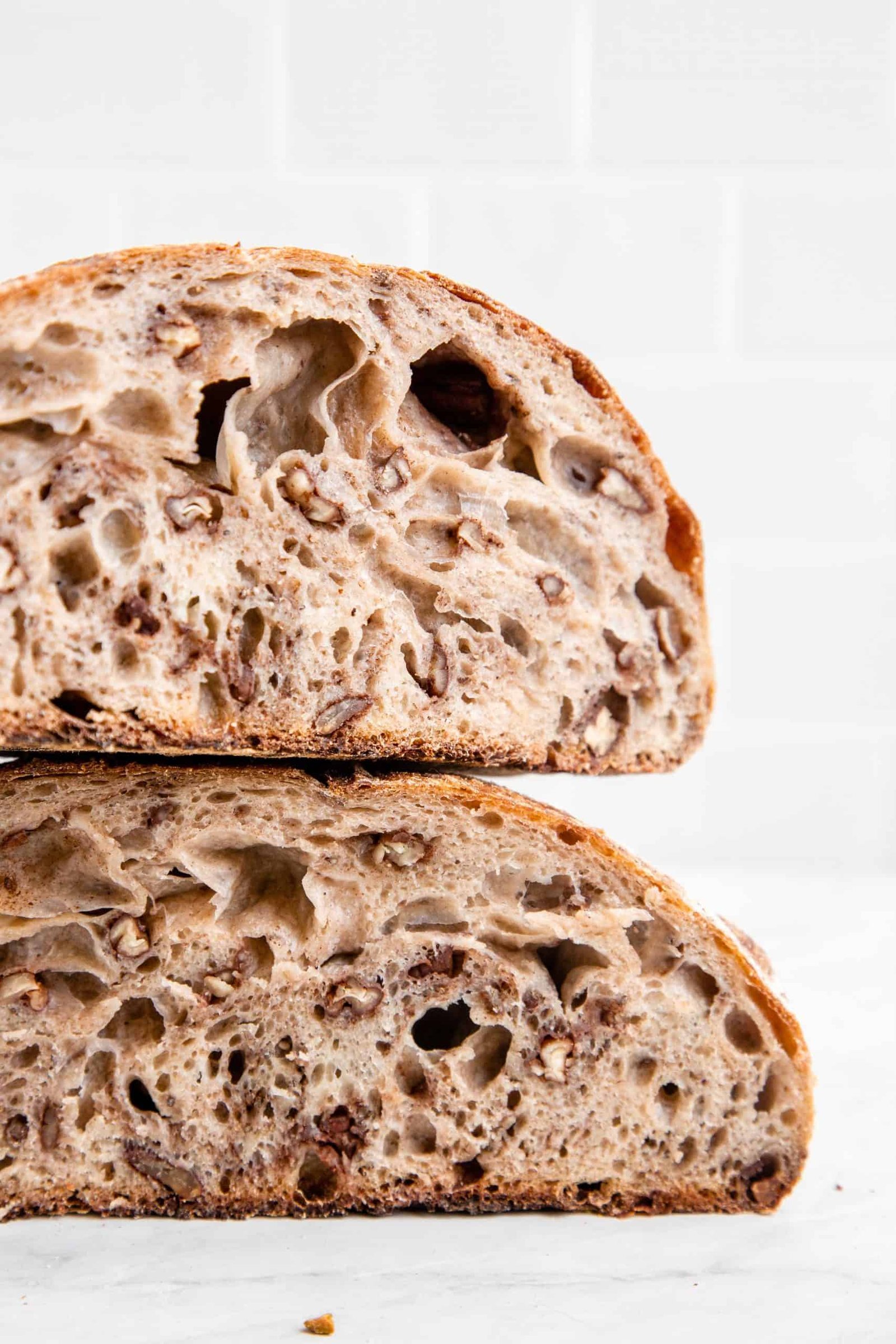
When I first attempted to create a sourdough bread, I found the process both intriguing and a bit daunting. The key lies in the starter fermentation, which sets the foundation for a flavorful loaf. I quickly learned that patience is essential, as it requires careful attention and daily feeding. Curious about how this starter transforms into a crusty bread? Let’s explore the steps together.
Starter Fermentation Process
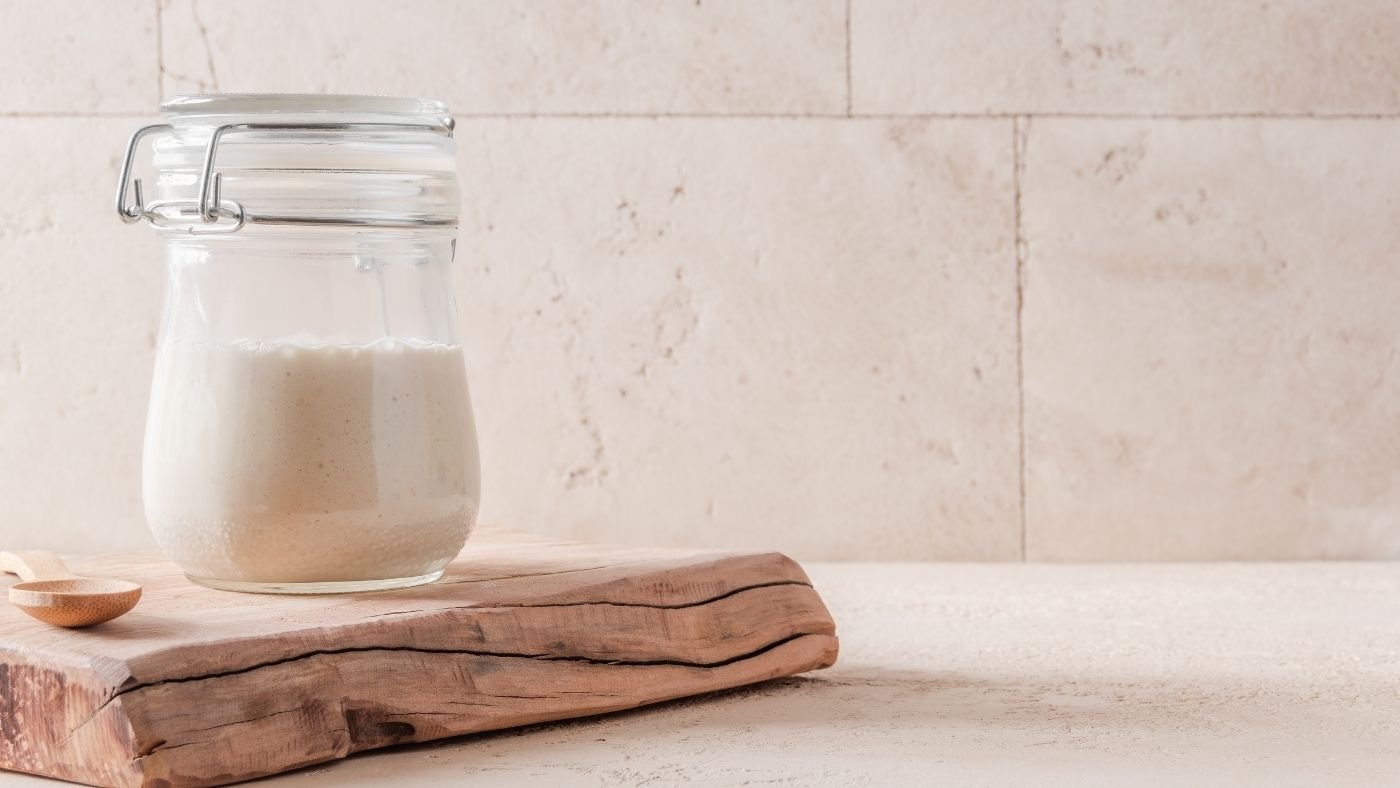
Ingredients:
- 50g all-purpose flour (or your preferred flour)
- 50g water
- 25g all-purpose flour (for feeding)
- 25g water (for feeding)
Instructions:
- In a clean, wide-mouth jar, mix 50g of flour and 50g of water until you achieve a smooth, thick paste.
- Cover the jar loosely with a lid or cloth and place it in a warm area, ideally between 23 and 30°C.
- After 24 hours, check the mixture for bubbles and a tangy smell, which indicates fermentation has begun.
- Discard half of the starter (about 50g) from the jar.
- Feed the remaining starter with 25g of flour and 25g of water, mixing well to combine.
- Repeat the feeding process daily, discarding half of the starter and adding the same amounts of flour and water each time.
- Monitor the starter’s growth using a rubber band to mark its height. Look for signs of doubling in volume.
- After two consecutive days of the starter doubling in volume within 12 hours, it’s ready to use.

Extra Tips:
When working with sourdough starter, I find it helpful to maintain a consistent feeding schedule and to keep an eye on the temperature of the room. The fermentation process is crucial for the bread’s volume, texture, and aromas, enhancing the final product’s characteristics. Variations in temperature can dramatically affect the fermentation process, so try to maintain an ideal environment. If you notice your starter is slow to ferment, consider moving it to a warmer spot. Also, experimenting with different types of flour can yield interesting flavors and fermentation rates; I’ve had great success with a mix of all-purpose and rye flour.