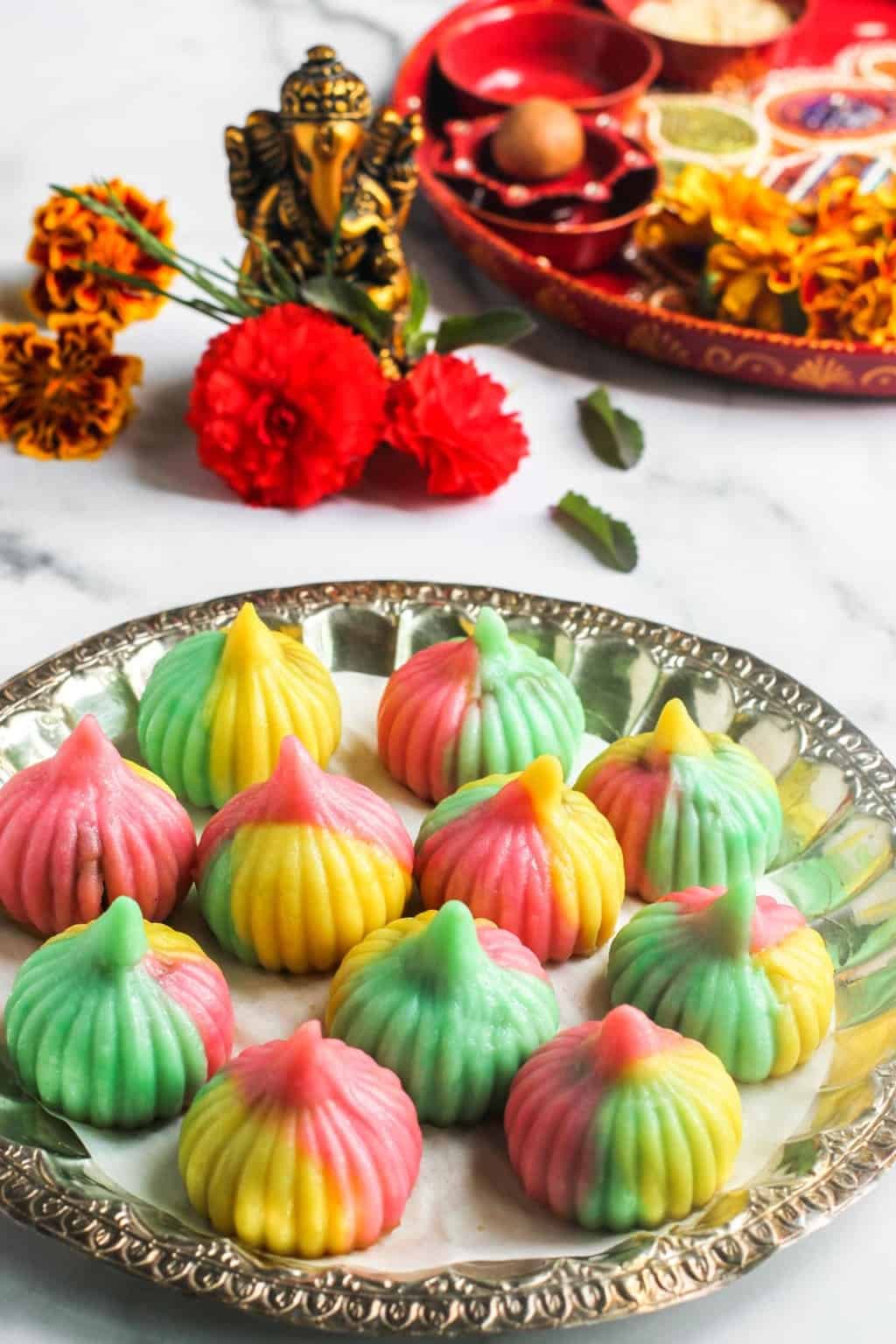
If you’re looking to make modaks, start by combining rice flour with a pinch of salt and knead it into a smooth dough. For the filling, mix grated coconut with jaggery and cardamom. Form small discs from the dough, place the filling in the center, and seal them into dumplings. Steam for 15-20 minutes until glossy. These sweet treats aren’t just delicious but also carry deep cultural significance, which you’ll find fascinating as you explore their history.
Sweet Dumpling Preparation Guide
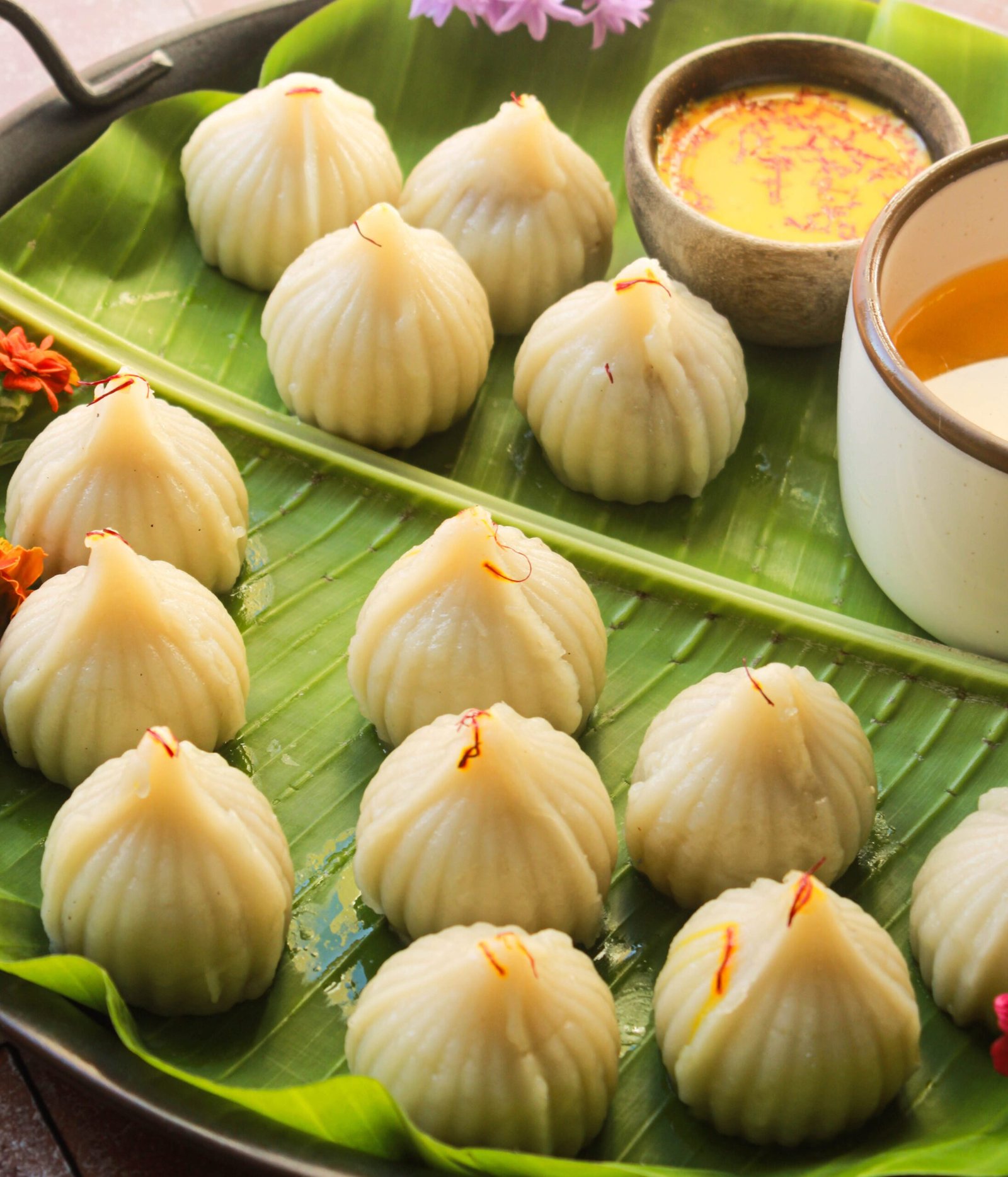
Ingredients:
- 2 cups rice flour
- 1 cup grated coconut (fresh or desiccated)
- 1 cup jaggery (grated or powdered)
- 1/2 teaspoon cardamom powder
- A pinch of salt
- Water (as needed)
- Ghee (for greasing)
Cooking Instructions:
- In a mixing bowl, combine the grated coconut, jaggery, and cardamom powder. Mix well until the jaggery is evenly distributed.
- In another bowl, take the rice flour and add a pinch of salt. Gradually add water while kneading to form a smooth and pliable dough.
- Divide the dough into small equal portions (about the size of a golf ball) and roll them into smooth balls.
- Flatten each ball into a small disc using your palms, making sure the center is slightly thicker.
- Place a spoonful of the coconut and jaggery mixture in the center of each disc.
- Fold the edges over the filling to encase it completely and pinch to seal. Shape it into a smooth dumpling.
- Repeat this process until all dough and filling are used.
- Grease a steamer basket with ghee and arrange the dumplings in it without overcrowding.
- Steam the dumplings for about 15-20 minutes or until they become slightly glossy on the outside.
- Serve warm and enjoy!
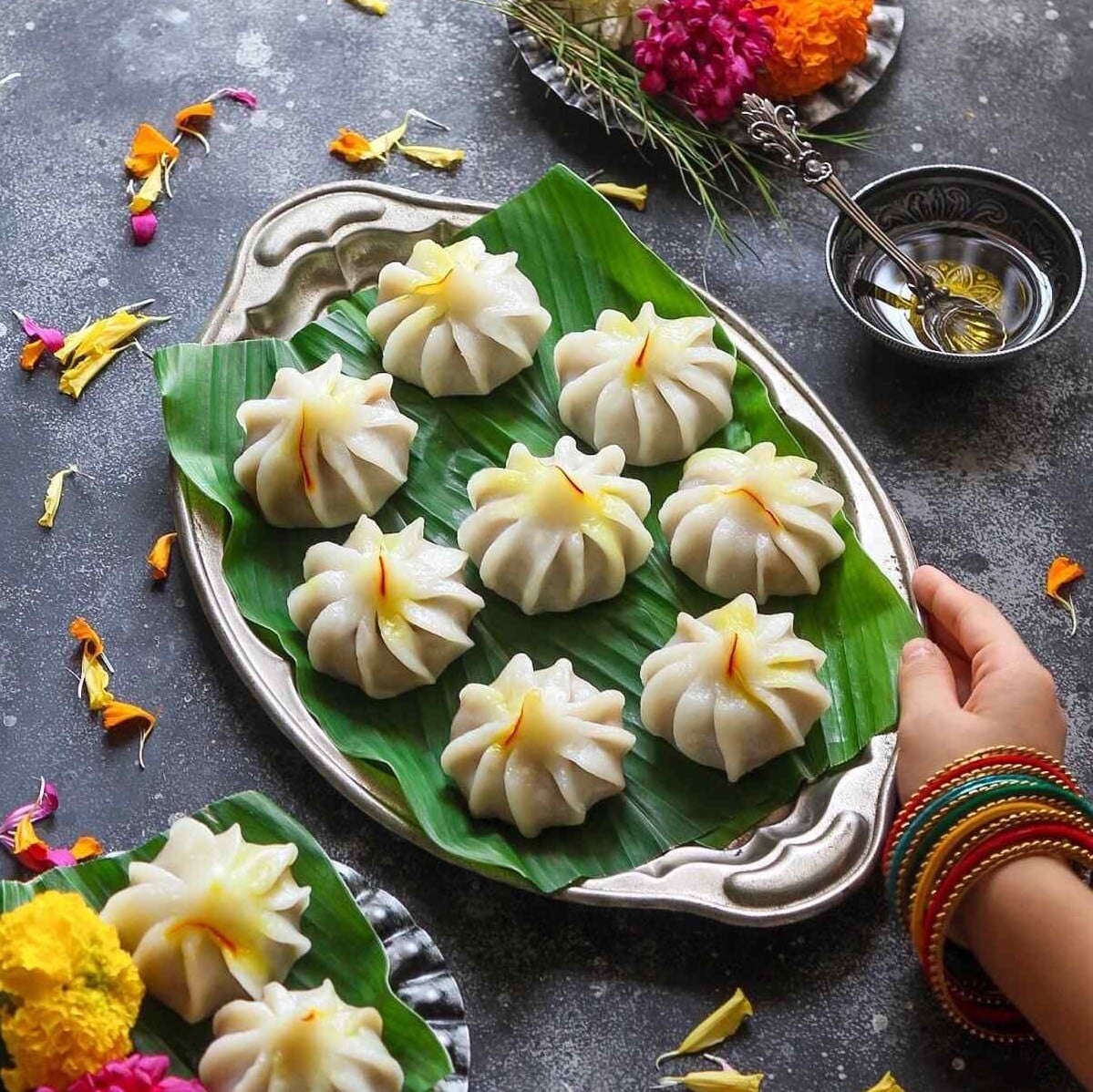
When making sweet dumplings, I find that using fresh coconut enhances the flavor significantly, but if that’s not available, desiccated coconut works just fine.
It’s important to ensure that the dough isn’t too wet; otherwise, the dumplings might turn out sticky.
Additionally, adjusting the sweetness to your taste is essential—I often experiment with the amount of jaggery depending on my mood.
Finally, these dumplings can be enjoyed plain or with a drizzle of melted ghee on top for an extra indulgent touch!
Ancient Festival Treat Origins
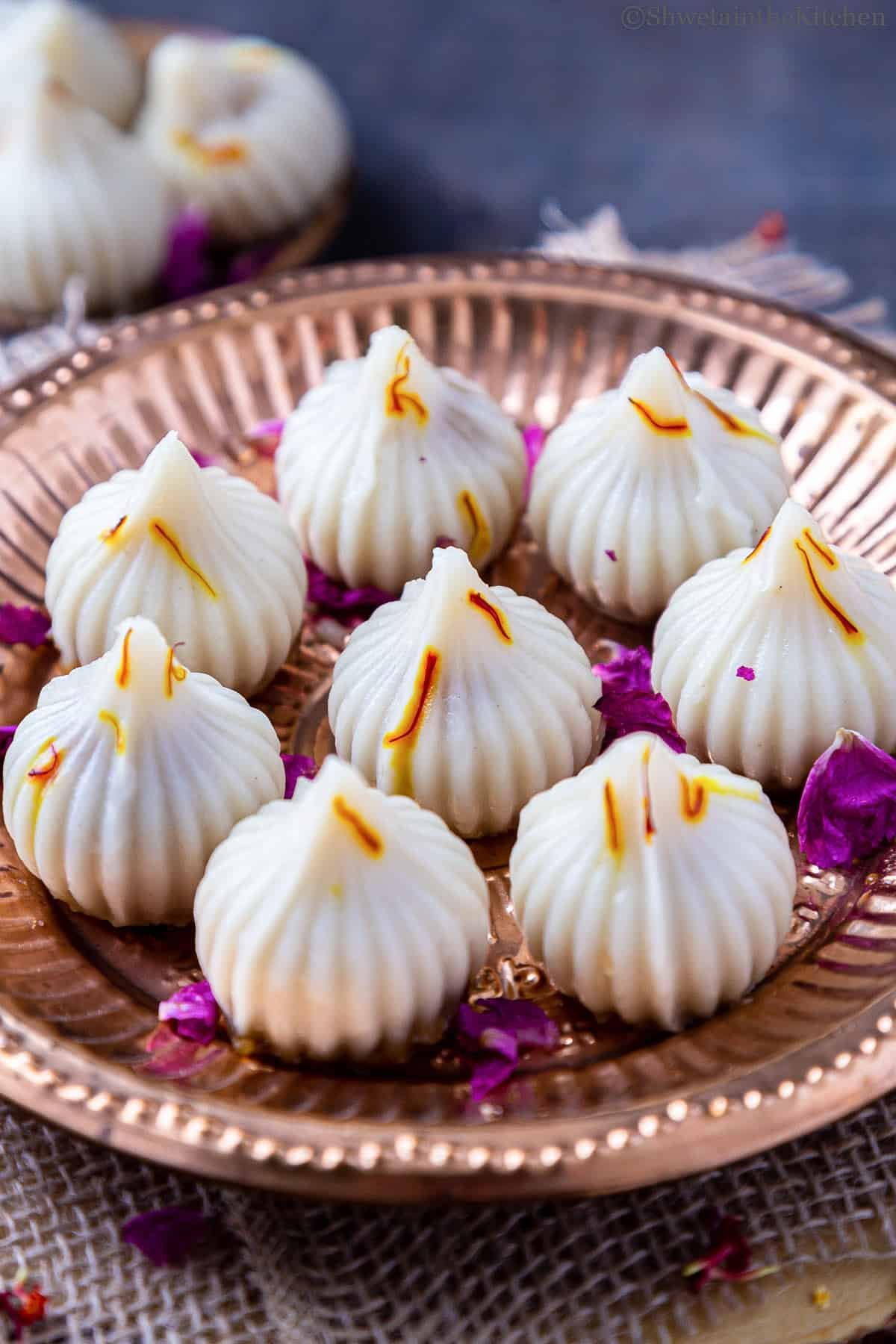
While exploring the origins of sweet dumplings like modaks, I can’t help but appreciate their deep-rooted significance in various ancient festivals.
These delightful treats were often offered to deities, symbolizing devotion and gratitude. Celebrated during Ganesh Chaturthi, modaks represent the sweet rewards of life.
Their rich history connects us to our ancestors, making every bite a taste of tradition and culture.