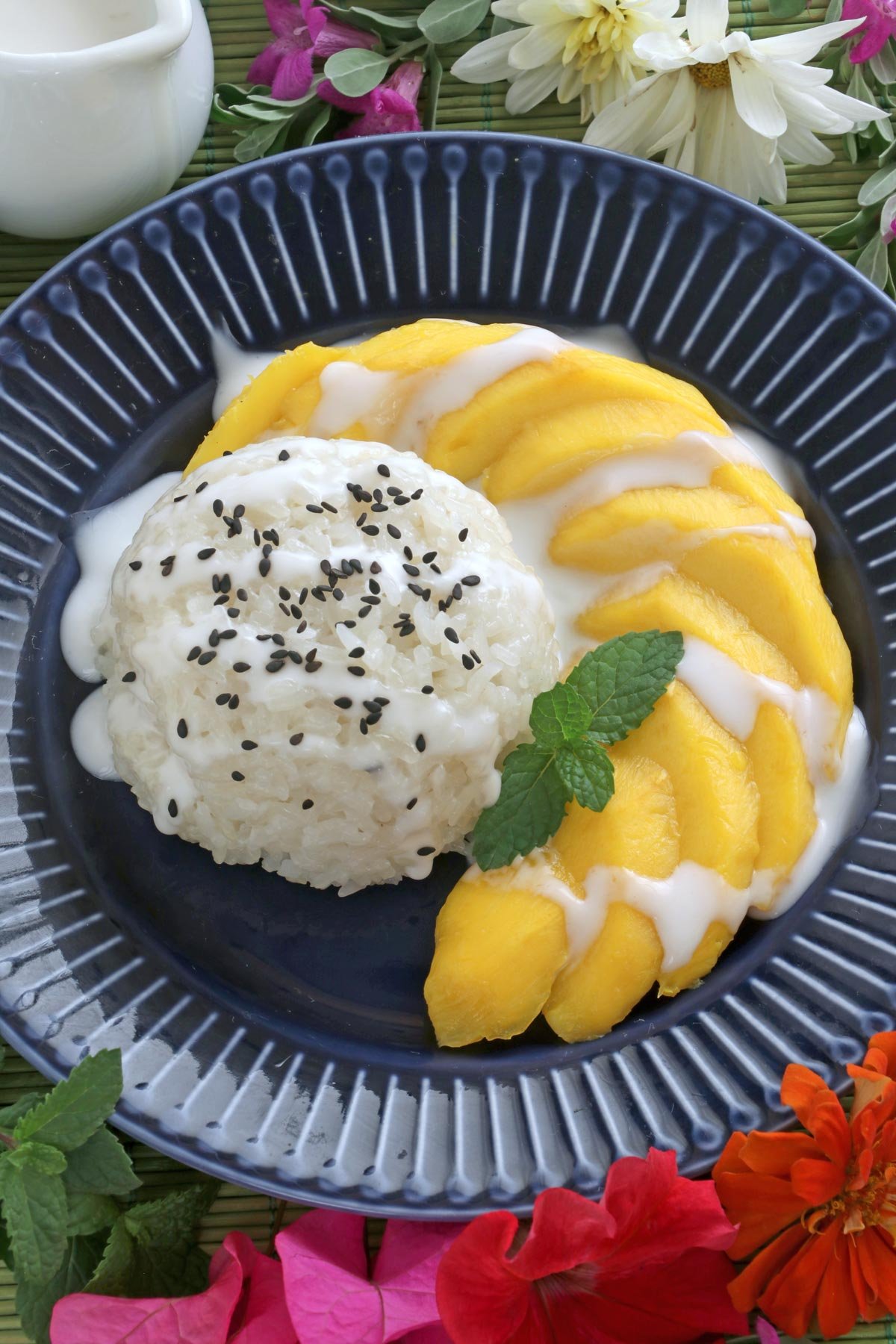
To make mango sticky rice, I start by soaking glutinous rice for at least 4 hours. After draining, I steam it until tender. Meanwhile, I heat coconut milk with sugar and salt, pouring some over the warm rice and letting it sit. I serve it topped with fresh mango slices and drizzle more coconut milk on top. For an extra touch, I sometimes add sesame seeds. There’s so much more to explore about this delightful Thai dessert!
Mango Dessert Preparation Guide
Ingredients:
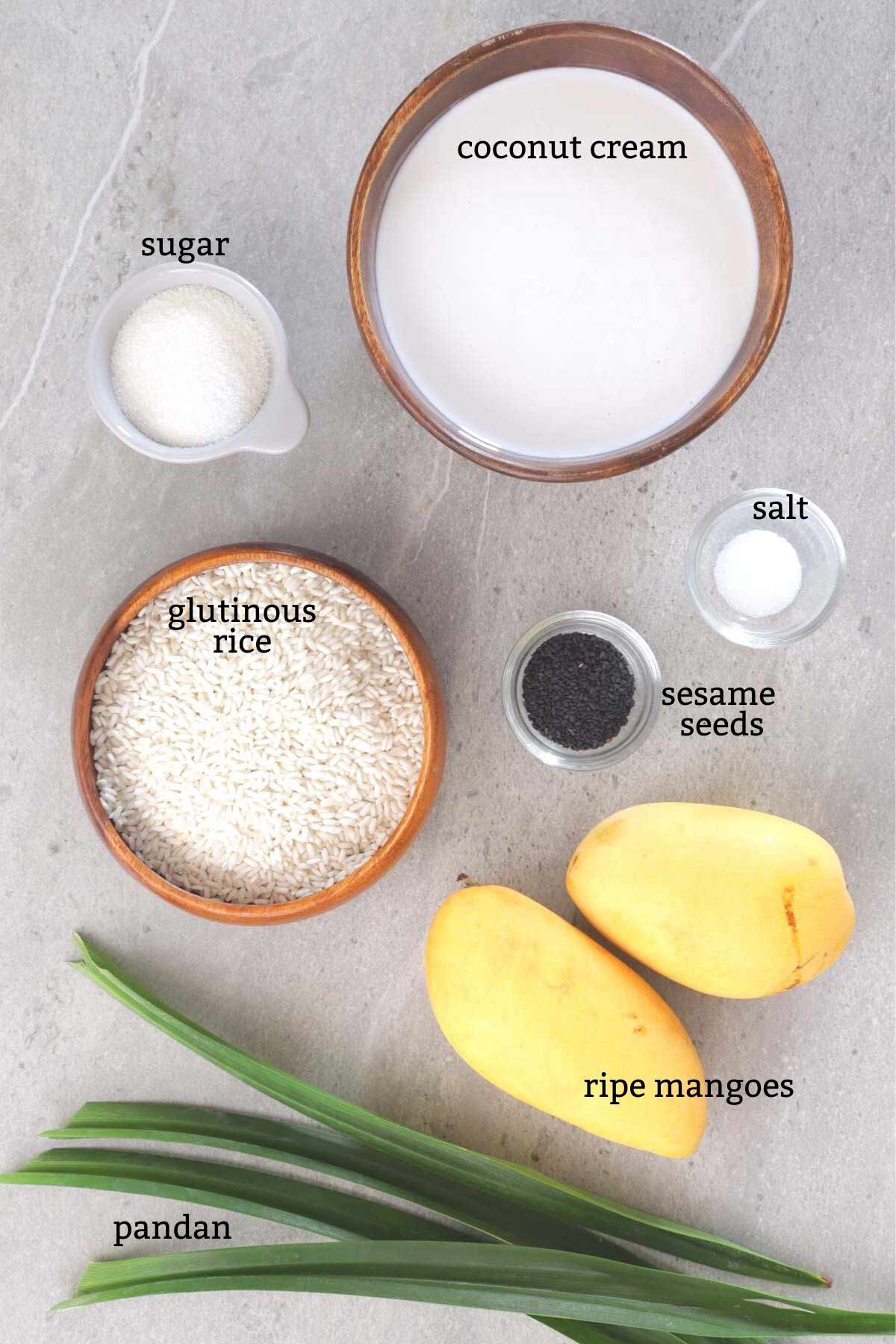
- 1 cup glutinous rice
- 1 1/2 cups coconut milk
- 1/2 cup sugar
- 1/4 teaspoon salt
- 2 ripe mangoes, peeled and sliced
- Sesame seeds or mung beans for garnish (optional)
Cooking Instructions:
- Rinse the glutinous rice under cold water until the water runs clear. This helps remove excess starch and prevents it from becoming overly sticky.
- Soak the rinsed rice in water for at least 4 hours, or overnight for best results. This hydrates the rice and allows it to cook evenly.
- After soaking, drain the rice and place it in a steamer basket lined with cheesecloth or a clean kitchen towel. Steam the rice for about 20-25 minutes, or until it becomes translucent and tender.
- While the rice is steaming, combine the coconut milk, sugar, and salt in a saucepan over medium heat. Stir until the sugar dissolves, but don’t let it boil.
- Once the rice is done steaming, transfer it to a large mixing bowl. Pour about 1 cup of the coconut milk mixture over the warm rice and gently fold it in. Let it sit for about 30 minutes to absorb the flavors.
- To serve, place a generous scoop of the sticky rice on a plate, top it with sliced mango, and drizzle the remaining coconut milk over the top. Garnish with sesame seeds or mung beans if desired.

Extra Tips:
When making mango sticky rice, I always recommend using ripe, sweet mangoes for the best flavor contrast with the creamy coconut rice.
The quality of the coconut milk also matters; I prefer using full-fat coconut milk for a richer taste.
If you want to elevate the presentation, try slicing the mangoes into elegant shapes.
Lastly, don’t rush the soaking and steaming process—these steps are crucial for achieving that perfect sticky texture!
Thai Street Food Origins
As I delve into the origins of Thai street food, I can’t help but appreciate how this vibrant culinary tradition reflects the country’s diverse cultural influences.
From Chinese noodle vendors to Indian curry stalls, every dish tells a story.
Exploring bustling markets, I’ve discovered that each bite connects me to Thailand’s rich history, showcasing local ingredients and regional flavors that have evolved over generations.