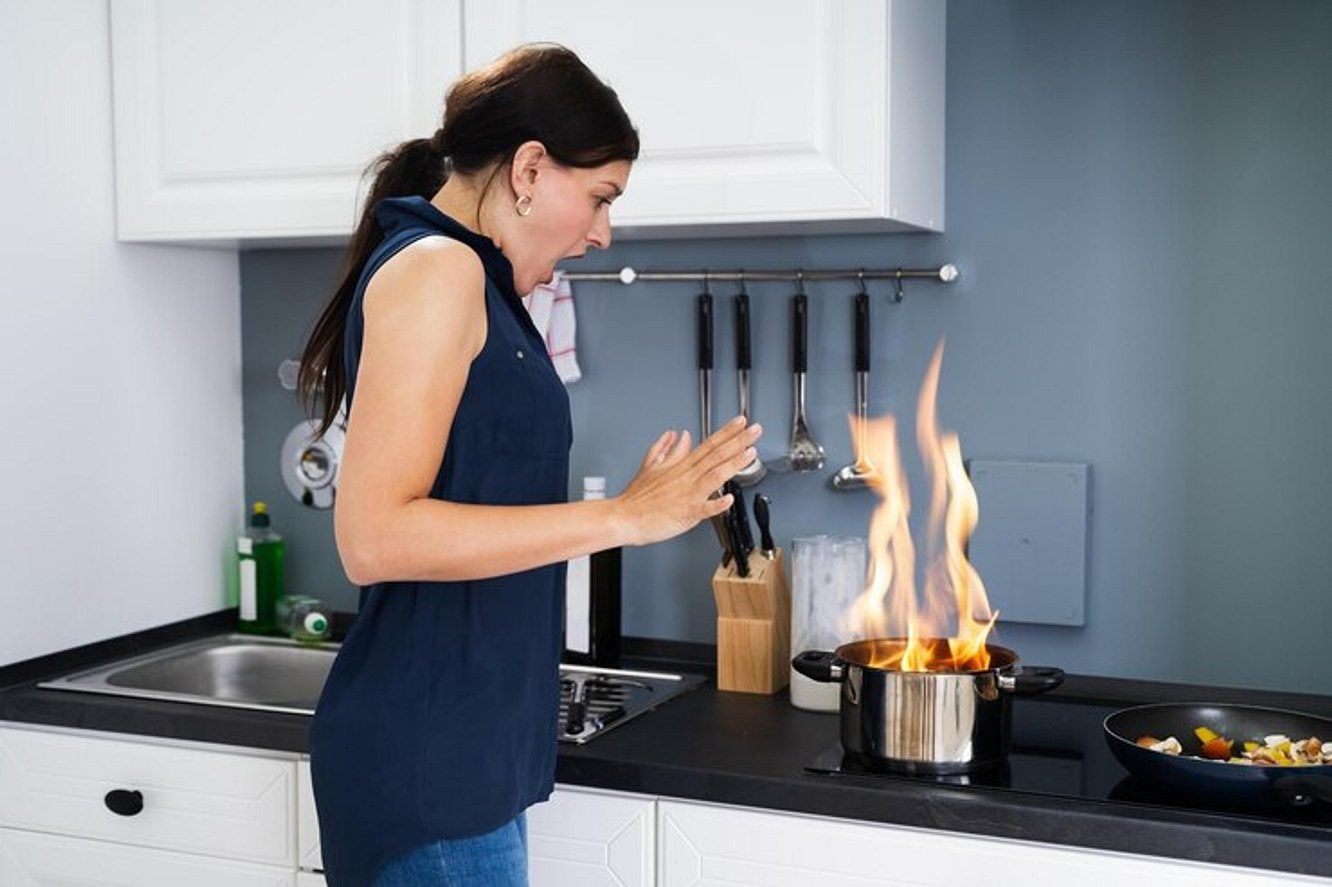
Kitchen fires aren’t inevitable. With a few simple habits, you can extinguish potential fires long before they start. After all, most kitchen fires start suddenly but can be stopped just as quickly. Take some time to learn about common kitchen dangers and fast fire suppression methods to keep your house and loved ones safe and help you feel safe while cooking.
How Do Kitchen Fires Happen so Quickly?
You might only need three things for a kitchen fire: heat, grease, and distraction. Leave a pan unattended on the stove long enough and it will surely catch. Place a towel or paper package too close to the flame and you will have the same result. Within seconds, your kitchen could be filled with smoke.
Many kitchen fires are caused by lack of knowledge about potential fire sources. Learning where most kitchen fires start can help you adjust your daily cooking routine to prevent fires before they have a chance to start.
Kitchen Fire Safety Guide: Before You Cook: Potential Fire Sources
You can practice fire safety before you even turn on the stove. By taking a few minutes to clear your space and set yourself up for success, you can prevent fires while cooking.
- Remove paper towels, food packaging, and cloth items from countertops.
- Ensure handles on pots and pans face away from you and others to avoid bumping into them.
- Wear clothing that does not hang loosely near flames.
- Check that oven mitts and dish towels are not touching heat sources.
- Avoid cooking while distracted and keep children and pets away from the cooking area.
- Exercise caution when frying with oil, broiling food, or cooking at high temperatures.
Preparing your space for cooking can help you prevent a fire as soon as you turn on the stove. When you start cooking knowing that your space is organized and hazards are removed, you’ll feel less stressed and can concentrate on preventing fires while cooking.
Kitchen Fire Safety Guide: Safe Cooking Habits to Prevent Kitchen Fires
Chance doesn’t play a factor in kitchen fire safety. By practicing careful cooking habits you can better ensure that you will prevent fires while cooking. Whenever you prepare a meal you should always be aware of food temperatures, cooking times, and potential dangers around your cooking area even if you consider yourself a seasoned chef.
Never leave food frying on the stove unattended. If you have grease or oil on the stove that is hot enough to smoke, it can catch fire in seconds. If you need to leave the kitchen while cooking, turn the burner completely off or ask someone to watch the stove.
Kitchen Fire Safety Guide: How to Put Out Kitchen Fires
Kitchen fires don’t have to spread if you know what to do. Before you try to extinguish the fire, take a deep breath and remind yourself that pan fires can be dangerous but are often manageable.
If you have a fire on the stove in a pan:
- Turn off heat source if possible.
- Place a lid over the pan and leave until it cools down.
- Baking soda can help put out small grease fires.
- Do not pour water on grease fires.
- Leave the house if the fire does not go out immediately.
If you catch the fire soon enough, you can avoid losing your kitchen to smoke and fire damage. If you notice the smoke getting worse or see flames getting too large to fit inside the pan, get out of the house and call emergency services. Your safety is the top priority.
When to Call the Fire Department
If you have a small fire on the stove, you may be able to put it out successfully by yourself. However, if your kitchen fire is rapidly growing, or the fire is anywhere but on the stove, it’s time to call the fire department.
Call the fire department immediately if your fire:
- Is in cabinets, on the wall, or spreading up appliances.
- Produces too much smoke to see while still in the kitchen.
- Poses a threat to you or your family members’ health.
- Blocks your path to exit the kitchen.
When in doubt, head to the door and call for help. You can always attempt to put out the fire if you know that your family has a safe path to exit the house.
Kitchen Fire Safety Guide: Safety Tools to Keep in Your Kitchen
When fire is working against you, the right tools can make all the difference. Fire extinguishers, metal pans lids, and baking soda are common fire suppression tools that can easily be kept in your kitchen. Familiarize yourself with these tools and teach family members how to access them before a fire happens.
Some Tools to Keep Close By:
- Smoke detector that is up and running outside of the kitchen.
- Fire extinguisher (preferably Class K or multi-purpose).
- Metal pan lid(s) that can cover most pans used on your stovetop.
- Box of baking soda.
- Heat-resistant oven mitts.
- An accessible exit path.
Having tools on hand is pointless if you allow them to become expired or damaged. Test your smoke detector monthly and check your fire extinguisher’s expiration date to ensure your safety tools will function when you need them.
What to Do After You Think the Fire Is Out
Depending on where and how your kitchen fire started, you may have lost a lot of valuable cooking equipment or supplies. Even after you think the fire is out, remains can still be dangerous. Take precautions to prevent injury to yourself or others even after the flames are gone.
Allow burned pots and pans to cool down and rest alone before touching. If you’ve had a small grease fire, it’s best to throw these out because they could catch again the next time you heat the pan. Fire can also damage the integrity of your appliances, making them unsafe to use again.
Kitchen Fire Safety Guide: Practice Makes You More Prepared
The best time to plan for a kitchen fire is before you need to use these safety practices. Spend time with your family discussing kitchen safety and firefighting techniques so that everyone feels prepared. The more you practice safe cooking habits and fire safety techniques, the more natural they will become if you have to put them into practice.
Running through fire safety practices doesn’t have to be stressful. Teaching children about kitchen safety is a great way to help them understand why they shouldn’t play near stoves and ovens. When everyone knows how to prevent fires before they happen and stop them after they start, you have less risk of injury or damage to your home.
Create Good Habits With Kitchen Fire Safety
Kitchen safety should be part of your daily routine when you cook. By keeping your cooking area clean, staying aware while you cook, and knowing where your safety tools are at all times, you can greatly reduce chances of fire in your kitchen. Implement these safety habits one at a time until they become second nature to you. You’ll be preventing kitchen fires before you know it!