Italian sausage brings plenty of seasoning to a savory breakfast, making it a useful starting point when you want a short ingredient list without a bland result. Pair it with potatoes, vegetables, or eggs, and you have several directions to explore.
These three Italian sausage breakfast recipes offer different textures and cooking methods: a potato and kale hash, eggs nestled in tomato sauce with sausage, and a mushroom breakfast strata made with bread and eggs. Choose the hash for an egg-free option, the tomato skillet for a saucy breakfast, or the strata for a sliceable dish to share.
I’m Adam, and I appreciate recipes that explain the small details rather than assuming I already know them. My aim with this collection is to make the preparation approachable, whether you cook regularly or are still finding your confidence.
Each recipe includes measured ingredients, clear steps, and practical checks for doneness. Preparation, cooking, and any soaking time are listed separately so you can plan your morning without surprises.
Choosing Your Italian Sausage
These recipes use raw, mild Italian-style pork sausage, either loose or removed from its casing. They are not written for dry-cured salami, smoked sausage, or fully cooked links, which behave differently during cooking.
In American recipes, mild Italian sausage is sometimes labelled “sweet Italian sausage.” Here, “sweet” generally distinguishes it from the hot variety; it does not mean a dessert-like sausage.
Check the packaging before buying. Seasoning, salt, and fat content vary between brands, so the recipes keep additional salt modest and explain when to remove excess rendered fat. If you prefer more heat, you can use a hot variety, adjusting any extra chili accordingly.
For links, follow the package guidance for removing the casing, then break the raw filling into small pieces as directed. Keep it refrigerated until preparation, and have a food thermometer ready to check that it is thoroughly cooked.
1. Italian Sausage, Potato and Kale Breakfast Hash
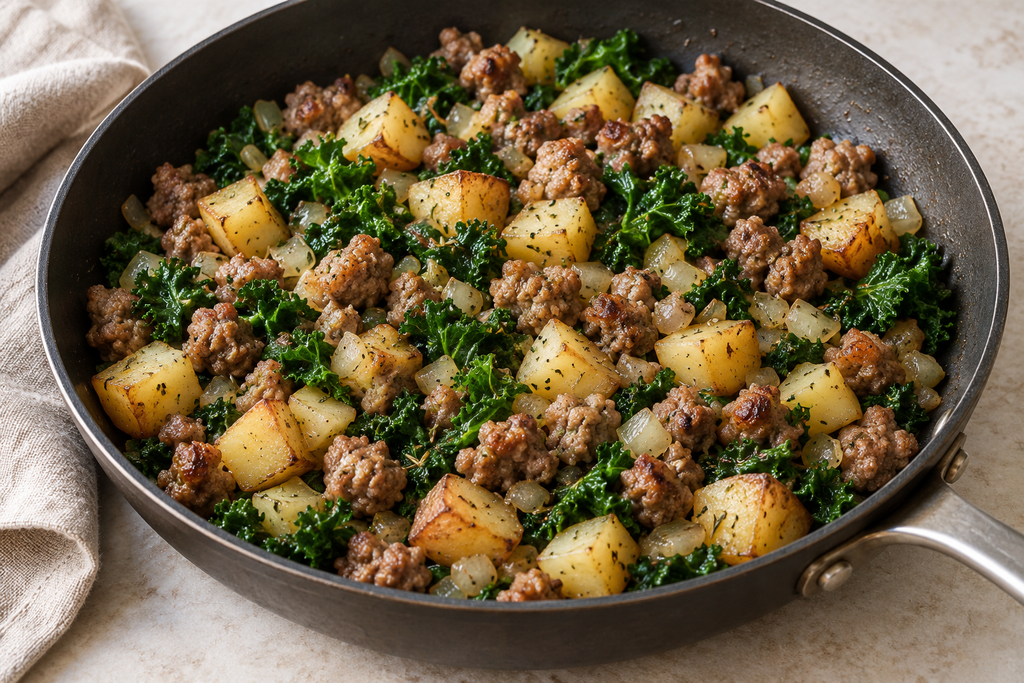
Golden potatoes, seasoned sausage, and tender kale make this an egg-free option among these Italian sausage breakfast recipes. A little onion and rosemary round out the flavor without competing with the sausage’s existing seasoning.
The potatoes are softened under a lid before browning. This keeps the method manageable and avoids leaving the cooked sausage in the pan while you wait for firm potato centers to soften.
Servings: 2 generous portions
Preparation time: 15 minutes
Cooking time: approximately 30–40 minutes
Ingredients
- 250 g raw mild Italian-style pork sausage, casing removed
- 400 g potatoes, peeled and cut into 1.5 cm cubes
- 80 g kale leaves, weighed after removing tough stems, washed and finely chopped
- 1 small onion, approximately 80 g, finely diced
- 1 teaspoon olive oil (5 ml), plus up to 2 teaspoons if needed
- ¼ teaspoon dried rosemary, finely crushed
- ⅛ teaspoon freshly ground black pepper
- 100 ml water, plus extra as needed
- Salt, only if needed after tasting the finished dish
Equipment: A large nonstick frying pan with a lid, a spatula, a clean bowl, and an instant-read meat thermometer.
Instructions
- Cook the sausage. Heat 1 teaspoon of olive oil in the pan over medium heat. Add the sausage and break it into bite-sized crumbles. Cook for approximately 8–10 minutes, stirring occasionally, until it reaches at least 71.1°C (160°F). Check several larger pieces with the thermometer, keeping its sensing tip away from the pan. Transfer to a clean bowl.
- Soften the onion. Spoon off excess rendered fat, leaving approximately 2 teaspoons in the pan. If the sausage released very little fat, add enough of the optional oil to provide a thin coating. Add the onion and cook for 3 minutes, then stir in the rosemary and pepper.
- Steam the potatoes. Add the potato cubes and 100 ml water. Stir, cover, and reduce the heat to medium-low. Cook for 10–12 minutes, stirring halfway through. A fork should pierce the centers easily. If they remain firm, add a splash of water and cook for a few more minutes.
- Brown the potatoes. Remove the lid and let the remaining water evaporate. Cook over medium heat for 5–7 minutes, turning occasionally, until some edges are golden. Add a little of the remaining optional oil only if the pan is dry and the potatoes begin sticking.
- Add the kale. Fold in the kale with 1 tablespoon of water. Cover and cook over medium-low heat for 3–4 minutes, until tender. Uncover briefly if excess moisture remains.
- Finish and serve. Return the cooked sausage and any collected juices to the pan. Fold gently and cook for another 2 minutes, or until thoroughly hot. Taste before adding salt, then divide between two plates.
Beginner Tips and Serving Suggestions
Keep the potato cubes small and evenly sized. Larger chunks take longer to soften, while constant stirring can break the cooked potatoes apart before they brown.
Adding kale introduces some moisture, so expect golden potato edges rather than a uniformly crunchy finish.
Serve as a complete breakfast or add sliced tomatoes on the side. If preparing ahead, refrigerate cooked portions promptly in shallow containers and reheat thoroughly before serving.
Allergen note: Sausage ingredients vary. Check the packaging for allergens, including any milk, wheat, or soy ingredients.
2. Italian Sausage and Eggs in Tomato Sauce
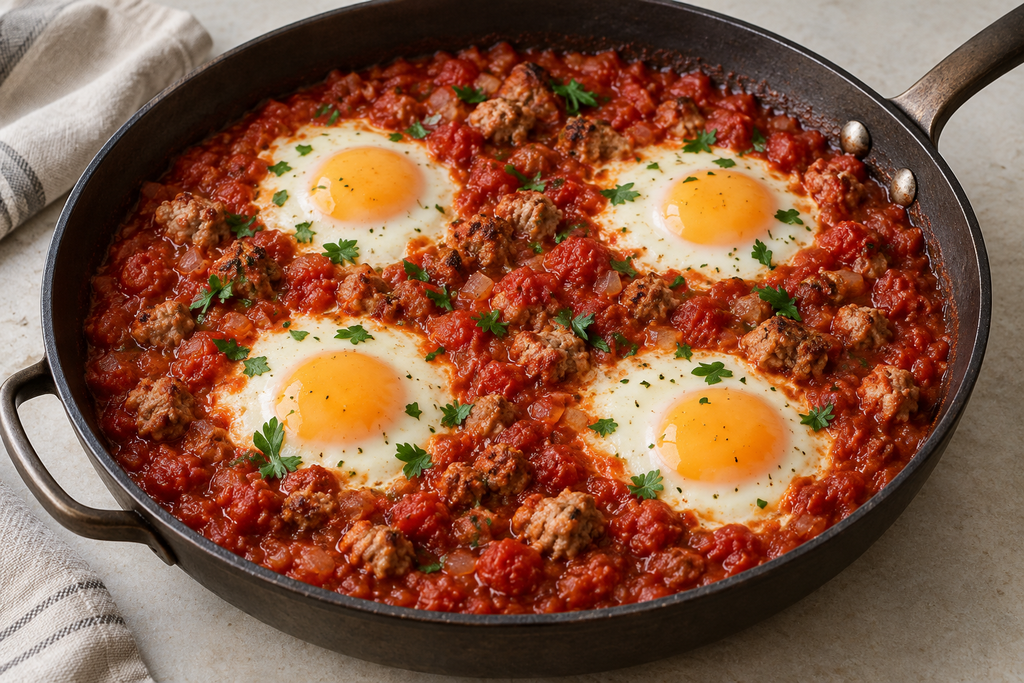
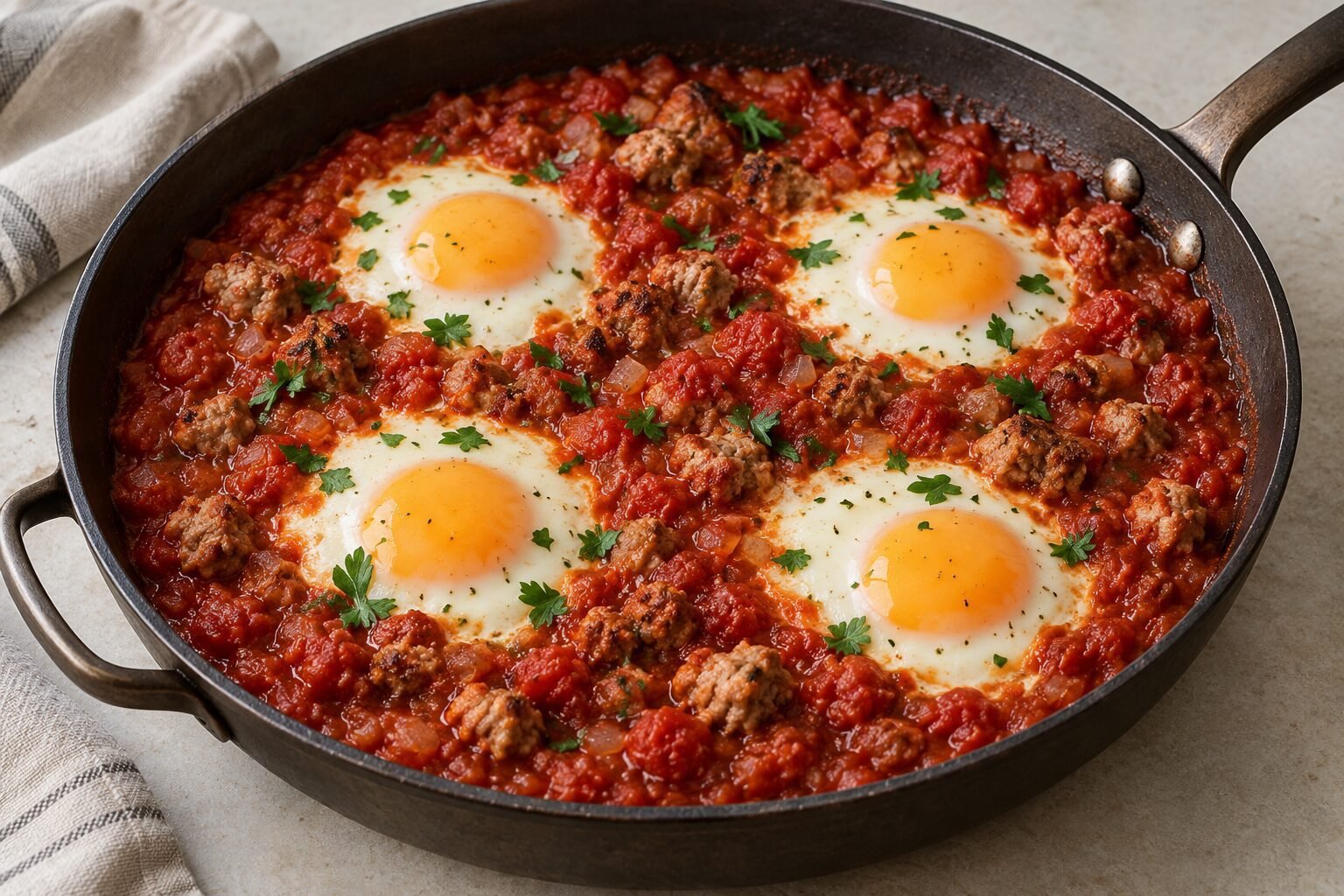
Eggs nestled in a warm tomato sauce make a comforting breakfast, with Italian sausage providing most of the seasoning. Garlic and oregano round out the flavor, while optional chili flakes add a little heat.
This is the saucy option among these Italian sausage breakfast recipes. Reduce the tomatoes before adding the eggs so the whites stay in their shallow wells rather than spreading through a watery sauce.
Servings: 2 generous portions
Preparation time: 10 minutes
Cooking time: approximately 30–35 minutes
Ingredients
- 200 g raw mild Italian-style pork sausage, casing removed
- 4 large eggs
- 1 × 400 g can crushed tomatoes
- 1 small onion, approximately 80 g, finely diced
- 2 garlic cloves, finely minced
- 1 teaspoon olive oil (5 ml)
- ½ teaspoon dried oregano
- A small pinch of chili flakes, optional
- 2–4 tablespoons water (30–60 ml), only if needed
- Salt and freshly ground black pepper, to taste
- 1 tablespoon chopped fresh parsley, optional
Equipment: A 24–26 cm frying pan with a close-fitting lid, a spatula, a small cup, and an instant-read food thermometer.
Instructions
- Cook the sausage. Heat the oil in the pan over medium heat. Add the sausage and break it into small crumbles. Cook for approximately 7–9 minutes, stirring occasionally, until it reaches at least 71.1°C (160°F). Check several larger pieces without touching the pan with the thermometer. Spoon off excess rendered fat, leaving a thin coating.
- Add the aromatics. Add the onion and cook for 4 minutes, stirring regularly. Stir in the garlic, oregano, and optional chili flakes and cook for another 30 seconds.
- Simmer the sauce. Add the crushed tomatoes and bring to a gentle simmer. Cook uncovered for 8–10 minutes, stirring occasionally, until thick enough to hold a shallow indentation briefly. If the sauce becomes paste-like or begins sticking, add water a tablespoon at a time.
- Taste before adding eggs. Adjust the pepper and salt if needed. Sausage and canned tomatoes may already supply enough salt.
- Make space for the eggs. Reduce the heat to low. Use a spoon to make four shallow wells, keeping a little sauce beneath each one. Crack each egg into a small cup, then slide it gently into a well.
- Cover and cook. Cover the pan and cook gently for approximately 8–12 minutes, checking from 8 minutes onward. Cook until the whites and yolks are firm and the egg-and-sausage dish reaches 74°C (165°F) in its central portions. Check the egg centers as well as the surrounding mixture, keeping the probe clear of the pan. Continue cooking if needed; timing varies with egg size and sauce temperature.
- Serve promptly. Scatter with the optional parsley. Spoon two eggs and half the sausage sauce onto each plate. Serve with toast if desired.
Beginner Tips and Serving Suggestions
Keep the heat low after adding the eggs. A vigorous simmer can scorch the sauce underneath before the eggs finish cooking.
A little condensation may collect beneath the lid. Lift it carefully, tilting it away from you and avoiding hot drips.
This dish is best served freshly cooked. For advance preparation, make the sausage-tomato sauce separately, refrigerate promptly, and reheat thoroughly before adding fresh eggs.
Allergen note: Contains eggs. Check the sausage packaging for additional allergens.ast everyone will love!
3. Italian Sausage and Mushroom Breakfast Strata
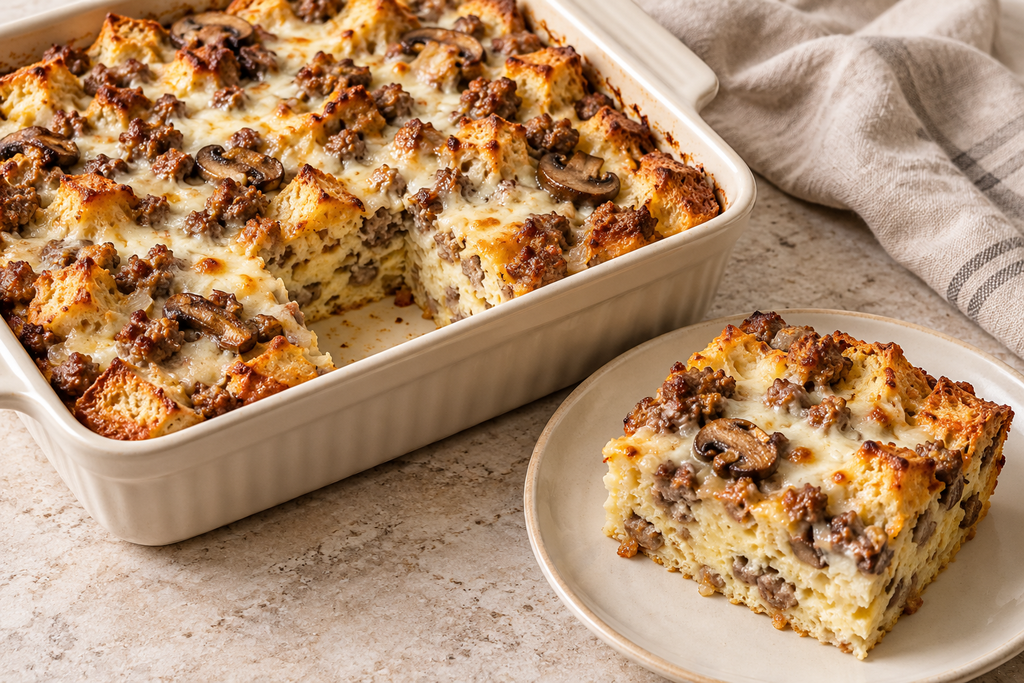
A strata is a bread-and-egg bake that rests before cooking so the bread can absorb the liquid. Here, browned sausage, mushrooms, and a modest layer of mozzarella turn it into a savory breakfast to share.
This is the oven-baked option among these Italian sausage breakfast recipes. Allow time for the soaking stage, and cook the mushrooms thoroughly before assembling so their moisture does not dilute the egg mixture.
Servings: 4
Preparation time: 15 minutes
Stovetop cooking time: 15–18 minutes
Refrigerated soaking time: 30 minutes
Baking time: approximately 35–45 minutes
Standing time: 10 minutes
Ingredients
- 200 g raw mild Italian-style pork sausage, casing removed
- 150 g mushrooms, cleaned and thinly sliced
- ½ small onion, approximately 40 g, finely diced
- 180 g slightly stale, sturdy bread, cut into 2 cm cubes
- 4 large eggs
- 250 ml milk
- 60 g grated low-moisture mozzarella, divided
- 1 teaspoon olive oil (5 ml), for greasing
- ½ teaspoon dried thyme
- ¼ teaspoon freshly ground black pepper
Equipment: A 20 cm square baking dish, at least 5 cm deep and suitable for refrigerator-to-oven use; a frying pan; a mixing bowl; a whisk; and an instant-read food thermometer.
Instructions
- Cook the sausage. Place the sausage in the frying pan over medium heat. Break into small crumbles and cook for approximately 8–10 minutes, until it reaches at least 71.1°C (160°F). Transfer to a clean bowl. Leave a thin coating of rendered fat in the pan, spooning off any excess.
- Cook the vegetables. Add the mushrooms and onion. Cook for 7–8 minutes, stirring occasionally, until softened and the released liquid has evaporated. Stir in the thyme, then combine with the sausage. Let cool briefly until no longer steaming heavily.
- Prepare the dish. Grease the baking dish with the olive oil. Spread half the bread cubes across the base, add half the sausage mixture, and scatter over half the cheese. Repeat with the remaining bread and sausage, reserving the remaining cheese.
- Add the egg mixture. Whisk the eggs, milk, and black pepper together. Pour evenly over the filling. Gently press down with a spatula to moisten the bread without compressing it into a solid layer. Scatter the reserved cheese over the top. No extra salt is included because the sausage, bread, and cheese already contribute saltiness.
- Allow to soak. Cover and refrigerate for 30 minutes. Meanwhile, preheat the oven to 180°C conventional / 160°C fan / 350°F. Follow your baking dish manufacturer’s guidance about temperature changes.
- Bake. Remove the cover and bake for approximately 35–45 minutes. Begin checking at 35 minutes. The center should be set and reach 74°C (165°F), with the thermometer clear of the dish. If the top browns too quickly, cover loosely with foil while the center finishes cooking.
- Rest and serve. Leave for 10 minutes before cutting into four portions. Serve with sliced tomatoes or a green salad if desired.
Beginner Tips and Storage
Use slightly stale bread, not bread showing any signs of mold. Very soft sandwich bread produces a softer texture, while an extremely dense loaf may need longer to absorb the liquid.
A golden top does not confirm that the center is cooked; check the temperature before removing the dish.
Refrigerate leftovers promptly in shallow containers and use within 3–4 days. Reheat portions to 74°C (165°F).
Allergen note: Contains eggs, milk, and typically wheat. Check the bread and sausage labels for additional allergens.
A Little Italian Inspiration for Your Morning
In the summer of 2026, I visited Italy, spending time around Montecatini and Florence. Since that trip, I look at Italian-inspired recipes a little differently. They bring back the thought of places I have visited and make me more curious about the ingredients and cooking traditions behind them.
These Italian sausage breakfast recipes are approachable home-cooking ideas rather than a claim to recreate a traditional Tuscan breakfast. Still, that personal connection makes a collection like this feel closer to me.
I’m Adam, and I’m certainly not a kitchen expert. I appreciate recipes that explain the steps clearly and give me somewhere manageable to begin. If you feel the same way, choose whichever dish appeals to you most and take your time with it. There is no need to prepare a whole brunch spread or make every portion look identical.
Your potatoes may brown unevenly, or your first slice of strata may come out less neatly than you hoped. Follow the cooking and temperature guidance, but allow yourself some freedom with how the meal looks.
Whether you are cooking for yourself or sharing breakfast with someone, I hope these ideas make the kitchen feel a little more welcoming. For me, they also offer a small connection to a place I’m glad I had the chance to visit.
— Adam
About These Recipes and Images
These recipes were developed with AI assistance and have not been independently kitchen-tested for this article. Cooking times and yields are estimates; follow the doneness checks, thermometer guidance, and storage instructions provided.
The images are AI-generated illustrations based on the listed ingredients and intended presentation. They are not photographs of dishes I cooked, tested, or ate during my visit to Italy. They illustrate serving ideas rather than verify recipe results, and your finished meals may look different.
Check ingredient labels for allergens and account for any substitutions.