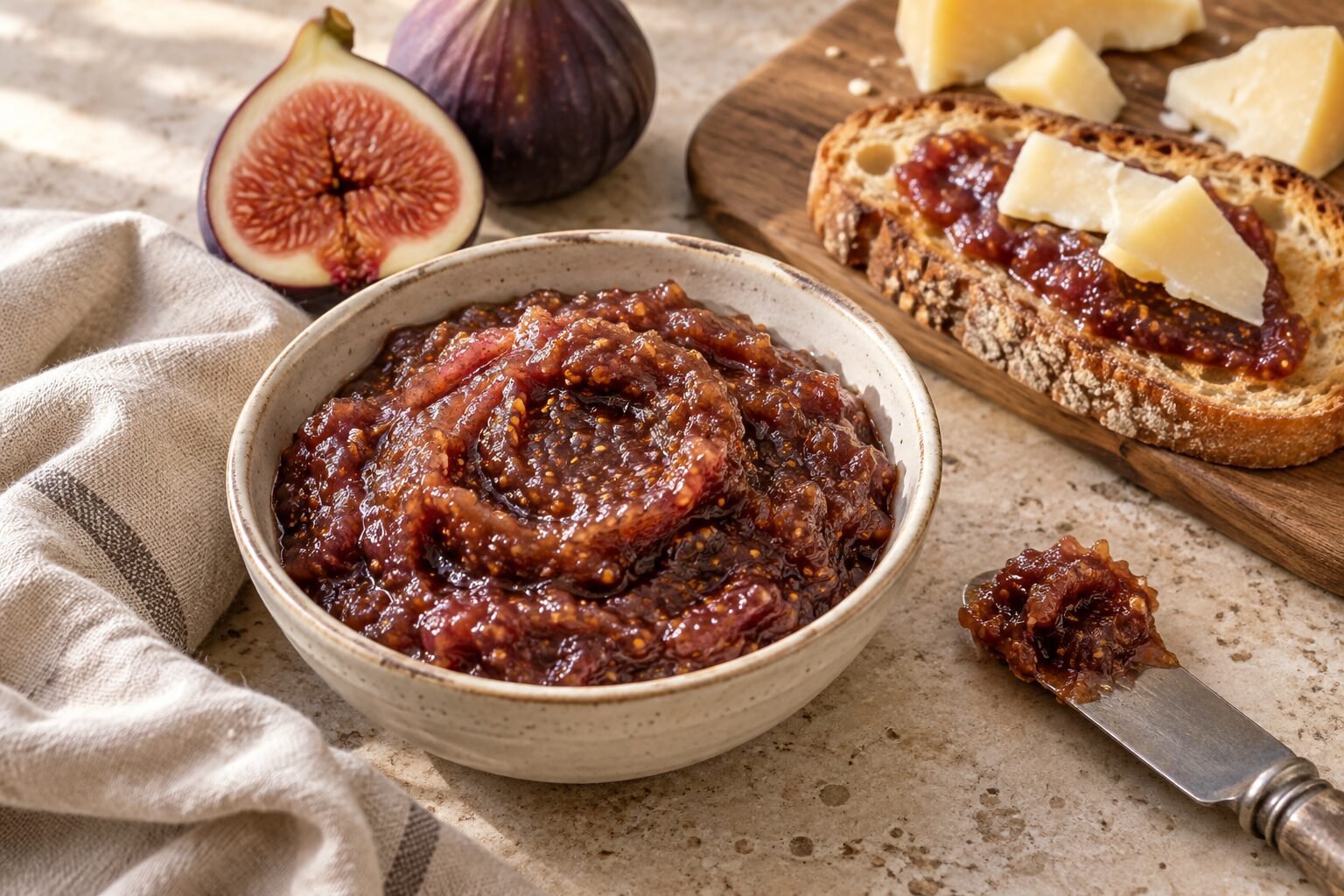
Fresh figs cook down into a thick, gently textured spread with a sweetness that pairs well with cheese, toast and savoury sandwiches. This fig paste recipe uses just four ingredients and a saucepan, with an optional blending step if you prefer a smoother finish.
The result is a soft, spreadable fig paste, not a firm block that you can slice. It thickens as it cools but should remain easy to spoon from a jar or spread across a cracker.
Because fresh figs vary in ripeness and water content, the cooking time is a guide. The most useful check is how a small spoonful behaves once cooled.
Fresh Paste Recipe at a Glance
- Preparation time: approximately 15 minutes
- Cooking time: approximately 30–45 minutes
- Chilling time: approximately 2 hours, or until cold
- Estimated yield: approximately 450–500 g, depending on reduction
- Equipment: a heavy-based saucepan, wooden spoon or silicone spatula, potato masher and clean heatproof storage containers
This recipe is intended for refrigerated storage. It is not a tested canning or shelf-stable preservation recipe.
Ingredients
- 450 g ripe fresh figs, weighed after removing the stems
- 150 g granulated sugar
- 15 ml lemon juice, approximately 1 tablespoon
- A small pinch of salt
Choose ripe figs that yield gently to pressure. Avoid fruit with mould, a fermented smell or signs of spoilage.
There is no need to peel sound, tender fig skins. They soften during cooking and contribute to the colour and texture. Depending on the variety, your finished spread may be golden brown, reddish brown or deep purple-brown.
Dried figs are not a direct substitute in this recipe: they contain much less water and require a different preparation method.
How to Make Fresh Fig Paste
1. Prepare the figs
Rinse the figs gently under cool running water and pat dry. Remove the hard stems completely, then cut the fruit into small pieces.
Weigh the prepared fruit so you have 450 g.
Place a small plate in the refrigerator. You will use it later to check the cooled consistency.
2. Combine the ingredients
Place the chopped figs, sugar, lemon juice and salt in the saucepan. Stir well and leave for approximately 10 minutes while you prepare your utensils and containers.
The sugar should begin drawing juice from the fruit. If the figs are relatively dry and the mixture has almost no liquid, add 1 tablespoon water to help it start cooking without catching.
3. Heat gently
Set the pan over a low heat. Stir regularly until the sugar dissolves and the figs release more juice, approximately 5–8 minutes.
Avoid turning the heat up sharply to speed up this stage. The sugar can catch on the bottom before the fruit has released enough moisture.
4. Simmer and soften
Increase the heat slightly to maintain a gentle simmer. Cook uncovered for approximately 20–30 minutes, stirring regularly.
As the figs soften, press them with a potato masher or the back of your spoon. Keep scraping along the bottom and into the corners of the pan.
The mixture should gradually become thicker, with slower bubbles. As this happens, reduce the heat if needed and stir more frequently. Thick fruit mixtures can spit, so use a long-handled utensil and keep your hands clear of the surface.
5. Choose your texture
For a rustic spread, continue mashing until the pieces are as small as you like.
For a smoother paste, remove the pan from the heat and let the bubbling stop. Use an immersion blender only if it is suitable for hot mixtures, following the manufacturer’s instructions. Keep the blade submerged and blend briefly to limit splashing.
If using a countertop blender, allow the mixture to cool to a temperature permitted by the manufacturer and follow its filling and venting instructions. Never put hot fruit paste into a sealed personal blender.
Tiny fig seeds will remain even after blending.
6. Check the consistency
Place a teaspoon of the mixture on the chilled plate and leave it for 1–2 minutes.
The cooled sample should form a soft mound and spread easily when pushed with a spoon, without a watery ring forming around it. You are checking for a thick spread, not a firm jam set or a sliceable block.
If it is too loose, continue simmering for 3–5 minutes, stirring frequently, then test again. Stop before the hot mixture becomes stiff or difficult to stir; it will thicken further as it cools.
7. Portion and chill
Transfer carefully into small, clean, heatproof containers, leaving a little space at the top. Use containers suitable for hot food and avoid sudden temperature changes that could crack glass.
Refrigerate promptly and within 2 hours of finishing cooking. Do not leave a large pan on the counter until completely cold.
Once chilled, check the texture again before serving.
Troubleshooting Your Fig Paste
Too thin after chilling?
Return it to a clean saucepan and simmer gently for a few more minutes. Repeat the chilled-plate test before cooling and refrigerating again.
Too thick?
Warm gently with water added one teaspoon at a time. Stir thoroughly after each addition so you do not loosen it too much.
More textured than expected?
Tender skins and seeds are normal in a whole-fruit spread. Blending reduces larger pieces but does not remove the seeds.
Beginning to catch on the bottom?
Lower the heat and stir more frequently. If a layer has burnt, transfer the unburnt mixture to a clean pan without scraping up the stuck portion. Taste before continuing; a strongly burnt flavour may not be salvageable.
Ways to Serve It
Spoon a small amount beside cheddar, goat cheese or another cheese you enjoy. Its sweetness also works with plain crackers or lightly toasted bread.
For a simple sandwich, spread a thin layer inside the bread before adding cheese. You can also stir a spoonful into plain yogurt or warm porridge.
Use a clean serving spoon and put out only the amount you expect to eat, keeping the remaining paste refrigerated.
Storage
Keep covered in the refrigerator at 4°C / 40°F or below and use within 3–4 days as a conservative household storage limit for this untested recipe. For a warm environment above 32°C / 90°F, refrigerate within 1 hour rather than two.
For longer storage, freeze small portions in freezer-safe containers, leaving room for expansion. Thaw in the refrigerator; the texture may loosen slightly after freezing.
The sugar and lemon juice in this recipe do not establish that it is safe to store at room temperature. Filling a jar while the paste is hot does not replace a validated canning process.
For general handling advice, see the USDA’s guidance on leftovers and food safety.
A Final Thought from Adam
I tend to prefer recipes with a short ingredient list and instructions that explain what to look for along the way. As someone who is still building confidence in the kitchen, I find that much more helpful than being told to cook something “until perfect.”
That is the approach behind this fig paste recipe. Take your time, keep an eye on the pan and use the cooled spoonful to guide you. The colour and texture may vary with your figs, and a slightly rustic finish is perfectly welcome.
A small bowl of homemade spread, some cheese and a piece of toast can make a pleasant meal without elaborate preparation. Sometimes that is all the occasion needs.
Recipe development note: This recipe was developed with AI assistance and has not been independently kitchen-tested for this article. Cooking time and yield are estimates. It is not a validated canning recipe.