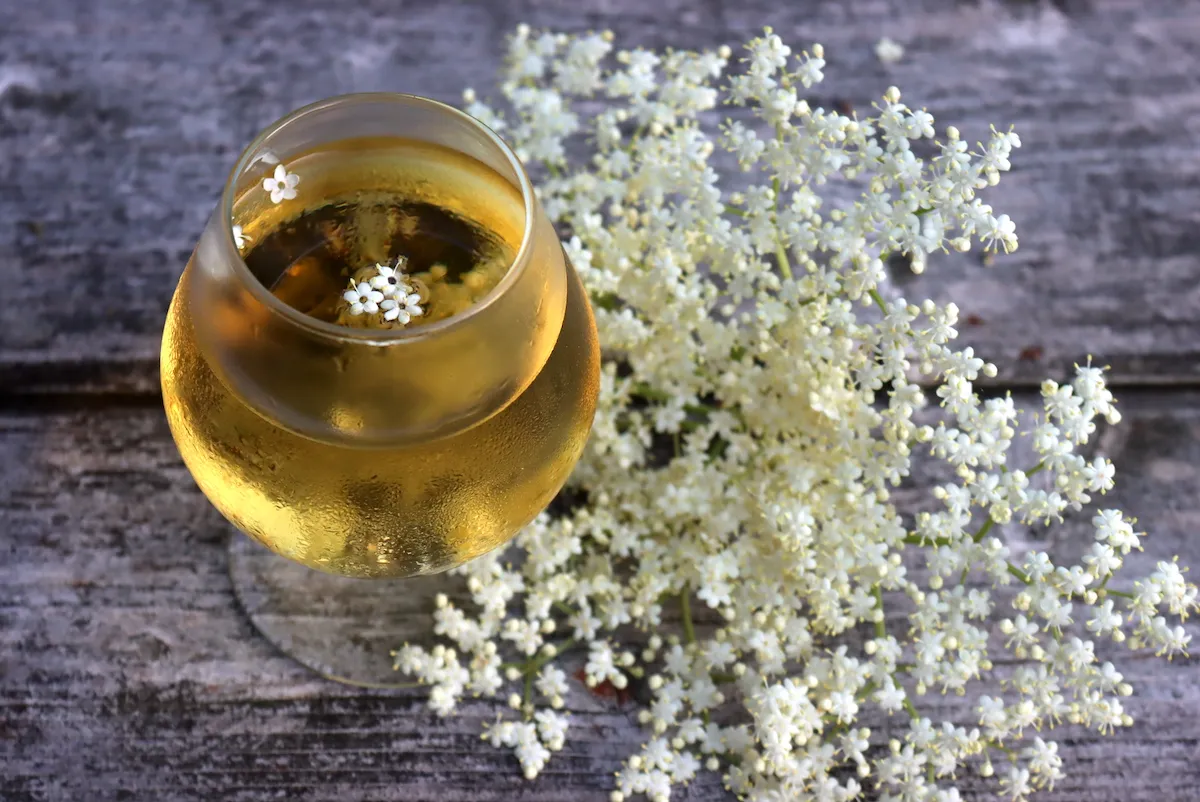
To craft your own elderflower wine, you’ll need fresh elderflower florets, lemons, sugar, yeast nutrient, a Campden tablet, and white wine yeast, with optional wine tannins for enhancing flavor. Begin by sterilizing your equipment, then combine the elderflower florets, lemon zest, and juice, topping off with boiling water to infuse. Once cool, add your dissolved sugar and citric acid, alongside your yeast and Campden tablet. After a period of fermentation and daily stirring, strain the mix into a clean demijohn for aging. But don’t stop here, there’s more intricacies to this delightful process left to be discovered.
What Makes This Recipe Great
One of the key things that sets this elderflower wine recipe apart is its stellar reputation. Don’t just take my word for it; this recipe boasts a solid five-star rating, based on four evaluations. These rave reviews are a testament to the quality and taste of this homemade wine.
The secret behind this wine’s success lies in three essential characteristics:
- The floral aroma and flavor: Thanks to the use of fresh elderflowers, this wine is a refreshing burst of nature in every sip. Perfect for warm weather, it’s like a summer day bottled up.
- The fermentation tips: The process typically lasts between 5-14 days. But remember, patience is key. With age, the wine develops a richer flavor profile. It’s worth waiting up to 18 months if you can resist.
- Small batch production: This recipe is perfect for those looking to experiment with homemade wines and foraged ingredients.
Ingredients
Let’s dive right into the ingredients you’ll need to create this delightful elderflower wine. We’re not just focusing on taste, but also on the elderflower benefits that come with this unique recipe. Here are the main players:
- Fresh Elderflower Florets: You’ll need about 600ml to 800ml, usually from 8 elderflower sprays. This is the star of the show, giving our wine its distinctive flavor and health benefits.
- Lemons, Sugar, and Yeast Nutrient: These play crucial roles in our fermentation process. The zest and juice of 2 to 4 lemons add zest, while 800g of sugar and a half teaspoon of yeast nutrient provide the yeast with energy to ferment.
- Campden Tablet and White Wine Yeast: These are essential for sterilizing the mixture and starting the fermentation.
For optional flavor enhancement, consider adding some wine tannins. You’ll also need a brewing bucket with a lid, a demijohn with an airlock, a thermometer, and a bottling funnel. To keep things neat and tidy, a fine mesh strainer comes in handy. Now that you’re familiar with the ingredients, we’re one step closer to homemade elderflower wine!
Step-by-Step Direction
So, you’re ready to get started on your elderflower wine-making journey. Let’s dive into the step-by-step directions and uncover some fermentation tips and elderflower benefits along the way.
- Begin by sterilizing all your equipment. In a brewing bucket, add elderflower florets, lemon zest, and juice. Pour boiling water over this mix and let it cool. This process ensures that the elderflower benefits are well infused into the mixture.
- Dissolve sugar and citric acid in 2 liters of hot water and combine with the cooled mixture. Top it up to 4.5 liters with cold water. Then, add a crushed Campden tablet, yeast nutrient, and wine yeast. Cover and leave the mixture in a warm spot for fermentation. This should last between 5 to 14 days, but remember to stir daily for the first four days.
- After fermentation, strain the liquid into a clean demijohn or fermentation vessel and seal it with an airlock. Allow it to age for 2-3 months. Once clear, bottle your wine in sterilized containers and store in a cool, dark place. Here’s where patience pays off – let the flavor develop over 3-6 months. Enjoy your homemade elderflower wine!