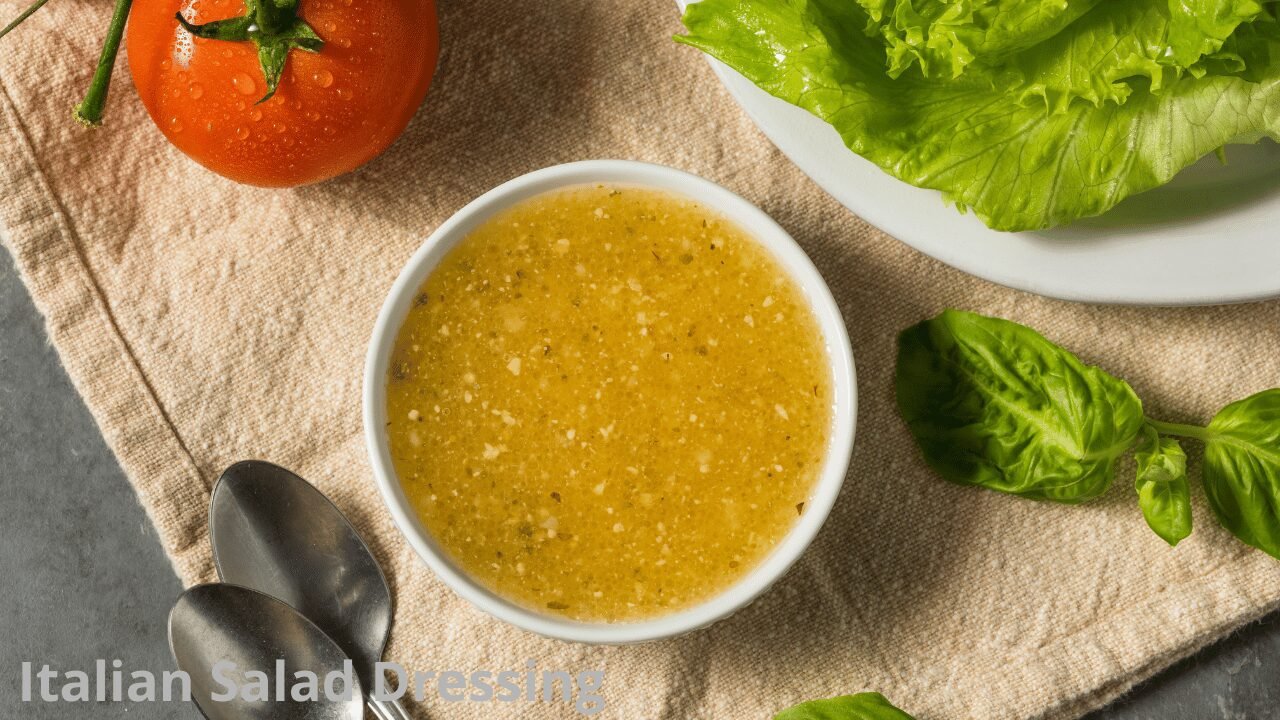
Refrigerate opened Italian dressing when its label instructs you to, and refrigerate homemade versions containing fresh garlic, fresh herbs, or other perishable ingredients. An unopened, shelf-stable bottle can usually stay in the pantry, while dressing sold refrigerated should remain chilled.
The name “Italian dressing” covers many different mixtures. A commercial vinaigrette, a creamy bottled dressing, and a homemade combination of olive oil, vinegar, and fresh garlic do not necessarily have the same storage requirements.
Knowing which one you have makes the answer much simpler.
How to Store Store-Bought Italian Dressing
Start with the instructions on your bottle. If it says “refrigerate after opening,” follow that direction even if the unopened product was displayed on an ordinary supermarket shelf.
Before opening a shelf-stable bottle, keep it in a cool cupboard away from direct sunlight and heat. Products purchased from a refrigerated display should stay refrigerated unless their packaging explicitly says otherwise.
After opening:
- Close the cap securely.
- Keep the bottle opening clean.
- Follow any stated after-opening storage period.
- Avoid pouring unused dressing from a serving dish back into the bottle.
There is no single after-opening deadline that applies to every brand. The printed date and the manufacturer’s storage instructions should be read together; opening the bottle does not start a new, universal shelf life.
Does Homemade Italian Dressing Need Refrigeration?
Refrigeration is a practical default for homemade Italian dressing, particularly when it includes fresh ingredients.
A simple mixture of oil and vinegar is different from a dressing containing chopped garlic, fresh herbs, cheese, or dairy ingredients. Do not assume that all these versions can be stored the same way.
Fresh garlic in oil deserves particular care. In response to a question about an oil-and-vinegar dressing containing raw garlic, Oregon-based Extension guidance recommends refrigeration and use within four days, or freezing.
The presence of vinegar does not automatically make an improvised recipe suitable for room-temperature storage. Reliable acidification depends on the actual formulation and method.
For a homemade dressing containing fresh garlic or herbs in oil, use that four-day limit unless a shorter ingredient-specific instruction applies. Make small batches and record the preparation date.
Why Does Dressing Separate in the Refrigerator?
An oil layer above the vinegar is normal in many vinaigrettes. Oil and vinegar naturally separate unless the mixture contains ingredients that help keep them combined.
Refrigeration does not guarantee that dressing will remain evenly mixed. Olive oil may also thicken or partially solidify when chilled.
For dressing that has been stored correctly, these changes alone do not establish spoilage. Shake or whisk it before serving. If necessary, briefly place the closed container in warm—not hot—water to loosen the oil.
Avoid leaving a fresh-garlic dressing out overnight simply to make it pourable.
How Long Can Dressing Sit Out During a Meal?
For homemade dressings that require refrigeration, follow the FDA’s general limit of two hours at room temperature, or one hour when temperatures exceed 90°F (32°C).
Keep refrigerated food at 40°F (4°C) or below. Returning a dressing to the fridge does not erase time already spent sitting out.
At a picnic or buffet, serve a small quantity and keep the remainder chilled. For commercial products, follow the label and consult the manufacturer if you need advice about a specific period without refrigeration.
Do not assume that every bottled vinaigrette presents the same risk as a homemade fresh-garlic mixture.
Can You Reuse Italian Dressing After Marinating Meat?
Dressing that has touched raw meat or poultry must be treated differently from unused dressing.
The easiest approach is to reserve a clean portion before adding the raw ingredients. Use that separate portion for salad, dipping, or finishing the cooked meal.
USDA guidance says marinade that has contacted raw meat or poultry must be brought to a boil before reuse as a sauce. Never pour it directly over ready-to-eat food or return it to the original dressing bottle.
Marinate food in the refrigerator. If you do not intend to handle the used marinade appropriately, discard it.
When Should You Throw Italian Dressing Away?
Discard dressing with visible mold, an unexpected unpleasant odor, or other clear signs of deterioration. Do not taste a questionable batch to check it.
Remember that vinaigrette is naturally acidic-smelling, and normal separation is not the same as spoilage. Equally, an ordinary appearance or smell cannot prove that a dressing is safe after improper storage.
Use its ingredients, preparation date, label instructions, and storage history together when deciding whether to keep it.
A Small Batch Makes Everyday Cooking Easier
A jar of Italian dressing can bring a simple salad, grain bowl, or plate of vegetables together with very little effort.
For homemade versions, prepare an amount that fits the next few meals rather than filling a large bottle without a plan. Add a date label, keep it chilled when required, and set aside a clean portion before using any as a marinade.
Those small habits make this versatile dressing easier to enjoy without guessing what is left in the fridge.