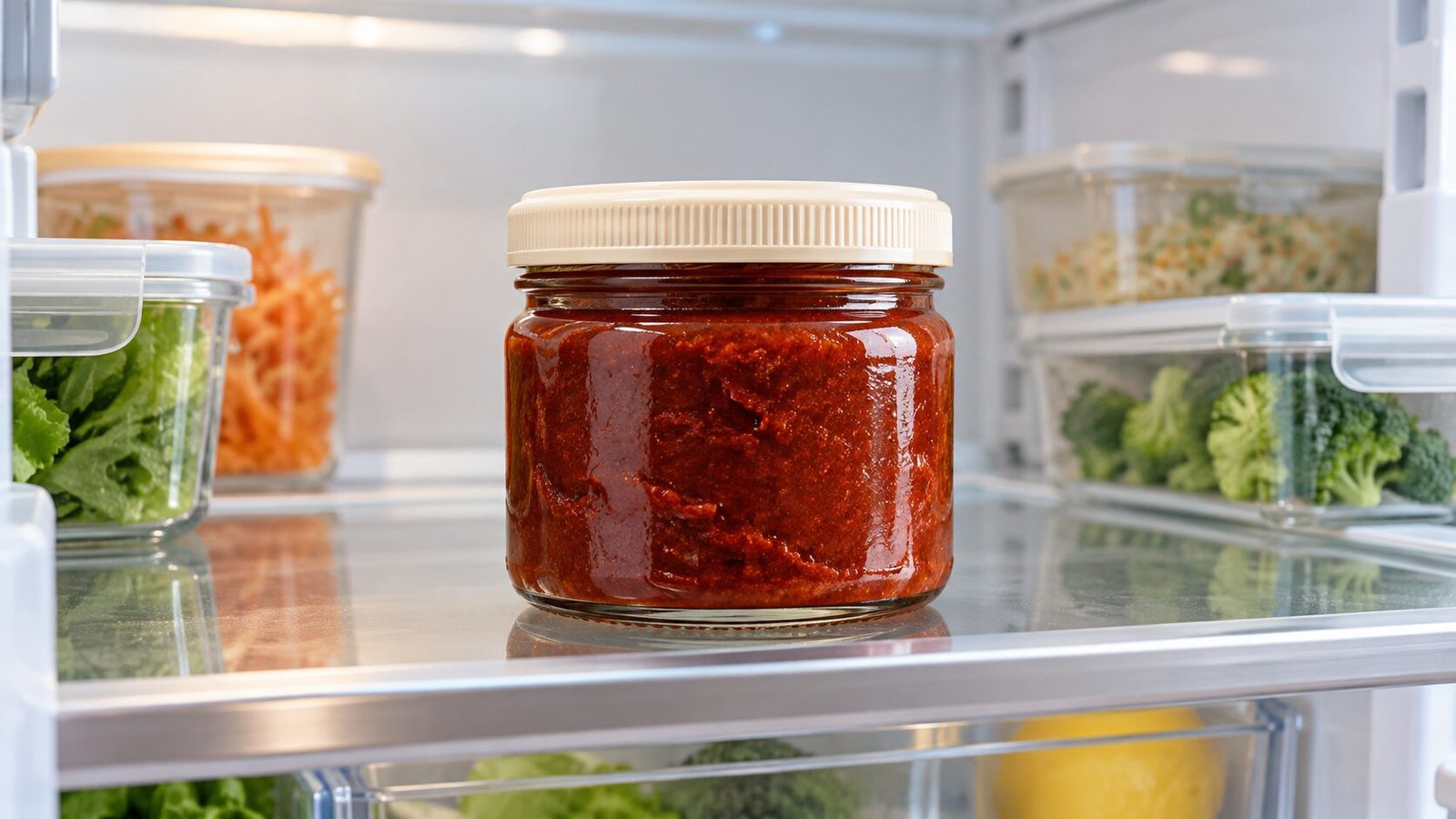
If you search for: Does Gochujang Need to Be Refrigerated here is our quick answer.
Quick answer: Refrigerate gochujang after opening and follow the storage instructions on its packaging. An unopened product labeled for shelf storage can usually stay in a cool, dry cupboard until opened. If the label requires refrigeration before opening, keep it refrigerated from the start.
The distinction between unopened and opened packaging matters more than whether your kitchen feels cool. For example, Lucky Foods instructs customers to store its unopened sauces in a cool, dark place and refrigerate them after opening. Always check the directions for the particular product you bought.
Why Refrigerate Gochujang After Opening?
Refrigeration helps slow changes in food quality and the growth of many microorganisms. It does not sterilize the paste, reverse contamination, or guarantee that a product will remain usable indefinitely.
Keep your refrigerator at 4°C / 40°F or below, and follow the manufacturer’s storage directions. Limited fridge space or a cool room is not a reason to disregard an instruction to refrigerate after opening.
Gochujang is a fermented product, but fermentation does not make every brand or preparation suitable for unrestricted room-temperature storage. Its formulation and processing matter. Do not assume that advice about one traditional paste also applies to every bottled gochujang sauce.
How to Store Unopened Gochujang
Read the label before choosing a storage location.
If the product is shelf-stable before opening, keep it in its original, sealed packaging in a cool, dry place away from sunlight and heat. A cupboard away from the oven is a more suitable location than a sunny windowsill.
Check the date and any special storage instructions. Do not replace those directions with a general claim that all unopened gochujang lasts a particular number of months or years.
If the packaging is damaged, leaking unexpectedly, or otherwise questionable, consult the manufacturer rather than assuming the product is fine because it is fermented.
How to Store Opened Gochujang
Once opened, make careful handling part of your routine:
- Refrigerate according to the label. Return the container after use.
- Use a clean, dry utensil. Avoid introducing water, food scraps, or utensils that have touched raw ingredients.
- Close the container securely. Keep the rim clean so the lid fits properly.
- Record the opening date. This helps you follow any instruction to use the product within a specified period.
- Keep the packaging information. If you transfer the paste, retain its product name, date, and storage directions.
Do not add water to the whole container simply to soften the paste. Instead, take out the amount needed and mix that portion with liquid as part of your recipe.
How Long Does Gochujang Last After Opening?
There is no single reliable timeframe that applies to every product.
Use the manufacturer’s instructions, including any opening-specific limit. Avoid treating a general estimate such as “six months” as a guarantee, and do not assume refrigeration automatically adds months to the printed date.
If the label is unclear, check the brand’s website or contact its customer service team. Give them the exact product name and explain when it was opened and how it has been stored.
Also distinguish between the original paste and a sauce you make with it. Adding ingredients such as yogurt, fresh garlic, or other liquids creates a different mixture; the paste’s storage guidance cannot automatically be applied to that finished sauce.
How Can You Tell When Gochujang Should Be Discarded?
Visible mold or an unusual, unpleasant odor is a reason to discard the product. Do not scrape away mold and assume the remaining paste is unaffected.
Do not taste questionable gochujang to test whether it is safe. Food can be unsafe even when its appearance, smell, or taste seems normal. Storage history and label instructions matter alongside visible warning signs.
If you are unsure whether the product has been stored correctly, avoid relying on a quick smell check for reassurance.
Does a Darker Color Mean It Has Spoiled?
Not necessarily. Mother-in-Law’s explains that its gochujang can deepen from bright red to darker red through contact with oxygen. That is a product-specific example of a color change that does not, by itself, indicate spoilage.
However, this does not mean every unusual patch, surface growth, or discoloration is harmless. If you cannot distinguish ordinary darkening from possible mold, do not stir it in or taste it to investigate. Ask the manufacturer or discard the questionable product.
What If You Left It Out?
Check the label and consider how long it was out and the temperature it was exposed to. Briefly taking out a container while cooking is different from storing it on the counter for days.
If a product requiring refrigeration has been left unrefrigerated for an extended or unknown period, do not assume putting it back in the fridge restores its safety. Seek product-specific advice from the manufacturer; if its safety remains uncertain, discard it.
Final Thoughts
The simplest routine is to check the packaging before opening, refrigerate afterward as directed, and use clean utensils every time.
Treat the label as your main guide to storage and shelf life. Fermentation, a normal smell, or a refrigerator cannot provide an unlimited safety guarantee. With clear instructions and consistent handling, you can avoid both unnecessary guesswork and misleading storage rules.
This guide covers commercially packaged gochujang. Homemade fermented preparations require guidance appropriate to their recipe and production process.