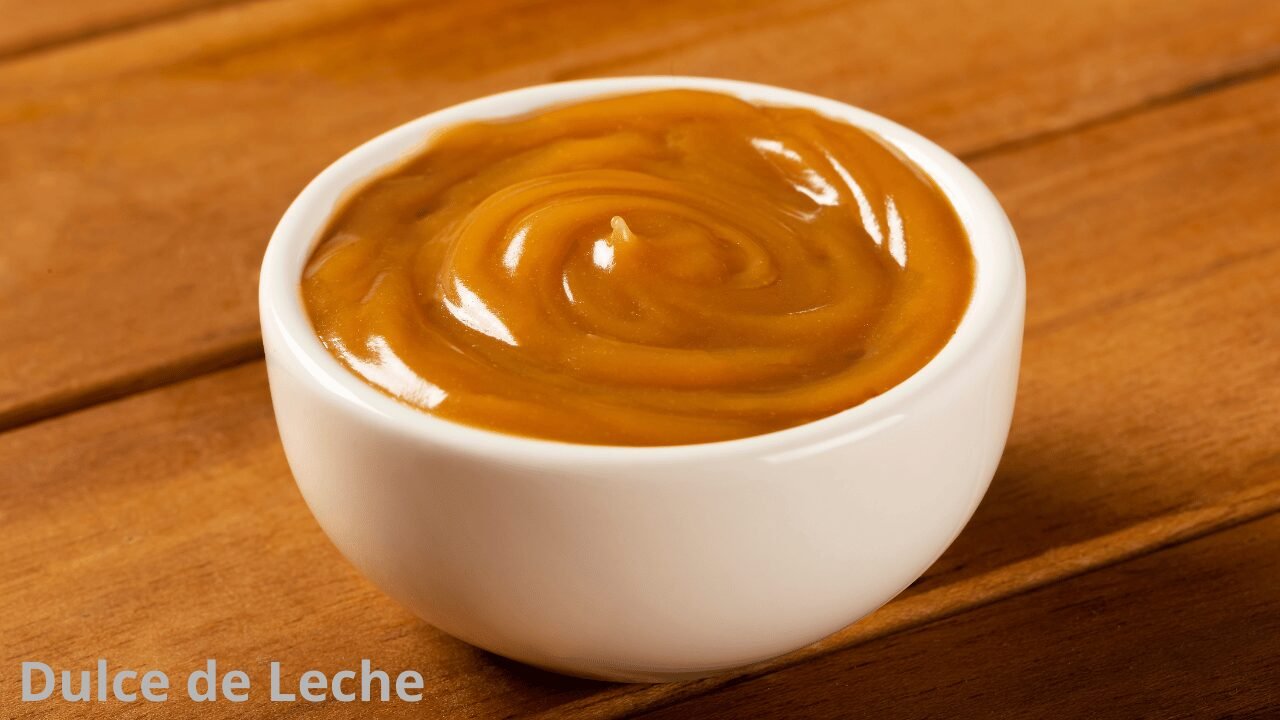
Quick answer: Refrigerate homemade dulce de leche and follow the label’s refrigeration instructions after opening a commercial product. Unopened, shelf-stable cans and jars can usually stay in a cool, dry cupboard until opened.
The important distinction is whether your dulce de leche is commercially packaged, already opened, or homemade. Those situations do not share one storage rule, and a thick texture or sweet taste does not establish that a product is safe to leave unrefrigerated.
Storing Unopened Dulce de Leche
If you bought a shelf-stable can or jar, follow its label. Keep the unopened container away from sunlight, heat, and damp conditions, and check the printed date before use.
Products sold from a refrigerated display may have different requirements. Keep those chilled unless their packaging explicitly says otherwise.
Do not use containers that are leaking, swollen, or have damaged seals.
Does Dulce de Leche Need Refrigeration After Opening?
Check the instructions on your particular product. For example, Nestlé’s La Lechera guidance says to refrigerate after opening and use within a few days for best quality.
That is a manufacturer-specific recommendation, not a universal shelf life for every brand. Formulations and packaging differ, so an instruction from another product should not override your label.
For convenient storage:
- Transfer leftovers from an opened can into a clean, food-safe container with a lid.
- Mark the opening date on the container.
- Use a clean spoon each time.
- Return the container to the refrigerator promptly after serving.
Do not assume an opened jar will keep for weeks in the cupboard simply because it contains plenty of sugar.
How Should You Store Homemade Dulce de Leche?
Treat homemade dulce de leche as a refrigerated food. Follow a reliable recipe’s cooling and storage instructions, and make a quantity you can use within its recommended period.
Divide a large batch into smaller, shallow containers to help it cool promptly. Avoid leaving a deep saucepan on the counter for hours.
Putting homemade dulce de leche into a clean or sterilized jar does not, by itself, make it shelf-stable. A closed lid is not evidence that the contents have undergone a validated preservation process.
How Long Does It Last?
There is no single storage period that reliably covers every version.
| Type | Which guidance should you follow? |
|---|---|
| Unopened shelf-stable product | The package’s storage directions and printed date |
| Opened commercial product | The manufacturer’s after-opening instructions |
| Homemade dulce de leche | The specific recipe’s refrigerated storage guidance |
| Dessert containing dulce de leche | The storage requirements of the finished dessert, including its other ingredients |
For example, adding dulce de leche to a whipped-cream dessert does not give that dessert the shelf life of an unopened can.
What If It Becomes Too Thick in the Fridge?
Chilled dulce de leche may be firmer and harder to spread. Thickness alone does not mean it has spoiled.
Spoon out only what you need into a heat-safe bowl. Warm that portion gently, stirring and checking frequently, until it reaches the consistency your recipe needs. Keep the remaining supply refrigerated rather than repeatedly warming the entire container.
Never microwave a metal can.
Can You Freeze Dulce de Leche?
Check before freezing. La Lechera’s published guidance advises against freezing its products, so freezing should not be presented as suitable for every brand.
For a homemade version, follow the recipe’s specific advice. Freezing can affect consistency and does not make previously mishandled food safe again.
When Should You Discard It?
Discard dulce de leche with mold, an unusual smell, or other suspicious changes. Do not taste it to check whether it is safe; harmful contamination may not produce an obvious smell or appearance.
For versions requiring refrigeration, follow the FDA’s two-hour limit outside refrigeration, reduced to one hour above 90°F (32°C). Keep the refrigerator at 40°F (4°C) or below.
A little planning makes this rich spread easier to enjoy without waste: date the container, take out a small portion, and keep the rest stored according to its label or recipe.
Sources and Further Reading
- Nestlé La Lechera: Common Questions — storage before and after opening, recommended use, and freezing guidance.
- FDA: Are You Storing Food Safely? — refrigeration temperatures, handling of perishable foods, and signs of spoilage.