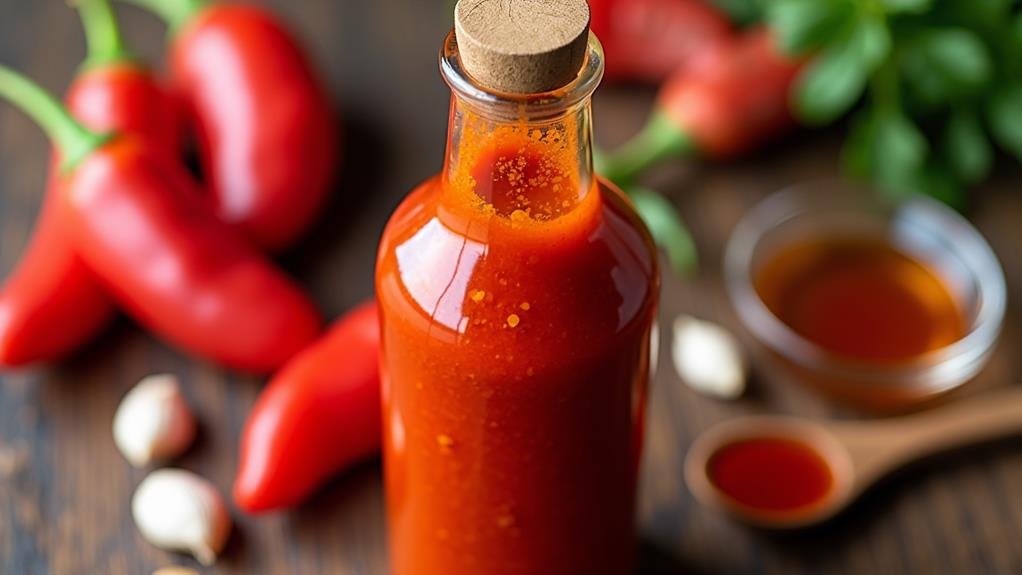
Here's a simple recipe for a flavorful Cowhorn Pepper Hot Sauce. You'll need 10 chopped cowhorn peppers, 1 cup of white vinegar, 3 cloves of minced garlic, 1 teaspoon of salt, and 2 tablespoons of sugar. Start by blending the peppers, garlic, salt, and sugar, then add the vinegar. Move the mixture to a saucepan, bring to a boil, and let it simmer for roughly 20 minutes. Once cooled, strain it into a bottle and refrigerate. This spicy concoction can ignite any dish with a sweet and tangy heat. Try it out, and I'll bet you'll be surprised at its versatility!
Ingredients:
- 10 cowhorn peppers, stems removed and chopped
- 1 cup white vinegar
- 3 cloves garlic, minced
- 1 teaspoon salt
- 2 tablespoons sugar
Cooking this hot sauce is as simple as blending and simmering. Start by wearing gloves to handle the peppers, to avoid any skin irritation. Add the chopped peppers, garlic, salt, and sugar to a blender or food processor, and pulse until roughly chopped.
Then, pour in the vinegar and blend until smooth. Transfer this mixture to a saucepan, bring it to a boil, then let it simmer for around 20 minutes, until it thickens slightly. Once cooled, you can strain it for a smoother consistency, if you prefer.
Now, here are a few tips to consider. When preparing the peppers, remember that the seeds and membranes are where most of the heat lies. So, adjust your sauce's spiciness by including or removing some or all of them.
And, to preserve the flavor and extend the shelf life of your hot sauce, store it in a clean, airtight glass jar in the refrigerator. I'd recommend letting it sit for at least a week before using it, to allow the flavors to fully meld together.
I love using this sauce on tacos, eggs, and pretty much anything that could use a spicy lift. Happy cooking!
Cooking Steps
Let's get cooking!
I'll guide you through prepping your peppers, blending them with our other ingredients, and simmering the sauce to perfection.
After cooling and straining, we'll discuss how to store the sauce to enhance its flavor and the best ways to use it in your meals.
Step 1. Pepper Preparation and Blending
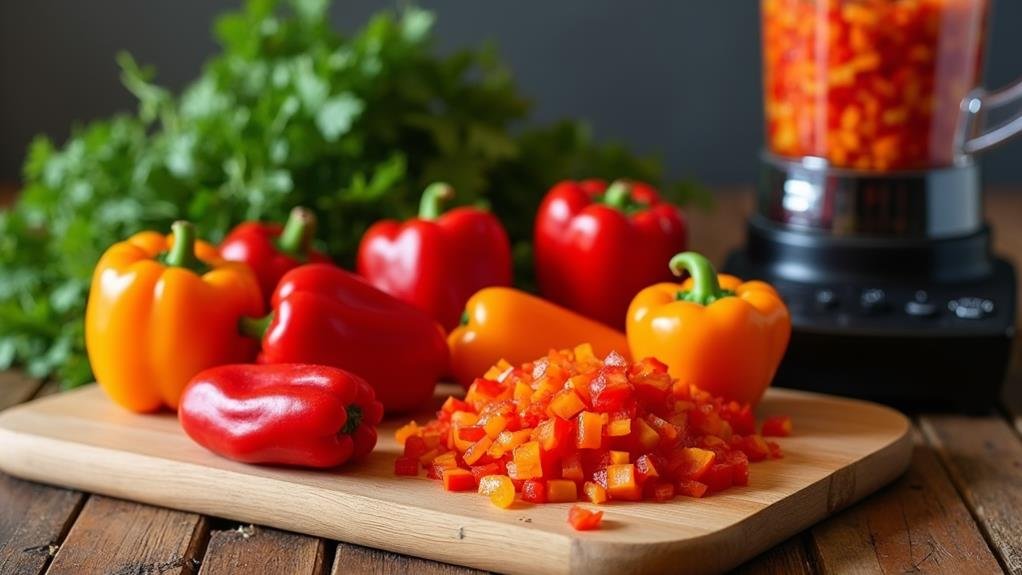
First off, make sure you're wearing gloves when handling your cowhorn peppers – they pack quite a punch and you don't want to risk any skin irritation.
Once you've got your gloves on, get to work on those peppers. Start by removing the stems, then chop the peppers into small pieces. If you're not a fan of super fiery hot sauce, remove some of the seeds and membranes – that's where most of the heat is.
Next, toss your chopped peppers into the blender or food processor. Add in some minced garlic, a bit of salt, and a couple tablespoons of sugar. The garlic adds a nice depth of flavor, while the salt enhances the natural taste of the peppers. The sugar, on the other hand, gives a sweet counterpoint to the heat, creating a balanced and complex flavor profile.
Now, it's time to blend. Pulse the mixture until it's roughly chopped. You're not looking for a smooth puree just yet – just a chop that's even enough to distribute the flavors.
Hold off on adding the vinegar at this stage – that's a step for later. There you have it, your pepper blend is ready!
Step 2. Adding Vinegar and Simmering Sauce
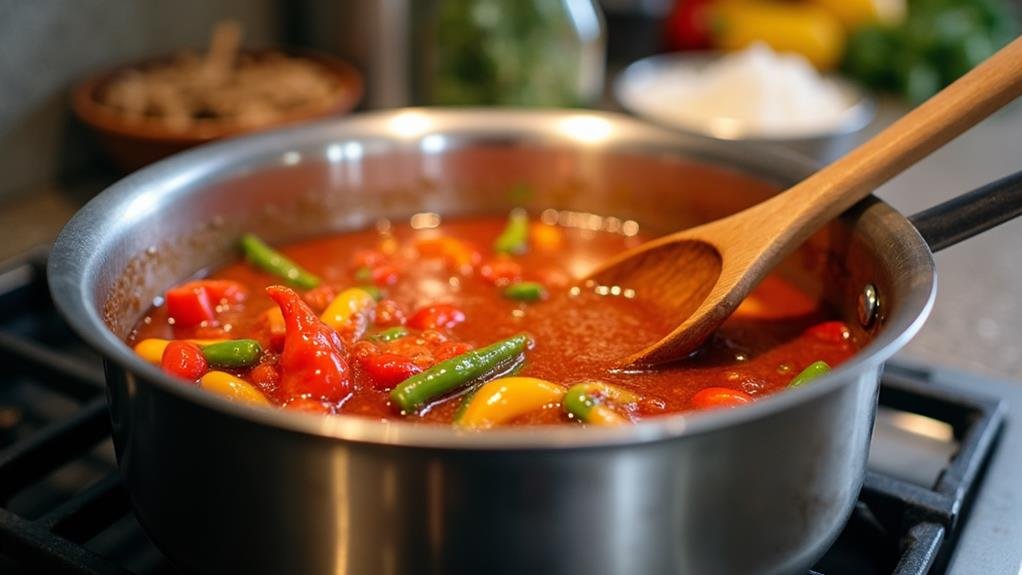
Now that our pepper blend is prepped and ready, it's time to add the vinegar. I prefer using white vinegar for its crisp, clean tanginess that won't overpower the vibrant heat of our cowhorn peppers.
Pour in a full cup of vinegar and let's start to blend everything together until it's smooth. This is the part where we really start to create that hot sauce consistency we're aiming for.
Once we've got a smooth blend, let's move to the stove. Pour the mixture into a saucepan and crank up the heat to medium. We're looking for a gentle boil here, nothing too furious.
When it starts bubbling, turn the heat down and let our sauce simmer. This simmering process is crucial as it allows all our flavors to meld together and intensify.
Keep an eye on it and give it a stir every now and then. After about 20 minutes, our sauce should have thickened slightly.
It's here that we conclude this step. The aroma you're experiencing now is a delicious sneak peek of the fiery flavor that's to come.
Step 3. Cooling and Straining Sauce
Wondering what to do next? After you've simmered your sauce, it's important to let it cool down. So, turn off your stove and let your sauce sit for a bit. You'll find it's easier to handle when it's not piping hot.
Plus, this cooling period allows the flavors to settle before we move on to the next step.
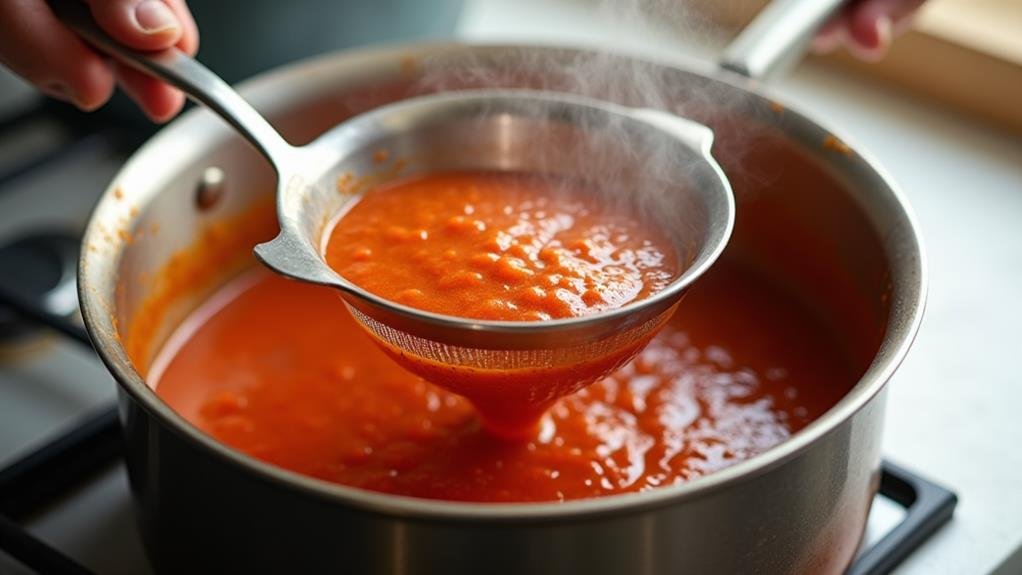
Now, onto the straining. You might be thinking, "Why strain the sauce?" Here's the deal – straining removes the seeds and any larger chunks that might've been missed during blending. It results in a smooth, velvety sauce that's easier to pour and spread.
So, grab a fine mesh sieve and a bowl to catch the sauce.
Pour your cooled sauce into the sieve, using a spoon to press down and help the sauce through. It might take a bit of time, but trust me, it's worth it.
And there you have it – a silky, strained hot sauce, ready to be refrigerated and savored. But, we'll get to the refrigeration part later.
Step 4. Sauce Refrigeration and Flavor Melding
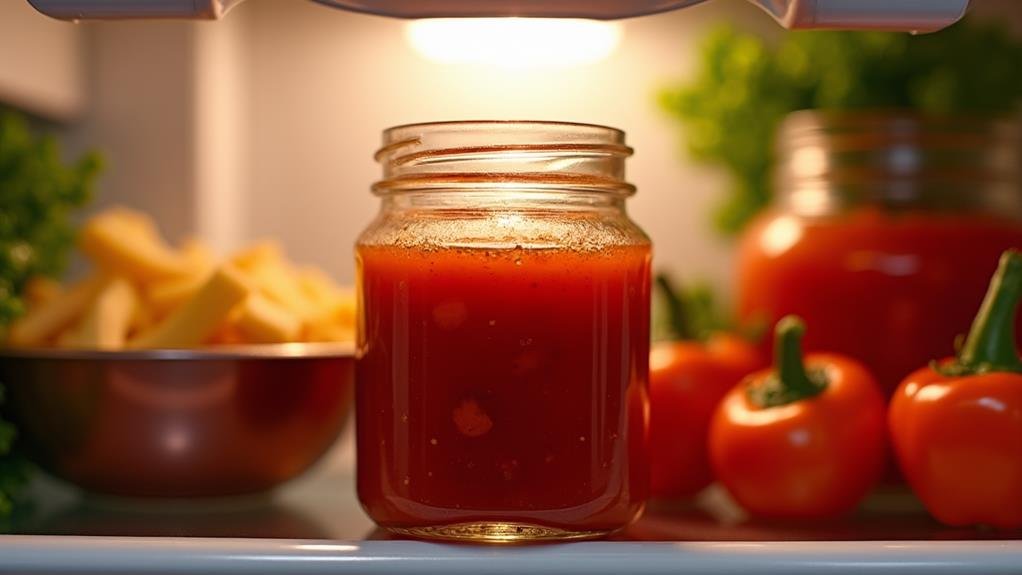
Patience is the secret ingredient at this stage of the hot sauce journey. After blending, cooking, and straining your cowhorn pepper hot sauce, it's time to let it chill in the fridge.
This isn't just about cooling down the sauce; refrigeration plays a crucial role in melding the flavors together.
Pour your hot sauce into a clean, sterilized glass jar. Make sure it's sealed tight, then let it sit in your fridge.
I know, you're eager to try it, but trust me, it's worth the wait. A week is the minimum, but the longer it sits, the more the flavors will develop.
You'll notice the difference when you finally get to taste it. The heat from the cowhorn peppers will have mellowed, blending beautifully with the tang of the vinegar, the sweetness of the sugar, and the bite of the garlic.
The result is a hot sauce that's complex, robust, and utterly irresistible.
Step 5. Sauce Usage and Pairing Suggestions
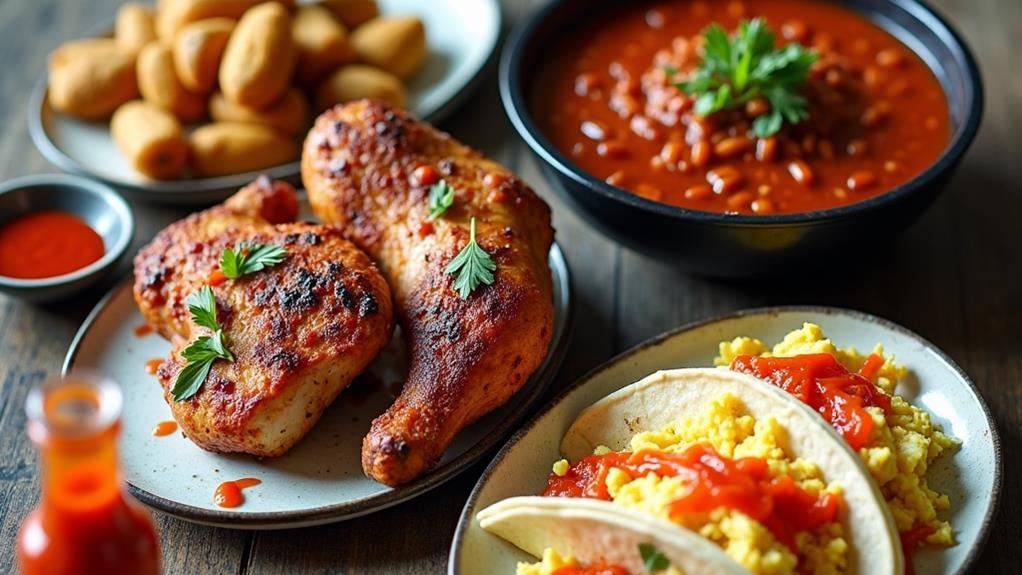
Once you've let your cowhorn pepper hot sauce rest and develop its flavor, it's time to unleash the full potential of this fiery condiment. It's versatile, so you can use it in many ways. Stir it into soups or stews for a little kick, drizzle it over scrambled eggs or an omelet, or even use it as a dip for chips.
I've also found it's a great addition to a Bloody Mary!
The robust flavor of the cowhorn pepper pairs well with hearty meats like beef and chicken, but don't stop there. Try it with grilled vegetables or mix it into your pasta sauce for an unexpected twist.
The tang from the vinegar and the heat from the peppers can really elevate a simple meal.
The beauty of this sauce is that it's not just hot, but flavorful. It's got a unique taste that can transform and enhance your dishes.
Brief history of this recipe
Pepper sauces have a rich history, dating back thousands of years. They've journeyed from their roots in the ancient Americas, where indigenous people ground peppers into pastes, to kitchens worldwide.
This cowhorn pepper hot sauce recipe, though, has a more recent origin. It's a Southern U.S. tradition. The cowhorn pepper, named for its long, curled shape, is a favorite in this region. Farmers and home gardeners love it for its heat, which is milder than jalapenos but still packs a punch.
Throughout the years, they've been pickling these peppers or grinding them into hot sauces. My recipe is a tribute to these traditions. It combines the cowhorn pepper's heat with the tanginess of vinegar – a common element in Southern-style hot sauces.
The addition of garlic, salt, and sugar is my own twist, adding depth to the sauce's flavor. This sauce is more than just a recipe; it's a piece of culinary history. Each spoonful carries the legacy of the Southern U.S., a region known for its bold flavors and love of heat.