Chorizo brings bold seasoning to simple breakfast ingredients. Combined with potatoes, eggs or vegetables, a modest amount can add plenty of flavour without needing a long list of extra spices.
These three chorizo breakfast recipes offer different ways to put it to use: a potato breakfast hash, chorizo and egg tacos, and spinach and cheese egg muffins. Each includes measured ingredients, clear cooking instructions and practical tips for getting the texture right.
The hash suits a leisurely breakfast, the tacos are easy to portion and serve, and the egg muffins offer a baked option with guidance for storing and reheating. You do not need advanced kitchen skills—just a little preparation and attention to the cooking steps.
Which Chorizo Should You Use?
All three recipes below use fresh, uncooked Mexican-style pork chorizo, removed from its casing if necessary and broken into small pieces during cooking.
This differs from firm, cured chorizo labelled ready to eat, which is usually sliced or diced. The two products behave differently in the pan, so do not substitute one for the other without adjusting the method.
Check the packaging before you begin. If it says “cook before eating” or gives instructions for cooking from raw, it needs thorough cooking. Follow any additional directions on the label.
For fresh pork chorizo, use a food thermometer to check that it reaches 71°C / 160°F. Colour alone is not a reliable guide to doneness. If using a poultry-based chorizo instead, the safe minimum temperature is 74°C / 165°F, and its cooking behaviour may differ.
A Few Useful Starting Tips
Choose a heat level you enjoy. Chorizo varies in spiciness. A mild version is a sensible starting point if you prefer gentler seasoning.
Add salt cautiously. Chorizo and cheese already contribute salt, so taste the fully cooked dish before adding more.
Adjust the cooking fat. Some chorizo releases considerably more fat than others. Each recipe will explain how much to retain rather than assuming you need extra oil.
Prepare the other ingredients first. Chop the vegetables, measure the ingredients and have your utensils ready before heating the pan. This makes the cooking easier to follow, especially when eggs are involved.
For more information, see the USDA’s guidance on sausages and food safety and the safe minimum cooking temperature chart.
1. Chorizo and Potato Breakfast Hash
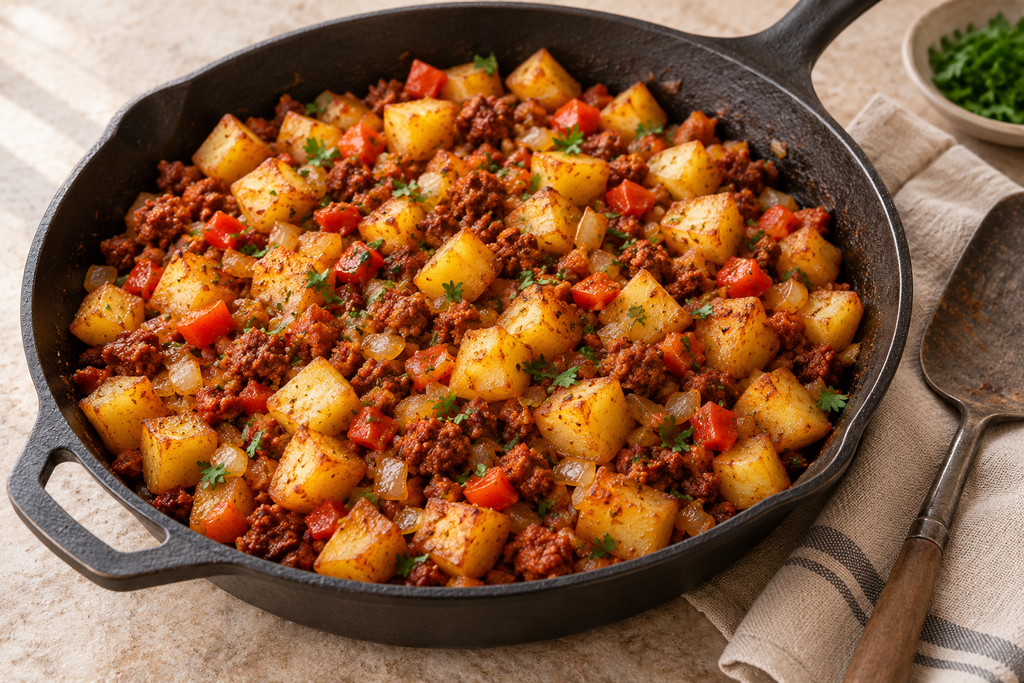
Tender potatoes with golden edges, crumbled chorizo and softened peppers make a hearty breakfast hash. Briefly boiling the potatoes before frying helps them cook through without needing a long time in the pan.
The chorizo is cooked separately, then returned at the end. This gives the potatoes time to brown without burning the sausage.
Servings: 2 generous portions
Preparation time: approximately 15 minutes
Cooking time: approximately 25–30 minutes
Equipment: a saucepan, a large frying pan approximately 28 cm wide, and a food thermometer
Ingredients
- 450 g potatoes, peeled if preferred and cut into 1.5 cm cubes
- 150 g fresh, uncooked Mexican-style pork chorizo, casing removed if necessary
- 1 small onion, approximately 100 g, diced
- 1 medium red bell pepper, approximately 150 g, deseeded and diced
- 1–2 teaspoons olive oil, only if needed
- Black pepper, to taste
- Salt, only if needed after tasting
- 1 tablespoon chopped fresh parsley or coriander, optional
Instructions
1. Parboil the potatoes.
Place the potato cubes in a saucepan and cover with cold water. Bring to the boil, then reduce to a gentle simmer.
Cook for approximately 5–7 minutes after the water begins simmering. A fork should enter the outside of a cube, while the centre still offers a little resistance. The pieces should hold their shape.
Drain thoroughly and leave in the colander for 2–3 minutes so excess moisture can evaporate. Drier potatoes brown more readily.
2. Cook the chorizo.
Place the chorizo in the frying pan over a medium heat. Break it into small pieces with a spatula and cook, stirring regularly, for approximately 6–8 minutes, or according to the packet instructions.
Check that it reaches 71°C / 160°F using a food thermometer. Gather some crumbles into a mound deep enough to accommodate the thermometer’s sensing area, check several places and avoid touching the pan with the probe. Do not rely on colour alone.
Transfer the cooked chorizo to a clean plate.
3. Adjust the fat in the pan.
Leave approximately 1 tablespoon of rendered fat in the pan, carefully spooning out any excess. If the chorizo released very little, add enough olive oil to lightly coat the pan.
4. Brown the potatoes.
Add the drained potatoes and spread them into a single layer. Cook over a medium heat for approximately 10–12 minutes, turning every few minutes.
Allow the pieces to sit undisturbed between turns so their surfaces can develop golden patches. They should become tender throughout. Transfer to the plate with the cooked chorizo.
5. Cook the onion and pepper.
Add the onion and red pepper to the pan, with a teaspoon of oil if the surface is dry. Cook for 5–7 minutes, stirring occasionally, until softened.
If browned residue starts catching, lower the heat and add a tablespoon of water. Let the water evaporate before continuing.
6. Combine and serve.
Return the potatoes and chorizo to the pan. Toss gently and cook for another 1–2 minutes, until everything is hot.
Taste a cooled bite before adding salt or pepper. Scatter over the optional herbs and serve.
Getting the Texture Right
Potatoes breaking apart? They may have boiled a little too long. Turn them gently and let the broken edges crisp; the hash can still be enjoyable.
Potatoes staying pale? Avoid crowding the pan or stirring constantly. If necessary, brown them in two batches.
Too much fat? Spoon off excess rendered fat before adding the potatoes. You want enough to coat them, rather than a pool in the pan.
Storing and Reheating
Refrigerate leftovers in shallow containers within 2 hours, or within 1 hour if the surrounding temperature exceeds 32°C / 90°F. Keep at 4°C / 40°F or below and use within 3–4 days.
Reheat in a frying pan over a moderate heat, stirring regularly, until the food reaches 74°C / 165°F throughout. Add a small splash of water if needed to prevent sticking; the potatoes may be softer than when freshly cooked.
For further information, see the USDA’s guidance on leftovers and food safety.
Recipe development note: This recipe was developed with AI assistance and has not been independently kitchen-tested for this article. Cooking times and serving sizes are estimates.
2. Chorizo and Egg Breakfast Tacos
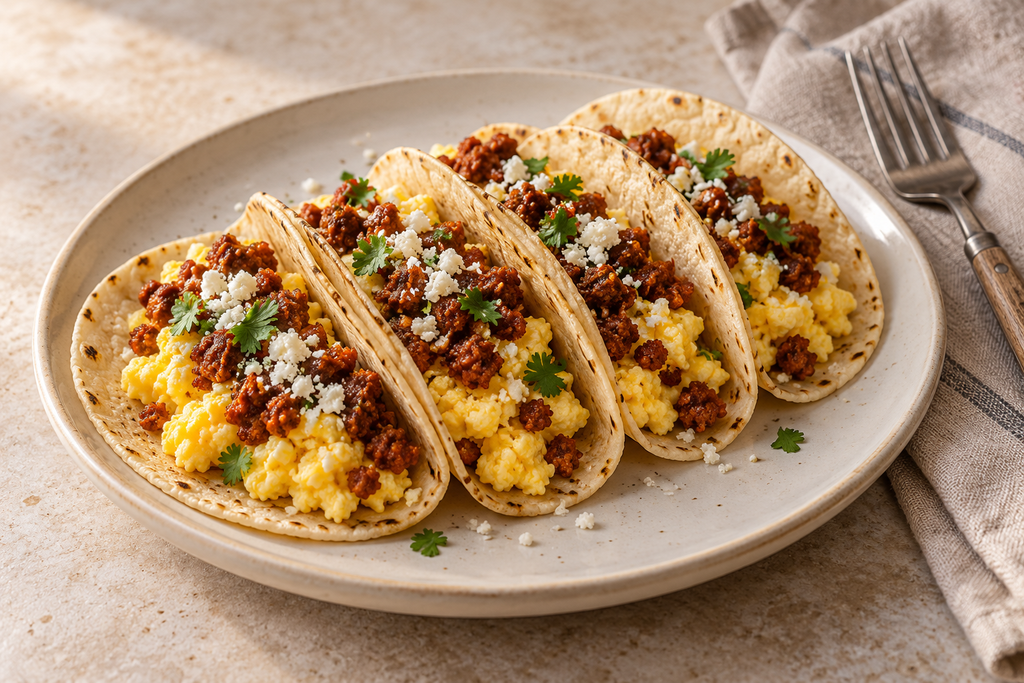
These breakfast tacos combine seasoned chorizo with gently scrambled eggs in warm tortillas. Cooking the eggs separately makes it easier to control their texture and prevents them from absorbing all the fat released by the sausage.
A little crumbled cheese and fresh coriander are optional finishing touches. Start with a modest amount of filling so the tortillas remain easy to fold.
Servings: 2, making 4 small tacos
Preparation time: approximately 10 minutes
Cooking time: approximately 15 minutes
Ingredients
- 120 g fresh, uncooked Mexican-style pork chorizo, casing removed if necessary
- 4 large eggs
- 1 teaspoon olive oil or 5 g butter, for the eggs
- 4 small corn or flour tortillas, approximately 15 cm across
- 25 g crumbled cotija or feta cheese, optional
- 1 tablespoon chopped fresh coriander, optional
- Black pepper, to taste
- Salt, only if needed
Instructions
1. Prepare the eggs and toppings.
Crack the eggs into a bowl and beat with a fork until the whites and yolks are evenly combined. Add a little black pepper if desired.
Prepare the optional cheese and coriander before cooking. Leave additional salt until the end, as the chorizo and cheese may provide enough seasoning.
2. Cook the chorizo thoroughly.
Place the chorizo in a frying pan over a medium heat. Break it into small crumbles with a spatula and cook for approximately 6–8 minutes, stirring regularly, or follow the packet’s cooking instructions.
Check that the pork chorizo reaches 71°C / 160°F. Gather some crumbles into a mound deep enough for your thermometer’s sensing area, check several places and avoid touching the pan with the probe.
Transfer to a clean heatproof bowl using a slotted spoon, leaving excess fat behind. Cover briefly while you prepare the eggs.
3. Warm the tortillas.
Warm the tortillas according to their packet instructions. For tortillas suitable for dry-pan heating, warm them briefly on each side in a separate frying pan until flexible.
Wrap in a clean tea towel to keep warm. Avoid cooking them until crisp, which makes them harder to fold.
4. Scramble the eggs.
Heat the olive oil or butter in a clean non-stick frying pan over a medium-low heat. Add the beaten eggs.
Using a silicone spatula, gently draw the setting egg from the edges towards the centre. Pause briefly between movements to allow soft curds to form.
Cook for approximately 3–5 minutes, until the eggs are set with no visible runny liquid. Avoid increasing the heat sharply to hurry them along.
5. Assemble and serve.
Divide the scrambled eggs between the four warm tortillas, then spoon the cooked chorizo over them.
Add the optional cheese and coriander. Fold gently and serve immediately.
Tips for Better Breakfast Tacos
Keep excess fat out of the filling. A slotted spoon helps transfer the chorizo without making the tortillas greasy.
Choose flexible tortillas. Cold corn tortillas can split when folded. Warm them just before assembly and keep them covered until needed.
Avoid overfilling. If your tortillas are smaller than 15 cm, use additional tortillas rather than packing the filling too tightly.
Adjust the heat through the sausage. Choose mild chorizo if you prefer a less spicy breakfast. Extra chilli is unnecessary for this recipe.
Preparing Ahead and Storing Leftovers
For the best texture, cook the eggs and warm the tortillas just before serving. You can cook the chorizo ahead and refrigerate it promptly, then reheat it thoroughly before assembling.
Store leftover filling separately from tortillas and fresh toppings. Refrigerate in shallow, covered containers within 2 hours, or within 1 hour if the surrounding temperature exceeds 32°C / 90°F. Keep at 4°C / 40°F or below and use within 3–4 days.
Reheat the filling to 74°C / 165°F throughout. If you used previously cooked chorizo, count its storage time from the original cooking day. Expect reheated eggs to be firmer than freshly scrambled eggs.
For further information, see the USDA’s guidance on leftovers and food safety.
Recipe development note: This recipe was developed with AI assistance and has not been independently kitchen-tested for this article. Cooking times and serving sizes are estimates.
3. Chorizo, Spinach and Cheese Egg Muffins
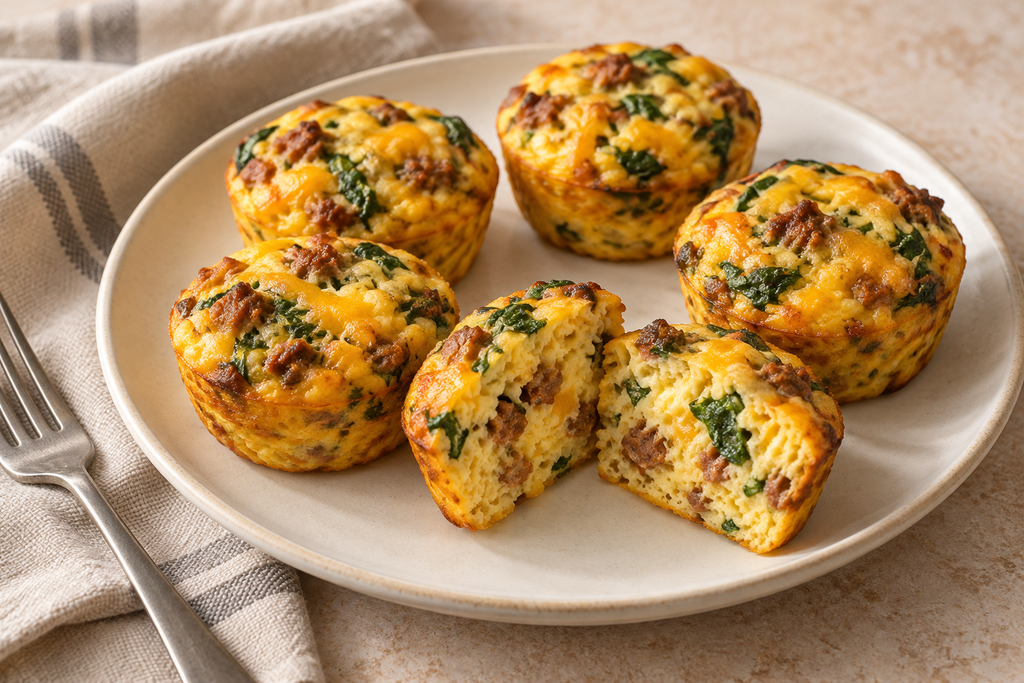
These savoury egg muffins combine cooked chorizo, spinach and cheddar in individual portions. They are small crustless egg bakes rather than bread-style muffins, so expect a tender centre and lightly golden edges.
Cooking the chorizo and removing excess moisture from the spinach before filling the tin helps keep the muffins from becoming greasy or watery.
Makes: 6 standard egg muffins
Servings: 3, allowing 2 muffins per person
Preparation time: approximately 15 minutes
Baking time: approximately 18–23 minutes
Equipment: a standard muffin tin with cavities approximately 100 ml each, a frying pan and a food thermometer
Ingredients
- 100 g fresh, uncooked Mexican-style pork chorizo, casing removed if necessary
- 75 g fresh spinach, washed and thoroughly drained
- 5 large eggs
- 30 ml milk, approximately 2 tablespoons
- 50 g cheddar, grated
- ⅛ teaspoon ground black pepper, optional
- A little olive oil or butter, for greasing
Additional salt is usually unnecessary because the chorizo and cheddar already contribute seasoning.
Instructions
1. Heat the oven and prepare the tin.
Preheat the oven to 180°C conventional / 160°C fan / 350°F / Gas 4.
Thoroughly grease six standard muffin cavities, including the sides. Alternatively, use oven-safe silicone liners according to their instructions. Ordinary paper cases can stick to baked eggs.
2. Cook the chorizo.
Place the chorizo in a frying pan over a medium heat. Break it into small crumbles and cook for approximately 6–8 minutes, stirring regularly, or follow the packet instructions.
Check that it reaches 71°C / 160°F. Gather some crumbles into a mound deep enough for your thermometer’s sensing area, check several places and keep the probe clear of the pan.
Transfer the cooked chorizo to a clean plate using a slotted spoon. Leave approximately 1 teaspoon of fat in the pan, discarding any excess.
3. Wilt and drain the spinach.
Add the spinach to the pan and cook over a medium-low heat for 1–2 minutes, stirring until wilted.
Transfer to a sieve and let it cool enough to handle. Press out excess liquid with the back of a spoon, then chop roughly. Let the chorizo cool slightly too while you prepare the eggs.
4. Mix the egg base.
Whisk the eggs and milk in a bowl until evenly combined. Stir in the grated cheddar and optional pepper.
The milk adds a little softness, but avoid increasing the quantity: too much liquid can prevent the muffins from holding together neatly.
5. Fill the muffin tin.
Divide the cooked chorizo and drained spinach evenly between the six prepared cavities.
Pour the egg mixture over the fillings, stirring it between pours to distribute the cheese. Fill each cavity no more than three-quarters full. If your tin has smaller cavities, use additional greased ones rather than overfilling.
Gently nudge any exposed filling into the egg mixture with a spoon.
6. Bake until set.
Bake on the middle shelf for approximately 18–23 minutes.
The muffins should be lightly puffed, with set centres and no visible liquid egg. Check that the centre reaches 74°C / 165°F, using a food thermometer and avoiding contact with the tin. Smaller muffins may cook sooner.
Do not rely on browning alone to judge doneness.
7. Rest and remove.
Let the muffins rest in the tin for 5 minutes. Run a silicone spatula or another utensil suitable for your tin around the edges, then lift them out gently.
A little sinking as they cool is normal for egg muffins.
Tips for a Better Texture
Drain the spinach well. Excess moisture can collect at the bottom of the muffins and make them fragile.
Keep the chorizo crumbles small. This distributes the filling more evenly and makes the muffins easier to portion.
Avoid overbaking. Once the centres reach the required temperature, remove the tin from the oven. Prolonged baking can make the eggs rubbery.
Serve warm with toast or a few sliced tomatoes for a simple breakfast.
Storing and Reheating
Refrigerate leftovers in a shallow, covered container within 2 hours, or within 1 hour if the surrounding temperature exceeds 32°C / 90°F. Keep at 4°C / 40°F or below and use within 3–4 days.
Reheat individual muffins in the microwave in short intervals, turning or rearranging them for even heating, until the centre reaches 74°C / 165°F. Microwave power varies, so check the temperature rather than relying on a fixed time.
If using chorizo cooked on an earlier day, count its storage time from that original cooking date.
For further information, see the safe minimum cooking temperature chart and the USDA’s guidance on leftovers.
Recipe development note: This recipe was developed with AI assistance and has not been independently kitchen-tested for this article. Cooking times and yield are estimates.
Final Notes from Adam About Chorizo Breakfast Recipes Above
I’m still building confidence in the kitchen, so I appreciate simple meals with clear steps—and I hope these chorizo breakfast recipes feel approachable to you too.
Take your time, choose the version you enjoy, and let a few imperfect edges be part of homemade cooking.
These recipes were developed with AI assistance and have not been independently kitchen-tested; cooking times and yields are estimates.
Follow the cooking and storage guidance, and use a food thermometer to check doneness.
The images are AI-generated illustrations, not photographs of tested dishes, so your results may look different.
Thank you for spending a little of your morning here—there is always room at the table for another beginner.