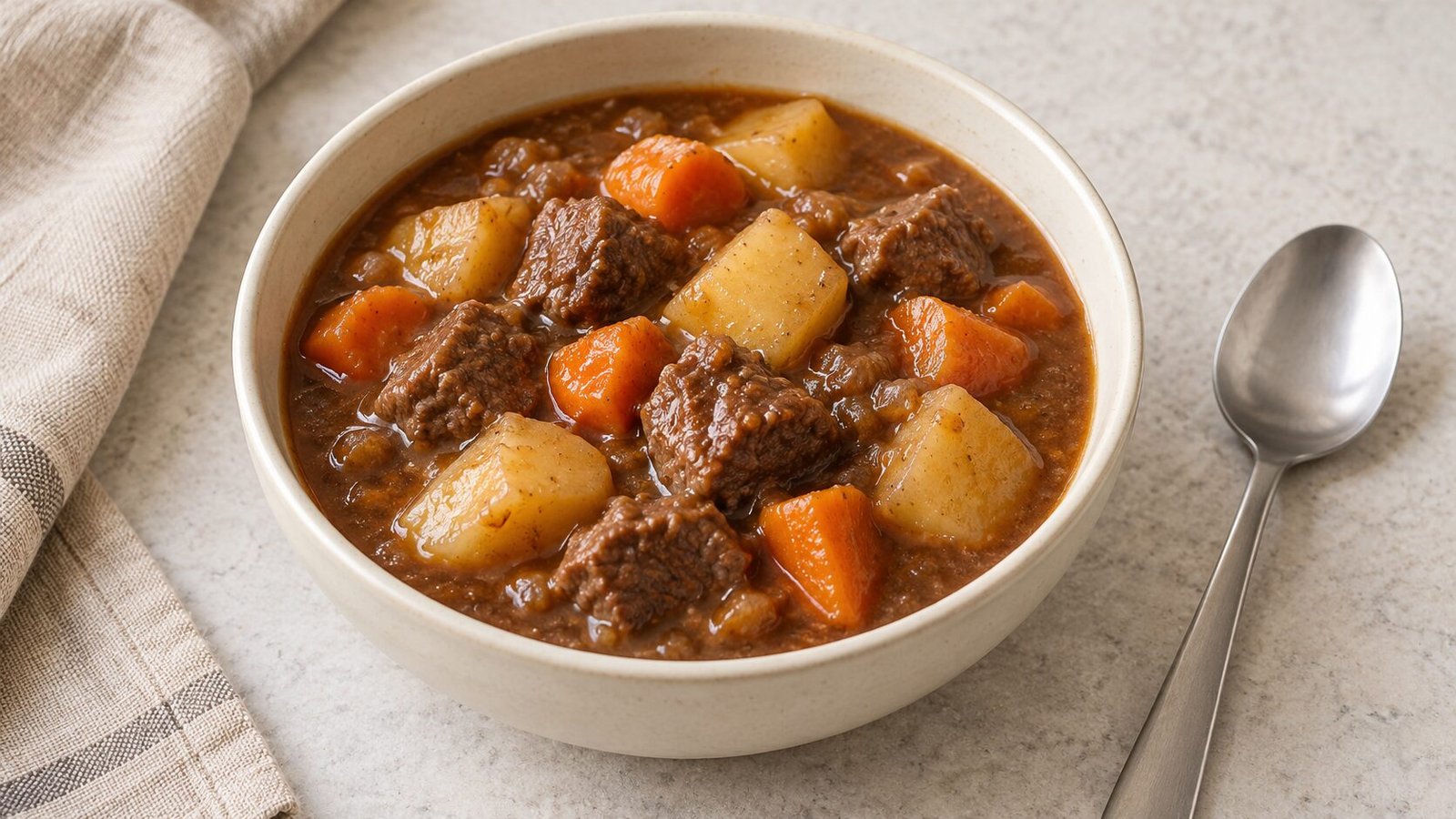
A ready-made beef stew can be useful on an evening when you want a warm meal without preparing everything from scratch. But similar-looking cans and trays can contain quite different products, portions, and ingredients.
The best store-bought beef stew for you depends on what matters most: a thicker gravy, a convenient single portion, a particular ingredient list, or a price that fits your budget.
I’m Adam, and I appreciate straightforward options because I’m not a kitchen expert. This guide is designed to make the shopping decision easier without pretending that I have personally tasted every product.
How this guide was prepared: The product examples below were checked against US manufacturer pages on October 17, 2026. This is a source-based buying guide, not a taste test or ranked product review. Availability, recipes, packaging, and prices can change; check the product you are purchasing.
First, Check What You Are Buying
A beef-related product name does not necessarily mean you are buying a ready-to-eat stew.
| Product type | What to check |
|---|---|
| Beef stew | Look for the meat, vegetables, gravy, portion size, and preparation instructions you want. |
| Beef and vegetable soup | This is a separate category, although some versions may suit the same meal occasion. |
| Beef broth or stock | Usually a cooking ingredient rather than a complete substitute for stew. |
| Microwave meal | Check the exact contents, tray size, and heating instructions. |
| Refrigerated or frozen stew | Follow its storage requirements; do not assume it is suitable for the cupboard. |
Words such as “hearty” or “homestyle” do not tell you how much meat is included or how the finished product will taste. Use them as descriptions, then turn to the label.
Verified Product Examples to Compare
These examples illustrate different formats. They are not first-, second-, and third-place recommendations.
DINTY MOORE Beef Stew: A Canned Stew Example
Hormel lists DINTY MOORE Beef Stew as a fully cooked, shelf-stable product available in several can sizes. Its listed ingredients include beef stock, beef, potatoes, and carrots, along with other ingredients.
This is an appropriate example to examine when you specifically want canned beef stew. Check the exact can size and serving information rather than assuming one can equals one meal. The manufacturer also notes that product information can change and directs shoppers to the packaging for current details.
What to compare: The amount you expect to eat, sodium per portion, ingredient suitability, and the unit price of the available sizes.
HORMEL COMPLEATS DINTY MOORE Beef Stew: A Microwave Meal Example
Hormel also lists a DINTY MOORE Beef Stew product within its COMPLEATS microwave-meal range. Treat this as a separate packaged product when shopping: do not transfer the canned version’s nutrition figures or heating directions to the tray.
What to compare: Whether the tray provides the portion you want, its current label, and the convenience of its preparation method.
A convenient format can be worth paying for, but calculate the cost against the amount you will actually eat.
Campbell’s Chunky Beef with Country Vegetables Soup: A Soup Alternative
Campbell’s identifies this product as soup, not beef stew. Its description includes beef and vegetables such as carrots, celery, peas, and potatoes.
It may be worth considering if you are open to a beef-and-vegetable soup, but it should not be presented as the same product category or as a taste-tested substitute.
What to compare: Whether you want soup or stew, the serving size, the ingredients, and the preparation instructions on the exact package.
Read the Serving Size Before Comparing Nutrition
Start with two details: serving size and servings per container. The calories, sodium, and other nutrients may describe only part of the package. The FDA emphasizes using serving information to understand how much you actually consume.
For example, imagine a fictional can containing two servings, each with 250 calories and 700 mg sodium. Eating the entire can would provide 500 calories and 1,400 mg sodium. These are illustrative figures, not the values of a product reviewed here.
When comparing two labels, check that the portions are similar in weight. A smaller stated serving can make one product appear lower in calories or sodium without representing a meaningful difference in the amount you plan to eat.
For a consistent comparison, you can calculate:
Nutrient per 100 g = nutrient per labelled serving ÷ serving weight in grams × 100.
Then consider your actual meal portion as well.
Compare Sodium, Ingredients, and Allergens
Sodium is worth checking alongside calories and protein. On US labels, the FDA describes 5% Daily Value or less per serving as low, and 20% or more as high. Remember to account for multiple servings.
Read the full ingredient list and allergen information. A beef stew can contain ingredients beyond meat and vegetables, including soy or wheat-derived ingredients. Do not assume that a meat-based dish is automatically gluten-free or suitable for every allergy.
Likewise, a claim such as “organic” or “no preservatives” does not replace checking the rest of the label. Choose according to your needs rather than treating one phrase on the front as a complete assessment of the food.
Work Out the Price of Your Meal
The cheapest package is not always the cheapest option by weight, and the largest package is not necessarily economical if you leave part unused.
For a simple comparison:
Price per 100 g = package price ÷ net weight in grams × 100.
For example, a fictional 500 g package costing $4 works out at $0.80 per 100 g. A 300 g tray costing $3 works out at $1 per 100 g.
The larger package costs less by weight, but the smaller tray may still suit someone who wants one convenient portion. Consider storage space and likely waste alongside price.
Use current local prices. A national article cannot reliably promise what a product will cost at your particular shop.
What a Label Cannot Tell You
A label can help you compare ingredients, portions, and nutrition. It cannot establish whether you will enjoy the gravy, the texture of the beef, or the softness of the vegetables.
If you are unsure, buy one package before committing to a multipack. Prepare it according to the directions and decide what you would change next time.
You might prefer more vegetables, a different consistency, or a smaller portion. Those observations are more useful for your next purchase than a universal “best” claim without a documented tasting method.
Heating and Storing Store-Bought Stew
Follow the instructions for the exact package. A can, microwave tray, refrigerated container, and frozen meal may require different preparation.
For canned products, transfer the contents into the cooking vessel specified by the manufacturer. Never put a metal can in the microwave. Follow instructions about venting, stirring, and standing time for microwave-safe trays.
Do not use food from leaking, bulging, or badly dented cans. Do not taste suspicious food to check whether it is safe. USDA guidance identifies damaged containers as potential safety concerns.
After opening, refrigerate unused stew promptly in a clean, covered container. USDA guidance generally allows 3–4 days refrigerated for opened low-acid canned foods such as stew, but follow a shorter instruction on the package when provided.
Making a Convenient Meal Feel More Like Your Own
You do not need to turn a ready-made stew into another complicated recipe. Serve it as directed, or add a simple accompaniment such as bread or separately cooked vegetables.
Taste before adding salt or salty sauces. If you add extra ingredients, cook them appropriately rather than assuming the stew’s reheating time will be enough to cook raw additions.
A small adjustment can help the meal suit your preferences, but it is also perfectly reasonable to enjoy it as it comes.
A Practical Choice for an Ordinary Evening
For me, convenience has a place in the kitchen. Being less experienced at cooking does not mean every meal has to become a challenge, and a ready-made option can help on a busy day.
The best store-bought beef stew is ultimately one that fits your appetite, budget, and ingredient needs—and that you enjoy eating. Start with a clear label, a suitable portion, and realistic expectations.
I hope this guide helps you feel more comfortable making that choice, without needing to become a product expert before dinner.
— Adam
Editorial and Image Disclosure
This article was prepared with AI assistance using the manufacturer and food-safety sources cited above. The author has not personally taste-tested the products for this guide. No flavor scores, comparative texture findings, or independently measured nutrition results are claimed.
The featured image is an AI-generated, generic illustration of beef stew. It does not depict the contents of any named product or provide evidence of product testing. Actual packaged meals may differ substantially in appearance.
Check the current package for ingredients, allergens, nutrition, preparation, and storage instructions.