Breakfast can take a little more planning when familiar options such as eggs, oatmeal, and yogurt are off the menu. Having a few clearly explained recipes can make that adjustment feel more manageable, especially when you are still finding your confidence in the kitchen.
These three AIP breakfast recipes follow the ingredient exclusions of the Core AIP elimination phase. They include a sweet potato, turkey, and kale hash; apple and sage pork patties served with zucchini; and a warm carrot and coconut porridge. Two offer savory combinations of meat and vegetables, while the third provides a gently sweet alternative without grains or added sugar.
AIP has both Core and Modified approaches, with different ingredient allowances. This collection uses the Core framework throughout. Check packaged ingredients carefully, particularly coconut milk and seasoning blends, because their contents vary between brands. Following a recipe’s ingredient framework does not guarantee that every ingredient will suit your individual needs.
The Autoimmune Protocol is an elimination-and-reintroduction approach, rather than a recommendation to avoid foods indefinitely. Work with a registered dietitian or your healthcare professional to decide whether it is appropriate for you and to maintain adequate nutrition. These recipes offer cooking ideas, not treatment advice.
Each recipe below includes quantities, step-by-step instructions, and practical preparation tips. Start with whichever sounds most appealing, keep the ingredient list nearby, and give yourself time to get comfortable with the process.
1. Sweet Potato, Turkey and Kale Breakfast Hash
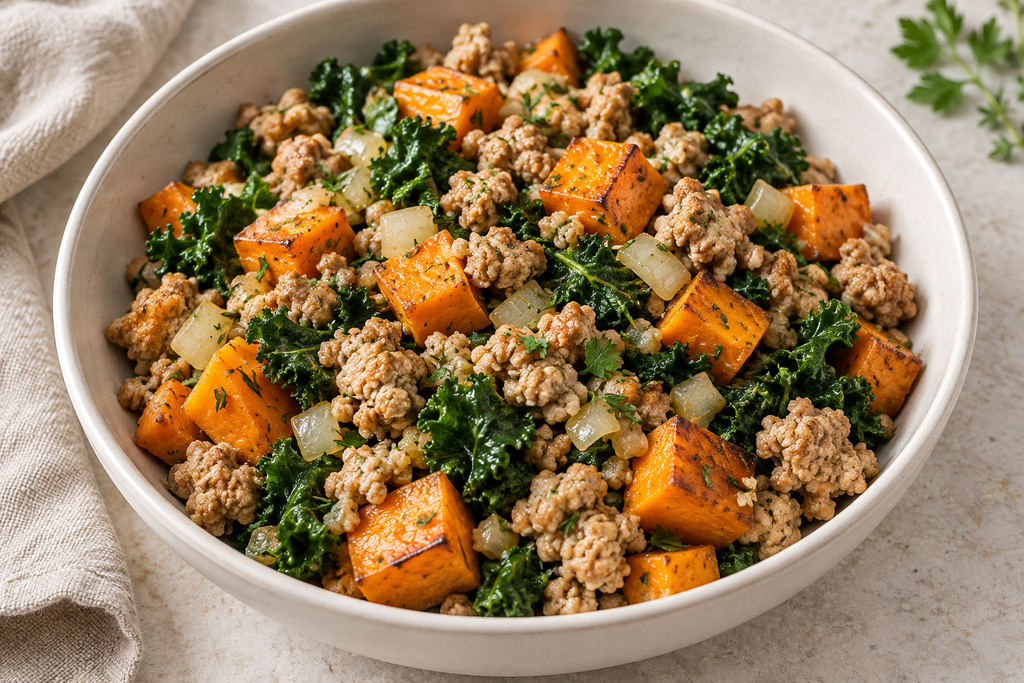
This savory hash combines tender sweet potato cubes, ground turkey, and wilted kale in one pan. Garlic and thyme provide flavor without a ready-made seasoning blend, making the ingredient list easy to check.
If you are exploring AIP breakfast recipes, this is a practical introduction to a breakfast built around meat and vegetables. Cutting the sweet potato into small, evenly sized pieces helps it cook through without leaving the turkey in the pan for too long.
Servings: 2
Preparation time: 15 minutes
Cooking time: approximately 25–30 minutes
Ingredients
- 300 g plain ground turkey, without added seasoning
- 350 g sweet potato, peeled and cut into 1.5 cm cubes
- 80 g kale leaves, weighed after removing tough stems, finely chopped
- 1 small onion, approximately 80 g, finely diced
- 2 garlic cloves, finely minced
- 1 tablespoon olive oil (15 ml), divided
- ½ teaspoon dried thyme
- ⅓ teaspoon fine salt, or to taste
- 80 ml water, plus a little extra if needed
- 2 teaspoons fresh lemon juice
- 1 tablespoon chopped fresh parsley, optional
Equipment: A large frying pan with a lid, a spatula, a clean bowl, and an instant-read food thermometer.
Instructions
- Cook the turkey. Heat 2 teaspoons of the olive oil in the pan over medium heat. Add the turkey and break it into bite-sized crumbles. Cook for approximately 7–9 minutes, stirring regularly, until it reaches 74°C (165°F). Check several larger pieces with the thermometer, keeping the probe away from the hot pan. Transfer the cooked turkey to a clean bowl.
- Soften the onion. Add the remaining teaspoon of oil and the onion to the same pan. Cook for 3 minutes, stirring and scraping up any lightly browned bits. Add the garlic and thyme and stir for another 30 seconds.
- Cook the sweet potato. Add the sweet potato, salt, and 80 ml water. Stir, cover, and reduce the heat to medium-low. Cook for 10–12 minutes, stirring halfway through. The cubes should be easily pierced with a fork. If they remain firm, add a splash of water and cook for a few more minutes.
- Add the kale. Stir in the chopped kale. Cover and cook for 3–4 minutes, until the leaves soften. Add another tablespoon of water if the pan becomes dry.
- Combine and finish. Return the turkey and any collected juices to the pan. Stir over medium heat until everything is thoroughly hot. If excess water remains, cook uncovered briefly to let it evaporate.
- Serve. Remove from the heat, stir in the lemon juice, and divide between two bowls. Add the optional parsley.
Beginner Tips and Ingredient Notes
Prepare all the vegetables before heating the pan. Small sweet potato cubes and finely chopped kale make the cooking process easier to manage.
Use plain turkey rather than turkey sausage, which may contain unspecified spices or other ingredients outside the Core AIP framework. Keep the individual seasonings listed here instead of substituting a general breakfast seasoning blend.
The finished hash should be tender with some lightly browned pieces; it does not need to be uniformly crisp.
2. Apple and Sage Pork Breakfast Patties
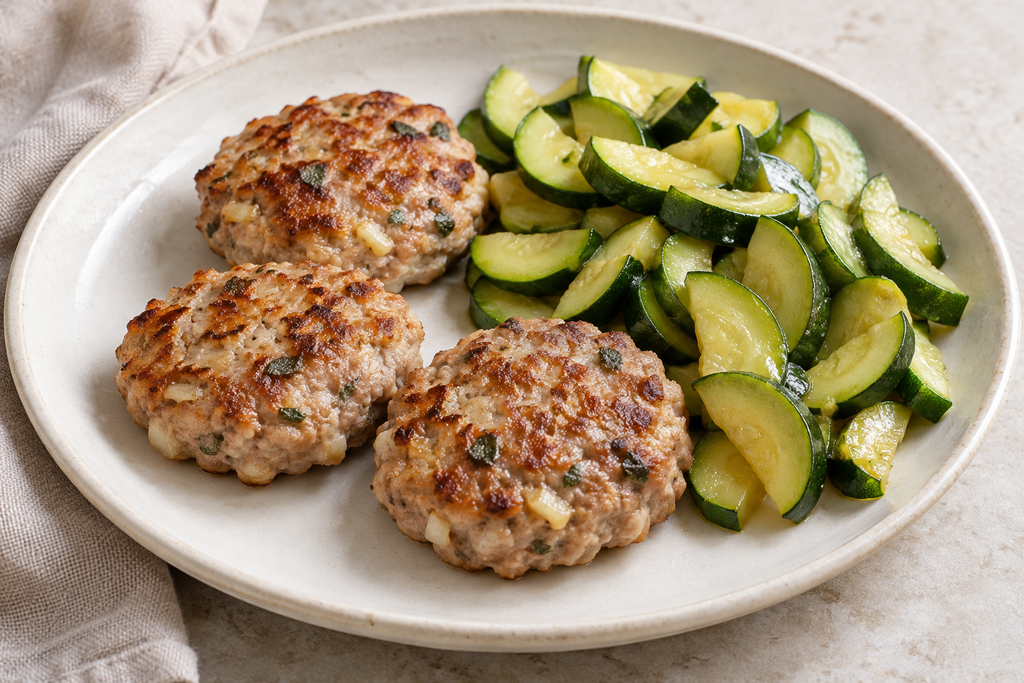
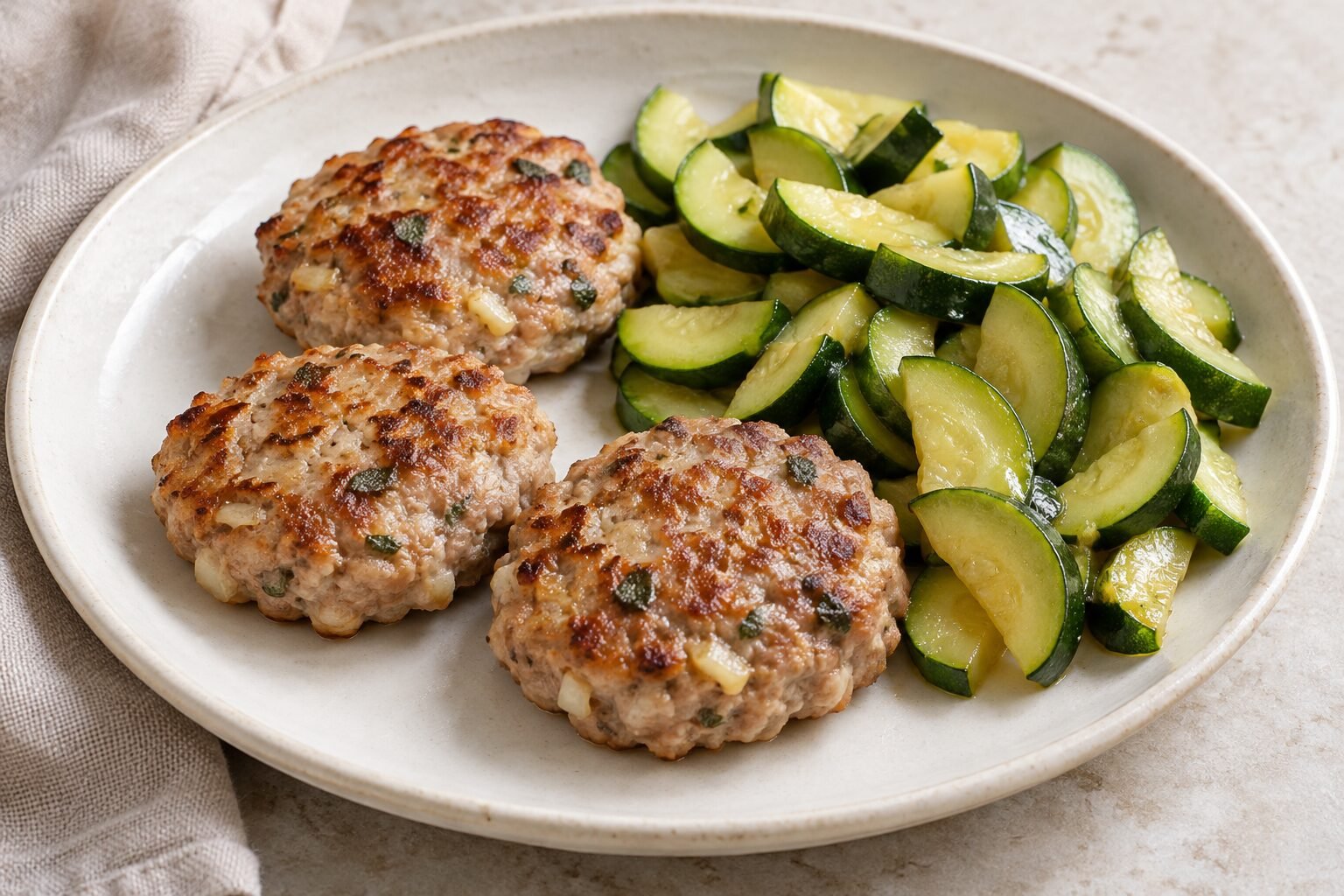
Grated apple adds gentle sweetness to these savory pork patties, while sage gives them a familiar breakfast-sausage flavor. Served with tender zucchini, they offer another simple option in this collection of AIP breakfast recipes.
There is no egg or breadcrumb binder. Instead, a modest amount of grated apple and careful mixing help the patties hold their shape. Use plain ground pork so you can control the seasonings.
Servings: 2, with 3 small patties each
Preparation time: 15 minutes
Cooking time: approximately 20 minutes
Ingredients
For the patties:
- 300 g plain ground pork, approximately 15–20% fat
- 60 g peeled, cored apple, coarsely grated
- ½ teaspoon dried rubbed sage
- ¼ teaspoon dried thyme
- ¼ teaspoon garlic powder, without added ingredients
- ⅓ teaspoon fine salt
- 1 teaspoon olive oil (5 ml)
For the zucchini:
- 300 g zucchini, trimmed and sliced into 5 mm half-moons
- 1 teaspoon olive oil (5 ml)
- 2 tablespoons water (30 ml)
- 1 teaspoon fresh lemon juice
- A small pinch of salt
Equipment: A mixing bowl, a large frying pan with a lid, a wide spatula, and an instant-read meat thermometer.
Instructions
- Prepare the apple. Gently squeeze the grated apple between clean hands to remove excess juice. It should remain moist but not drip. Too much liquid can make the patties difficult to shape.
- Mix and shape. Combine the pork, apple, sage, thyme, garlic powder, and salt. Mix with a fork or clean hands until evenly combined and slightly tacky. Divide into six equal portions and shape into patties approximately 7 cm wide and 1.5 cm thick. Smooth any cracks around the edges.
- Cook the patties. Heat 1 teaspoon of olive oil in the frying pan over medium heat. Add the patties in a single layer without crowding; cook in batches if necessary. Cook for approximately 4–5 minutes on the first side, then carefully turn with a wide spatula and cook for another 4–5 minutes.
- Check the centers. Insert the thermometer from the side into the center of each patty. The pork should reach at least 71.1°C (160°F) before removal. If the outside browns before the center is ready, reduce the heat and continue cooking, checking regularly. Transfer the cooked patties to a clean plate and loosely cover.
- Cook the zucchini. Add the remaining teaspoon of oil to the pan, followed by the zucchini and a small pinch of salt. Stir for 2 minutes, then add the water and cover. Cook over medium-low heat for 4–6 minutes, until tender. Uncover briefly to evaporate excess liquid, then stir in the lemon juice.
- Serve. Divide the zucchini between two plates and add three patties to each.
Beginner Tips and Ingredient Notes
Let the first side set before attempting to turn the patties. Repeatedly moving or pressing them can cause breakage and squeeze out juices.
Choose individual herbs rather than a sausage seasoning blend, which may contain ingredients outside the Core AIP framework. The apple supplies enough sweetness without honey or syrup.
For a more substantial breakfast, serve with a portion of cooked sweet potato.
3. Warm Carrot and Coconut Breakfast Porridge
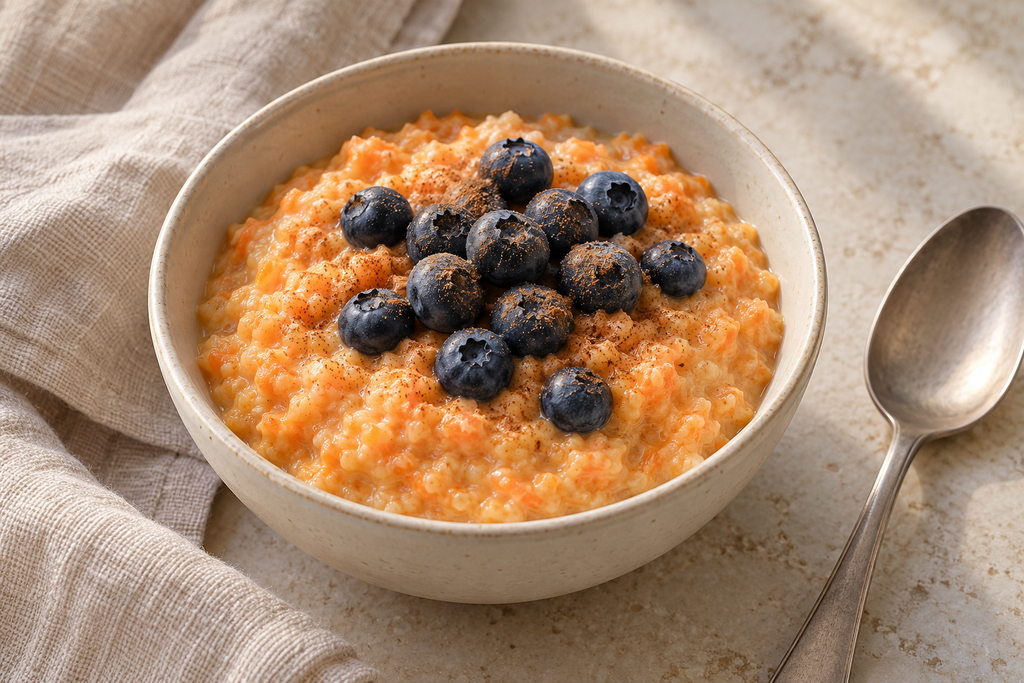
Carrot, coconut milk, and cinnamon give this vegetable-based porridge a gently sweet flavor without added sugar. Finely chopped cauliflower adds texture, while a small amount of ginger brings warmth.
This is the softer, spoonable option among these AIP breakfast recipes. Expect a creamy vegetable porridge with a little texture, rather than the chewiness of oatmeal. It provides little protein on its own, so consider serving it alongside a protein source that fits your individual plan, such as the apple and sage pork patties above.
Servings: 2
Preparation time: 10 minutes
Cooking time: approximately 20–25 minutes
Ingredients
- 200 g carrots, peeled and finely grated
- 150 g cauliflower florets, very finely chopped or pulsed into rice-sized pieces
- 200 ml unsweetened full-fat coconut milk, made with coconut and water
- 100 ml water, plus extra as needed
- ½ teaspoon ground cinnamon
- ¼ teaspoon ground ginger
- A small pinch of salt
- 60 g fresh blueberries, optional, for serving
- A little extra cinnamon, optional, for serving
Equipment: A box grater, a chopping board or food processor, a medium saucepan with a lid, and a wooden spoon. A potato masher or immersion blender is optional.
Instructions
- Prepare the vegetables. Grate the carrots finely so they soften evenly. Chop or pulse the cauliflower into small pieces, removing any larger chunks of firm stalk. Avoid leaving large florets, which will take longer to cook and give the porridge an uneven texture.
- Combine the ingredients. Stir the coconut milk before measuring if it has separated. Place it in the saucepan with the carrots, cauliflower, water, cinnamon, ginger, and salt.
- Simmer gently. Bring to a gentle simmer over medium heat, then reduce the heat to low and partially cover. Cook for 15–20 minutes, stirring every few minutes, until both vegetables are very soft. Add water a tablespoon at a time if the mixture becomes dry before they are tender.
- Adjust the texture. Mash some of the softened vegetables against the side of the saucepan with your spoon, or use a potato masher. For a smoother result, remove the pan from the heat and briefly use an immersion blender, keeping its head submerged to prevent splashes.
- Finish the porridge. If the mixture is too loose, simmer uncovered for another 2–5 minutes, stirring frequently. If it is thicker than you prefer, stir in a little water. Aim for a soft, spoonable consistency.
- Serve warm. Divide between two bowls and add the optional blueberries and light sprinkle of cinnamon.
Beginner Tips and Ingredient Notes
Use canned culinary coconut milk rather than a thin coconut beverage. For this Core AIP version, choose a product containing coconut and water, without added gums, sweeteners, or other ingredients.
Keep the heat gentle: a thick mixture can catch on the bottom of the saucepan. The carrots provide mild sweetness, but the cauliflower may still contribute a subtle vegetable flavor.
Use the individual spices listed rather than a pumpkin pie or chai blend, whose ingredients may differ from the Core AIP framework.
A Note on These Recipes and Your Individual Needs
These AIP breakfast recipes are intended as practical cooking ideas based on the ingredient exclusions of the Core AIP elimination phase. They are not personalized dietary advice and are not intended to diagnose, treat, or cure any medical condition. Following the Core AIP ingredient framework does not guarantee that a recipe will suit your allergies, intolerances, or nutritional needs.
If you are considering AIP, discuss its suitability, nutritional adequacy, and the reintroduction process with a registered dietitian or qualified healthcare professional. These recipes should not replace prescribed treatment or advice from your healthcare team.
Recipe Development and Food Safety
These recipes were developed with AI assistance and have not been independently kitchen-tested for this article. Cooking times and yields are estimates. Ingredient size, equipment, and heat settings can affect the results; follow the doneness checks and meat thermometer guidance provided rather than relying on timing or appearance alone.
Check the full ingredient lists of packaged products and any substitutions. A replacement ingredient may change both the recipe’s performance and its suitability for the Core AIP elimination phase. An AIP label does not mean a food is allergen-free.
Image Disclosure
The images are AI-generated illustrations based on the listed ingredients and intended presentation. They are not photographs of dishes prepared or tested for this article, and they do not verify recipe performance. The texture, color, and appearance of your finished food may differ.