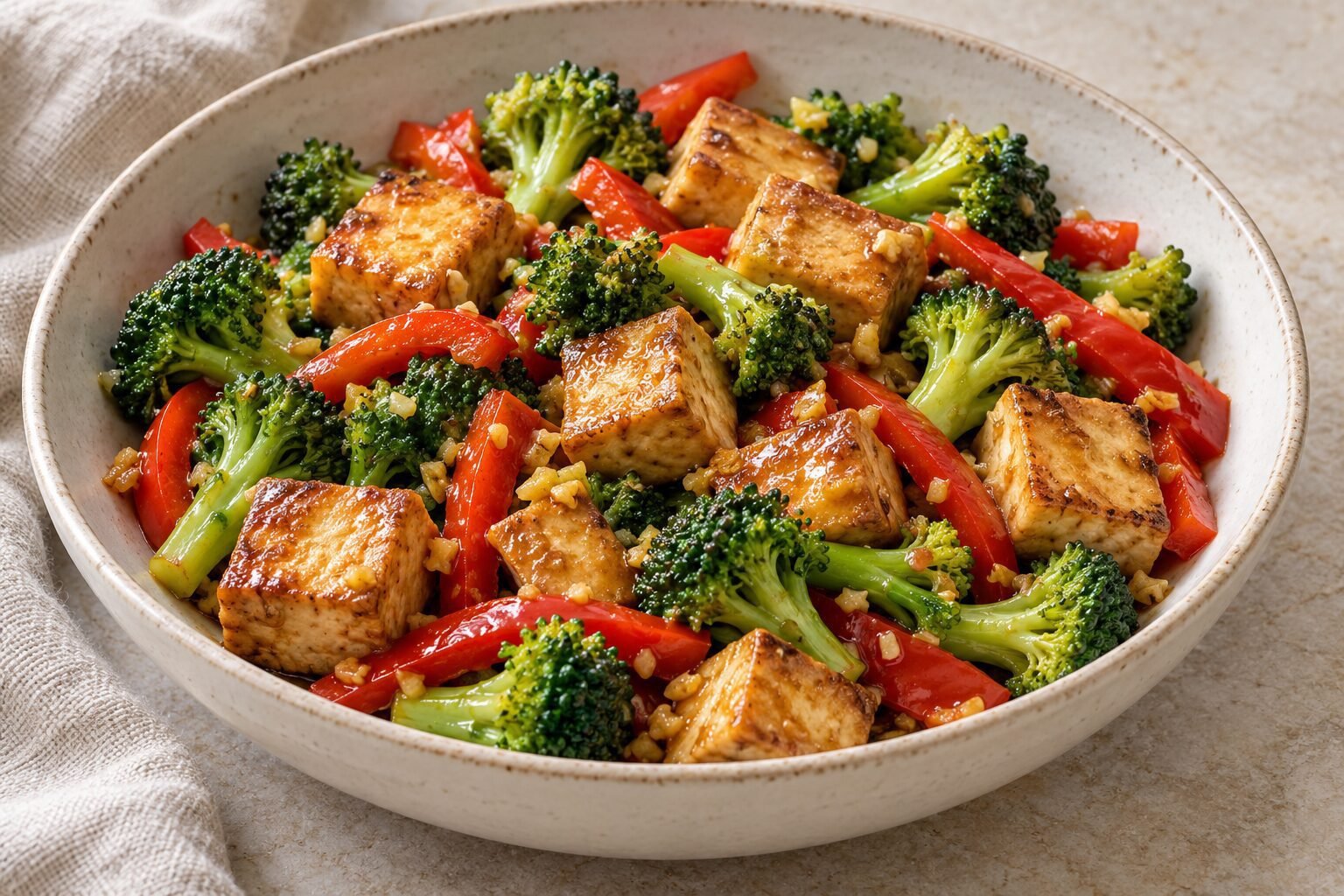
If you have ever looked at a block of tofu and wondered what to do with it, you are not alone. Its mild flavor gives you plenty of room for seasoning, but a clear method makes that first attempt feel much more manageable.
These three firm tofu recipes offer different ways to get started: oven-baked tofu with a garlic-soy dip, a ginger-soy stir-fry with broccoli and peppers, and a creamy coconut curry with spinach. Choose the baked version when you want golden edges, the stir-fry for a vegetable-filled meal, or the curry when you prefer something soft and saucy.
I appreciate straightforward recipes because I’m not a kitchen expert myself. My aim here is to explain the small steps that can otherwise be easy to miss: drying the tofu, leaving enough space in the pan, and adding the sauce at the right stage.
Each recipe includes measured ingredients, preparation times, and practical texture cues. Any pressing time is listed separately, so you can see what is involved before you begin.
Before You Start: Choosing and Preparing Your Tofu
Choose regular block-style firm tofu, rather than silken tofu. Check the type as well as the firmness on the packaging: a product labelled “firm silken tofu” is still a different style from the tofu intended for these recipes.
Drain the packing liquid and gently pat the block dry. For the baked tofu and stir-fry, the instructions include a short pressing step to remove additional moisture. Place the tofu between clean kitchen towels or folded paper towels, set a flat plate on top, and add a modest, stable weight. Avoid pressing so heavily that the block cracks.
For the curry, draining and patting dry will be enough; the recipe is designed around a softer texture in sauce.
Firmness and moisture vary between brands, so use the visual cues alongside the estimated cooking times. You do not need perfectly identical cubes or restaurant-style presentation—just manageable pieces and a little patience as you learn how your tofu cooks.
1. Crispy Oven-Baked Tofu with Garlic-Soy Dip
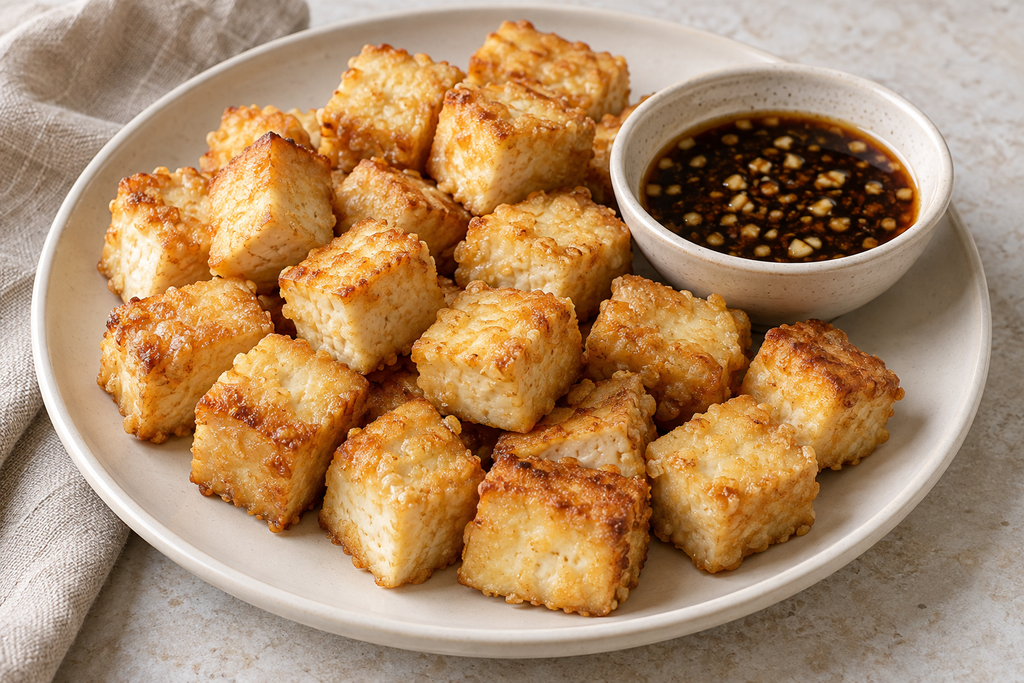
A light cornstarch coating gives these tofu cubes golden edges while leaving the centers tender. The garlic-soy dip is served separately, so you can add flavor without immediately softening the baked coating.
This is a useful starting point for firm tofu recipes because it introduces three simple steps: remove excess moisture, coat lightly, and give the pieces room on the tray. Expect a lightly crisp exterior rather than a thick, deep-fried crust.
Servings: 2 as part of a meal, or 4 small snack portions
Preparation time: 10 minutes
Pressing time: 20 minutes
Baking time: approximately 30–35 minutes
Ingredients
For the tofu:
- 400 g regular firm tofu, weighed after draining and before pressing
- 1 tablespoon neutral cooking oil (15 ml)
- 2 teaspoons reduced-sodium soy sauce (10 ml)
- ½ teaspoon garlic powder
- 2 tablespoons cornstarch (approximately 16 g)
For the dip:
- 1 tablespoon reduced-sodium soy sauce (15 ml)
- 1 tablespoon water (15 ml)
- 2 teaspoons fresh lemon juice (10 ml)
- 1 teaspoon maple syrup (5 ml)
- 1 small garlic clove, finely minced
Equipment: A rimmed baking tray, baking parchment, clean kitchen towels or paper towels, a mixing bowl, and a spatula.
Instructions
- Press the tofu. Wrap the drained block in a clean kitchen towel or several layers of paper towel. Place on a plate, set another flat plate on top, and add a modest, stable weight. Press for 20 minutes, replacing saturated paper towels if necessary. Avoid a heavy weight that crushes the block.
- Prepare the oven. While the tofu presses, preheat to 220°C conventional / 200°C fan / 425°F. Line the tray with parchment rated for this temperature.
- Cut and season. Pat the tofu dry and cut into approximately 2.5 cm cubes. Place in a bowl and gently toss with the oil, soy sauce, and garlic powder.
- Add the coating. Sprinkle over half the cornstarch and turn gently. Repeat with the remainder until the cubes have a thin, even coating. Avoid leaving thick pockets of dry starch.
- Bake. Arrange in a single layer with space between the pieces. Bake for 15 minutes, then turn carefully with a spatula. Continue for another 15–20 minutes, until the edges are golden and the coating feels dry and lightly crisp. Begin checking early if your cubes are smaller.
- Mix the dip. Stir together all the dip ingredients while the tofu bakes. Taste and add a little more water if you prefer a milder, less salty sauce.
- Serve promptly. Let the tofu stand for 2 minutes, then serve with the dip alongside. Add cooked rice and vegetables if serving as a main meal.
Beginner Tips and Ingredient Notes
Use a large enough tray to keep the cubes apart. Crowding traps moisture and makes browning less even. Turn gently: firm tofu is more delicate than extra-firm varieties.
The coating softens as the tofu cools or absorbs sauce. For the best texture, bake shortly before serving and dip individual pieces as you eat.
Allergen note: Contains soy. Soy sauce commonly contains wheat; for a gluten-free version, use a specifically labelled gluten-free tamari and check the remaining ingredients.
2. Ginger-Soy Tofu Stir-Fry with Broccoli and Peppers
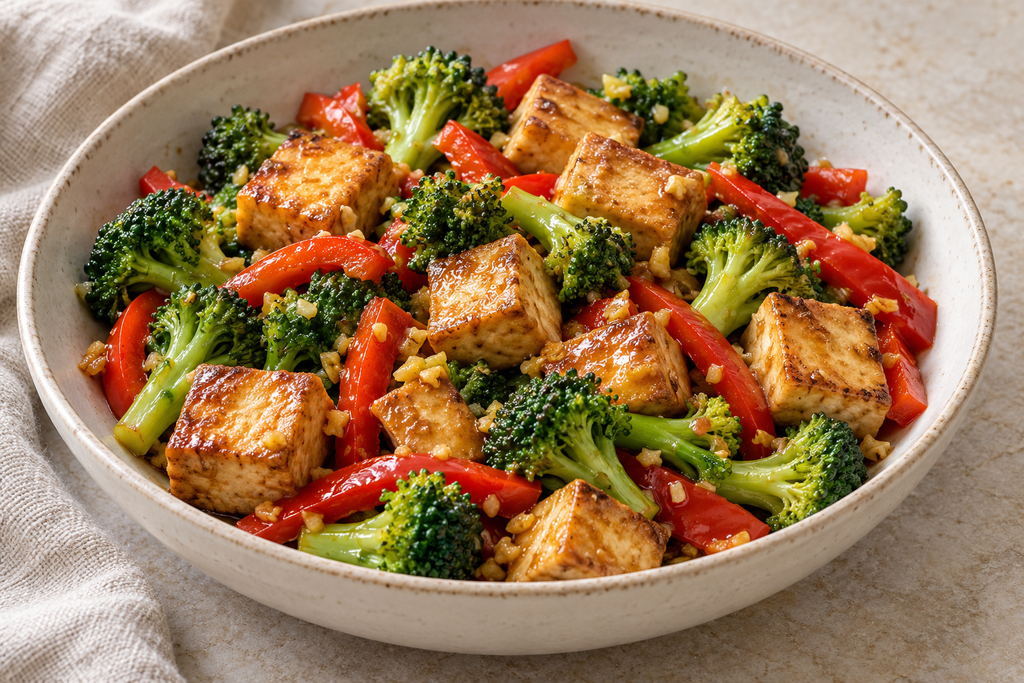
Golden tofu, broccoli, and sweet red pepper come together in a light ginger-soy sauce. Cooking the tofu separately gives it time to brown before the vegetables and sauce enter the pan.
This is the vegetable-filled option among these firm tofu recipes. Prepare the ingredients and mix the sauce before switching on the heat so you can concentrate on cooking rather than chopping halfway through.
Servings: 2–3, with rice if desired
Preparation time: 15 minutes
Pressing time: 20 minutes, overlapping with vegetable preparation
Cooking time: approximately 20–25 minutes
Ingredients
For the stir-fry:
- 400 g regular firm tofu, weighed after draining and before pressing
- 250 g broccoli, cut into small florets with thick stems thinly sliced
- 1 red bell pepper, approximately 150 g after trimming, cut into strips
- 1½ tablespoons neutral cooking oil (22.5 ml), divided
- 2 garlic cloves, finely minced
- 2 teaspoons finely grated fresh ginger
- 2 tablespoons water (30 ml), for steaming the vegetables
For the sauce:
- 2 tablespoons reduced-sodium soy sauce (30 ml)
- 1 tablespoon unseasoned rice vinegar (15 ml)
- 2 teaspoons maple syrup (10 ml)
- 4 tablespoons cold water (60 ml)
- 1 teaspoon cornstarch (approximately 3 g)
Equipment: A large nonstick frying pan with a lid, a spatula, a small bowl, and a clean plate.
Instructions
- Press and cut the tofu. Wrap the drained block in a clean towel, place between two plates, and add a modest, stable weight. Press for 20 minutes. Pat dry and cut into approximately 2.5 cm cubes.
- Prepare the sauce. Whisk all the sauce ingredients together until no dry cornstarch remains. Set aside and prepare the vegetables, garlic, and ginger.
- Brown the tofu. Heat 1 tablespoon of oil in the frying pan over medium-high heat. Add the tofu in one layer, working in batches if necessary. Cook for approximately 10–12 minutes, turning gently every few minutes until several sides are golden. Transfer to the clean plate.
- Cook the vegetables. Add the remaining ½ tablespoon of oil, broccoli, and pepper to the pan. Stir-fry for 2 minutes. Add the 2 tablespoons of water, cover, and cook for 3–4 minutes, until the broccoli is just tender when pierced. Uncover and let any remaining water evaporate.
- Add the aromatics. Reduce the heat to medium. Add the garlic and ginger and stir for 30 seconds, taking care not to burn them.
- Combine with the sauce. Return the tofu to the pan. Stir the sauce again because the cornstarch settles, then pour it in. Fold everything together gently and bring to a simmer for 1–2 minutes, until the sauce lightly coats the ingredients. Add a splash of water if it becomes too thick.
- Serve immediately. Divide between bowls and serve with separately prepared rice if desired. Rice cooking time is not included above.
Beginner Tips and Ingredient Notes
Keep the broccoli florets small and similar in size so they cook evenly. If they remain firm after steaming, add a little water and cook briefly before adding the sauce.
Expect browned tofu with tender centers. Once coated in sauce, it will soften; this recipe is not intended to retain a dry, crunchy crust.
Allergen note: Contains soy. For a gluten-free version, use specifically labelled gluten-free tamari and check the remaining ingredients.
3. Creamy Coconut Tofu Curry with Spinach
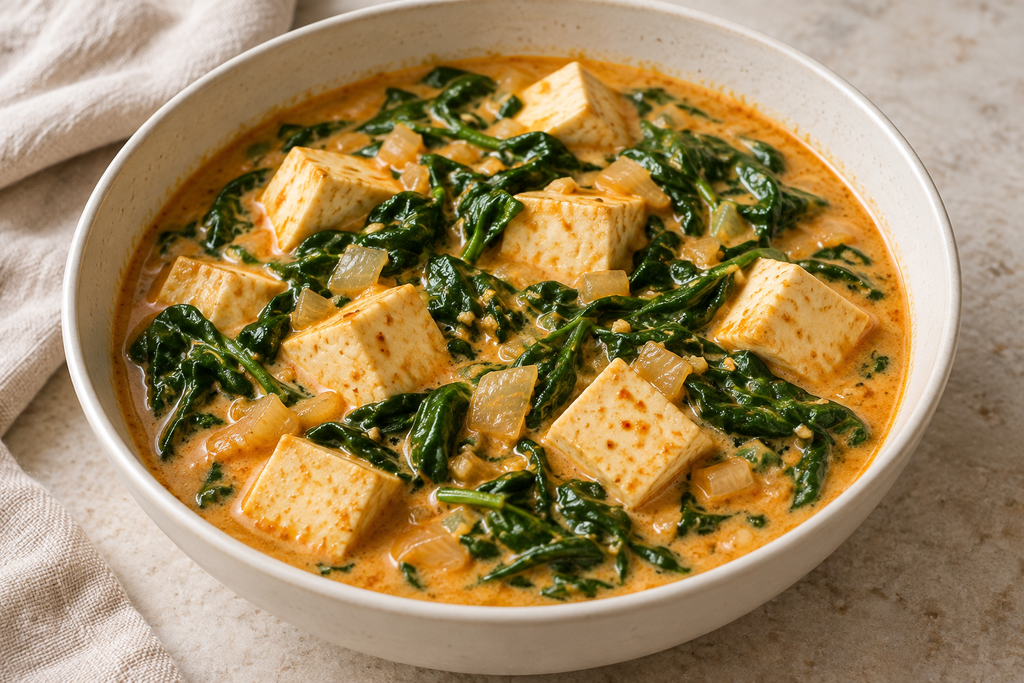
Tender tofu cubes and wilted spinach sit in a creamy coconut sauce flavored with red curry paste, garlic, and ginger. This is the softer, saucier option among these firm tofu recipes, with no pressing or separate frying required.
Curry pastes vary considerably in strength and saltiness. Start with the smaller quantity suggested below if you are unfamiliar with your brand, and check the label for ingredients such as shrimp paste or fish sauce if you want to keep the dish vegan.
Servings: 3, with rice if desired
Preparation time: 10 minutes
Cooking time: approximately 20–25 minutes
Ingredients
- 400 g regular firm tofu, drained and gently patted dry
- 1 small onion, approximately 80 g, finely diced
- 2 garlic cloves, finely minced
- 2 teaspoons finely grated fresh ginger
- 1 tablespoon neutral cooking oil (15 ml)
- 1–2 tablespoons vegan Thai-style red curry paste, approximately 15–30 g, adjusted to the product’s strength
- 1 × 400 ml can unsweetened full-fat coconut milk
- 50 ml water, plus extra if needed
- 100 g baby spinach, washed and thoroughly drained
- 1 teaspoon reduced-sodium soy sauce (5 ml), optional
- 2 teaspoons fresh lime juice (10 ml)
Equipment: A large, deep frying pan or saucepan, a spatula, a chopping board, and a knife.
Instructions
- Prepare the tofu. Cut the drained tofu into approximately 2.5 cm cubes. There is no need to press it for this recipe; a tender texture suits the sauce.
- Soften the onion. Heat the oil in the pan over medium heat. Add the onion and cook for 4–5 minutes, stirring occasionally, until softened but not deeply browned.
- Add the aromatics. Stir in the garlic and ginger and cook for 30 seconds. Add the curry paste and stir for another 30–60 seconds, following any cooking instructions on its packaging. Lower the heat if it begins to catch.
- Build the sauce. Stir the coconut milk before adding it to the pan with the water. Mix until the curry paste is evenly dispersed, then bring to a gentle simmer. Taste a little sauce with a clean spoon. If you want more curry paste, stir a small additional amount into the sauce now and allow it to cook through.
- Simmer the tofu. Add the tofu and simmer gently, uncovered, for 8–10 minutes, turning the pieces carefully once or twice. Avoid vigorous boiling or frequent stirring, which can break the cubes.
- Finish with spinach. Fold in the spinach in handfuls and cook for 2–3 minutes, until wilted. If the sauce is thicker than you prefer, add water a tablespoon at a time. Taste before adding the optional soy sauce, as the curry paste may already provide enough salt.
- Serve. Remove from the heat and stir in the lime juice. Divide between bowls and serve with separately prepared rice if desired. Rice cooking time is not included above.
Beginner Tips and Ingredient Notes
Use canned culinary coconut milk rather than a thin coconut drink. The finished sauce should remain spoonable; it does not need to reduce to a thick coating.
For a milder result, choose a mild curry paste rather than relying on extra coconut milk to correct an overly hot sauce. The sauce’s color will also vary by brand.
Allergen note: Contains soy. Check the curry paste for additional allergens and animal-derived ingredients. For a gluten-free version, use labelled gluten-free tamari in place of soy sauce and check all packaged ingredients.
Finding Your Own Way With Firm Tofu Recipes
I’m Adam, and I’m not someone who walks into the kitchen and instinctively knows what to do with every ingredient. I appreciate clear instructions, manageable steps, and recipes that leave room to learn. That is the approach I wanted to bring to these firm tofu recipes.
If tofu is unfamiliar to you, there is no need to master all three methods at once. Choose the dish that sounds most appealing. Perhaps you enjoy golden, lightly crisp edges, or perhaps a bowl of creamy curry feels more inviting. Your own preferences are a good place to begin.
Give yourself time to prepare the ingredients and read through the steps. If a few cubes break when you turn them, they still belong in your dinner. If your sauce needs another spoonful of water, making that small adjustment is part of learning how you like to cook.
You also do not have to love every texture equally. Discovering that you prefer tofu baked, pan-fried, or gently simmered is useful in itself. The next time you pick up a block, you will have a clearer idea of what you want to make.
My hope is that this collection makes an unfamiliar ingredient feel a little more approachable. A simple meal you enjoy is a perfectly worthwhile result.
— Adam
About These Recipes and Images
These recipes were developed with AI assistance and have not been independently kitchen-tested for this article. Cooking times and yields are estimates; results vary with tofu brands, ingredients, and equipment. Follow the preparation instructions and texture cues, along with any relevant directions on product packaging.
The images are AI-generated illustrations, not photographs of dishes I have cooked or tested. Your finished meals may look different. Check ingredient labels for allergens and for suitability when making vegan or gluten-free substitutions.