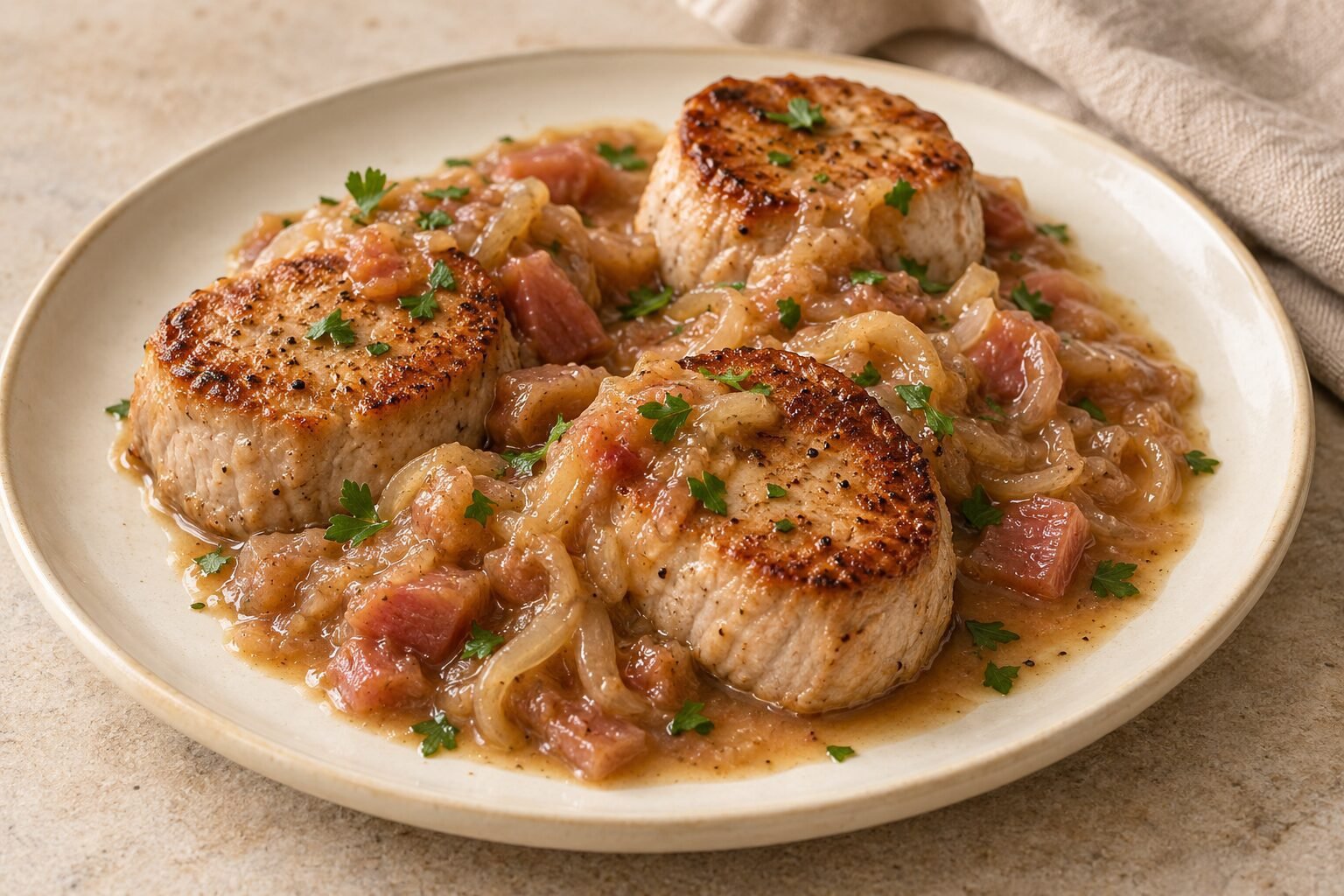
Rhubarb might make you think of crumbles and pies, but its sharp flavor also has a place at the dinner table. Cooked with onions, ginger, or warming spices, it can bring a pleasantly tangy contrast to a rich sauce or a comforting bowl of lentils.
These three savoury rhubarb recipes explore that side of the ingredient through approachable meals: chicken thighs with rhubarb and ginger, a red lentil curry, and pork medallions with rhubarb and onion sauce. Each takes a different approach, giving you a choice between a saucy chicken dish, a plant-based dinner, and a quick-cooking pork main.
If you have never cooked with rhubarb before, the main thing to understand is its tartness. A little sweetness can help balance it, even in a savory dish. The aim is to soften the sharp edges while keeping the finished meal firmly on the savory side.
Before You Start: Preparing Rhubarb
Use only the rhubarb stalks. Remove and discard any leaves, which are toxic and must not be eaten. The University of Minnesota Extension’s guide to rhubarb provides further information.
Wash the stalks under running water, trim the ends, and cut them to the size specified in each recipe. Remove any particularly tough strings if necessary. Weigh the rhubarb after trimming so that the quantities remain consistent.
Rhubarb softens as it cooks and can break down into a sauce. That is useful when you want its tanginess distributed throughout a dish. Where visible pieces are part of the intended texture, the recipe will specify when to add them and when to check their tenderness.
Finding the Right Flavor Balance
Start with the measured quantities in each recipe before making adjustments. Rhubarb already contributes acidity, so extra lemon juice or vinegar should have a clear purpose.
Taste sauces and lentils near the end of cooking, once the ingredients are cooked through. If the result is too sharp, add the suggested sweetener a little at a time. If a sauce has become too thick, a small splash of water or stock can loosen it.
You do not need to disguise the rhubarb completely. Its gentle sourness is what makes these dishes worth trying.
1. Chicken Thighs with Rhubarb and Ginger
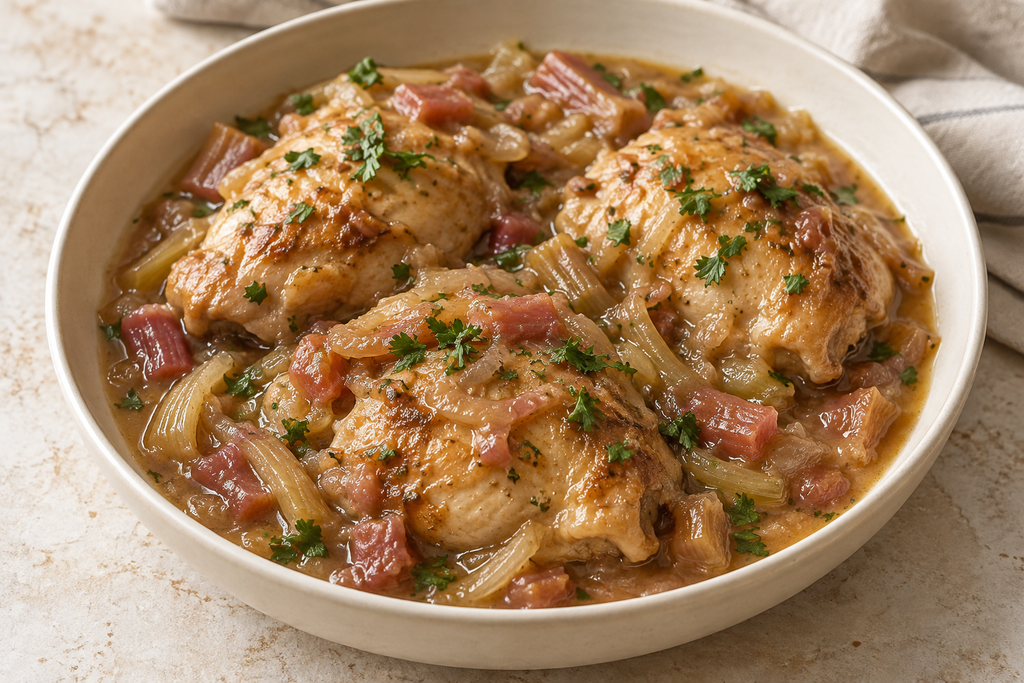
This dish combines boneless chicken thighs with a tangy rhubarb sauce, softened by onion and a little honey. Fresh ginger adds warmth without making the dish hot or spicy.
The rhubarb is meant to break down during cooking, so there is no need to keep every piece intact. Serve the chicken with rice or boiled potatoes to make the most of the sauce.
Servings: 4
Preparation time: Approximately 15 minutes
Cooking time: Approximately 30–35 minutes
Equipment: Large, deep skillet with a lid; instant-read thermometer
Ingredients
- 1½ lb (680 g) boneless, skinless chicken thighs, thawed
- 9 oz (250 g) trimmed rhubarb stalks, cut into ½-inch (1 cm) pieces
- 1 medium yellow onion, approximately 150 g, thinly sliced
- 2 garlic cloves, finely chopped
- 1 tablespoon finely grated fresh ginger
- 1 tablespoon (15 ml) olive oil
- ¾ cup (180 ml) low-sodium chicken stock
- 1 tablespoon (15 ml) honey, plus 1–2 teaspoons if needed
- ½ teaspoon ground cumin
- ½ teaspoon fine salt, divided
- ¼ teaspoon ground black pepper
- Chopped fresh parsley, optional, for serving
Instructions
1. Prepare the chicken.
Pat the chicken thighs dry with paper towels. Season both sides with ¼ teaspoon of the salt and all the black pepper. Unfold the thighs so that they cook relatively evenly.
2. Brown the chicken.
Heat the olive oil in the skillet over medium-high heat. Add the chicken in a single layer, working in batches if necessary. Cook for approximately 3 minutes on each side, until lightly browned.
Transfer to a plate. The chicken will still be partially cooked at this stage and must finish cooking in the sauce.
3. Soften the onion.
Reduce the heat to medium. Add the onion and cook for 5–7 minutes, stirring regularly, until softened. If the pan becomes dry or the browned residue starts to catch, add a tablespoon of the measured stock.
Stir in the garlic, ginger, and cumin. Cook for about 30 seconds, just until fragrant.
4. Start the rhubarb sauce.
Add the rhubarb, remaining stock, honey, and remaining ¼ teaspoon salt. Stir gently, scraping up the browned bits from the bottom of the pan.
Bring to a gentle simmer.
5. Finish cooking the chicken.
Return the chicken and any collected juices to the skillet. Nestle the thighs into the sauce, cover, and reduce the heat to maintain a gentle simmer.
Cook for approximately 10–15 minutes, checking earlier if the thighs are small. Measure the thickest part of several pieces with an instant-read thermometer. The chicken must reach 165°F (74°C) before serving; continue cooking if needed.
6. Adjust the sauce.
Transfer the fully cooked chicken to a clean plate. If the sauce looks watery, simmer it uncovered for 3–5 minutes, stirring occasionally. Press some of the softened rhubarb with the back of a spoon to help it blend into the sauce.
Taste once the chicken is fully cooked. If the sauce is sharper than you prefer, stir in another teaspoon of honey, then taste again. Add a second teaspoon only if needed. If the sauce is too thick, loosen it with a little water.
Return the chicken to the skillet, coat with the sauce, and sprinkle with parsley if using.
Tips for Beginners
- Keep the simmer gentle. Rapid boiling can reduce the sauce before the chicken has finished cooking.
- Expect the rhubarb to soften. This recipe produces a rustic sauce rather than firm pieces of fruit.
- Use temperature to check the chicken. Timing varies with the size and thickness of the thighs.
- Do not expect a bright pink sauce. Rhubarb color varies, and the onions, stock, and browned chicken will also affect its appearance.
Allergen note: Check the chicken stock label for allergens such as celery or wheat.
Recipe note: This recipe was developed with AI assistance and has not been independently kitchen-tested for this article. Cooking times are estimates; check the chicken with a food thermometer.
2. Rhubarb and Red Lentil Curry
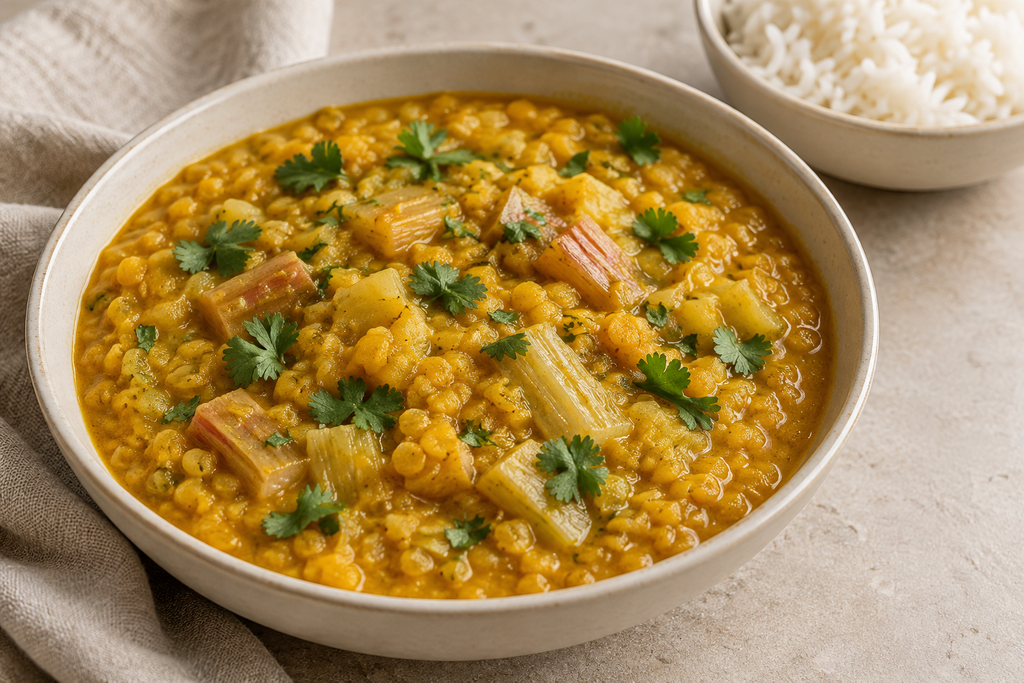
Red lentils make a comforting base for this gently spiced curry. Coconut milk adds richness, while rhubarb brings a tangy contrast. Ginger, cumin, and coriander connect the flavors without making the dish particularly hot.
Among these savoury rhubarb recipes, this is the plant-based option. Serve it with rice or warm flatbread, and adjust the consistency with a splash of water if you prefer a looser curry.
Servings: 4, with rice or flatbread
Preparation time: Approximately 15 minutes
Cooking time: Approximately 35–40 minutes
Equipment: Medium heavy-bottomed saucepan with a lid
Ingredients
- 1 tablespoon (15 ml) olive oil
- 1 medium yellow onion, approximately 150 g, finely chopped
- 2 garlic cloves, finely chopped
- 1 tablespoon finely grated fresh ginger
- 1 teaspoon ground cumin
- 1 teaspoon ground coriander
- ½ teaspoon ground turmeric
- ⅛ teaspoon chili flakes, optional
- 1 cup (200 g) dried split red lentils, rinsed and drained
- 2 cups (480 ml) low-sodium vegetable stock
- 1 can (400 ml) unsweetened coconut milk
- 7 oz (200 g) trimmed rhubarb stalks, cut into ½-inch (1 cm) pieces
- ½ teaspoon fine salt, or less if the stock is salty
- 1 teaspoon maple syrup, optional, plus another teaspoon if needed
- 2 tablespoons chopped fresh cilantro, optional
Instructions
1. Soften the onion.
Heat the oil in the saucepan over medium heat. Add the onion and cook for 6–8 minutes, stirring occasionally, until softened.
Stir in the garlic and ginger, followed by the cumin, coriander, turmeric, and optional chili flakes. Cook for about 30 seconds, stirring constantly. Add a small splash of the measured stock if the spices start sticking.
2. Cook the lentils.
Add the rinsed lentils and remaining stock. Bring to a gentle simmer, then partially cover and reduce the heat.
Cook for approximately 15–20 minutes, stirring regularly, until the lentils are soft and beginning to break down. If the mixture becomes thick before they soften, add water a few tablespoons at a time.
Check the texture before continuing: the lentils should no longer have a firm, chalky center.
3. Add the rhubarb and coconut milk.
Stir the coconut milk until smooth, then add it to the saucepan with the rhubarb and salt.
Return to a gentle simmer and cook uncovered for approximately 8–12 minutes. Stir frequently, scraping along the bottom to prevent the lentils from catching.
The rhubarb should become tender and begin blending into the curry. Press a piece against the side of the saucepan with a spoon to check.
4. Adjust the flavor and consistency.
Taste the curry once the rhubarb is tender. If it is too tart for your preference, stir in 1 teaspoon of maple syrup. Taste again before adding more.
For a thinner curry, add a little water. For a thicker consistency, simmer uncovered for a few extra minutes, stirring frequently. Remember that the lentils will continue thickening as they stand.
5. Serve.
Spoon into bowls with rice or flatbread. Sprinkle with cilantro if using.
Tips for Beginners
- Use split red lentils. Whole green or brown lentils require different cooking times and will produce a different texture.
- Check the lentils before adding the rhubarb. Getting them soft first makes the final cooking stage easier to judge.
- Keep the heat gentle. Thick lentil mixtures can stick to the bottom even when the surface is barely bubbling.
- Expect a golden curry. Turmeric and lentils determine much of the color; pink rhubarb will not necessarily remain pink after cooking.
Allergen note: Check the vegetable stock and any flatbread for allergens. Use suitable gluten-free accompaniments if needed.
Recipe note: This recipe was developed with AI assistance and has not been independently kitchen-tested for this article. Cooking times and yields are estimates.
3. Pork Medallions with Rhubarb and Onion Sauce
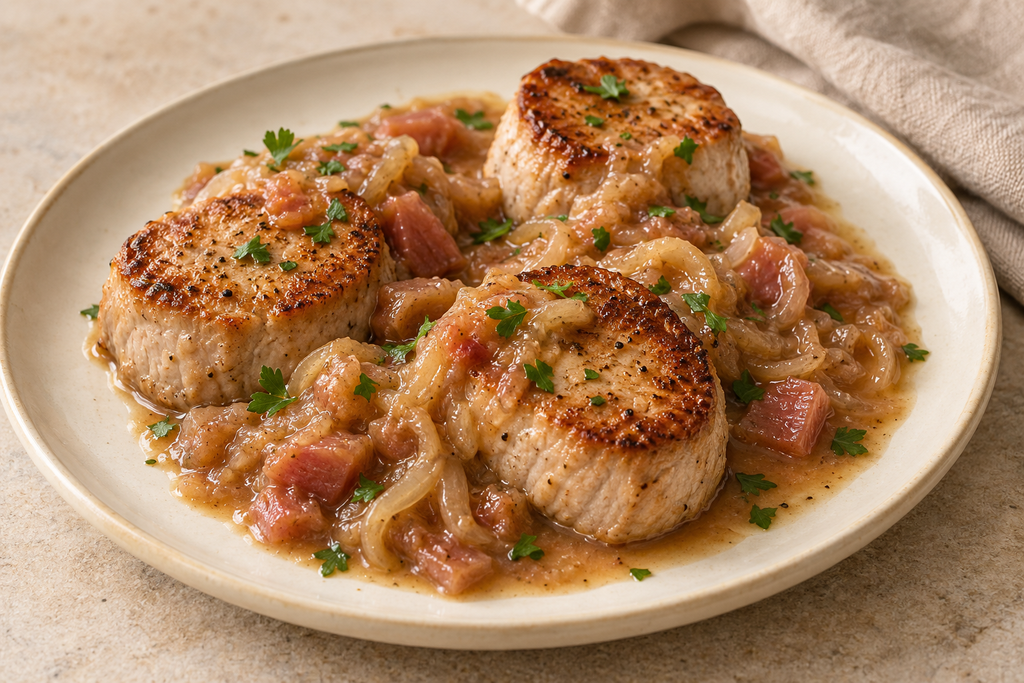
Pork tenderloin cooks quickly, making it a useful option for a skillet dinner. Here, golden medallions are served with a tangy rhubarb and onion sauce, gently seasoned with thyme and a little honey.
Unlike the chicken recipe, the pork finishes cooking before the sauce is added. This gives you more control over its doneness while allowing the rhubarb to soften at its own pace.
Servings: 4
Preparation time: Approximately 15 minutes
Cooking time: Approximately 25–30 minutes
Equipment: Small saucepan, large skillet, wide spatula or tongs, and an instant-read thermometer
Ingredients
- 1¼ lb (570 g) pork tenderloin, trimmed
- 7 oz (200 g) trimmed rhubarb stalks, cut into ½-inch (1 cm) pieces
- 1 medium yellow onion, approximately 150 g, thinly sliced
- 1 garlic clove, finely chopped
- 1½ tablespoons olive oil, divided
- ½ cup (120 ml) low-sodium chicken or vegetable stock
- 1 tablespoon (15 ml) honey, plus 1 teaspoon if needed
- ½ teaspoon dried thyme
- ½ teaspoon fine salt, divided
- ¼ teaspoon ground black pepper
- Chopped fresh parsley, optional, for serving
Instructions
1. Start the onion sauce.
Heat ½ tablespoon of the oil in the saucepan over medium-low heat. Add the onion and cook for 8–10 minutes, stirring occasionally, until softened and lightly golden.
Stir in the garlic and thyme. Cook for another 30 seconds.
2. Add the rhubarb.
Add the rhubarb, stock, honey, and ¼ teaspoon of the salt. Bring to a gentle simmer, then partially cover.
Cook for approximately 10–15 minutes, stirring occasionally, until the rhubarb is tender and beginning to break down. Add a splash of water if the mixture becomes dry before the rhubarb softens.
Uncover and simmer briefly if the sauce needs thickening. Taste and add the extra teaspoon of honey only if it is too sharp for your preference. Keep warm over very low heat while you finish the pork.
3. Prepare the medallions.
While the sauce simmers, remove any remaining silver skin from the tenderloin. Cut the meat crosswise into medallions approximately 1 inch (2.5 cm) thick.
Pat dry with paper towels and season with the remaining ¼ teaspoon salt and the black pepper. Keep the pieces similar in thickness so they cook more evenly.
4. Sear the pork.
Heat the remaining tablespoon of oil in a large skillet over medium-high heat. Add the medallions in a single layer with space between them.
Cook for approximately 3 minutes on the first side, until browned. Turn and cook for another 2–4 minutes, reducing the heat if the surface darkens too quickly. Work in batches if necessary.
Check the center of several medallions by inserting an instant-read thermometer horizontally from the side. Cook until the pork reaches 145°F (63°C) before removing it from the skillet. Timing will vary with thickness and pan heat.
5. Rest and serve.
Transfer the pork to a clean plate and let it rest for at least 3 minutes.
Spoon the warm rhubarb and onion sauce over or alongside the medallions. Sprinkle with parsley if using, and serve with mashed potatoes, rice, or steamed green beans.
Tips for Beginners
- Buy tenderloin, not pork loin. These are different cuts, and the cooking instructions here are designed for tenderloin.
- Prepare the sauce first. It can wait over low heat while you give the pork your attention.
- Check each batch. Smaller medallions may finish before larger ones; remove pieces individually as they reach the required temperature.
- Avoid simmering the finished pork in the sauce. Spoon the sauce over after resting to limit additional cooking.
Allergen note: Check the stock label for allergens such as celery or wheat.
Recipe note: This recipe was developed with AI assistance and has not been independently kitchen-tested for this article. Cooking times are estimates; use a food thermometer to check doneness.
A Final Note from Adam
I’m still finding my feet in the kitchen, so I appreciate recipes that explain the small details: when to lower the heat, what a sauce should look like, and how to check that the meat is ready. If you feel the same way, I hope these savoury rhubarb recipes make an unfamiliar ingredient feel a little more approachable.
Choose whichever dish appeals to you, read the steps before you begin, and give yourself time. Your sauce may look different from the pictures, and your presentation may be simpler. That is perfectly fine. There is room at the table for ordinary home cooking, including the meals we make while we are still learning.
Recipe and image note: These recipes were developed with AI assistance and have not been independently kitchen-tested for this article. The images are AI-generated illustrations, not photographs of tested dishes. Actual results may vary; use the instructions and food-temperature checks to guide your cooking.