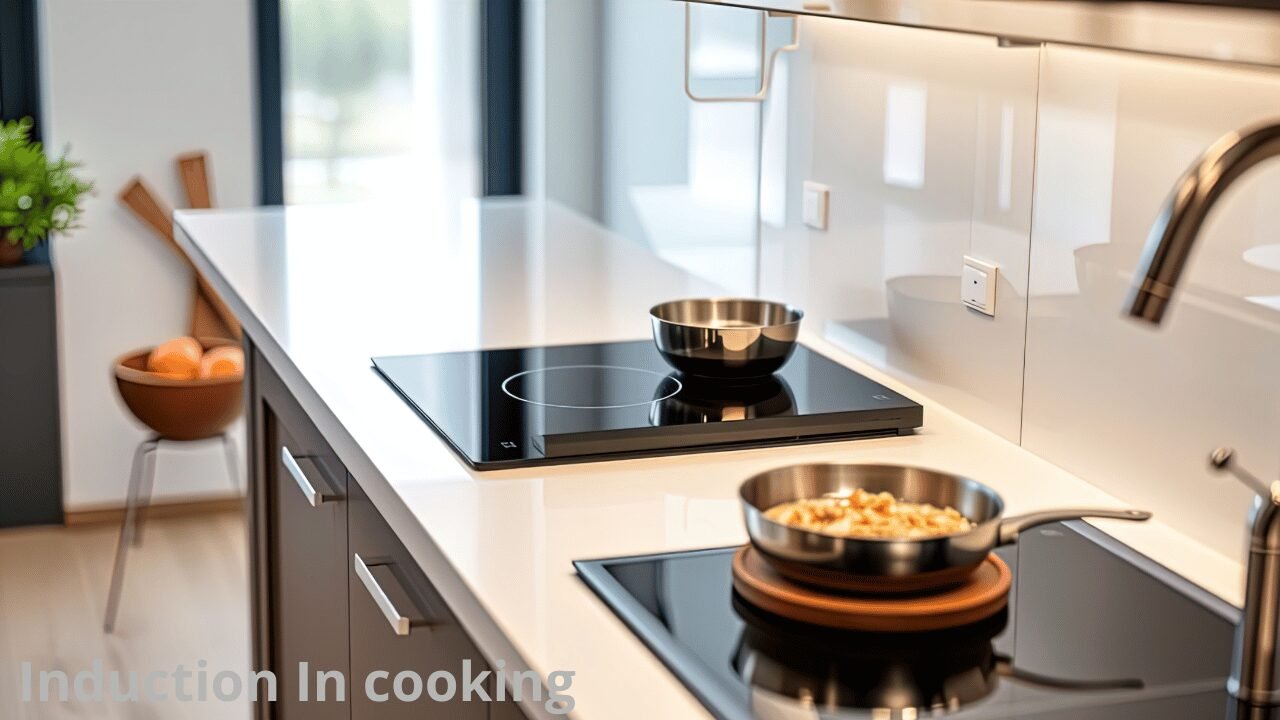
Induction cooking uses an electromagnetic field to generate heat directly in compatible cookware. The hot pan then transfers heat to the food inside it.
Unlike a gas burner, an induction cooking zone has no flame. Unlike a conventional electric radiant cooktop, it does not rely on first heating an element beneath the glass to heat the pan.
For a home cook, the practical differences include responsive power adjustments, fast heating, and specific cookware requirements. However, induction still involves hot pans, hot food, and a surface that can retain heat after cooking. Department of Energy
How Does an Induction Cooktop Work?
Beneath the cooking surface is an electrical coil. When a cooking zone operates with suitable cookware in place, its changing magnetic field induces electrical currents in the pan’s magnetic base, producing heat.
This is why cookware compatibility matters. A pan that works perfectly on gas may not work on induction.
Induction is also a type of electric cooking. When comparing appliances, the useful distinction is between induction, conventional electric resistance heating, and gas—not simply “induction versus electric.”
Which Pots and Pans Work on Induction?
Look for an induction-compatible label or symbol on the cookware or its packaging.
| Cookware | General compatibility |
|---|---|
| Cast iron | Usually compatible; check the base and manufacturer’s guidance |
| Enameled cast iron | Usually compatible |
| Stainless steel | Depends on whether the base is magnetic |
| Aluminum or copper | Requires a suitable induction-compatible base |
| Ordinary glass or ceramic cookware | Generally unsuitable for direct induction heating |
A magnet sticking firmly to the bottom is a useful preliminary check. However, the pan must also meet the cooktop’s requirements for base size, shape, and placement.
Center the pan on the appropriate zone. A very small pan may not be detected, and a warped base can affect performance. Follow your appliance manual rather than assuming that every magnetic pan will work equally well on every zone. Bosch
Does the Cooking Surface Stay Cold?
No. The surface can become hot enough to cause burns.
Although the electromagnetic field heats the pan directly, heat from the pan transfers back into the glass. Removing the pan or switching off the zone does not instantly cool either surface.
Many models display a residual-heat warning after cooking. Treat that warning seriously, and keep hands and heat-sensitive items away from the recently used area. Bosch’s induction guidance specifically explains that a cooking zone can remain hot after it is switched off. Induction Cooktop Quick Start Guide.indd
The food also continues cooking in a hot pan after power is reduced or switched off. A heavy pan retains more heat than a lighter one, so the response of the cookware still matters.
How to Start Cooking on Induction
1. Prepare before turning on the heat
Have your ingredients and utensils ready. Because some induction zones heat pans quickly, starting the burner before chopping everything can leave an empty pan heating longer than intended.
2. Choose the correct pan and zone
Use compatible cookware with a clean, dry base. Place it centrally on a zone suited to its size.
3. Start with a moderate setting
For an unfamiliar appliance, begin below maximum power and observe how the food responds.
A numbered power setting is not necessarily a specific pan temperature. The same number can behave differently across cooktops and cookware.
4. Adjust according to the food
Watch for the cues your recipe describes: gently bubbling liquid, softened onions, or steady sizzling.
Reduce power when necessary. A boost function may help bring water to a boil, but it is not the right default for every cooking task.
5. Switch the zone off when finished
Do not rely solely on removing the pan. Use the controls to switch off the cooking zone, then allow the cookware and surface to cool appropriately.
Benefits and Limitations
Induction can heat compatible cookware efficiently and respond quickly to power changes. Its smooth surface also avoids the burner grates found on gas stoves.
However, efficient does not mean that no energy is lost, and faster heating does not guarantee a lower bill in every household. Appliance performance, cooking habits, and local energy prices all matter. Department of Energy
Other practical considerations include cookware compatibility, the controls, and how well a particular model maintains gentle heat. Some appliances cycle power at lower settings, which may be noticeable during delicate cooking.
Induction also requires electricity. Installation requirements vary, especially between portable single-zone units and built-in cooktops.
Safety Features Do Not Replace Supervision
Pan detection, timers, control locks, and automatic shutoff vary by model. None should be treated as permission to leave cooking unattended.
Oil and food can overheat in an induction-compatible pan. The absence of a flame does not eliminate cooking fires.
Keep towels, packaging, and other combustible items away from the cooking area. Stay in the kitchen while frying or boiling, and switch off the heat if you need to leave. Keep pan handles positioned where they are less likely to be knocked.
These are ordinary cooking precautions, and they still apply to induction. NFPA identifies unattended cooking equipment as an important contributor to home cooking fires. NFPA
Cleaning an Induction Cooktop
For routine cleaning, switch off the appliance and let the surface cool as directed in the manual.
Use an approved cleaner and a suitable soft cloth. Avoid abrasive pads or improvised scraping tools that could damage the glass.
Some spills, particularly melted sugar or plastic, require special handling. Check the manufacturer’s instructions for these situations instead of applying a universal “wait until cold” rule.
Keep pan bases clean, and lift heavy cookware when moving it rather than dragging it across the surface.
Learning Your Cooktop
A simple first task is heating water in a compatible saucepan. Observe how quickly it approaches boiling and how the bubbling changes when you reduce the power.
Then try a familiar recipe with a moderate heat requirement. You already know what the food should look like, which makes it easier to learn the appliance’s controls.
Induction changes how heat reaches the pan, but the essential cooking skills remain familiar: prepare your ingredients, watch the food, adjust the heat, and stay attentive.