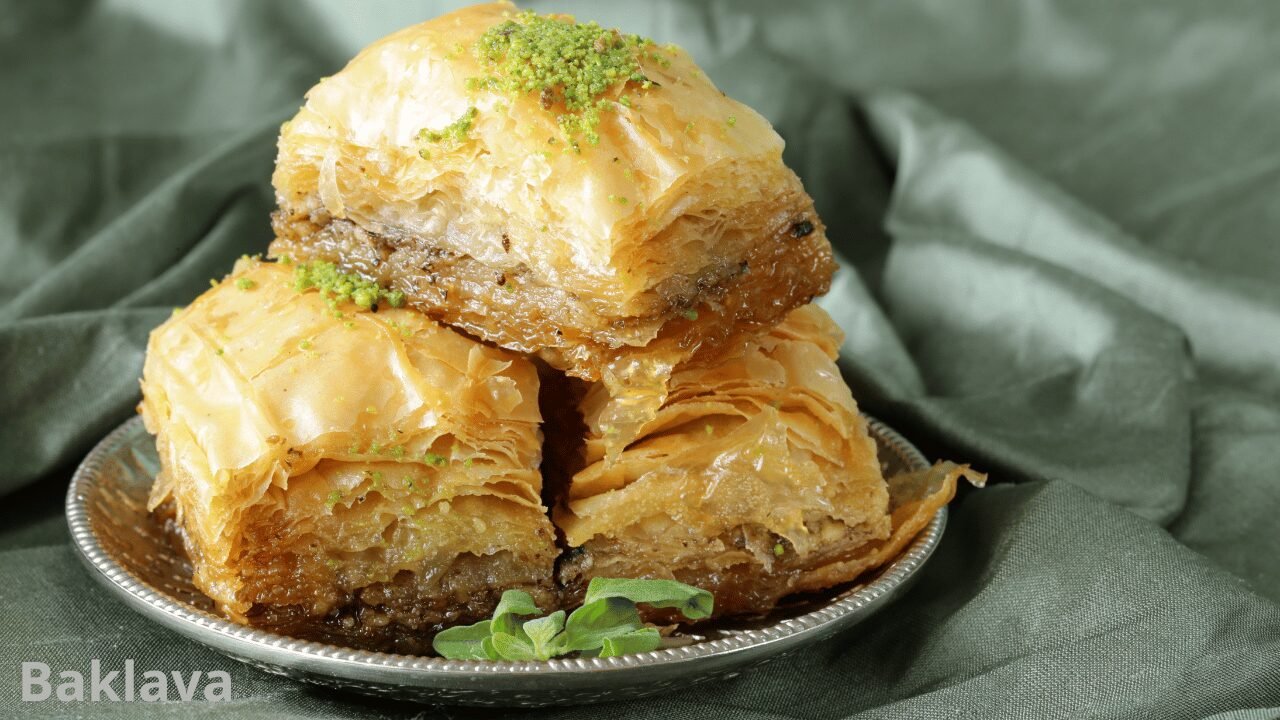
Quick answer: Traditional nut-and-syrup baklava may be suitable for room-temperature storage, depending on the recipe or bakery’s instructions. Milk-soaked, custard-filled, and fresh-cream versions need refrigeration.
The name “baklava” covers desserts with different ingredients and moisture levels. Before choosing between the cupboard and refrigerator, identify which version you have.
Traditional Baklava Versus Milk or Cream Versions
Traditional baklava usually combines layers of phyllo pastry, nuts, butter, and syrup. Some recipes provide room-temperature storage instructions for the finished dessert.
For example, King Arthur Baking’s twice-baked cashew baklava recipe specifies room-temperature storage in an airtight container. That guidance applies to its particular preparation; it should not be transferred to every tray of baklava.
Milk-soaked “cold baklava” and versions containing fresh cream or custard require different handling. Keep these refrigerated according to the producer’s or recipe’s instructions.
How Should You Store Bakery-Bought Baklava?
Keep the original packaging and read any storage label. If no instructions are supplied, ask the bakery:
- Does this particular variety need refrigeration?
- How soon should it be eaten?
- Does opening the package change the recommended storage period?
Be specific about the product. Advice for a dry walnut variety may not apply to a milk-soaked pistachio dessert sold beside it.
As one example, Karaköy Güllüoğlu instructs customers to refrigerate its cold baklava and milk-and-cream varieties and consume them within two days after opening. Other products may have different instructions.
Storing Homemade Baklava
Follow the storage guidance supplied with a reliable recipe.
If the recipe permits room-temperature storage, let the traditional baked pastry cool before packing it as directed. Keep it covered and away from sunlight, steam, and heat sources.
For a version requiring refrigeration, cool it promptly and refrigerate rather than leaving it on the counter for hours.
Changing a recipe can also change its storage requirements. Adding a milk soak or fresh cream means you should not continue using the original nut-and-syrup version’s storage advice.
Does Refrigeration Ruin Baklava?
Refrigeration may change the firmness of the butter and the texture of the pastry, but that does not mean baklava should never be refrigerated.
Storage safety comes first for varieties that require chilling. Follow the bakery’s serving instructions if it recommends briefly bringing a portion closer to room temperature before eating.
Take out only what you plan to serve. The rest can remain stored under the recommended conditions.
How Long Does Baklava Last?
There is no single reliable shelf life for every type.
The recipe, amount of moisture, filling, packaging, and storage conditions all influence the answer. A storage period given for one commercial product is not a guarantee for a homemade batch.
Write the preparation or opening date on the container, and follow the specific recipe or label. Do not assume that sweetness alone makes the dessert suitable for weeks on the counter.
Serving Baklava That Requires Refrigeration
Keep refrigerated varieties at 40°F (4°C) or below. Follow the FDA’s limit of two hours outside refrigeration, reduced to one hour when the surrounding temperature exceeds 90°F (32°C).
Include transport and serving time in that total. These limits concern perishable versions; they should not be presented as proof that every traditional baklava requires refrigeration.
For gatherings, put out a small serving plate and replenish it rather than leaving the whole tray out.
When Should You Discard It?
Discard baklava with mold, an unusual smell, or other suspicious changes. Do not taste it to check whether it is safe.
Loss of crispness alone is a texture change, but normal appearance cannot establish safety either. For a refrigerated variety, consider how long it has been outside the fridge as well as how it looks.
Baklava is easier to store when the instructions are as specific as the dessert. Identify the filling, keep the label or recipe handy, and take out a few pieces at a time. That helps preserve the remaining portions without relying on conflicting advice.
Sources and Further Reading
- Karaköy Güllüoğlu: Storage Conditions — product-specific instructions, including milk-and-cream varieties.
- King Arthur Baking: Twice-Baked Caramelized Cashew Baklava — an example of recipe-specific room-temperature storage.
- FDA: Are You Storing Food Safely? — refrigeration temperatures and handling limits for perishable foods.